Living in San Miguel de Allende: A Cultural Haven for Expat Retirees
Waking up shivering in the middle of the night, layering a heavy wool sweater over my pajamas, and desperately wishing I had bought an electric blanket was not exactly the sun-drenched Mexican retirement I had visualized. San Miguel de Allende is undeniably one of the most breathtaking, historically profound cities in the Americas. However, the glossy travel magazines completely omit the physical reality of freezing colonial homes, punishing cobblestone hills, and the sheer logistical effort required to build a life in a 16th-century UNESCO World Heritage site. This guide strips away the romanticized tourist veneer. It breaks down the true infrastructural, financial, and cultural realities of relocating to San Miguel de Allende (SMA), empowering you to decide if this vibrant, artistic high-desert haven is the right anchor for your retirement.
Disclosure: This post may contain affiliate links. We may earn a commission at no extra cost to you if you make a purchase through these links. Read full disclosure.
The Physical Reality: Climate, Altitude, and Topography
When expats conceptualize moving to Mexico, they almost universally imagine a tropical, perpetually warm environment. San Miguel de Allende shatters this stereotype with a jarring, high-altitude reality that dictates your physical comfort and daily routine.
The Myth of Eternal Spring and Freezing Nights
San Miguel de Allende is located in the high desert of the state of Guanajuato, sitting at an elevation of approximately 6,200 feet (1,900 meters) above sea level. This specific geography creates a dramatic, highly polarized daily microclimate. During the day, the intense, high-altitude Mexican sun warms the city beautifully. The skies are generally a spectacular, cloudless blue, making it perfect for wandering the historic plazas or enjoying a rooftop lunch in a short-sleeve shirt.
However, the absolute biggest shock for new retirees is the sudden, biting cold that arrives the exact moment the sun dips below the horizon. Because traditional colonial Mexican architecture was ingeniously designed with two-foot-thick stone and adobe walls specifically to stay cool during the blistering summer afternoons, these homes completely lack central heating and thermal insulation.
During the winter months (typically late November through February), the ambient temperature inside your stunning, vaulted-ceiling living room can easily plummet into the low 40s°F (4°C to 6°C). New arrivals are routinely stunned to find themselves wearing winter coats, thick wool socks, and beanies inside their own homes. Managing this indoor climate is a daily chore. Because finding high-quality, energy-efficient ceramic space heaters or premium electric blankets in local SMA hardware stores is often an exercise in pure frustration, veteran expats rely entirely on Amazon Mexico. Utilizing the localized Amazon Mexico platform allows you to order clinical-grade climate control appliances directly to your heavy wooden front door, ensuring you survive the winter nights without battling local inventory shortages.
Surviving the Altitude Shock
The elevation itself is a massive physical hurdle that cannot be ignored by aging bodies. When you first arrive in San Miguel, your cardiovascular system will violently rebel against the thinner air. You will likely experience mild to moderate altitude sickness.
This acclimatization period manifests in highly frustrating ways. You will experience sudden shortness of breath simply from walking up a single flight of stairs or carrying a light bag of groceries. Persistent, dull headaches, profound fatigue, and rapid dehydration are incredibly common during the first two weeks. You must drink significantly more water than you are accustomed to and aggressively limit your alcohol intake during your first few days. Do not push yourself to explore the entire city immediately. Give your body the grace and the time it needs to build the necessary red blood cells to process the thinner air efficiently.
The Brutal Beauty of Cobblestone Streets
The aesthetic charm of San Miguel de Allende is globally famous. The city center is a protected UNESCO World Heritage site, strictly regulating the paint colors of the buildings, prohibiting modern neon signs, and maintaining the original street infrastructure. The streets are paved with historic, uneven cobblestones (adoquines).
While these streets look spectacular in photographs, they are absolutely brutal on the human body. Walking on uneven cobblestones requires sturdy, thick-soled footwear and intense, continuous visual vigilance to avoid twisting an ankle or tripping over a loose stone. Furthermore, the city is built on a steep hillside leading up to the majestic Parroquia de San Miguel Arcángel.
If you rely on a wheelchair, a walker, a cane, or simply have severe arthritis or bad knees, navigating the historic center of San Miguel is an exceptionally hostile and physically exhausting experience. The sidewalks are rarely uniform; they feature sudden, steep drops, missing concrete, and are often barely twelve inches wide, forcing pedestrians directly into moving traffic just to bypass a utility pole. For expats with severe mobility issues, San Miguel can quickly lead to physical isolation unless you have the budget to hire a private driver daily.
The Cost of Living: Gentrification and the Gringo Tax
San Miguel de Allende is not a budget destination. Because it has been a magnet for foreign artists, writers, and wealthy retirees since the post-WWII era, the local economy has been aggressively shaped by foreign capital.
The Astronomical Rental Market
San Miguel de Allende is widely considered one of the most expensive inland real estate markets in all of Mexico. Because the city strictly enforces historic preservation codes, making new construction in the center nearly impossible, the existing housing inventory commands a massive premium.
A modern, beautifully restored two-bedroom colonial home in the Centro Histórico or the highly desirable Colonia Guadiana can easily rent for $2,000 to $4,000 USD per month. To find affordable housing, expats must move further out to peripheral neighborhoods like San Antonio, Guadalupe, or Los Frailes, where a comfortable, modern home can be secured for $1,000 to $1,800 USD per month. However, moving further out increases your dependency on taxis or a personal vehicle.
Furthermore, securing a long-term lease introduces the infamous Aval requirement. Mexican landlords almost universally demand a local co-signer who owns debt-free property in the exact same state of Guanajuato to guarantee your lease against squatters. Bypassing this usually requires paying out of pocket for a specialized legal eviction policy (Póliza Jurídica) or offering to pay six months of rent upfront in cash. To navigate these wild realities and understand your tenant rights, you must review Real Estate in Mexico: Renting vs Buying for Expats.
The Unfurnished Reality and Bypassing Local Retail
When you bypass the landlord negotiations and sign a long-term lease, you must prepare for the brutal reality of the Mexican definition of “unfurnished” (sin amueblar). In Mexico, an unfurnished home often means bare concrete walls, absolutely no kitchen appliances (no refrigerator, no stove), and frequently no light fixtures or toilet seats.
Outfitting a raw house in SMA is a massive logistical headache. The local big-box stores are located on the outskirts of town and often lack premium inventory. Organizing delivery with local freight drivers in rapid-fire Spanish over cobblestone streets adds massive friction to your move-in process. This is exactly why veteran retirees immediately digitize their household setup upon arrival. Ordering heavy appliances, ergonomic mattresses, and specialized cookware through Amazon Mexico bypasses the retail exhaustion entirely. It allows you to transform an empty colonial shell into a comfortable sanctuary quickly, leaving you free to focus on exploring the city’s art galleries rather than fighting traffic at the hardware store.
Daily Expenses and Grocery Logistics
The daily cost of living in San Miguel is heavily influenced by the “Gringo Tax”—the inflated pricing applied to everything from real estate to a simple lunch at a plaza restaurant. If you insist on buying imported American brands at specialty grocers like City Market, dining exclusively at high-end rooftop fusion restaurants, and hiring full-time domestic staff, your budget will quickly mirror what you spent in a major North American city.
However, if you adapt your lifestyle to the local economy, San Miguel still offers incredible value. The secret to sustainable living here is the Tianguis del Martes (the Tuesday Market). This massive, sprawling open-air market is where the locals shop. You can buy a week’s worth of spectacular, fresh, locally grown produce, artisan cheeses, and spices for a fraction of the supermarket price. Adapting your diet to seasonal Mexican ingredients and eating at traditional local fondas rather than tourist traps will drastically reduce your overhead. To ensure you understand how the Mexican government tracks the income you are spending locally, you must thoroughly read Taxes in Mexico for Expats: A Complete Guide to Income Tax and More.
| Expense Category | Estimated Monthly Cost (Mid-Range Retiree Couple) | Notes and Context |
| Housing (2-Bed Home) | $1,200 – $3,000+ USD | Highest in Centro; lower in San Antonio or Los Frailes. |
| Groceries (2 People) | $400 – $700 USD | Dependent on avoiding imported luxury goods. |
| Utilities (Electricity/Water/Gas) | $100 – $250 USD | Spikes in winter if using heavy electric space heaters. |
| Transportation (Taxis/Uber/Gas) | $100 – $200 USD | Owning a car in Centro is highly discouraged due to parking. |
Infrastructure, Utilities, and Connectivity
Living in a 300-year-old historic building is aesthetically magnificent but infrastructurally frustrating. You must adjust your expectations regarding basic modern conveniences.
Plumbing and the Water Reality
The plumbing in colonial mountain towns is often ancient and highly fragile. In the vast majority of historic homes in San Miguel, you absolutely cannot flush toilet paper; it must be thrown in a designated bin next to the toilet to avoid catastrophic, highly expensive clogs in the municipal sewage lines.
Water pressure is another daily challenge. The city’s water pressure is frequently reliant entirely on gravity from a rooftop tank (tinaco). This means your morning shower might be a disappointing trickle unless you ensure your landlord has installed a specialized, high-capacity pressurized pump (hidroneumático). Furthermore, municipal water rationing is common during the dry season. You must monitor your rooftop reserves.
Crucially, you cannot drink the tap water anywhere in the city. You must manage the ongoing logistics of heavy, 20-liter garrafón deliveries for your drinking and cooking water. Local delivery trucks navigate the cobblestone streets daily, allowing you to exchange your empty jugs for roughly $2 to $3 USD. For a comprehensive look at setting up and paying for these services, carefully study Setting Up Utilities in Mexico: Electricity, Water, and Internet.
Internet Reliability and the Concrete Fortress
For retired expats who still consult remotely, manage digital investment portfolios, or simply want to video-call their grandchildren in high definition, reliable internet is non-negotiable. San Miguel has modernized heavily, and major providers like Telmex and Megacable offer fiber-optic connections to residential homes.
However, the physical architecture of your colonial home will fight your Wi-Fi signal relentlessly. The two-foot-thick stone and adobe walls act as a massive barrier to radio waves. Even if you have a blazing-fast 200 Mbps fiber connection entering your living room, the signal will likely completely disappear the moment you walk into your bedroom or interior courtyard. You will almost certainly need to invest in a heavy-duty mesh router system (easily sourced via Amazon Mexico) to push the internet signal through the ancient masonry.
Arriving Safely: Airports and Mobile Data
San Miguel de Allende is remarkably isolated from major aviation hubs. The city does not have its own commercial airport. To get here, you must fly into either León/Bajío International Airport (BJX) or Querétaro Intercontinental Airport (QRO). Both of these airports are roughly a 1.5-hour to 2-hour drive from San Miguel over remote state highways.
When you land at these regional airports, particularly after a long international flight with massive luggage, you cannot rely on spotty airport Wi-Fi to summon a secure private driver or communicate with your shuttle service. Relying on your home country’s “free roaming” plan is a dangerous gamble, as major carriers frequently throttle data speeds south of the border.
You must localize your cellular data the absolute second your plane lands. By downloading an eSIM profile through Airalo before you even cross the border, you ensure your phone stays connected to Mexico’s strongest local networks. Having a dedicated Airalo data package is the ultimate digital safety blanket. It guarantees you can seamlessly coordinate your 1.5-hour shuttle extraction, translate complex Spanish terms with your driver, and navigate the confusing, one-way cobblestone grid of San Miguel upon arrival without being stranded in a dangerous dead zone.
Transitional Housing: The Try Before You Buy Strategy
The most dangerous, financially devastating mistake you can make is selling your home in the US or Canada and signing a blind 12-month lease in San Miguel based purely on retirement blogs. You must employ a strict “try-before-you-buy” strategy.
To bridge your arrival and instantly tap into a vetted, reliable community, you need a transitional basecamp. Utilizing a private room or a suite at the Selina location in San Miguel de Allende is a strategic masterclass in relocation logistics. Selina provides commercial-grade internet, built-in coworking spaces (perfect for organizing your real estate hunt), and an inherently welcoming environment. You can walk downstairs to the common areas and instantly network with other remote workers and expats who can recommend safe neighborhoods, warn you about specific noisy streets, and introduce you to trustworthy local landlords. It acts as the perfect, low-risk anchor while you explore whether SMA is truly your forever home.
Expat Community, Culture, and Social Integration
The soul of San Miguel de Allende is deeply intertwined with its massive foreign population. Understanding how to navigate this unique social hierarchy is the key to a fulfilling retirement.
The Artistic Sophistication of the Expat Bubble
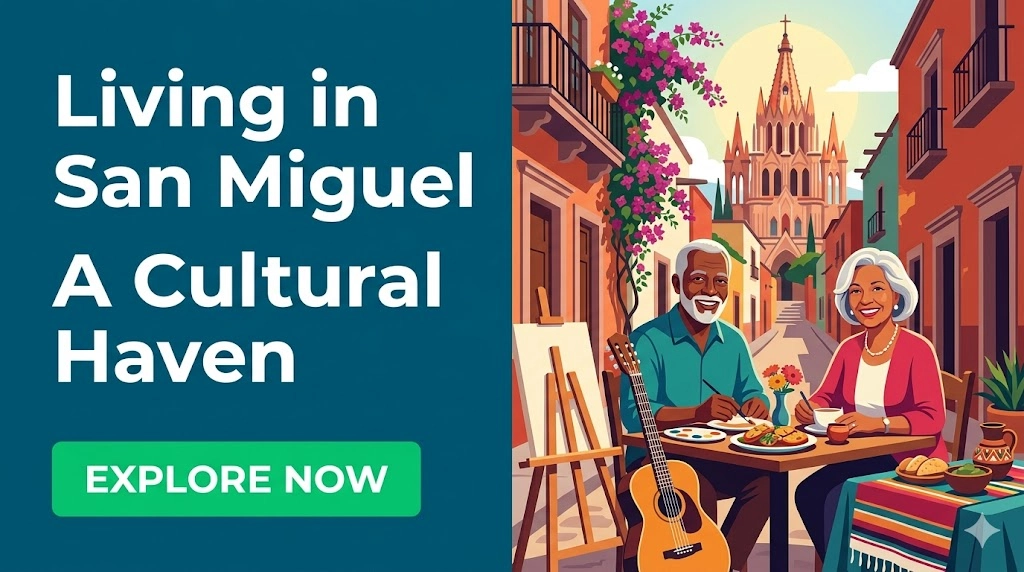
San Miguel de Allende has acted as a magnet for artists, writers, and creatives since the 1950s, largely spurred by the establishment of the Instituto Allende and the influx of American GI Bill students. Today, the social scene here is undeniably sophisticated, upscale, and culturally intense.
The expat community is highly organized and heavily revolves around high-end gastronomy, gallery openings, classical music festivals, charity galas, and English-language theatrical productions. Because the expat footprint is so massive (accounting for roughly 10% to 15% of the local population), you can easily live your entire daily life without ever speaking a single word of Spanish. Restaurants feature flawless English menus, local doctors are perfectly bilingual, and businesses actively cater to North American tastes.
For nervous expats seeking an immediate, plug-and-play social life, this deep infrastructure is incredibly comforting. You will never lack for a dinner party invitation or a bridge club to join.
Breaking Out of the Gentrified Isolation
However, this intense concentration is a double-edged sword. Living entirely within the “San Miguel Bubble” can feel highly insular and socially claustrophobic. The community is so tightly knit that gossip travels fast, and the environment can sometimes feel intensely pretentious, with social hierarchies subtly dictated by wealth and artistic standing.
If you only interact with other wealthy foreigners, your experience of Mexico remains shallow, transactional, and heavily filtered through the anxieties and complaints of other retirees. You miss out on the profound warmth, deep family values, and incredible resilience of the local Mexican culture.
To truly thrive, you must force yourself into uncomfortable integration. You must commit to learning functional conversational Spanish. Being able to joke with the vendor at the Tuesday Market, negotiate respectfully with an electrician, or simply greet your neighbors correctly transforms your entire existence. It shifts you from being viewed as a wealthy, passing tourist to a respected, integrated member of the community.
Furthermore, you must give back to the city that hosts you. San Miguel has an incredible network of non-profits, such as the local SPA (animal rescue), Feed the Hungry San Miguel, and various educational charities supporting local Mexican youth. Volunteering your time and resources with these organizations is the absolute fastest, most genuine route to forging deep, lasting friendships with both established expats and local Mexicans.
Healthcare: The Critical Reality for Retirees
For retirees, the proximity and quality of medical care is often the single most critical factor in choosing a destination. San Miguel presents a unique, tiered medical reality that requires strategic planning.
Local Clinics and Routine Care
For routine medical care, minor emergencies, and chronic disease management, San Miguel is exceptionally well-equipped. The city boasts several very good local clinics, an active Red Cross (Cruz Roja), and the modern MAC Hospital located on the outskirts of town.
The local medical infrastructure is excellent for stabilizing patients, treating broken bones, managing diabetes, or handling severe sinus infections. The vast majority of private practice doctors in SMA speak excellent English, many having trained in the United States or Europe. The bedside manner is generally vastly superior to the rushed, corporatized experience in North America, with doctors often giving you their personal WhatsApp number for follow-up questions.
The Trauma Gap: The Drive to Querétaro
However, you must be brutally honest about the city’s limitations. If you require highly specialized, life-saving neurosurgery, complex cardiac bypass, or advanced oncology treatments, the local facilities in San Miguel are not fully equipped to handle your case.
In these severe, catastrophic emergencies, expats must be transported by ambulance to the much larger, highly industrialized city of Querétaro, which is a grueling 1-hour to 1.5-hour drive away. This terrifying delay in acute care is the hidden, dangerous cost of living in the isolated colonial highlands. You must have a formalized medical evacuation plan and know exactly which private ambulance services to call in an emergency. To learn how to locate vetted, bilingual specialists and prepare for this reality, utilize the strategies detailed in Finding English-Speaking Doctors and Specialists in Mexico.
Furthermore, managing ongoing maintenance medications for a chronic condition involves dealing with local pharmacy supply chains. While you must use local pharmacies for immediate prescriptions, ensuring a steady supply of specific medications requires knowing local equivalents. To understand how to safely navigate the local retail drug stores, consult Pharmacies in Mexico: How to Get Medications OTC vs Prescription.
Securing Your Financial Medical Safety Net
Do not be lulled into a false sense of security by the cheap $40 USD doctor consultations for minor ailments. A major medical crisis requiring an ambulance transfer and admission to a premium private hospital in Querétaro will cost tens of thousands of dollars. The hospital administration will mercilessly demand a massive credit card deposit upfront—often between $3,000 and $5,000 USD—before they will even admit you to the emergency room or stabilize you.
Relying entirely on out-of-pocket cash for catastrophic medical events is financial suicide. Furthermore, the Mexican public healthcare system (IMSS) is chronically underfunded, heavily backlogged, and operates exclusively in Spanish; it is not a viable option for a foreign retiree experiencing a cardiac event.
You must secure robust international health coverage to guarantee you have VIP access to elite hospitals without draining your life savings. A premium policy ensures you bypass the public clinics entirely and coordinates complex medical evacuations on your behalf. To deeply understand the financial mechanics of this catastrophic medical protection, review Choosing Private Health Insurance: Local Mexican Plans vs International Coverage. For a comprehensive overview of the public versus private divide, read Healthcare in Mexico: Complete Guide for Expats Public vs Private.
Visas and Bureaucracy: Establishing Legal Residency
The era of the “perpetual tourist” doing border runs every six months is completely, definitively dead. The Mexican government has cracked down aggressively on foreigners living in the country on tourist visas.
To legally rent a long-term home, buy a car, open a local bank account, and sign utility contracts in San Miguel de Allende, you must secure a Temporary or Permanent Resident Visa based on economic solvency. This requires proving specific monthly income (from pensions or social security) or holding massive savings thresholds at a Mexican consulate in your home country long before you book your one-way flight.
The process involves a consular interview abroad, followed by a strict 30-day window upon arriving in Mexico to exchange your visa sticker for a physical plastic resident card at the highly backlogged local National Institute of Migration (INM) office in San Miguel. The local INM office is notoriously strict regarding paperwork formats, demanding specific margin sizes for photographs and flawless black-and-white copies.
To ensure your paperwork is flawless and you survive the initial bureaucratic gauntlet without facing massive fines or deportation, strictly follow the steps outlined in How to Apply for Temporary Residency in Mexico: Step-by-Step and calculate your exact required financial thresholds in Mexico Immigration Fees and Costs: Budgeting for Your Residency.
Living in San Miguel de Allende requires surrendering your rigid home-country expectations and embracing the vibrant, unpredictable, and sometimes frustrating reality of life in a 16th-century city. By securing your digital connectivity with Airalo, managing your climate comfort through Amazon Mexico, building your medical safety net, and respecting the profound local culture, you can transform this breathtaking colonial gem into the most extraordinary, fulfilling chapter of your life.
References
Primary sources (official)
- San Miguel de Allende: The official municipal government site providing data on local civic regulations, historic preservation codes, property tax payments (Predial), and public safety initiatives in the UNESCO zone. https://www.sanmigueldeallende.gob.mx/
- Secretaría de Relaciones Exteriores (SRE): The official federal Mexican portal detailing the exact financial thresholds, economic solvency requirements, and consular procedures for securing Temporary and Permanent Resident Visas. https://sre.gob.mx/visas
Other helpful sources
- U.S. Embassy & Consulates in Mexico: The official diplomatic portal offering crucial emergency contacts, notary services, and localized safety information specifically dedicated to American expats residing in the Guanajuato region. https://mx.usembassy.gov/tag/san-miguel-de-allende/
- ExpatDen: An incredibly detailed, firsthand resource covering the cultural, financial, and logistical nuances of renting apartments, navigating the healthcare system, and bridging the cultural divide as a foreign retiree. https://www.expatden.com/mexico/
Disclaimer
The information provided in this comprehensive guide is for educational, logistical, and informational purposes only and does not constitute formal immigration, legal, real estate, or medical advice. The cost of living, rental market prices, and public utility tariffs in San Miguel de Allende are highly volatile and subject to rapid economic shifts and intense gentrification. Always consult with a certified bilingual Mexican attorney or a registered immigration facilitator before signing long-term leases or executing financial transfers, and thoroughly verify your international health insurance coverage networks before relocating abroad.