Volunteering in Mexico: Ways to Give Back and Organizations to Join
Wanting to help out in your new Mexican community is a beautiful impulse, but finding an organization that actually needs your specific skills instead of just your donation money is incredibly frustrating. I spent my first year accidentally supporting a sketchy orphanage before learning how to vet legitimate charities. This guide explains how to find ethical, impactful volunteering opportunities across Mexico.
Disclosure: This post may contain affiliate links. We may earn a commission at no extra cost to you if you make a purchase through these links. Read full disclosure.
The Legal and Cultural Reality of Volunteering in Mexico
Before you put on a pair of work gloves or step into a local animal shelter, you must understand the legal and cultural framework of volunteering as a foreigner. Mexico has strict labor and immigration laws designed to protect local jobs, and crossing the line from “helpful volunteer” to “illegal unpaid worker” is easier than you might think.
Navigating Tourist Visas and Unpaid Work
The most common question expats and travelers ask is whether they can legally volunteer while visiting Mexico on a standard tourist visa. The short answer is yes, but with a massive, non-negotiable caveat: the work must be strictly and completely unpaid. You cannot receive a salary, a stipend, or even under-the-table cash tips for your services. If immigration officials discover that you are displacing a Mexican worker and receiving compensation without a proper work visa, you face immediate deportation. If you are planning a short-term trip to volunteer, you should first clarify your entry requirements by reading Do You Need an Onward Ticket to Enter Mexico on a Tourist Visa?.
For expats holding Temporary Resident visas, the rules are generally more relaxed regarding long-term, unpaid community service, provided your visa does not specifically restrict your activities. It is highly recommended to understand your exact legal standing by reviewing Understanding the Residente Temporal Lucrativa vs No Lucrativa (With/Without Work). Even legitimate Non-Governmental Organizations (NGOs) will require you to sign extensive liability waivers stating that your relationship with them is purely voluntary.
Navigating this initial bureaucracy can be intimidating because these legally binding waivers will be written in highly formal, bureaucratic Spanish. You cannot afford to sign away your legal rights or assume liability without understanding the document perfectly. Utilizing a comprehensive language program like SpanishPod101 to build your reading comprehension of formal Mexican legal terminology ensures you know exactly what you are signing at the NGO’s administrative office.
| Visa Type | Volunteering Permitted? | Restrictions | Best For |
| Tourist Visa (FMM) | Yes | Must be strictly unpaid. Cannot receive any form of remuneration. | Short-term beach cleanups, casual dog walking. |
| Temporary Resident | Yes | Must not engage in lucrative activities without explicit INM permission. | Long-term fostering, NGO board members. |
| Permanent Resident | Yes | Full rights to work and volunteer. No restrictions. | Founding your own local NGO, directing long-term projects. |
| Student Visa | Yes | Must not interfere with studies or involve paid work. | University-led community service. |
Escaping the “Voluntourism” Trap
There is a massive difference between ethical volunteering and the damaging industry of “voluntourism.” Voluntourism often involves foreign visitors paying thousands of dollars to an international agency so they can spend a week painting a school wall—a job that a local Mexican painter could have done much better, much faster, and for a fair local wage. This model centers the emotional experience of the foreigner rather than the actual, sustainable needs of the local community.
To avoid falling into this trap, you must meticulously vet the organizations you engage with. Look for charities that are formally registered as Civil Society Organizations with the Mexican government. A legitimate organization will be entirely transparent about where their funding goes, and they will prioritize asking for your specific, professional skills rather than just charging you a participation fee. If you decide to move here full-time to support these NGOs, you will need to map out your long-term transition by consulting How Long Does It Take to Get Mexican Residency? Timeline & Tips.
Animal Rescue and Street Dog Sanctuaries
For many expats, the most immediate and visible area of need in Mexico is animal welfare. The sheer number of street dogs roaming the streets, beaches, and highways is often deeply shocking to foreigners newly arriving from the United States, Canada, or Europe.
The Overwhelming Need for Fosters and Walkers
Every major expat hub has local animal shelters that are perpetually operating at triple their intended capacity. They are desperately underfunded and constantly scrambling for resources. While donating bags of kibble is always appreciated, what these sanctuaries actually need is physical manpower. Volunteering at a local shelter is gritty, exhausting work. It involves scrubbing kennels, administering medications, and patiently socializing dogs that have been traumatized by neglect.
If you have the space in your home, fostering is arguably the most critical service you can provide. Shelters are highly stressful environments, and dogs recovering from surgeries simply cannot heal in a crowded pen. Taking a dog into your home for a few weeks to rehabilitate them makes them exponentially more adoptable.
When fostering, you will inevitably have to take the animal to local veterinarians for follow-up care. These local vets are incredible, but they rarely speak fluent English. You must be able to communicate effectively about the dog’s symptoms, feeding schedule, and medication dosages. Relying on SpanishPod101 to rapidly learn practical veterinary vocabulary ensures you can advocate for your foster dog’s health without critical details getting lost in translation.
Flight Angels and International Adoptions
Because the local adoption rate in Mexico simply cannot keep pace with the number of stray dogs, many rescues rely heavily on international adoptions. Families abroad are eager to adopt these resilient Mexican street dogs, but transporting the animals across international borders is a massive logistical hurdle. This is where expats step in as “Flight Angels.”
A Flight Angel is a traveler who is already booked on a flight back home and agrees to attach a rescue dog to their existing ticket. If you frequently travel back and forth, you should read up on Leaving Mexico and Re-entering: Travel Tips for Residents and Visa Holders to ensure your own paperwork is in order before taking on the responsibility of an animal.
The rescue handles the paperwork, but you are the one standing at the airline check-in counter dealing with the gate agents. Mexican airline staff will ask you a series of rapid-fire questions regarding the dog’s breed, weight, and destination. Having your SpanishPod101 audio lessons actively playing during your commute to the airport will sharpen your ear, ensuring you can confidently answer the airline staff’s questions and ensure the dog gets safely loaded into the cargo hold.
Marine Life and Environmental Conservation
Mexico boasts some of the most spectacular, biodiverse coastlines on the planet, but these fragile ecosystems are under constant threat from over-development, illegal poaching, and climate change. For expats living on the coasts, environmental volunteering offers a deeply impactful way to give back.
Sea Turtle Patrols on the Coasts
Along the beaches of Oaxaca, Baja California Sur, and the Riviera Maya, sea turtle conservation is a relentless, nightly battle. Several endangered species of sea turtles return to these beaches annually to lay their eggs, which are highly prized by poachers. Local conservation groups run nightly patrols to intercept the turtles, harvest the eggs before the poachers arrive, and relocate them to guarded hatcheries.
Volunteering for these patrols is physically demanding. You will find yourself walking for miles on completely dark beaches at 2:00 AM, battling mosquitoes and exhaustion. Safety and ecological protocols during these patrols are incredibly strict, and you will be operating entirely under the direction of local Mexican marine biologists. You must be able to understand their instructions perfectly in the dark. Engaging with SpanishPod101 to learn environmental and directional vocabulary guarantees that you won’t accidentally step on a nest simply because you misunderstood a shouted command in Spanish.
Coral Reef Restoration Projects
The Mesoamerican Barrier Reef system is suffering from severe coral bleaching and damage from cruise ship anchors. In coastal towns, dedicated local NGOs have established underwater coral nurseries to farm resilient coral fragments and manually replant them onto the damaged reef structures.
This is highly specialized volunteering. You typically need advanced scuba diving certifications and absolute mastery of your buoyancy. Furthermore, these restoration projects are deeply intertwined with the local maritime community. You will be working alongside Mexican dive masters, boat captains, and local fishermen. Integrating into this tight-knit community requires genuine respect and a willingness to speak their language. Learning specific nautical terminology through the SpanishPod101 platform will earn you immense respect from the local crew.
Community Development and Housing Initiatives
While the beaches and colonial centers of Mexico are beautiful, extreme poverty still grips many informal settlements surrounding the major metropolitan areas. Expats who want to engage in direct, hands-on community development will find numerous organizations desperately seeking support.
Building Homes with Organizations Like TECHO
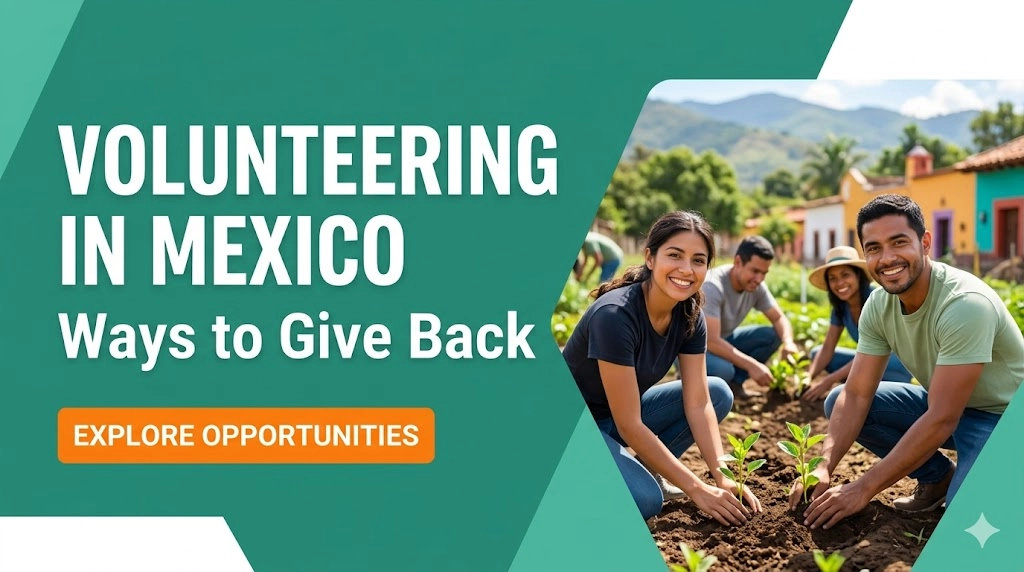
Organizations like TECHO Mexico operate on a massive scale to combat housing inequality. They focus on building transitional, emergency housing in informal settlements located on the extreme outskirts of major cities. These organizations rely on massive mobilizations of volunteers to construct these wooden and aluminum homes over the course of a single weekend.
The reality of a build weekend is intense. You will be sweating under the Mexican sun, hammering wooden panels, and lifting heavy materials. It is exhausting, grassroots work, but it is uniquely powerful because you are working side-by-side with the actual family who will be moving into the home.
The most profound moments of these builds happen during the lunch breaks. Sitting on a dirt floor, sharing a meal of homemade tortillas with the family, is where real human connection is forged. However, this beautiful cultural exchange is entirely impossible if you cannot speak to them. Relying on SpanishPod101 to build your conversational confidence transforms what would be a silent, awkward lunch into a profound exchange of stories, laughter, and mutual respect.
Teaching English in Rural Communities
Access to English education is one of the most significant vehicles for upward economic mobility in Mexico. Fluency in English opens doors to high-paying jobs in the international tourism sector. However, public schools in rural areas critically lack dedicated English teachers.
Many expats believe that simply being a native English speaker qualifies them to volunteer as a teacher. Stepping into an under-resourced Mexican classroom requires immense patience, pedagogical strategies, and the ability to maintain the attention of thirty energetic children. If you find you enjoy this and want to transition to a legal, paid teaching position later, you will need to research Can You Change from a Tourist Visa to Residency Without Leaving Mexico?.
The supreme irony of teaching English abroad is that you must possess a very strong command of Spanish to do it effectively. If you cannot explain complex grammatical differences, or if you cannot tell a disruptive student to sit down in their native language, you will lose control of the room instantly. Brushing up on your imperative classroom commands with SpanishPod101 is absolutely essential before stepping in front of a whiteboard.
Skills-Based Volunteering for Digital Nomads and Professionals
If you are an expat working remotely, your most valuable asset to a Mexican charity is likely not your ability to swing a hammer, but the specialized professional skills you spent decades honing.
Offering Digital Marketing and Grant Writing
The biggest, most glaring gap in the Mexican non-profit sector is a profound lack of administrative and digital infrastructure. Many incredible local charities have absolutely zero web presence, no social media strategy, and no ability to accept international credit card donations.
This is where digital nomads can make a staggering impact without ever leaving their laptops. If you are an expat working remotely, offering to build a basic website or write comprehensive international grant proposals in English is incredibly valuable. To navigate the legalities of working remotely while living in Mexico long-term, ensure you read Digital Nomads in Mexico: Visa Options for Remote Workers in 2027.
However, the challenge lies in gathering the necessary information to market these NGOs effectively. You cannot write a compelling grant proposal without interviewing the local directors and capturing the emotional core of their mission. Using SpanishPod101 to aggressively improve your listening comprehension ensures that you can conduct these interviews accurately, capturing the true heart of their mission when you translate their stories.
Medical, Dental, and Professional Assistance
Medical missions and free health clinics operating in impoverished, rural areas constantly need support. The Mexican Red Cross and various independent health NGOs do incredible work, but foreign medical professionals must navigate strict legal limitations.
Unless your foreign medical degree has been formally validated by the Mexican government, you cannot legally write prescriptions or perform surgeries. However, you are legally permitted to assist, run triage stations, and provide preventative education. Understanding how local systems work is crucial; you should familiarize yourself with Healthcare in Mexico: Complete Guide for Expats (Public vs Private) as well as the protocols outlined in Medical Emergencies in Mexico: What Expats Should Know and Prepare.
The absolute necessity here is clinical fluency. A misdiagnosis due to a language barrier can be fatal. If you are going to volunteer in any health-related capacity, you must dedicate rigorous time to mastering advanced clinical vocabulary. Making SpanishPod101 an indispensable part of your daily preparation ensures you can ask a patient about their symptoms accurately. If you need to register for local identification to access certain community buildings, you will also want to read up on How to Get a CURP as a Foreigner: The Mexican ID Number Explained.
Overcoming the Language Barrier for Meaningful Impact
The recurring theme across every single sector of volunteering in Mexico is communication. Language is not just a tool for asking for directions; it is the fundamental bridge that dictates whether your presence in a community is genuinely helpful.
Why Conversational Spanish is Non-Negotiable
The harsh truth about volunteering abroad is that if you cannot speak the language, you are often more of a burden than a blessing. An NGO that is already stretched thin suddenly has to dedicate one of their bilingual staff members to translate every instruction for you.
Demanding that a Mexican community accommodate your lack of Spanish reinforces the exact harmful power dynamics that ethical volunteering seeks to dismantle. Speaking Spanish demonstrates genuine respect for their culture. Engaging with the immersive, culturally relevant audio lessons on SpanishPod101 prepares your ear for the gritty reality of Mexican street Spanish, transforming you into a useful volunteer from your very first day.
Building Genuine Trust with Local Coordinators
Local NGO directors in Mexico are usually overworked and battling immense bureaucratic hurdles daily. They simply do not have the time or the emotional bandwidth to hold the hands of international volunteers who cannot follow basic instructions.
When you can sit down with a local coordinator and ask them directly what they need in their own language, the relief on their face is palpable. You instantly cease being a tourist and become a reliable ally. The long-term benefits of establishing this trust are immense. Coordinators who trust you will give you more meaningful responsibilities and introduce you to local leaders, providing a richer, more authentic expat experience.
References
Primary sources (official)
- Secretaría de Bienestar – La sociedad civil organizada marca una ruta de coparticipación con el gobierno: https://www.gob.mx/bienestar/prensa/la-sociedad-civil-organizada-marca-una-ruta-de-coparticipacion-con-el-gobierno
- Cruz Roja Mexicana – Voluntariado Institucional: https://www.cruzrojamexicana.org.mx/
Other helpful sources
- LATINNO – Techo Mexico Innovation Profile and Democratic Impact: https://latinno.net/en/case/13248/
- Idealist – Directory of Volunteer Opportunities and Civil Society Organizations in Mexico: https://www.idealist.org/
Disclaimer
The information provided in this guide is for educational and informational purposes only and does not constitute legal, immigration, or professional advice. Immigration laws regarding volunteering, visa restrictions, and the legal status of civil society organizations in Mexico are subject to frequent change. Always consult with a qualified Mexican immigration attorney and verify the legal registration of any NGO with the appropriate Mexican federal authorities prior to committing your time or financial resources.