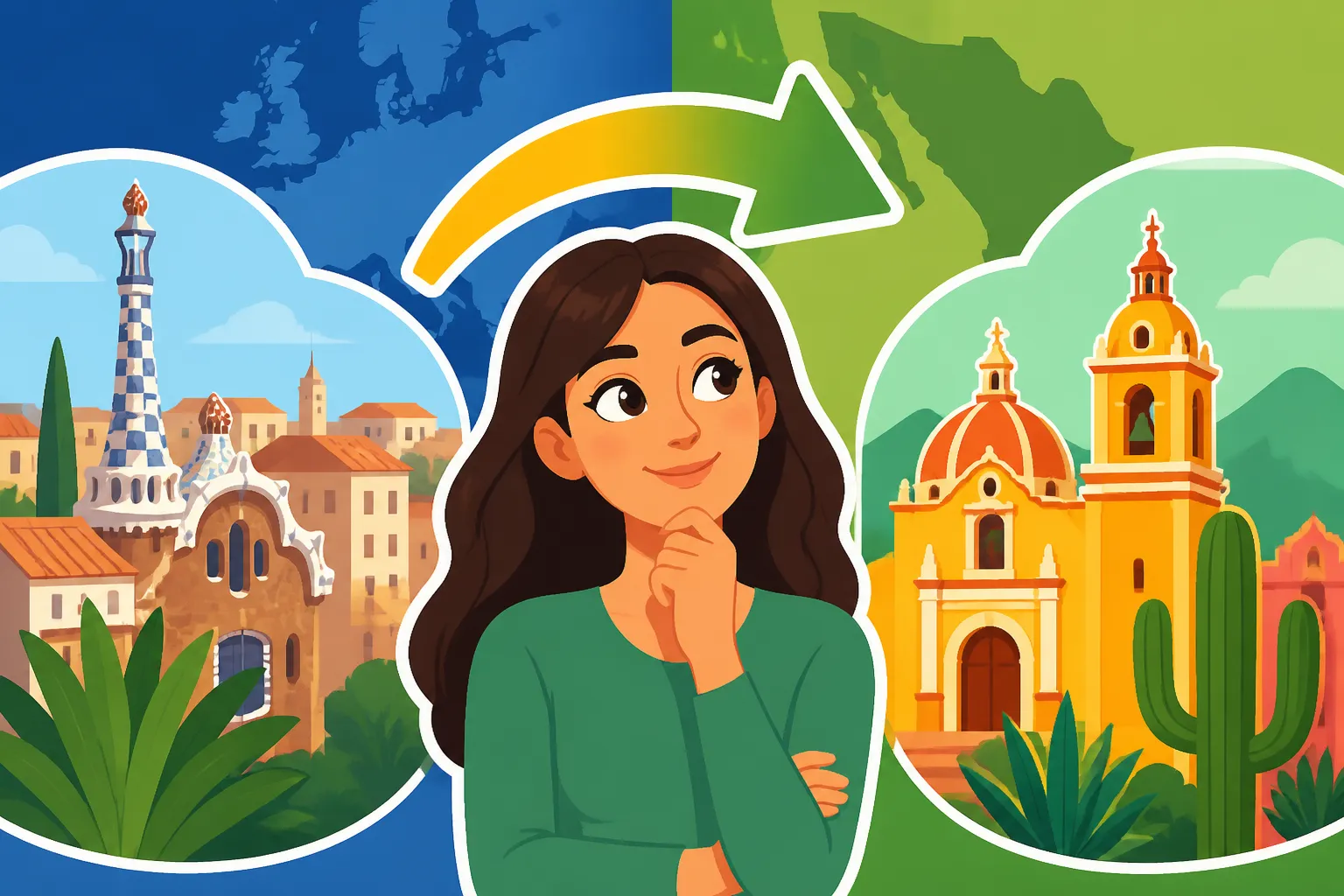
Switching From European Spanish to Mexican: A Lesson Plan
So, you’ve bravely embarked on a new adventure in Mexico, perhaps after years of diligent Spanish study in a classroom back home, or even after living in Spain for a while. You arrive, full of confidence, ready to converse, only to find yourself feeling a little… lost in translation? That common feeling of knowing Spanish, but not Mexican Spanish, can be incredibly frustrating. This guide is here to walk you through the nuances of switching from European (Castilian) Spanish to the vibrant, distinctive Spanish spoken here in Mexico, and how to master it efficiently.
Disclosure: This post may contain affiliate links. We may earn a commission at no extra cost to you if you make a purchase through these links. Read full disclosure.
Understanding the Linguistic Divide: Beyond the "Vosotros"
When you’ve studied or lived with European Spanish, the most obvious difference that usually jumps out at people is the use of "vosotros" for the plural "you." Here in Mexico, and across most of Latin America, that form is completely absent; everyone uses "ustedes." But trust me, that's just the very first layer of the cebolla (onion) of differences!
Pronunciation Quirks That Can Trip You Up
Beyond the grammatical forms, the way words sound can be a significant hurdle. In Spain, especially in central and northern regions, you'll hear the distinct "th" sound for 'c' before 'e' or 'i' (like gracias sounding like "gra-thias") and for 'z' (like zapato sounding like "tha-pa-to"). This is known as distinción. In Mexico, and indeed, most of Latin America, we use seseo, meaning 's', 'c' (before 'e' or 'i'), and 'z' all sound like an 's'. So, gracias is "gra-see-as" and zapato is "sa-pa-to." It’s a subtle shift, but it’s fundamental.
Then there’s the yeísmo phenomenon. In many parts of Spain, the 'll' (as in calle) and 'y' (as in yo) have distinct sounds. Here in Mexico, they generally merge into one sound, usually like the 'y' in "yes" or sometimes a softer 'j' sound, especially in some northern accents. This might not affect comprehension too much, but it definitely impacts how "native" you sound. Don't forget the pronunciation of the 'x' in Mexico. While often like an 's' or 'ks' sound elsewhere, here it can sound like a 'j' (as in México, pronounced "Mé-ji-co") or even an 'sh' in some indigenous names like Xochimilco. Learning these local variations is crucial.
Navigating the Vocabulary Minefield
This is where the real fun, and sometimes the real confusion, begins. You might know a word perfectly well in European Spanish, only for it to mean something entirely different, or simply not be used, here in Mexico. For instance, that coche you learned to drive in Spain? Here, it’s a carro. If you ask for a zumo (juice), you’ll get jugo. And those delicious patatas you love? They’re papas here.
It goes beyond just simple substitutions, too. Certain expressions and idioms are unique to each region. Trying to use European Spanish slang can lead to blank stares, or worse, unintended offense. For example, the verb coger (to take/grab) is perfectly innocuous in Spain. In Mexico and many other Latin American countries, however, it’s a vulgar term for sexual intercourse. Believe me, you do not want to accidentally tell someone you're going to "coger el autobús" here! This is why immersing yourself in authentic Mexican Spanish from the get-go is vital. You’ll want to find a great resource, like a native speaker tutor on iTalki, who can guide you through these local intricacies and prevent embarrassing linguistic blunders.
Grammatical Nuances and Sentence Structure
While the core grammar is the same, there are differences in common usage. The pretérito perfecto compuesto (present perfect, e.g., "he comido") is used much more frequently in European Spanish for recent past actions, even those completed just hours ago. In Mexico, you'll hear the simple pretérito indefinido (simple past, e.g., "comí") far more often, even for things that just happened. "Hoy he comido" (European) becomes "Hoy comí" (Mexican) for "I ate today."
Furthermore, Mexican Spanish often favors a slightly more indirect, polite, and sometimes formal structure. Diminutives like -ito or -ita (e.g., ahorita, cafecito) are used extensively, not just to mean "small" but to convey affection, politeness, or to soften a request, adding a layer of warmth and nuance that can be missed if you're not attuned to it. You’ll notice these subtle shifts in how people frame requests or give directions, often making it sound less direct than what you might be used to.
Practical Strategies for Making the Seamless Switch
Okay, so we’ve established that it's more than just a few words. How do you actually make the switch without feeling like you’re learning Spanish all over again? It’s completely doable, but it requires a focused approach and a healthy dose of patience.
Active Immersion through Mexican Media
One of the most enjoyable and effective ways to attune your ear and expand your vocabulary is through Mexican media. Forget your Spanish podcasts for a bit and dive into everything Mexico has to offer.
- TV Shows & Movies: Netflix, HBO Max, and other streaming services are overflowing with Mexican productions. Start with popular shows like La Casa de las Flores, Club de Cuervos, or movies by Mexican directors. Pay attention to the dialogue, the intonation, and how words are used in context. You’ll pick up slang, common expressions, and the rhythm of Mexican speech naturally.
- Music: Mexican music is incredibly diverse. From traditional mariachi and banda to contemporary pop, rock, and reggaeton, there’s something for everyone. Listen actively! Try to catch the lyrics, look them up, and sing along. Artists like Natalia Lafourcade, Juan Gabriel, Maná, and even newer artists like Christian Nodal will introduce you to a wide range of vocabulary and cultural references.
- Podcasts & Radio: Find Mexican news podcasts, cultural shows, or even true crime series. This is fantastic for listening comprehension and exposure to more formal as well as colloquial speech. Tune into local radio stations if you're living here; even if you don't understand everything, your brain will start to recognize patterns.
This kind of exposure helps your brain rewire itself to the new sounds and rhythms. Don't be afraid to rewind and listen again!
Dedicated Vocabulary and Pronunciation Practice
You’ll need to be deliberate about learning new vocabulary and adjusting your pronunciation. It won't happen magically overnight.
-
Create Your Own Glossary: Keep a running list of European Spanish words you know and their Mexican equivalents. When you hear a new word, jot it down. When you use a "Spanish" word and get a confused look, ask for the local term and add it to your list. For instance:
European Spanish Mexican Spanish English Equivalent Coche Carro Car Zumo Jugo Juice Patatas Papas Potatoes Ordenador Computadora Computer Móvil Celular Mobile Phone Ponerse (ropa) Vestirse / Usar To wear (clothes) Vuestro Su (de ustedes) Your (plural) ¡Guay! ¡Chido! Cool! (Slang) Me cago en… (Avoid!) (Vulgar expression) This kind of direct comparison will be incredibly helpful.
-
Shadowing and Mimicry: Listen to short clips of Mexican speakers (from shows, podcasts, or even YouTube videos) and try to mimic their pronunciation, intonation, and speed exactly. Record yourself and compare it to the native speaker. Pay close attention to the 'seseo' and how they pronounce 'll' and 'y'. This active mimicking is a fantastic way to retrain your mouth muscles.
-
Find a Dedicated Tutor: This is, hands down, the most effective strategy for making this switch. Generic language apps might help with vocabulary, but they won't give you personalized feedback on your accent or correct your usage of local idioms. This is where a platform like iTalki becomes your best friend. You can easily search for tutors specifically from Mexico, ensuring they are native speakers. They can tailor lessons specifically to your needs, correcting your pronunciation, introducing you to authentic local slang, explaining cultural nuances, and helping you navigate those vocabulary differences in real-time. Think of it as having a personal linguistic guide through the Mexican linguistic landscape. A tutor can also help you understand Mexican Etiquette and Customs: Do's and Don'ts for New Expats through language.
Embrace Local Interaction
Once you're in Mexico, try to speak with locals as much as possible. Don't shy away from conversation. The market, the local tienda, your neighbors—these are all opportunities to practice. Most Mexicans are incredibly patient and appreciate the effort you're making. They’ll often gently correct you or teach you new phrases. This is also where you’ll pick up local expressions and even 10 Mexican Spanish Slang Words Expats Should Know. Just be polite, humble, and ready to learn.
Overcoming Psychological Hurdles and Common Pitfalls
Switching how you speak a language you already "know" can be surprisingly challenging on a psychological level. It's okay to feel a bit frustrated or even like you're taking a step backward.
The "Starting Over" Frustration
It’s completely normal to feel a sense of "imposter syndrome" when you arrive in Mexico and realize your perfectly good European Spanish isn't quite hitting the mark. You might feel like you're starting from scratch, which can be disheartening. Remember, you're not starting from zero. You have a strong foundation; you're just tweaking and updating your dialect. Think of it less as learning a new language and more like learning a new operating system for your existing linguistic hardware. Many expats experience a form of Overcoming Culture Shock: Tips for Adjusting to Life in Mexico, and this linguistic adaptation is a big part of it.
The Fear of Sounding "Wrong" or Making Mistakes
Perhaps you've grown accustomed to the distinct "th" sound and feel like you're losing part of your Spanish identity by dropping it. Or maybe you're worried about using the wrong word and sounding foolish. Push past this! The goal is effective communication and integration into your new environment. Locals will appreciate your effort to adapt to their way of speaking. While your European accent might be charming, making an effort to use local vocabulary and pronunciation shows respect and a genuine desire to connect. Don't let the fear of imperfection paralyze you. Every mistake is a learning opportunity.
Unintentional Offenses and Cultural Gaffes
We already mentioned coger, but there are other, more subtle ways to unintentionally cause a cultural gaffe through language. Mexican culture often values indirectness and politeness, sometimes more so than direct European communication styles. What might seem like a straightforward question in Spain could come across as abrupt or impolite here. The extensive use of diminutives (e.g., un momentito, una agüita) often serves to soften requests or make conversations more cordial. A good tutor on iTalki can prepare you for these nuances, helping you understand the implicit politeness and how to phrase your questions and statements respectfully. This cultural sensitivity is just as important as the vocabulary itself.
The "Purist" Trap: My Spanish is Better Than Yours
Avoid falling into the trap of thinking one dialect is "purer" or "better" than the other. Both European and Mexican Spanish are rich, valid, and beautiful in their own ways. The goal isn't to declare a winner, but to become proficient in the dialect that serves your current needs and location. You're learning to adapt, not to replace. Embrace the diversity of the Spanish language!
The Importance of Consistency
Like any language learning, consistency is paramount. Even if you're only dedicating 15-30 minutes a day to listening to Mexican podcasts, reviewing your new vocabulary list, or having a quick chat with a tutor on iTalki, those consistent efforts will compound over time. The brain needs regular exposure and practice to integrate new patterns. Don't try to cram everything in once a week; daily, manageable doses are much more effective.
Making the Most of iTalki for Your Mexican Spanish Journey
Now that you know the ins and outs, let's talk about how to put it into practice, with iTalki as your secret weapon. For expats, especially those trying to adapt an existing Spanish foundation, iTalki isn’t just another language app; it’s a personalized pathway to fluency in Mexican Spanish.
Why iTalki is a Game-Changer for This Transition
- Native Mexican Tutors: This is the absolute cornerstone. You can filter tutors specifically by their country of origin. This means you’re not just learning Spanish; you’re learning Mexican Spanish from someone who lives and breathes it. They'll know the current slang, the cultural references, and the specific pronunciation nuances.
- Personalized Lesson Plans: Unlike a classroom setting or pre-programmed app, an iTalki tutor can immediately identify where your European Spanish tendencies are strongest and create lessons to specifically address them. They can focus on your 'coger' issue, your 'vosotros' habit, or your pronunciation of 'll'.
- Flexibility and Convenience: Life in Mexico is vibrant and sometimes unpredictable! iTalki allows you to schedule lessons at your convenience, whether it's an early morning session before work, a mid-day break, or an evening class. This flexibility means you can consistently integrate learning into your busy expat life.
- Affordability: Private, one-on-one tutoring can be expensive. iTalki offers a range of tutors at different price points, often significantly more affordable than traditional in-person lessons, making consistent practice accessible without breaking the bank. Many tutors offer trial lessons at a reduced rate, so you can find the perfect fit.
- Real-Life Scenarios: Your tutor can help you role-play common Mexican interactions, from ordering food at a taquería to negotiating prices at a local mercado, or even understanding Getting a SIM Card in Mexico (Telcel, AT&T, Movistar) in Spanish. This practical application solidifies your learning in scenarios you'll actually encounter.
Your iTalki Lesson Plan to Master Mexican Spanish
- Find Your Mexican Spanish Guru: Go to iTalki, filter by "Spanish" and then "Country" to select "Mexico." Browse tutor profiles, watch their intro videos, and read reviews. Look for tutors who mention working with intermediate or advanced learners, or those who specifically state they help with regional adaptations. Book a few trial lessons with different teachers to find someone you click with.
- Communicate Your Goal Clearly: In your first message or trial lesson, explain your specific situation: "I speak European Spanish and I want to transition to Mexican Spanish. I need help with vocabulary, pronunciation (seseo, yeísmo), and local expressions." A good tutor will understand exactly what you're looking for.
- Focus on Specific Areas:
- Pronunciation Drills: Ask your tutor to provide audio examples and drills to eliminate the "th" sound and adapt to Mexican 'll' and 'y' sounds. Practice shadowing them.
- Vocabulary Swaps: Send your tutor a list of common European Spanish words you use and ask for their Mexican equivalents. Have them quiz you on it.
- Contextual Practice: Discuss real-life situations. "How would I ask for a taxi politely here?" "What's the best way to respond if someone says ¡Qué onda!?" This is where your tutor provides invaluable cultural context.
- Slang Integration: Once you're comfortable with the basics, ask your tutor to introduce common Mexican slang and explain when and how to use it appropriately. You can ask about 10 Mexican Spanish Slang Words Expats Should Know.
- Grammar Reinforcement: Have them gently correct you when you use the pretérito perfecto instead of the pretérito indefinido for recent actions, or if you accidentally slip into vosotros.
- Regular Practice is Key: Aim for at least one to two lessons a week. The consistent exposure and personalized feedback are what will truly accelerate your transition. Complement your lessons with daily immersion activities like listening to music or watching Mexican shows.
Switching from European to Mexican Spanish is an exciting linguistic journey that will deepen your connection to your new home. It takes effort, patience, and a willingness to adapt, but with the right resources like iTalki, you’ll be speaking like a local in no time. ¡Échale ganas!
Disclaimer
This article is for general informational purposes only and does not constitute professional advice. Laws, prices and regulations vary by location and change over time. Consult a qualified professional for guidance on your specific situation.