Invoicing US Clients From Mexico: Getting Paid Without Losing on Conversion
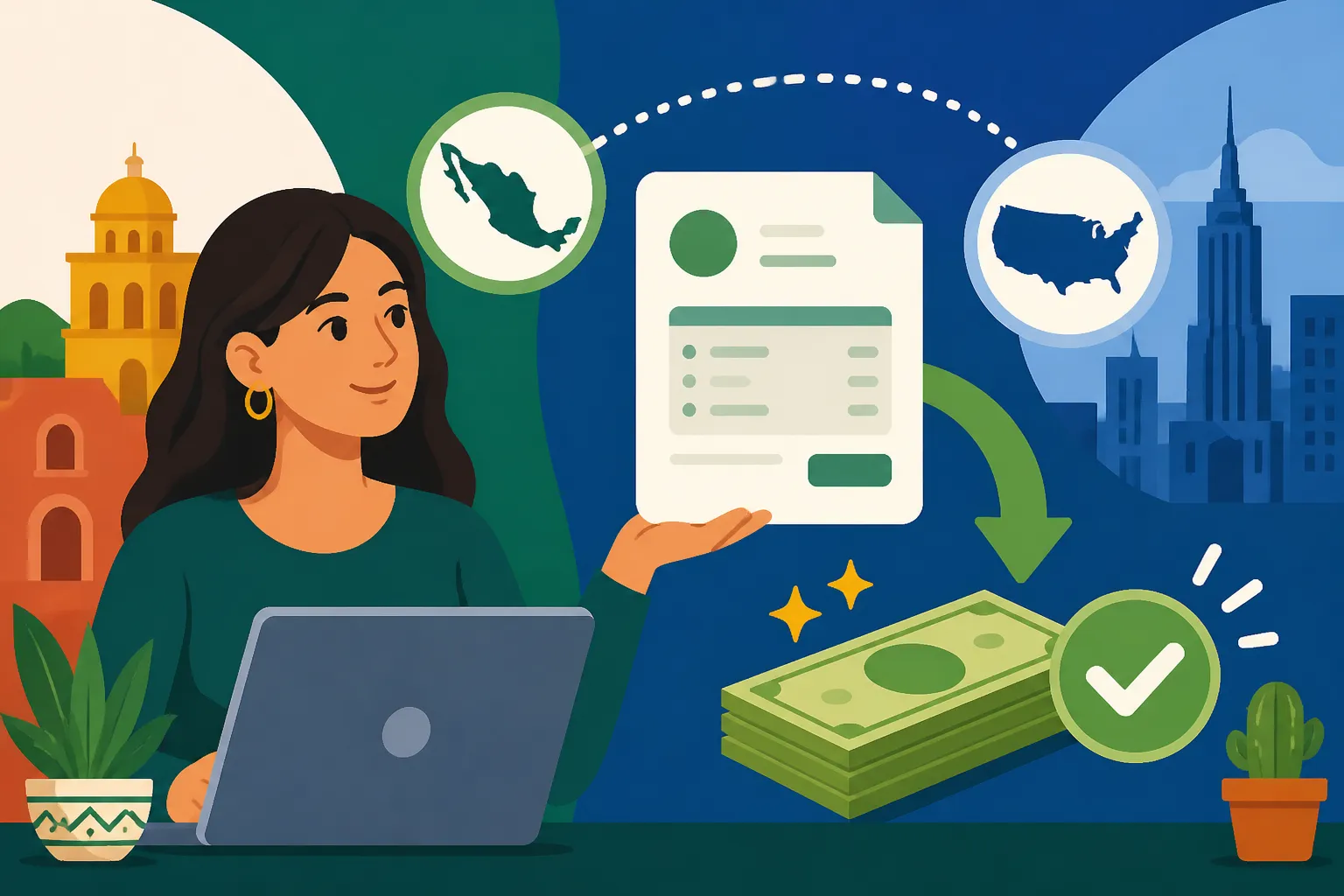
If you’re a freelancer, consultant, or small business owner in Mexico, proudly serving clients back in the U.S., you’ve probably faced the frustrating dance of getting paid. Between exorbitant bank fees, confusing exchange rates, and the sheer time it takes for money to arrive, it often feels like a significant chunk of your hard-earned cash disappears into the ether. This guide cuts through the confusion, offering a straightforward path to invoicing your U.S. clients efficiently and ensuring you keep more of your money, thanks to smart solutions like Wise.
Disclosure: This post may contain affiliate links. We may earn a commission at no extra cost to you if you make a purchase through these links. Read full disclosure.
The Expat's Dilemma: Why Invoicing US Clients From Mexico is Tricky
Living and working in Mexico as an expat comes with its unique set of financial challenges, especially when your income source is primarily in a different currency. You’ve set up your life here, perhaps you've even dipped your toes into local banking by learning How to Open a Bank Account in Mexico Without Residency, but when it comes to international payments, the waters can get murky fast. Many of us arrive assuming our old methods of getting paid will work seamlessly, only to discover a bureaucratic and costly reality.
The Hidden Costs of Traditional Banking
Oh, the dreaded wire transfer! It’s the go-to for many international transactions, but for expats living on a tighter budget or those dealing with frequent, smaller payments, it can feel like a financial assault. Picture this: your U.S. client sends you $500 for a project. Their bank might charge them a fee, say $25. Then, when the money lands in your Mexican bank, your bank here might take another $20-$30 for receiving an international transfer. Suddenly, your $500 project is worth $450, and that’s before conversion. These seemingly small fees accumulate quickly, eating into your profit margins and making you question why you bothered working so hard in the first place.
Beyond direct transfer fees, traditional banks often bake hidden charges into their exchange rates. They'll give you a rate that's slightly worse than the actual market rate (the "mid-market" rate) and pocket the difference. It's a subtle way of taking a cut without you always realizing it. For many expats, every peso counts, especially when trying to manage the Cost of Living in Mexico: 2026 Comprehensive Guide. Losing even a small percentage on each conversion can add up to hundreds or thousands of dollars over a year.
Understanding the Exchange Rate Rollercoaster
The Mexican peso, bless its heart, can be a bit of a wild child when it comes to exchange rates. One day, your dollar might buy you 17 pesos; the next, it’s 16.8, or perhaps even 17.2. If you’re getting paid in USD and need to convert that to pesos for your daily expenses, this volatility can cause real anxiety. Imagine a big payment coming in, and you’re anxiously watching the rate, trying to time the conversion perfectly to maximize your pesos. It’s stressful, unpredictable, and frankly, a waste of your valuable time.
This constant fluctuation, combined with banks offering non-competitive rates, means you’re not just battling fees, but also the unpredictable whims of the market. You might send an invoice at one rate, and by the time the money clears and you convert it, the rate has shifted unfavorably. It adds a layer of complexity to financial planning that most expats simply don't have the bandwidth to manage meticulously. We moved here for a simpler life, didn't we?
How Wise Solves Your Cross-Border Payment Woes
After years of dealing with these frustrations myself, I stumbled upon a service that genuinely changed how I approach international payments: Wise (formerly known as TransferWise). It’s not just another money transfer service; it’s a full-fledged financial tool designed with expats and international professionals in mind. Wise cuts through the complexities, offering a transparent and efficient way to handle multiple currencies and get paid without the usual headaches.
Multi-Currency Accounts: Your Game Changer
The standout feature of Wise is its multi-currency account. This isn't just a simple online wallet; it provides you with local bank details in several countries, including the U.S. This means your U.S. clients can pay you directly into a U.S. dollar account number provided by Wise, just as if you had a local American bank account. They make a domestic transfer, which means no international wire fees for them, and often no fees at all. This instantly eliminates a significant chunk of those hidden costs we talked about earlier.
Think about it: your client sends USD to your Wise USD account details. It's fast, free (for domestic ACH transfers), and completely bypasses the traditional international banking routes. You can hold those USD in your Wise account until you're ready to convert them to Mexican pesos, or even use them for online purchases in dollars if you have a Wise debit card. This flexibility is a true game-changer for managing your finances when your income is in a different currency from your expenses.
The Real Exchange Rate: No More Nasty Surprises
One of the biggest financial traps with traditional banks is their marked-up exchange rates. They rarely give you the true mid-market rate, which is the rate you see on Google or Reuters. Wise is built on the principle of transparency, offering you the real, mid-market exchange rate for all your currency conversions. They don't hide fees in a poor exchange rate; they show you a small, upfront conversion fee, so you know exactly what you're paying and what you'll receive.
This commitment to the real exchange rate is why Wise is such a powerful tool for expats. You can monitor the exchange rate within the Wise app or website and convert your USD to MXN when the rate is favorable, or when you simply need the pesos. This level of control and transparency empowers you, taking away the guesswork and anxiety associated with currency conversion. It truly helps you maximize your earnings against the fluctuating market.
Transparent Fees and Faster Transfers
With Wise, there are no surprises. Before you initiate any conversion or transfer, you'll see a clear breakdown of the exact fee and the exact amount of pesos you'll receive. This contrasts sharply with the often opaque fee structures of traditional banks, where you might only find out the total cost after the transaction is complete. The fees for converting from USD to MXN with Wise are typically very competitive, often significantly lower than traditional banks, and always displayed upfront.
What's more, transfers with Wise are remarkably fast. While traditional wire transfers can take several business days, many Wise transfers, especially from USD to MXN, are completed within hours, if not minutes. This speed is invaluable when you need access to your funds quickly, or when you’re managing cash flow for your business. The combination of transparent, low fees and rapid transfer times makes Wise an indispensable tool for anyone getting paid internationally while living in Mexico.
A Step-by-Step Guide to Invoicing US Clients with Wise
Ready to ditch the traditional bank headaches and embrace a smarter way to get paid? Here’s how you can leverage Wise to invoice your U.S. clients and ensure you keep more of your hard-earned money. It’s simpler than you might think, and once you’ve done it a couple of times, it will become second nature.
Setting Up Your Wise Account and USD Balances
First things first, you’ll need to set up your free Wise account. The process is straightforward and typically takes just a few minutes online. You'll provide some basic personal information and might need to verify your identity, just like with any financial service.
Once your account is active, the next crucial step is to activate a USD balance. This is where the magic happens. Within your Wise account, you’ll see an option to "Open a balance" or "Get local account details." Choose USD, and Wise will provide you with:
- A U.S. account number
- A routing number
- A SWIFT/BIC code (though often not needed for domestic U.S. transfers)
- Your name as the account holder
These are legitimate U.S. bank details that your clients can use to send you money via ACH (Automated Clearing House) transfers, which are common for payroll and vendor payments in the U.S. Think of it as having a bank account in the States without actually needing a physical address there. This means your US clients will be sending you payments as if you were still in the US, making the process smooth and familiar for them.
Crafting Your Invoice for US Clients
Now that you have your Wise USD account details, invoicing your clients becomes incredibly easy. When you create your invoice, whether it's through a dedicated invoicing software, a simple PDF, or even just an email, make sure to include the following payment instructions:
- Payment Method: Bank Transfer (ACH)
- Bank Name: Include "Wise" or "Community Federal Savings Bank" (which is Wise's partner bank in the U.S.).
- Account Name: Your name (as registered with Wise)
- Account Number: The USD account number provided by Wise
- Routing Number: The routing number provided by Wise
Clearly state that payment should be made in USD. You can even add a small note explaining that you're using Wise for efficient international transfers. Most U.S. companies are already familiar with receiving payment instructions for ACH transfers, so this won't be an unusual request for them. This simplifies their side of the transaction and ensures they avoid international wire fees, making them happier clients too!
Receiving Funds and Converting to Pesos
Once your client initiates the payment, the funds will arrive in your Wise USD balance, typically within 1-2 business days for ACH transfers. You’ll receive a notification from Wise when the money lands. At this point, you have a few options:
- Hold the USD: If you anticipate future USD expenses or want to wait for a more favorable exchange rate, you can keep the funds in your USD balance.
- Convert to MXN: When you're ready to use the money for your life in Mexico, you can easily convert the USD to Mexican pesos directly within your Wise account. Simply select your USD balance, choose "Convert," specify the amount, and select MXN. Wise will show you the exact mid-market exchange rate and the transparent fee before you confirm.
- Send to Your Mexican Bank: After converting to MXN, you can then transfer the pesos to your local Mexican bank account. Transfers from Wise to Mexican banks are typically very fast, often arriving the same day or within a few hours via SPEI (Sistema de Pagos Electrónicos Interbancarios). If you're wondering how these local transfers work, you might want to read more about SPEI and CLABE: How Bank Transfers Work in Mexico.
This streamlined process ensures you get the best possible exchange rate, pay minimal fees, and have quick access to your funds, all while making it easy for your U.S. clients to pay you.
Beyond Wise: Other Considerations for Freelancers and Businesses in Mexico
While Wise is a fantastic tool for managing your international payments, living and working in Mexico for foreign clients also comes with other important financial and legal considerations that you absolutely cannot ignore. You're operating in a new country with its own rules, and understanding these will save you a lot of headaches down the line.
Navigating Mexican Tax Obligations as an Expat
Even if your clients are all outside of Mexico, if you are living here as a resident, you likely have tax obligations in Mexico. This is a critical area that many expats overlook until it's too late. Mexico's tax system, managed by the SAT (Servicio de Administración Tributaria), requires residents to declare worldwide income. This means your earnings from U.S. clients, even if initially received in USD through Wise, must be reported. Understanding Taxes in Mexico for Expats: A Complete Guide to Income Tax and More is paramount.
You’ll need to obtain an RFC (Registro Federal de Contribuyentes) number, which is your tax ID. This is a crucial step for anyone who intends to earn income or engage in significant financial activities in Mexico. You can find detailed guidance on How to Get an RFC in Mexico for Work. Once you have your RFC, you’ll typically register under a tax regime suitable for independent professionals or small businesses, such as RESICO (Régimen Simplificado de Confianza), which offers simplified tax payments for eligible individuals. Regularly filing your taxes, even if through a local accountant (contador), will keep you in good standing. Don't let your Do You Need an RFC Number? Why a Tax ID Matters for Expats' Finances go unaddressed.
The Importance of Proper Invoicing (Facturas) in Mexico
In Mexico, formal invoices, known as facturas or CFDIs (Comprobante Fiscal Digital por Internet), are much more than just a request for payment. They are legal tax documents that are crucial for both businesses and individuals to prove income and expenses. If you're operating as a freelancer or a registered business here, your Mexican clients will expect facturas. While your U.S. clients won't need a Mexican factura, understanding how to issue one is essential for any local business dealings you might have.
Even for your foreign income, your Mexican accountant will use the information from your bank statements (or Wise income) to calculate your taxes. While you might not issue facturas to your U.S. clients, you will still need to keep meticulous records of your income. Learning How to Issue a Factura (CFDI) in Mexico is a valuable skill, even if it's just for understanding the local financial landscape and using it for domestic transactions or services.
Legalities of Working Remotely for Foreign Companies
Many expats come to Mexico to work remotely for companies back home. While the idea of being a "digital nomad" is appealing, it's important to understand the legalities concerning your visa and work status. Generally, if you are working for a foreign company and your income is derived from outside Mexico, you would typically be on a Residente Temporal No Lucrativa visa, which means "non-lucrative temporary resident." This visa explicitly prohibits you from earning income from Mexican sources or working for Mexican companies.
However, working remotely for foreign clients, where the income originates and is paid from abroad, is generally considered acceptable under this visa. You're not taking jobs from Mexicans or generating income within Mexico in the traditional sense. It's crucial to confirm your specific visa type and consult with an immigration lawyer if you have any doubts, especially if your activities blur the lines. For a deeper dive, consider reviewing Remote Work & Taxes: Do Digital Nomads in Mexico Owe Mexican Taxes?. Always ensure your work activities align with your immigration status to avoid any future complications.
Frequently Asked Questions About Invoicing from Mexico
Moving money across borders, even with solutions like Wise, can bring up questions. It's totally normal to want to be absolutely sure you're doing things right and optimizing your process. Let's tackle some common concerns that pop up for expats invoicing U.S. clients from Mexico.
Can I receive USD directly into a Mexican bank account?
Yes, technically, you can receive USD directly into most Mexican bank accounts, but it often comes with a significant cost and hassle. When a U.S. client sends a wire transfer in USD to your Mexican bank, your bank will first charge you a hefty fee for receiving an international transfer. This fee can range from $20 to $50 USD per transaction, sometimes even more for larger amounts.
Beyond the fees, your Mexican bank will then convert that USD to Mexican pesos using their own, often unfavorable, exchange rate. They'll almost certainly give you a rate that's worse than the mid-market rate, pocketing the difference as another hidden charge. This means you lose money twice: once on the receiving fee and again on the poor exchange rate. Plus, depending on the bank and the amount, there can be additional forms to fill out or questions asked about the origin of funds, leading to delays. This is precisely where Wise shines, by allowing you to hold USD and convert at your leisure, at the real rate.
What about other payment processors?
You might be wondering about other popular payment processors like PayPal or Payoneer. These can indeed be options, but they often come with their own set of caveats for expats in Mexico:
- PayPal: Widely used, but notoriously expensive for currency conversion. Their exchange rates are typically less favorable than Wise, and they often have a percentage-based fee for receiving international commercial payments. While convenient for small, infrequent transactions, for regular invoicing, the costs can quickly add up, significantly eroding your profits. Getting money from PayPal to your Mexican bank account usually involves another layer of fees and conversion rates.
- Payoneer: This is a solid option that also offers local receiving accounts in certain currencies, similar to Wise. Payoneer is often favored by freelancers and businesses in specific industries. Their fees and exchange rates are generally more competitive than PayPal, but it's always worth comparing them directly with Wise for your specific payment corridors and amounts. Sometimes, one might be slightly better depending on the exact services you need. It's a strong contender, but many find Wise to be more user-friendly and transparent for everyday expat use and a broad range of currencies.
Ultimately, the best approach is to compare the total cost – including all fees and the effective exchange rate – for your typical transaction size and frequency across different platforms. For most expats invoicing U.S. clients and needing to convert to MXN, Wise offers the most transparent, cost-effective, and straightforward solution. When you're constantly thinking about Transferring Money Internationally: Best Ways to Send Money to/from Mexico, minimizing those hidden costs is key.
Comparison Table: Invoicing Options for US Clients from Mexico
| Feature | Traditional Bank Wire Transfer | PayPal (Business) | Payoneer | Wise |
|---|---|---|---|---|
| Client Payer Experience | International wire (fees) | Easy for client (if they have PayPal) | Domestic transfer via local details | Domestic transfer via local USD details |
| Fees for Receiving | High (e.g., $20-$50 USD) | Percentage-based (e.g., 2.9% + fixed fee) | Varies, often small or free for local payments | Usually free for ACH/local USD payments |
| Exchange Rate Markup | Significant (hidden cost) | Significant | Moderate | Mid-Market Rate (No Markup) |
| Conversion Fees | Hidden in poor rate | High (approx. 3-4%) | Moderate (approx. 0.5% – 2%) | Low, transparent (e.g., 0.45% – 1%) |
| Transfer Speed | 2-5 business days | Instant to PayPal, 1-3 days to bank | 1-3 business days | Same-day to 1 business day (often faster) |
| Holding USD Balance | No, converts immediately | Yes (in PayPal wallet) | Yes (in Payoneer balance) | Yes (with local USD account details) |
| Transparency | Low | Moderate | Good | Excellent (all fees/rates upfront) |
| Overall Cost | Highest | High | Moderate | Lowest |
As you can see, for the expat who needs to invoice U.S. clients and eventually use those funds in Mexico, Wise offers a compelling package that addresses the core pain points of fees and unfavorable exchange rates. It empowers you to manage your Currency Exchange in Mexico: Getting the Best Rates on Pesos more effectively.
Disclaimer
The information provided in this guide is for general informational purposes only and does not constitute financial, legal, or immigration advice. While we strive to keep the information up-to-date and accurate, regulations and financial products can change. Always consult with a qualified financial advisor, tax professional, and/or immigration lawyer in Mexico for advice tailored to your specific situation. Reliance on any information provided in this guide is solely at your own risk.