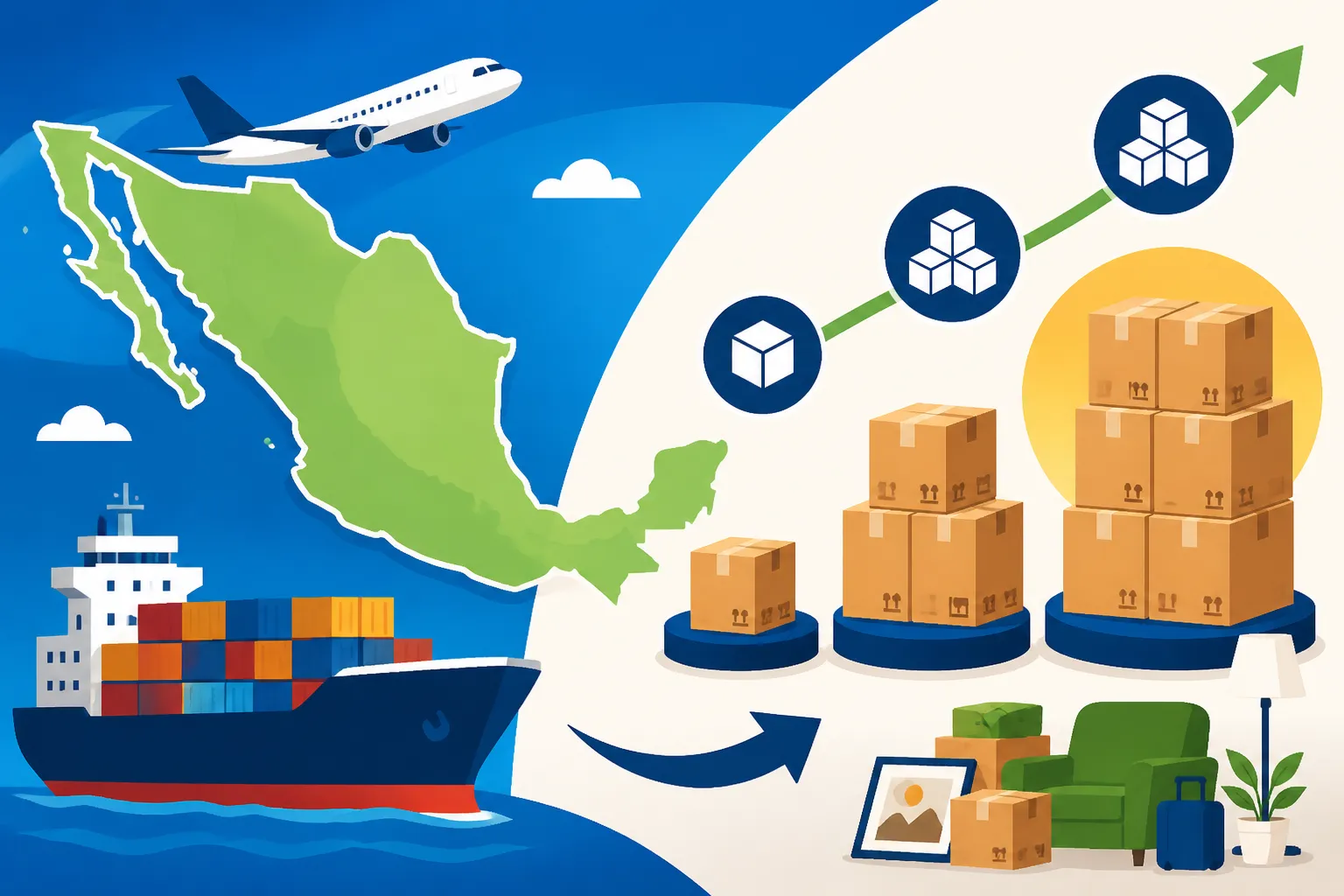
International Move to Mexico: Full Shipping Price Breakdown by Volume and Origin
Oh, the joy of moving your life, your stuff, to a new country! If you're anything like me when I first contemplated bringing my entire household to Mexico, you're probably picturing a mountainous pile of boxes, a sea of paperwork, and a rapidly emptying bank account. It's a daunting prospect, isn't it? The dream of your favorite armchair gracing your new sala in San Miguel or your treasured artwork adorning the walls of your Mérida abode can quickly turn into a logistical nightmare when you start looking at international shipping prices. This isn't just about packing a few suitcases; it's about transplanting your entire existence. This guide is here to walk you through the labyrinthine world of international moving to Mexico, breaking down the costs, clarifying the process, and helping you find a reliable partner like Sirelo to make your transition smoother and more predictable.
Disclosure: This post may contain affiliate links. We may earn a commission at no extra cost to you if you make a purchase through these links. Read full disclosure.
The Initial Sticker Shock: Why International Shipping to Mexico Isn't Cheap
Let's be brutally honest: moving internationally is expensive. It's often one of the biggest costs you'll incur when relocating, right up there with securing your residency and finding a place to live. Mexico, while offering a lower cost of living in many aspects, doesn't exempt you from the realities of global logistics. You're not just paying for a truck; you're paying for ocean liners, port fees, customs agents, and a whole chain of people and processes designed to get your belongings safely across borders.
Understanding the Factors Driving Up Costs
Several key elements coalesce to form that eye-watering figure on your moving quote. It's not just a random number; it's a calculation based on a complex interplay of variables.
First and foremost, there's the volume and weight of your belongings. This is the most straightforward factor. Moving companies primarily charge by the cubic meter (CBM) for sea freight or by weight for air freight. The more stuff you have, the larger the space it occupies, and the more it weighs, the higher your bill will be. This is why you'll often hear veteran expats stress the importance of decluttering before you move. Do you really need that dusty old exercise bike? Is that extra set of dishes truly indispensable? Each item contributes to the overall volume, and thus, the cost. A small apartment's worth of goods might be 5-10 CBM, while a three-bedroom house could easily be 30-50 CBM or more.
Next, consider the distance and origin of your move. Shipping from, say, Texas to Nuevo León will inherently be less expensive and complicated than shipping from the United Kingdom to Cancún. Longer distances mean more fuel, longer transit times, and potentially more trans-shipment points, each adding to the complexity and cost. Origin countries with higher labor costs (like the US, Canada, or Western Europe) will also have higher initial packing and handling fees compared to moving from a country with lower labor costs. The journey itself is a significant part of the expense equation.
The type of service you choose also plays a massive role. Are you opting for a full-service, door-to-door move where the movers pack everything, handle all the paperwork, and unpack it at your new home? Or are you planning a more DIY approach, packing your own boxes and coordinating some of the logistics yourself? Naturally, the more services you opt for, the higher the price tag. Full-service moves offer unparalleled convenience but come at a premium, as you're essentially outsourcing all the headaches.
Finally, and perhaps the most confusing and often underestimated, are customs and duties. Ah, Mexican customs! Even with the proper documentation, this is where many expats encounter unexpected costs. While Mexico allows you to import your household goods duty-free if you have a Menaje de Casa (more on that later), if you bring in new items, items not listed, or exceed certain allowances, you'll be on the hook for import taxes. These can range from 10% to 25% or even more, depending on the item category. Even without duties, there are often import processing fees, storage charges, and handling fees levied by customs or the shipping agent. This is where a transparent quote and an experienced mover, easily found through a service like Sirelo, become invaluable.
Common Pitfalls and Hidden Fees Expats Face
"Hidden fees" are the bane of any expat's existence when dealing with logistics in Mexico. It feels like just when you think you've budgeted for everything, a new charge pops up. International moving is no exception.
One common pitfall involves port charges, handling fees, and inspection costs. Even if your Menaje de Casa is perfect, your container still needs to be unloaded from the ship, moved around the port, potentially X-rayed, and then loaded onto a truck for delivery. Each step involves fees that your initial quote might not explicitly detail as "port fees," but rather lump into a broader "destination services" charge. Sometimes, customs officials might flag your shipment for a physical inspection, which incurs additional charges for the labor to open and repack your container. These can add hundreds, sometimes even thousands, of dollars to your final bill.
Another anxiety-inducing scenario is when your belongings arrive at the port, but your Menaje de Casa isn't ready, or your residency card hasn't been processed, or there's some other administrative hiccup. This can lead to storage fees at the port or warehouse. These fees accrue daily and can quickly escalate, turning a manageable delay into a significant financial burden. It's absolutely critical to ensure all your immigration paperwork, especially your temporary or permanent residency, is finalized and your Menaje de Casa is stamped and ready well before your shipment even leaves its origin country. For more on navigating immigration, check out our guide on The Ultimate Guide to Mexico's Visa and Residency Options (2027 Edition).
Then there's insurance. While not exactly "hidden," it's an additional cost many people might try to skimp on. However, given the long journey and multiple handling points, comprehensive "all-risk" insurance is highly recommended. It covers damage or loss from the moment your goods are packed until they're delivered to your new home. Without it, you might only be covered for a meager amount per pound, which won't even replace a single damaged flat-screen TV. The cost of insurance is usually a percentage of the declared value of your goods, so it adds up, but it's peace of mind you really can't put a price on.
Finally, a less common but still frustrating "surprise" can be the cost for manual customs declarations or additional broker fees if your paperwork isn't immaculate. If an item isn't clearly described on your inventory, or if there's any ambiguity, the customs broker might charge extra to clarify or amend the declaration. This is why meticulously creating your inventory list and providing thorough descriptions is so crucial. Don't just write "kitchen items"; specify "pots, pans, dishes, glassware." Being overly detailed saves you headaches and potential fees down the line.
Breaking Down Shipping Methods: Which One Fits Your Budget and Timeline?
When it comes to moving your belongings internationally, you essentially have a few main options, each with its own pros, cons, and price point. Your choice will largely depend on how much you're moving, how quickly you need it, and, of course, your budget.
Sea Freight: The Most Economical (But Slowest) Option
For most expats making a permanent move to Mexico, sea freight is the go-to option. It's by far the most economical way to transport a substantial volume of household goods. However, it requires patience, as transit times can be anywhere from a few weeks to a couple of months, not including customs clearance on either end.
There are two primary ways to ship via sea freight:
-
Full Container Load (FCL): This means you get an entire shipping container all to yourself – typically a 20-foot or 40-foot container. A 20-foot container holds approximately 33 cubic meters (CBM), which is usually enough for a 2-3 bedroom house. A 40-foot container is double that, suitable for larger homes.
- Pros: Exclusivity, faster transit times than LCL (as there's no consolidation/deconsolidation), less handling of your goods, reduced risk of damage or loss compared to shared containers. You also have more control over the packing and loading schedule.
- Cons: It's the most expensive sea freight option, so it's only cost-effective if you genuinely have enough stuff to fill a significant portion of a container. If you don't, you're paying for empty space.
- Best for: Larger households, those who want maximum control and security, and aren't on a shoestring budget.
-
Less than Container Load (LCL): This is the shared container option, where your belongings occupy a portion of a container, sharing space with other people's shipments. Your goods are typically crated or palletized before being loaded onto the container.
- Pros: Significantly more cost-effective for smaller moves (e.g., a one-bedroom apartment, just furniture, or a few dozen boxes) because you only pay for the space your items occupy. It's a great option if you don't have enough to justify an FCL.
- Cons: Slower transit times due to the need for consolidation at the origin port and deconsolidation at the destination port. More handling of individual packages, which can increase the risk of damage or misplacement. You have less control over the schedule, as it depends on when the container is full and ready to ship.
- Best for: Smaller shipments, those on a tighter budget, or individuals moving a select few essential items.
The main pros and cons of sea freight overall are clear: you save money, especially for larger volumes, but you sacrifice speed. You need to plan well in advance and be prepared to live without your shipped items for an extended period. Many expats choose to pack a few weeks' worth of essentials, clothes, and important documents in their checked luggage or carry-on, knowing their household goods will follow later. This phased approach allows you to settle into your new home in Mexico while your container makes its journey.
Air Freight: Fast, but Comes at a Premium
When time is of the essence, or you're only moving a small number of critical items, air freight is your quickest solution. Your belongings will literally fly across borders, drastically cutting down transit times.
- Best for: Urgent items, high-value goods that you don't want out of your sight for long, or small volumes that are too bulky for regular luggage but not large enough for LCL sea freight. Think irreplaceable family heirlooms, crucial work equipment, or a small collection of essential books.
- Express vs. Standard Air Cargo: Just like package delivery, you can often choose between express services (faster, more expensive) and standard air cargo (a bit slower, slightly cheaper).
- Pros: Unbeatable speed – your items can arrive in Mexico in a matter of days or a week. This minimizes the period you're separated from your essential belongings.
- Cons: Astronomical cost. Air freight is significantly more expensive than sea freight, sometimes by a factor of 5 to 10. It’s calculated primarily by weight, and every kilogram adds up quickly. There are also size and weight limitations for individual packages, and customs clearance for air cargo can sometimes be just as rigorous, if not more so, than for sea freight.
- Best for: Anyone who absolutely needs items quickly and has the budget to support it. Not recommended for an entire household move unless budget is truly no object.
Hybrid Solutions and Door-to-Door Services
Sometimes, the best solution is a mix of the above. A hybrid approach might involve shipping most of your household goods via slower, more economical sea freight, while sending a few crucial items (like an expensive work computer, special medical equipment, or a small box of favorite books) via air freight. This allows you to prioritize what you need immediately without breaking the bank on your entire shipment.
Many international moving companies offer door-to-door services, which are often the preferred choice for expats. This means the moving company handles everything from packing at your old home to delivering and unpacking at your new home in Mexico, including all the logistics, customs clearance, and paperwork.
- Convenience (and Cost) of Door-to-Door: This service comes at a higher price, but the peace of mind it offers is often worth every penny. Imagine not having to worry about coordinating trucking from the port, dealing with customs brokers, or understanding arcane Mexican import regulations. A good door-to-door service will appoint a single point of contact who guides you through the entire process. They also typically include basic liability insurance, though supplemental "all-risk" coverage is always advised.
- The Value of a Service that Handles Everything: For a complex move to a new country like Mexico, where language barriers and bureaucratic processes can be frustrating, having a single company manage the entire chain is incredibly valuable. This is where platforms like Sirelo come in handy, allowing you to compare comprehensive door-to-door quotes from reputable movers, ensuring you find a service that genuinely takes care of all the details. They can streamline the quote-gathering process, saving you time and stress, and connect you with movers who are experienced in shipping to Mexico.
Navigating Customs, Import Duties, and Mexican Regulations
This is often where the dreams of a seamless move collide with the reality of international bureaucracy. Mexico's customs regulations, while logical on paper, can be a headache in practice. The key to minimizing stress and unexpected costs lies in meticulous preparation and understanding a few critical concepts.
The Menaje de Casa: Your Golden Ticket (and How to Get It)
If you're moving to Mexico with a temporary or permanent resident visa, the Menaje de Casa (Household Goods Certificate) is your absolute best friend. This document allows you to import your used household goods duty-free. Without it, you'd be charged import duties on everything you bring in, which can quickly add up to thousands of dollars. It’s designed to help new residents establish their homes without prohibitive taxes.
Here's the gist of how it works and why it's crucial:
- What it is: The Menaje de Casa is essentially a certification from a Mexican consulate in your home country (or country of residence before Mexico) that the items you are shipping are indeed your used household effects and not commercial goods or items for resale. It exempts these declared items from import duties.
- Why it's crucial: Imagine paying 16% IVA (sales tax) plus various import duties on the estimated value of your sofa, dining table, and every single kitchen utensil. It would make moving furniture virtually impossible for most. The Menaje de Casa legally bypasses these charges for your personal, used items.
- Step-by-step process (simplified):
- Gather documents: You'll need your valid passport, your Mexican residency visa (Temporary or Permanent), proof of address in your origin country, and a detailed inventory list (in Spanish and English, often notarized).
- Contact a Mexican Consulate: Book an appointment at the Mexican consulate that serves your current place of residence. This cannot be done within Mexico.
- Consulate Interview: Present your documents and inventory. The consulate will review everything, and if approved, they will stamp and certify your Menaje de Casa. You'll pay a fee for this service.
- Immigration in Mexico: Once you enter Mexico and complete your Canje (exchange your consulate visa for your physical resident card at INM), you will have about 6 months to import your goods using the Menaje de Casa. It’s a tight deadline, so coordinate carefully.
- Shipping: Provide your stamped Menaje de Casa to your international moving company. They will use this document to clear your goods through Mexican customs.
Common challenges and required documents: The biggest challenge is ensuring your inventory list is perfect. It needs to be incredibly detailed, itemizing everything from furniture to books, clothes, and kitchenware. Numbered boxes with corresponding contents are a must. Any new items (bought within the last six months, still in their original packaging, or with receipts) generally won't be covered by the Menaje de Casa and will be subject to duties. You’ll also need to have successfully completed your initial Canje Process: Exchanging Your Visa for a Resident Card to be recognized as a resident before your goods arrive.
Prohibited and Restricted Items: What You Can't Bring (or Needs Special Permits)
Just as you can't bring a suitcase full of illicit substances into your home country, Mexico has strict rules about what can and cannot cross its borders. Ignoring these can lead to confiscation, fines, or even criminal charges.
- Firearms and Ammunition: This is a big NO. Mexico has extremely strict gun control laws. Do not attempt to bring firearms or ammunition. Period. Even ornamental or antique firearms might cause major issues.
- Certain Medications: While many over-the-counter medications are readily available, certain prescription drugs, especially those with psychotropic or narcotic components, are highly regulated. Always check with the Mexican embassy or consulate if you need to bring a large supply of a specific prescription medication. It's often safer to bring only what you need for a short period and then work with a local doctor in Mexico to get refills. Our guide on Bringing Prescription Medications from Home: Rules and Tips for Expats offers more detailed advice.
- Food Items: Fresh fruits, vegetables, meat, dairy products, and even some processed foods are often restricted or prohibited to prevent the introduction of pests and diseases. Dried, commercially packaged, and sealed non-perishable goods are usually fine, but again, check specifics. Don't try to bring your entire pantry.
- Vehicles: Bringing a car into Mexico as a resident is a complex and often expensive process, generally not covered by the Menaje de Casa unless it's a new vehicle being imported for the first time and you apply for specific permits, and it has to meet Mexican standards. Many expats find it easier and more cost-effective to sell their car in their home country and buy one in Mexico, or to use public transport for getting around Mexico.
- Consequences of not declaring properly: The worst-case scenario is having your entire shipment delayed or even confiscated. At best, you'll incur hefty fines and storage fees while the offending items are dealt with. Honesty is always the best policy when it comes to customs. When you're dealing with movers, especially those found through platforms like Sirelo, make sure they clearly explain what's permissible and what's not.
Estimating Import Duties: When the Menaje de Casa Isn't Enough
Even with a perfectly executed Menaje de Casa, there are circumstances where you might still face import duties. This usually happens if you're bringing in items that don't qualify as "used household goods."
- New Items vs. Used Items: As mentioned, the Menaje de Casa is for used household effects. If you've recently purchased new furniture, appliances, or electronics specifically for your move to Mexico, and they are clearly new (in original packaging, with receipts), they may be subject to import duties and IVA. Some movers might advise opening all packaging and disposing of receipts to make them appear "used," but this is a grey area and carries risks.
- Calculating Duties on Non-Household Goods: If you're bringing in commercial samples, items for a business, or high-value new items, you will need to pay import duties. These duties vary wildly depending on the Harmonized System (HS) code of the item. Mexico has free trade agreements with many countries, which can affect duty rates, but IVA (Value Added Tax), currently 16%, usually applies to all imports unless specifically exempted. It's often best to consult with your moving company's customs broker or an independent Mexican customs broker if you anticipate importing high-value new items.
- The Role of Customs Brokers: Unless you're an expert in Mexican import law, you'll rely heavily on a customs broker. Reputable international moving companies include customs brokerage services as part of their package. The broker acts as your liaison with Mexican customs, ensuring all documentation is correct, paying any necessary duties on your behalf (which you then reimburse), and facilitating the clearance process. Choose a mover known for their excellent customs brokerage, as this can make or break your shipping experience.
Shipping Price Breakdown by Volume and Origin
Now for the numbers, which I know is what everyone really wants to see! Keep in mind that these are estimates and can fluctuate significantly based on current fuel prices, peak seasons, specific routes, and the services included. Always get a detailed quote tailored to your exact needs. This is where a service like Sirelo becomes incredibly valuable, providing a quick way to compare multiple, personalized quotes.
Typical Costs from Major Origin Countries (USA, Canada, Europe)
Let's look at some general ranges for common expat origins, focusing on door-to-door sea freight for average household sizes. Air freight, as discussed, is significantly higher and usually quoted per kilogram for specific items.
Estimated Sea Freight Costs (Door-to-Door, in USD)
| Origin Region | Volume (CBM) | Estimated LCL Cost (USD) | Estimated FCL (20ft) Cost (USD) | Estimated FCL (40ft) Cost (USD) | Typical Transit Time (weeks) |
|---|---|---|---|---|---|
| USA (West Coast) | 1-5 | $1,500 – $3,000 | – | – | 3-6 |
| 5-10 | $2,500 – $5,000 | $6,000 – $9,000 | – | 3-6 | |
| 20-30 | – | $7,500 – $11,000 | $10,000 – $15,000 | 3-6 | |
| USA (East Coast) | 1-5 | $2,000 – $3,500 | – | – | 4-8 |
| 5-10 | $3,000 – $6,000 | $7,000 – $10,000 | – | 4-8 | |
| 20-30 | – | $8,500 – $12,500 | $11,000 – $17,000 | 4-8 | |
| Canada (East/West) | 1-5 | $2,200 – $4,000 | – | – | 4-9 |
| 5-10 | $3,500 – $7,000 | $8,000 – $11,000 | – | 4-9 | |
| 20-30 | – | $9,500 – $14,000 | $12,000 – $19,000 | 4-9 | |
| Europe (e.g., UK, Germany) | 1-5 | $3,000 – $5,500 | – | – | 6-12 |
| 5-10 | $4,500 – $8,000 | $10,000 – $14,000 | – | 6-12 | |
| 20-30 | – | $12,000 – $18,000 | $15,000 – $25,000 | 6-12 |
Note: These ranges are for the shipping service itself and generally include packing, loading, sea freight, customs clearance assistance, and delivery to your new home. They do not typically include duties on non-Menaje items, storage fees if delays occur, or "all-risk" insurance, which must be added separately.
Factors affecting these estimates:
- Fuel Surcharges: These are volatile and can change rapidly, impacting overall costs.
- Port Congestion: Busy ports, especially during peak seasons or holidays, can cause delays and additional fees.
- Seasonality: Moving during the summer months or around major holidays can sometimes be more expensive due to higher demand.
- Inland Transportation: The final leg of the journey from the Mexican port (Veracruz, Manzanillo, or Lázaro Cárdenas are common) to your specific city can vary greatly. Transporting a container from Veracruz to, say, Oaxaca City will have different costs than to Puebla.
- Services Included: As discussed, the level of service (packing, unpacking, debris removal) will significantly impact the final price.
How Volume Affects Your Quote: From a Few Boxes to a Whole House
Understanding cubic meters (CBM) can be a bit abstract, so let's break it down into real-world scenarios:
- A Few Boxes / Studio Apartment (1-5 CBM): This might be an LCL shipment of essential boxes, a small desk, and a few personal items. You’re definitely sharing container space. Costs in the table above reflect this. This is ideal if you're planning to buy most of your furniture in Mexico, which can be surprisingly affordable, especially if you explore local markets or big box stores like Liverpool or Fábricas de Francia. Remember, living in Mexico often means adapting, and sometimes a fresh start with furniture makes sense! Our article on Furnishing a Home in Mexico on a Budget might give you some ideas.
- One-Bedroom Apartment (5-10 CBM): This usually still falls into the LCL category. It includes a small sofa, a bed frame and mattress, a dining table and chairs, and a good number of boxes. You'll likely be sharing a container but will occupy a larger portion of it.
- Two-Bedroom Home (15-25 CBM): This is where you might start to consider if an FCL is worth it, depending on the cost difference from LCL. An FCL might offer a faster transit time, which could be appealing. It includes full household furniture, appliances, and many personal boxes.
- Three-Bedroom Home or Larger (30-50+ CBM): This is almost certainly an FCL (20-foot or 40-foot container) move. You have enough volume that paying for exclusive container space makes financial and logistical sense. This includes extensive furniture, large appliances, and perhaps outdoor equipment.
Illustrative Comparison Table for Volume Impact (from US East Coast to Central Mexico)
| Volume (CBM) | Equivalent Home Size | Recommended Service | Estimated Cost Range (USD) | Notes |
|---|---|---|---|---|
| 1-3 | Small Studio/Just Boxes | LCL | $1,800 – $3,000 | Very minimal move. May be cheaper to sell and buy new, or ship via air for small, valuable items. |
| 5-8 | 1 Bedroom Apartment | LCL | $3,000 – $5,500 | Good for essential furniture and personal effects. Shared container. |
| 10-15 | Small 2 Bedroom Home | LCL (larger space) | $4,500 – $7,000 | If on the lower end, might still fit LCL. Consider FCL if costs are comparable and you prefer exclusivity/speed. |
| 20-25 | Standard 2-3 Bedroom Home | FCL (20 ft) | $8,500 – $12,500 | Ideal for most family moves, full furniture, and appliances. Dedicated container space. |
| 35-45 | Large 3-4 Bedroom Home | FCL (20 ft or 40 ft) | $10,000 – $17,000 | For larger homes, a slightly less full 40ft container. |
Importance of accurate inventory for quotes: This cannot be stressed enough. When you request a quote, movers will ask for an inventory. Be as accurate as humanly possible. Underestimating your volume can lead to an adjusted, higher price later, or even issues if your items don't fit the allocated space in an LCL shipment. Many reputable movers, especially those partnered with Sirelo, will offer an in-home or virtual survey to get a precise estimate of your volume and address any specific packing needs. This upfront accuracy is crucial for avoiding unpleasant surprises. Use Sirelo's platform to ensure you're getting quotes from movers who prioritize this detail and transparency.
Choosing the Right International Mover: What to Look For
Selecting an international moving company is one of the most critical decisions you'll make in this entire process. A good mover can turn a potentially chaotic experience into a smooth transition, while a bad one can lead to lost heirlooms, damaged goods, and endless frustration. Don't rush this decision.
Vetting Companies and Getting Accurate Quotes
This isn't the time to pick the first company you find on Google. Due diligence is key.
- Reputation, Reviews, Certifications: Look for companies with a long-standing positive reputation. Check independent review sites, expat forums, and ask for testimonials. Are they members of recognized international moving associations like FIDI (Fédération Internationale des Déménageurs Internationaux) or OMNI (Overseas Moving Network International)? These certifications indicate adherence to high industry standards, financial stability, and quality service. Companies that are FAIM-certified (FIDI Accredited International Mover) undergo regular independent audits of their operational processes.
- Transparent Pricing – No Hidden Fees: This is huge. A reputable mover will provide a detailed, itemized quote that clearly states what is included and what isn't. Beware of quotes that seem too good to be true, as they often hide essential services that will be added on later. Ask pointed questions:
- Does this include all port charges at both ends?
- Are customs clearance fees covered?
- What about delivery to my specific address in Mexico? Is there an extra charge for stairs or difficult access?
- Is there a separate charge for fuel surcharges or currency fluctuations?
- What exactly is covered by the basic liability insurance, and what are my options for additional coverage?
- The Importance of On-Site Surveys for Precise Quotes: For any move beyond a few boxes, insist on an in-home or virtual survey. An experienced surveyor can accurately estimate your volume, assess any special packing requirements (like crating fragile art or disassembling large furniture), and identify potential access issues at your current home. This survey is crucial for an accurate quote and avoids disputes later about volume. If a company tries to give you a definitive quote over the phone without seeing your belongings, be wary.
This is precisely where Sirelo shines. It's a platform designed to connect you with multiple, pre-vetted international moving companies that specialize in moves to Mexico. You can compare quotes side-by-side, read reviews from other expats, and ensure you're working with a company that understands the intricacies of Mexican customs and logistics. By using Sirelo, you’re streamlining the process of finding transparent and accurate quotes, saving yourself a ton of legwork and potential headaches.
Insurance, Tracking, and Customer Service
Once you've narrowed down your choices, these factors become paramount for peace of mind.
- All-Risk Insurance vs. Basic Coverage: We touched on this earlier, but it bears repeating. Most movers offer basic liability, which is often tied to weight and provides minimal compensation. For an international move, all-risk transit insurance is highly recommended. It covers loss or damage from any external cause (with standard exclusions for perishables, concealed damage, or inherent vice) from packing to delivery. The cost is usually 1-3% of the declared value of your goods. If you’re moving your entire life, this is not an area to cut corners.
- Communication and Tracking Throughout the Shipping Process: How will you be kept informed? Will you have a dedicated move coordinator? Can you track your shipment online? Good communication is vital, especially given the long transit times. You should expect regular updates on your shipment's status, from departure to port arrival and customs clearance. This transparency helps alleviate anxiety and allows you to plan for the arrival of your goods.
- Dealing with Claims and Potential Issues: No matter how good the mover, sometimes things go wrong. A box might get lost, or an item might be damaged. Understand the company's claims process before you sign anything. How quickly do they respond to claims? What documentation do they require? Knowing this upfront provides crucial reassurance. You want a company that stands behind its service and helps resolve issues fairly and efficiently.
Essential Tips for a Smooth Shipping Experience to Mexico
Moving to Mexico is a grand adventure, but the shipping part doesn't have to be a source of constant dread. With careful planning and the right approach, you can significantly reduce stress and avoid common pitfalls.
Packing Smart and Preparing Your Inventory
This stage is more important than you might think; it directly impacts costs, customs clearance, and the overall success of your move.
- Declutter Ruthlessly: Before you even get a quote, go through everything. As I mentioned before, every single item adds to your volume and therefore your cost. Ask yourself: "Do I truly need this in my new life in Mexico?" "Can I easily replace this there?" "Is the sentimental value worth the cost of shipping?" Mexico has fantastic markets and stores, and it's often more economical to buy new or second-hand items locally than to ship things you rarely use. This also aligns with adapting to a new culture and embracing local sourcing.
- Professional Packing Services vs. DIY: While packing yourself can save you money, professional packing offers several advantages, especially for fragile or valuable items. Professional movers use specialized materials and techniques to protect your belongings for the long journey. Furthermore, insurance policies often require professional packing for certain types of coverage to be valid. If you choose to pack yourself, use high-quality boxes and packing materials, and label everything clearly. A simple rule: if it fits, it ships, but if it breaks, you'll regret not packing it well.
- Meticulous Inventory Lists for Customs: This is perhaps the most crucial piece of advice. Your inventory list must be detailed, accurate, and preferably typed. List every box, its contents, and a general description. For furniture, list each piece. If you're packing "kitchen items," break it down: "Box 12: Pots, pans, baking dishes; Box 13: Dinnerware (plates, bowls, cups); Box 14: Glassware (wine glasses, tumblers)." This level of detail aids customs and helps you unpack efficiently. Remember, if you get your Menaje de Casa from a Mexican consulate, this list will be attached and stamped, making it a legal document. Any discrepancies at the border can cause delays and additional fees.
Timing Your Move and Planning for Delays
The one thing you can count on with international shipping to Mexico is that things rarely go exactly to schedule. Flexibility and patience are paramount.
- Allow Ample Time for Sea Freight: If you're opting for sea freight, assume the quoted transit time is a minimum. Add a few weeks buffer for potential port delays, customs queues, or unforeseen weather events. For example, if your mover quotes 6 weeks from the East Coast of the US, don't be surprised if it takes 8-10 weeks door-to-door. Planning for this allows you to manage your expectations and reduces stress.
- Flexibility for Customs Processing: Mexican customs operates on its own timeline. Even with all your paperwork in order, your shipment might sit for a few days or even a week or two awaiting clearance. Avoid scheduling a fixed delivery date that is too close to the estimated arrival. Your moving company will notify you once your shipment is cleared and ready for the final leg of delivery.
- Having Essential Items with You: When you fly to Mexico, make sure you pack a few weeks' worth of clothing, toiletries, important documents (passports, residency cards, Menaje de Casa, copies of all shipping documents), medications, and any other immediate essentials in your checked luggage or carry-on. Do not put critical documents in your shipped container! Think about what you absolutely cannot live without for a month or two. Our guide on Bringing Children’s Medical Records: Managing Kids’ Health History Abroad is a good example of critical documents to keep with you.
The Value of Comparison: Why You Need Multiple Quotes
This might seem obvious, but it's astonishing how many people go with the first quote they receive. Especially for something as costly and complex as an international move, comparison is your superpower.
- Don't Settle for the First Quote: Get at least three to five quotes from different international moving companies. Prices can vary significantly for the same service, even among highly reputable movers. This difference isn't always about quality; it can be due to their current container availability, routes, or volume of business.
- Understand What Each Quote Includes (or Excludes): Don't just look at the bottom line. Scrutinize each quote. Compare line by line:
- What are the CBMs quoted?
- Is packing included? What about materials?
- Is insurance included? What type and what percentage of declared value?
- Are all destination charges covered?
- Is there a clause for fuel surcharges?
- What are the payment terms?
- What are the estimated transit times?
Make a spreadsheet if you need to; this level of detail is crucial for an apples-to-apples comparison.
- Reiterate Sirelo's Benefit Here for Streamlining the Comparison Process: This is where Sirelo truly shines. Instead of spending hours contacting individual movers, filling out forms, and repeating your inventory details, Sirelo allows you to submit your information once. They then connect you with multiple reputable international moving companies that serve Mexico. This not only saves you immense time and effort but also ensures you're getting competitive quotes from qualified, experienced movers. Sirelo helps you cut through the noise and find the best value for your specific move, making it easier to select a company that will be your true partner in this significant journey to your new home in Mexico.
Disclaimer
Please remember that while I strive to provide accurate and up-to-date information based on my experiences and available resources, regulations for international shipping, customs, and immigration in Mexico can change. This guide is for informational purposes only and does not constitute legal or professional advice. Always verify current requirements with official Mexican government sources (consulates, INM, SAT) or consult with a qualified immigration lawyer or customs broker before making any decisions related to your move.