IMSS Explained: Mexico’s Public Health Insurance for Residents
You’re sitting at your kitchen table in Ajijic or Playa del Carmen, staring at a stack of residency papers, wondering if one unexpected hospital bill could end your Mexican dream. I remember that sinking feeling when I first moved here and realized my home country’s insurance stopped at the border. This guide breaks down the IMSS system so you can decide if it’s your safety net.
Disclosure: This post may contain affiliate links. We may earn a commission at no extra cost to you if you make a purchase through these links. Read full disclosure.
The Foundation of Public Healthcare in Mexico
The Instituto Mexicano del Seguro Social, or IMSS, is the backbone of the Mexican healthcare landscape. For many expats, it represents a path to affordable, comprehensive medical care that doesn't depend on the volatility of private premiums. However, understanding what it is—and more importantly, what it isn't—is the first step toward peace of mind.
A System Built for the Working Class
Originally designed for the Mexican workforce, IMSS is a social security system funded by a tri-party contribution from employees, employers, and the federal government. If you are working for a Mexican company, you are automatically enrolled. But for the retired expat or the digital nomad, the system opens up through a specific portal called the Seguro de Salud para la Familia. This voluntary enrollment allows foreign residents to pay an annual fee to access the same clinics and hospitals as Mexican citizens.
When I first looked into this, I was surprised by the scale. IMSS isn't just a clinic on the corner; it’s a massive network of primary care units (UMFs) and specialized hospitals. It covers everything from basic flu shots to complex heart surgeries. However, because it serves millions, the bureaucracy is legendary. You aren't just a patient; you are a participant in a vast, sometimes slow-moving national project.
Public vs Private The Great Debate
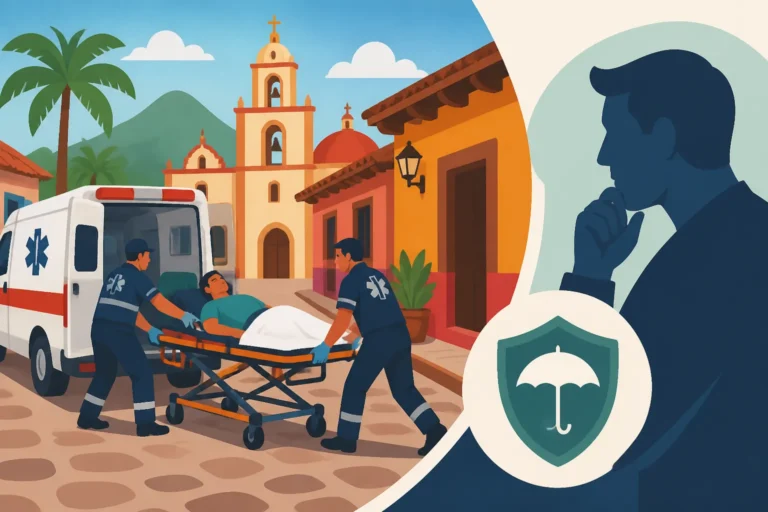
One of the most common questions I get is whether IMSS is "good enough." The answer depends entirely on your health needs and your patience. Public healthcare in Mexico is excellent when it comes to emergency trauma and chronic disease management. If you have a heart attack, an IMSS hospital is often the best place to be because they have the specialized equipment and staff that smaller private clinics might lack.
On the other hand, the "hotel" side of medicine—private rooms, English-speaking staff, and immediate elective surgeries—is where the private sector wins. Many foreigners choose to use Healthcare in Mexico: Complete Guide for Expats (Public vs Private) as a starting point to see which philosophy aligns with their lifestyle. It’s not uncommon to see expats use IMSS for their monthly maintenance medications but keep a policy from a provider like Cigna Global for major surgeries or when they want to choose their own specialist.
The Role of the CURP and Residency
You cannot even think about IMSS without your Residente Temporal or Permanente card. The system is strictly for residents. Your entry point into almost every social service in Mexico is your CURP (Clave Única de Registro de Población). Without this unique ID number, the IMSS computers simply won't see you. I remember spending a whole afternoon just trying to get my CURP verified because a clerk had mistyped one letter of my name. It’s these small administrative hurdles that define the IMSS experience.
The Enrollment Process for Expats
If you aren't working for a Mexican employer, you’ll likely be looking at the voluntary enrollment scheme. This is often referred to by locals as "incorporación voluntaria." It is not a "pay as you go" system in the way a local pharmacy clinic works; it is a formal insurance contract with the Mexican state.
Step-by-Step to Your Carnet
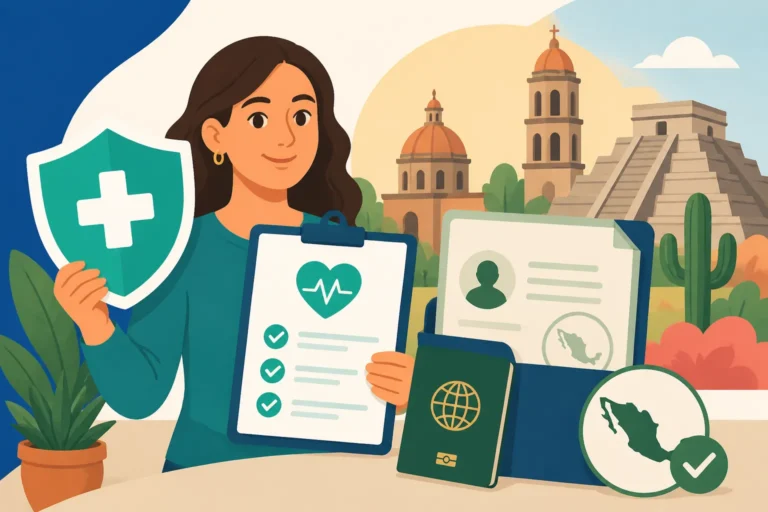
The process usually begins at the local subdelegación (administrative office) of IMSS. You cannot simply walk into a hospital and sign up. You need a dossier of documents: your passport, your residency card, proof of address (like a CFE electric bill), and your CURP. You will also need to provide a set of infant-sized photos for your carnet—the little health ID booklet that will become your most important possession.
Once you submit your paperwork, you will undergo a basic medical questionnaire. This is where things get tricky. Unlike some international plans, like those offered by SafetyWing which are designed for flexible travel, IMSS is a residency-based system that is very strict about who it lets in. They will ask about everything from your family history of diabetes to your current blood pressure. For a deeper dive on the logistics, check out How to Enroll in IMSS: Step-by-Step Guide for Foreign Residents.
The Waiting Period and Restrictions
When you join IMSS voluntarily, you don't get full coverage on Day One. There is a tiered "waiting period" for various conditions. For example, you might be covered for accidents immediately, but surgeries for pre-existing respiratory issues or certain chronic conditions might not be covered for the first or even second year of your membership.
This is a defensive measure by the system to prevent people from moving to Mexico specifically to get a high-cost surgery for a few hundred dollars. I’ve seen friends get frustrated because they expected immediate help for a hip issue they’d had for a decade. If you have a pre-existing condition, you must read Does IMSS Cover Pre-existing Conditions in Mexico? before you commit, as it might change your entire financial plan.
Navigating the Subdelegación
The administrative offices are often crowded, and Spanish is the only language spoken. I highly recommend bringing a local friend or a professional translator. The clerks are generally helpful, but they follow the rules to the letter. If your proof of address is more than three months old, they will send you home. It’s a rite of passage for many of us. I once had to go back three times because the "official" stamp on my document was slightly faded. Don’t take it personally; it’s just how the system ensures integrity.
Understanding the Costs of Voluntary Enrollment
One of the most attractive aspects of IMSS is the price. For many retirees coming from the US or Canada, the annual cost of IMSS is less than what they were paying for a single month of COBRA or private insurance back home.
Age-Based Pricing Brackets
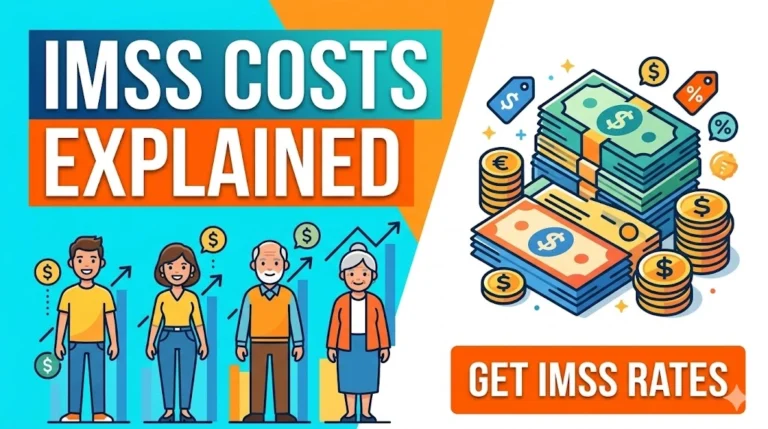
IMSS uses a sliding scale based on your age. The older you are, the more you pay, reflecting the statistical likelihood of needing more care. However, even at the highest bracket, the cost is remarkably low. These rates are tied to the UMA (Unidad de Medida y Actualización), meaning they adjust slightly every February.
| Age Group | Annual Cost (Estimated in Pesos) | Approximate USD Equivalent |
|---|---|---|
| 0 – 19 | $8,500 – $10,000 | $500 – $600 |
| 20 – 39 | $11,000 – $13,000 | $650 – $750 |
| 40 – 59 | $16,000 – $19,000 | $950 – $1,100 |
| 60 – 79 | $22,000 – $25,000 | $1,300 – $1,500 |
| 80+ | $26,000+ | $1,550+ |
These figures are a bargain when you consider they include all medications, hospital stays, and specialists. For the most current numbers, refer to How Much Does Voluntary IMSS Cost per Year?.
Payment Cycles and Renewals
Unlike private insurance where you might pay monthly, IMSS voluntary enrollment is an annual, upfront payment. You pay for the year, and your coverage begins on the first day of the following month. If you miss your renewal window, you may have to start the entire application process over, which could reset your waiting periods for specific conditions.
I always tell new arrivals to set a calendar reminder two months before their expiration date. The renewal process is usually faster than the initial enrollment, but you still have to visit the office and show your updated residency status. If you are budgeting for your move, knowing these Healthcare Costs in Mexico: Doctor Visits, Hospital Stays, and Surgery Expenses will help you see where IMSS fits into your overall financial picture.
The Hidden Costs of Public Care
While the "premium" is low, there are indirect costs to consider. Because the clinics are often far from expat enclaves, you’ll spend money on transportation. Because the wait times for tests can be long, many people end up paying out-of-pocket for a private lab test to speed things up, then bringing those results back to their IMSS doctor.
Also, the IMSS pharmacy may occasionally run out of specific medications. In those cases, you’ll need to buy them at a private farmacia. It’s a good idea to keep a "medical slush fund" even if you are fully covered by the state. I’ve had to do this for a simple asthma inhaler when the local clinic was waiting for a shipment. It only cost me $15 USD at the private pharmacy, but it’s a reality of the system.
The Reality of Receiving Care at IMSS
This is where the "veteran expat" advice really matters. Walking into an IMSS facility for the first time can be an overwhelming sensory experience. It is busy, it is functional, and it is uniquely Mexican.
The Triage and Appointment System
Everything starts with your UMF (Unidad de Medicina Familiar). This is your home base. You are assigned a specific doctor and a specific shift—either morning (matutino) or afternoon (vespertino). You cannot just show up at any IMSS clinic; you must go to the one assigned to your neighborhood.
If you have a non-emergency issue, you show up early—often at 6:00 or 7:00 AM—to get an appointment for that day. Or, you can use the IMSS Digital app, which has improved significantly in recent years, though it still has its glitches. The first time I went, I didn't realize I had to check in with the nurse at the front desk of my specific wing. I sat in the hallway for two hours wondering why no one was calling my name. Lesson learned: always "report in" as soon as you arrive.
Specialists and Referrals
You cannot book a specialist directly at IMSS. You must see your family doctor first. If they determine you need a cardiologist or a dermatologist, they will issue a referral. This is one of the main pain points for foreigners. The wait for a specialist can range from a few weeks to several months.
If you are used to the efficiency of a system like Cigna Global, where you can often pick a specialist and see them within days, this will be a culture shock. However, once you are in the specialist's care, the quality is often very high. Many IMSS specialists also have private practices in the evenings, so you are often seeing the same doctors who charge $1,000 pesos for a private consultation, but for "free" under your IMSS plan. To navigate this better, read Finding English-Speaking Doctors and Specialists in Mexico to understand your options if the IMSS wait is too long.
Language and Cultural Nuances
English is rare in the IMSS system. From the security guard at the gate to the surgeon in the theater, Spanish is the language of operation. If you don't speak the language, the experience can be terrifying. I’ve seen expats get angry because they didn't understand the instructions for a fasting blood test, leading to a canceled appointment.
Culturally, Mexican medicine is very family-oriented. You will see entire families in the waiting rooms. Nurses are the gatekeepers and the engines of the hospital; being polite, patient, and using your "por favors" and "gracias" will get you much further than demanding service. If you are worried about the language gap, Overcoming Language Barriers at the Doctor: Tips for Expats offers some great hacks for using translation apps in a clinical setting.
IMSS-Bienestar: The New Frontier
In the last few years, the Mexican government has been transitioning toward a system called IMSS-Bienestar. This can be confusing for expats because it sounds like the standard IMSS, but it’s actually a different branch designed for people who do not have formal social security.
Who is it for?
Originally, this was intended for the most vulnerable populations—those in rural areas or those working in the informal economy. For most legal residents (expats), the standard IMSS voluntary scheme is still the recommended path. However, IMSS-Bienestar is becoming more prevalent as the government tries to centralize healthcare.
The rules for foreigners using IMSS-Bienestar are currently in a bit of a gray area and can vary by state. In some regions, you can access basic services just by showing your residency card and CURP, but the facilities are often more basic than the standard IMSS clinics. It’s a developing story in the Mexican medical world. For the latest updates, you should keep an eye on Public Healthcare in Mexico: IMSS and IMSS Bienestar Explained for Expats.
Comparing the Two Branches
While the standard IMSS is an insurance product you pay into, IMSS-Bienestar is a social program. For an expat who has the means, the voluntary IMSS is almost always the better choice because it provides a more robust legal right to care and access to the higher-tier specialized hospitals.
Think of it this way: Standard IMSS is the "Gold" version of public care, while Bienestar is the universal safety net. If you live in a remote village in Oaxaca, Bienestar might be your only option. If you live in a city like Querétaro or Merida, you want the standard IMSS.
Is IMSS Right for You?
Choosing your healthcare strategy is the most important decision you’ll make in your first year in Mexico. It’s not just about the money; it’s about your comfort level with risk and your ability to navigate a foreign system.
The Hybrid Strategy
The most successful expats I know use a hybrid approach. They enroll in IMSS to cover their "big" risks (catastrophic care) and to get their monthly medications for things like high blood pressure or cholesterol. They then supplement this with a high-deductible international plan like SafetyWing for when they travel, or a more comprehensive private policy for elective procedures.
This allows them to skip the lines for a simple dermatological check-up by paying a private doctor $800 pesos, but if they ever need a $50,000 USD surgery, they have the IMSS system to fall back on. It’s about not putting all your eggs in one basket. Many people find that Choosing Private Health Insurance: Local Mexican Plans vs International Coverage helps them find that perfect balance.
Factors to Consider
Before you head to the subdelegación with your paperwork, ask yourself these three questions:
- How is my Spanish? If it's zero, do you have a friend who can help you every single time you go to the doctor?
- What is my health history? Do I have pre-existing conditions that will be excluded for the first two years?
- What is my tolerance for waiting? Can I handle a four-hour wait in a crowded clinic, or will that ruin my week?
If you have a chronic illness, the IMSS system can be a literal lifesaver. If you are a healthy 30-year-old, you might find the bureaucracy isn't worth the savings.
Making the Final Call
I personally spent my first two years in Mexico without IMSS, relying entirely on private out-of-pocket payments. But as I settled in and my Spanish improved, the logic of having a state-backed safety net became undeniable. It’s a feeling of being "part" of the country. When you hold that little green health booklet, you aren't just a tourist anymore; you’re a resident contributing to and benefiting from the social fabric of Mexico. For more help on the final transition, read Settling in Mexico: Step-by-Step Guide to Your First 30 Days as an Expat.
Important Medical Disclaimer
The information provided in this guide is for educational and informational purposes only and is based on the personal experiences of the author and current public information regarding the Mexican healthcare system. Healthcare regulations, IMSS costs, and enrollment requirements in Mexico are subject to frequent change by the federal government. This article does not constitute professional medical, legal, or financial advice. Always consult with a qualified immigration attorney, a licensed insurance broker, or a medical professional before making decisions regarding your healthcare coverage or residency status in Mexico. Enrollment in IMSS does not guarantee coverage for all conditions, and waiting periods or exclusions may apply based on your individual health history.