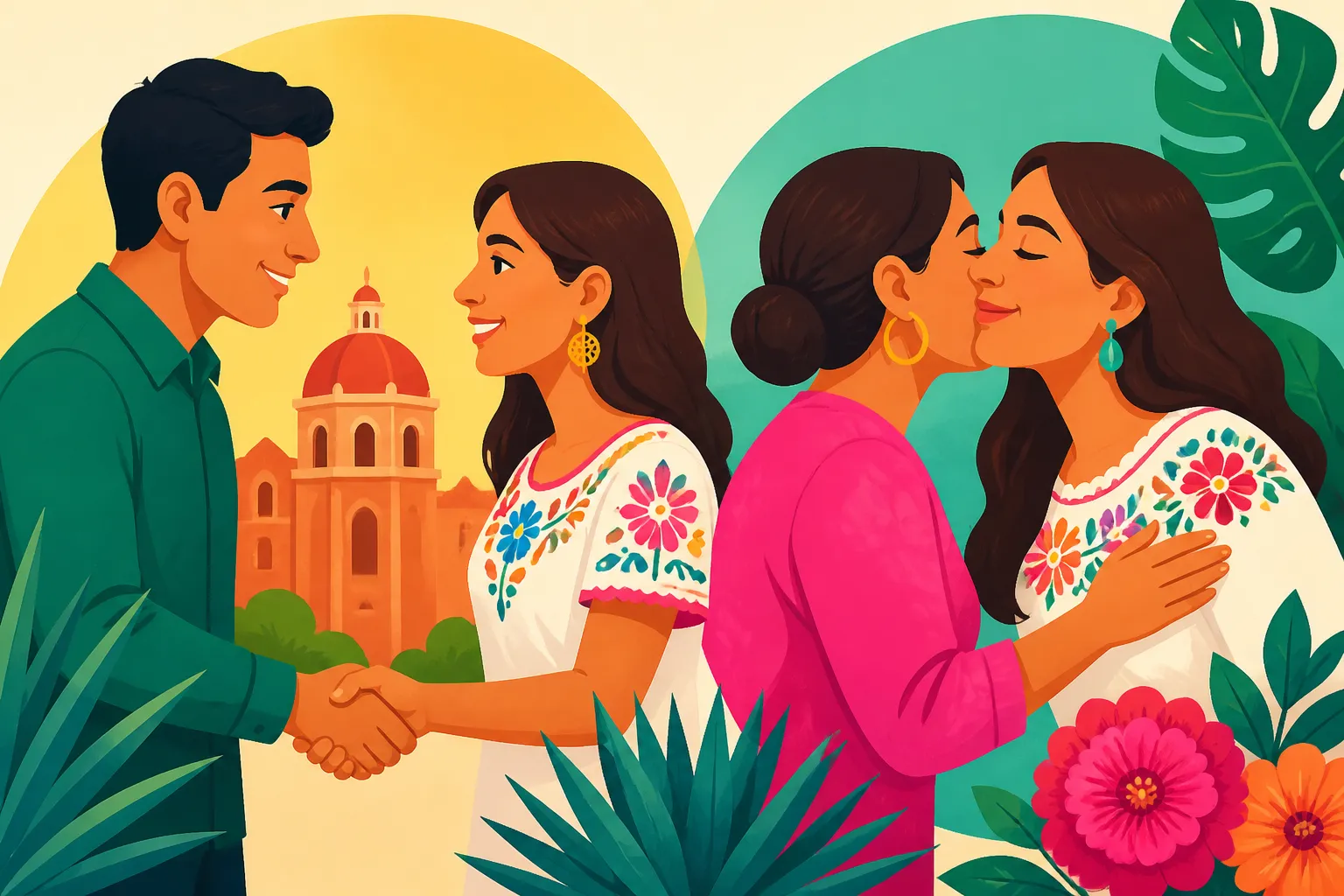
How to Greet People in Mexico: Handshakes and Besos
Moving to or even just visiting Mexico, you'll quickly realize that greetings are far from a casual "hello" and a quick wave. For many of us expats, the initial encounters can be a minefield of awkward hesitations – do I shake a hand? Offer a kiss on the cheek? How many kisses? This guide is here to untangle the delightful, yet sometimes daunting, world of Mexican greetings, helping you feel more comfortable and genuinely connect with the wonderful people you'll meet.
Disclosure: This post may contain affiliate links. We may earn a commission at no extra cost to you if you make a purchase through these links. Read full disclosure.
The Art of the Mexican Greeting: More Than Just "Hola"
When I first moved here, I was a bundle of nerves every time I met someone new. Coming from a culture where a nod or a quick handshake suffices, the warmth and physical closeness of Mexican greetings felt like stepping onto a stage without a script. But I promise you, once you understand the nuances, it becomes one of the most endearing parts of living here. It's not just about politeness; it’s about showing respect, building rapport, and acknowledging the humanity in each interaction.
Why Greetings Matter So Much Here
In Mexico, personal connection is paramount. Unlike some cultures where efficiency is prized, here, taking the time for a proper greeting is an investment in the relationship, no matter how brief. It sets the tone for everything that follows. Whether you're meeting a new neighbor, a vendor at the market, or the host of your Airbnb on Booking.com, a genuine greeting signals that you value the person and the interaction. It’s a foundational stone of Mexican social interaction, a silent agreement to engage with warmth and respect. Imagine walking into a small shop and just barking your order – it would feel jarring, wouldn't it? A quick "Buenos días" and a friendly demeanor go a long way. This cultural emphasis on interpersonal warmth extends into all aspects of daily life, making every interaction a little more personal and, frankly, a lot more human.
It’s also a sign of good upbringing. Parents teach their children from a young age to greet everyone upon entering a room and to say goodbye when leaving. This isn't optional; it's deeply ingrained social programming. Skipping a greeting can come across as rude, aloof, or even arrogant. When you make the effort, especially as a foreigner, it’s noticed and appreciated. It demonstrates that you’re not just passing through, but you're attempting to understand and integrate, even just a little.
First Impressions: Reading the Room and the Person
Before you launch into a greeting, take a quick moment to observe. Mexicans are incredibly expressive, and often, you can pick up cues from their body language and the context of the situation. Is it a formal business meeting or a casual gathering at a friend's home? Are people standing or seated? Who is already interacting, and how are they doing it? This quick assessment can save you from an awkward moment and help you choose the appropriate greeting.
Age and social standing also play a role. You'll generally be more formal with elders or those in positions of authority, like a doctor or a government official at the INM office. With peers or younger individuals, greetings tend to be more relaxed. Pay attention to how others are greeting each other within the group; this is often your best guide. If you’re at a tour meeting, for instance, notice how the Viator guide greets new arrivals. Are they shaking hands with everyone, or offering a quick nod and smile? Mimicking the locals is always a safe bet until you gain more confidence.
Gender dynamics are also important. Men typically shake hands with other men, while women often exchange a beso (cheek kiss) with both men and women. However, these are general guidelines, and regional differences exist, which we'll dive into next.
Navigating the Physical Greetings: Handshakes, Besos, and Hugs
Now for the nitty-gritty: what physical gesture do you make, and with whom? This is where many of us foreigners tend to stumble, but once you get the hang of it, it becomes second nature.
The Classic Handshake: When and How to Do It Right
The handshake, or saludo de mano, is a universal symbol of greeting, and it's definitely present in Mexico, but with its own nuances.
Typically, men shake hands with other men in most formal and semi-formal settings. Think business meetings, meeting a new acquaintance for the first time, or interacting with service professionals. The handshake is usually firm, but not bone-crushing, and often accompanied by direct eye contact. It’s a sign of respect and professionalism.
However, it's not exclusively for men. If you're a woman meeting a man in a business context, a handshake is perfectly appropriate. Sometimes, an older man might extend a handshake to a younger woman, or vice-versa, depending on the formality and personal preference. The key is to be prepared to offer it, especially to men. When you're making a new professional contact, perhaps meeting a lawyer to help with your Mexican residency application, a handshake is definitely the way to go.
The Infamous "Beso" Kiss: Who, Where, and How Many?
Ah, the beso, or the cheek kiss. This is probably the most intimidating greeting for newcomers, because the rules aren't always immediately obvious. But trust me, it’s a beautiful gesture of warmth and familiarity once you get comfortable with it.
- The Gender Dance: The beso is typically exchanged between women, and between women and men. It's almost never between two men (unless they are very close family members, and even then, usually a hug is more common).
- The "How Many?" Question: In Mexico, it’s almost always one kiss. You lean in, lightly touching cheeks (usually right cheek to right cheek, but sometimes left to left, so just follow their lead), often accompanied by a soft air kiss sound or a slight brush of lips near the ear. It’s rarely an actual kiss on the cheek.
- When to Offer It:
- Friends and Acquaintances: When you're introduced to someone new in a social setting, particularly if it's through a mutual friend, expect to give and receive a beso.
- Family: Definitely with family members, both immediate and extended.
- After the First Meeting: Once you've met someone and seen them again, the beso becomes the default greeting for women and for women greeting men.
- Children: It's common to give a beso to children, even if you’ve just met them, especially if their parents are friends.
- When Not to: Avoid initiating a beso in highly formal business settings or with people you've just met in a very formal context (e.g., the first meeting with a bank manager). In these cases, a handshake is safer. If in doubt, wait for the other person to initiate.
Think of it this way: if you're meeting someone at a casual get-together after finding transport on Busbud to visit friends in another city, a beso is highly likely. If you're stepping into a high-stakes business negotiation, stick to the handshake.
The Warm Embrace: When a Hug is Appropriate
Beyond the handshake and the beso, there's the abrazo, or hug. This is a sign of deep affection, friendship, and solidarity. It's not an everyday greeting for casual acquaintances, but it's very common among:
- Close Friends: After not seeing each other for a while, or during emotional moments, a good, hearty abrazo is standard.
- Family Members: This is a default greeting for family, especially men with other men, or women with women they’re very close to.
- Celebrations and Condolences: At parties, weddings, funerals, or other significant life events, hugs are very common.
The Mexican abrazo can be quite intense! It’s usually a full-body hug, often with a pat on the back. For men, it’s sometimes a one-armed hug while still shaking hands with the other hand. It signifies a genuine bond and mutual respect. Don't be surprised if your new Mexican friends, after a few shared meals or conversations, graduate from besos to abrazos. It's a sign you've been accepted into their inner circle.
Verbal Greetings: Beyond the Basics for Deeper Connections
While physical greetings are crucial, the verbal component truly seals the deal. It's not enough to just nod or smile; you need to speak. Even a few words in Spanish will be greatly appreciated.
Essential Phrases for Every Situation
Mastering a few simple Spanish greetings will make a world of difference. They show effort and respect, and even if your accent isn't perfect, the intention counts for everything.
- "Hola": The universal "Hello." Simple, safe, and effective for almost any informal situation.
- "Buenos días": "Good morning." Used until around noon. Always a safe and polite choice.
- "Buenas tardes": "Good afternoon." Used from noon until sunset.
- "Buenas noches": "Good evening/night." Used from sunset onwards, both as a greeting and a farewell.
- "¿Cómo estás?" or "¿Cómo está?": "How are you?" (estás for informal, está for formal). This is often an automatic follow-up to the initial greeting, and a simple "Bien, ¿y tú/usted?" (Good, and you?) is usually sufficient, even if you're not actually "fine." It's more of a social pleasantry than a literal inquiry into your well-being.
- "Mucho gusto": "Nice to meet you." Always a good phrase when being introduced to someone new.
- "Mi nombre es…" / "Soy…": "My name is…" / "I am…" (followed by your name). Essential for introductions.
| Greeting Phrase | Translation | Usage | Notes |
|---|---|---|---|
| Hola | Hello | General, informal, anytime | Safest default |
| Buenos días | Good morning | Formal/Informal, until ~12 PM | Polite, always appropriate |
| Buenas tardes | Good afternoon | Formal/Informal, ~12 PM – sunset | Polite, always appropriate |
| Buenas noches | Good evening/night | Formal/Informal, sunset onwards | Used for both greeting and farewell |
| ¿Cómo estás? | How are you? (inf.) | After "Hola" with friends/peers | Expect "Bien, ¿y tú?" |
| ¿Cómo está? | How are you? (form.) | After "Buenos días/tardes" with elders/professionals | Expect "Bien, ¿y usted?" |
| Mucho gusto | Nice to meet you | Upon introduction to anyone | Accompanies a handshake/beso |
| Qué tal? | What's up? | Very informal, with close friends | More casual than "¿Cómo estás?" |
Addressing People: Formalities and Familiarity
Mexican Spanish has two forms of "you": tú (informal) and usted (formal). Getting this right is a sign of respect, and getting it wrong can inadvertently cause offense or make you seem too familiar too quickly.
- Usted (Formal): Use usted when addressing elders, people in positions of authority (police, doctors, government officials), new acquaintances in formal settings, or anyone to whom you want to show particular respect. When in doubt, start with usted. It's always better to be too formal than too informal. If they prefer tú, they will usually invite you to use it by saying "tutéame" (use tú with me).
- Tú (Informal): Use tú with friends, children, and people your age or younger once a level of familiarity has been established. If someone addresses you with tú, it’s generally safe to respond in kind.
This distinction is crucial in conversations, impacting verb conjugations and pronouns. Overcoming language barriers at the doctor or dealing with official processes at the immigration office requires an understanding of this formal address. It’s part of the fabric of polite communication here.
Group Greetings: Navigating a Room Full of Strangers
Walking into a party or a family gathering can be overwhelming, especially if you're the only foreigner. The custom in Mexico is to greet everyone individually upon entering and departing. Yes, everyone. This means going around the room, shaking hands with each man, and giving a beso to each woman (and men if you're a woman).
It sounds like a lot, but it’s just how it’s done. It’s a moment to acknowledge each person's presence and worth. If you’re introduced to a couple, you’d greet both. If you leave early, you're expected to say goodbye to everyone as well. This might mean interrupting conversations briefly, but it’s considered more polite than slipping out unnoticed. I remember my first few parties where I tried to just wave to the group, and a friend gently guided me to each person. It felt awkward initially, but now it feels natural, a small gesture that goes a long way in showing you’re part of the group.
Common Pitfalls and How to Avoid Them
Even with the best intentions, you might still feel a bit clumsy initially. That’s totally normal! We’ve all been there.
The Awkward Dance: Avoiding Misunderstandings
One of the most common pitfalls is the "awkward dance" – leaning in for a beso when a handshake was expected, or vice-versa. Or worse, leaning for the wrong cheek and bumping noses! Here’s how to minimize these moments:
- Observe First: As mentioned, watch what others are doing. If you see two women giving each other a beso, and you're about to be introduced to one of them, prepare for a beso.
- Let Them Lead: When meeting someone new, especially if you're unsure, let the Mexican person initiate the physical greeting. They will typically extend their hand or lean in slightly. Follow their lead.
- Smile and Be Ready: Maintain eye contact, smile genuinely, and be ready for either a handshake or a beso. A friendly, open demeanor will cover a multitude of minor greeting missteps.
- Don't Overthink It: If you do bump noses or offer the wrong greeting, just laugh it off. Mexicans are incredibly forgiving of foreigners' attempts to engage with their culture. A quick "¡Ay, perdón!" (Oh, sorry!) with a smile is usually all that's needed.
The important thing is the willingness to engage and show respect. The specific mechanics will come with practice.
Personal Space: It's Different Here
Coming from countries with larger personal space bubbles, the closeness of Mexican interactions can be a bit of a shock. Mexicans tend to stand closer when talking, and physical touch (a hand on the arm, a pat on the back) is much more common and not usually seen as invasive, but rather as a sign of warmth and friendliness.
During greetings, this means you might find yourself closer to someone than you're used to. Don't recoil; it can be misinterpreted as coldness or discomfort with them personally. Just try to relax into it. This applies not just to initial greetings but to general conversation. People will often stand closer than you might be accustomed to, and it's simply a cultural norm rather than a breach of etiquette. Embrace the warmth, it's one of the beautiful things about Living in Mexico: Cultural and Practical Guide for New Expats.
When in Doubt: Observe and Follow Lead
This is the golden rule for almost any cultural situation in Mexico. If you're unsure, don't guess. Take a moment to see how people around you are interacting. If you’re at a small gathering, watch how the host greets the next arrival. If you're joining a group for coffee, see how they're all saying "hola" to each other.
If there’s no clear cue, a polite verbal greeting like "Buenos días" or "Hola," accompanied by a warm smile and direct eye contact, is always appropriate. If a physical greeting is expected, they will almost always initiate it. Mexicans are very understanding, and they'll appreciate your effort more than your perfect execution. Learning Spanish language and everyday communication for visitors will definitely help you navigate these situations with more confidence. The simple act of trying is what matters most.
Learning to navigate these greetings successfully is part of the journey of becoming an expat. It’s a small, daily act that builds bridges and makes you feel more at home.
Disclaimer
The information provided in this guide is for general informational purposes only and does not constitute legal, financial, or professional advice. Cultural norms can vary by region and individual, and practices may change over time. Always exercise your best judgment and observe local customs.