How to Apply for a Mexican Student Visa
Navigating the Mexican consulate system can feel like trying to solve a Rubik's Cube while blindfolded, especially when your academic future is on the line. I remember standing in line at 7:00 AM, clutching a folder of documents and praying I hadn't missed a single obscure photocopy required for my own residency. This guide breaks down the entire process of securing a Mexican student visa so you can stop stressing over paperwork and start looking forward to your studies.
Disclosure: This post may contain affiliate links. We may earn a commission at no extra cost to you if you make a purchase through these links. Read full disclosure.
Understanding the Mexican Student Visa Landscape
The first thing you need to realize is that "student visa" is a bit of a broad term in Mexico. Depending on the length of your program and your nationality, you might not even need a formal resident visa. However, for those planning to stay longer than six months—which covers most university degrees and intensive language programs—the Temporary Resident Student Visa is the standard path. This isn't just a sticker in your passport; it is a multi-stage process that begins in your home country and ends at a local immigration office in Mexico.
The 180 Day Threshold and Why It Matters
If your study program is shorter than 180 days, many students from visa-exempt countries (like the US, Canada, or the UK) simply enter as tourists. While this is common, it has major limitations. You cannot renew a tourist stay from within the country, and you won't receive a CURP, which is essential for everything from opening a bank account to getting a local gym membership. If there is even a slight chance your studies will extend beyond six months, I always recommend going through the formal visa process from the start. It saves a massive headache later. For a broader look at how these pieces fit together, check out Navigating Mexico's Immigration System: Visas, INM Procedures, and Regulations.
Temporary Resident Student Visa vs Visitor Visa
A Visitor Visa with permission to study is typically for those short-term stays I mentioned. The Temporary Resident Student Visa, however, is for those committed to a full degree or a long-term exchange. The latter allows you to leave and enter Mexico as many times as you like, provided you have your physical ID card. It also places you firmly within the legal framework of the Mexico Student Visa: Application Requirements for 2026, ensuring you are compliant with the most recent immigration updates.
Eligibility and Institutional Requirements
Not just any "class" qualifies you for a student visa. The institution must be part of the National Educational System in Mexico. Whether it is a massive university like UNAM or a private language school, they must be authorized by the government to issue the specific "Letter of Acceptance" required by the consulate. Before you pay any tuition deposits, ask the school’s international office specifically if they provide the necessary documentation for a Residente Temporal Estudiante visa.
The Step by Step Application Process
The process is split into two distinct phases: the Consulate Phase and the INM (National Institute of Migration) Phase. You cannot skip the consulate interview in your home country. I have seen many students arrive in Mexico on a tourist permit hoping to "switch" to a student visa at the local office, only to be told they have to fly all the way back home to start over. Don't be that person.
Phase One The Consulate Interview
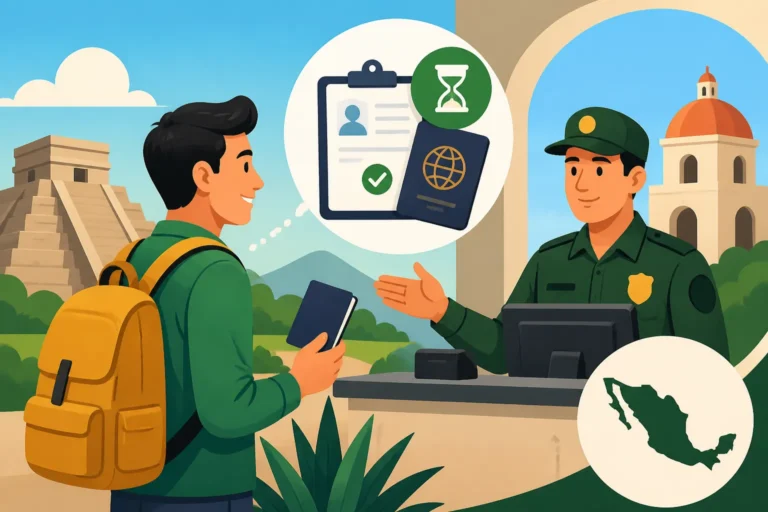
Your journey begins at a Mexican consulate outside of Mexico. You will need to book an appointment through the MiConsulado booking portal. These appointments can be notoriously hard to get, often disappearing seconds after they are released. Once you secure a spot, you'll head to the interview with your original documents and copies. The officer will ask about your studies, your background, and your plans in Mexico. They aren't looking to trick you; they just want to verify that your intentions are purely educational and that you have the means to support yourself.
Entering Mexico and the FMM
Once the consulate approves you, they will glue a visa sticker into your passport. This sticker is only valid for one entry and usually expires within 90 to 180 days. When you land in Mexico or cross the land border, you must present this visa to the immigration officer. They will process your entry differently than a tourist. Instead of a standard tourist stamp, they will likely give you a mark or a digital record indicating you have 30 days to report to the local immigration office. Ensure they do not mark you as a "Turista," or you will have to exit and re-enter the country to fix the error.
Phase Two The Canje Process at INM
This is where the real "fun" begins. Within 30 days of arriving, you must visit the local INM office to exchange (canje) your visa sticker for a physical plastic ID card. This process involves more forms, more fees, and the dreaded fingerprinting session. You will need to learn How to Book an INM Appointment in Mexico because walking in without one is rarely successful. This card is your actual permit to live in the country, and you must carry it whenever you travel within Mexico.
Document Checklist and Financial Solvency
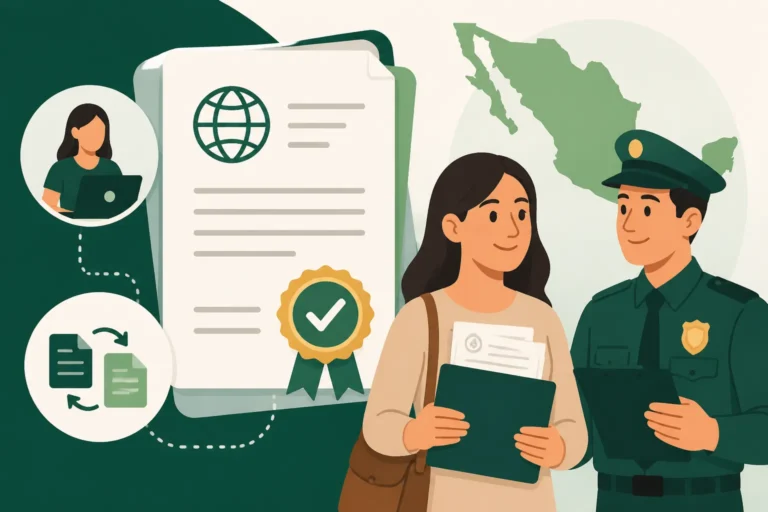
The paperwork is where most applications hit a snag. Mexican bureaucracy loves stamps, signatures, and very specific formatting. If a document is in English, it almost certainly needs to be translated by a professional. I highly recommend using a service like RushTranslate to handle your transcripts and bank statements. Consulates are very picky about the quality of translations, and a "home-made" translation is a quick way to get your application rejected.
The Acceptance Letter
Your letter from the school must be on official letterhead and include your full name, the specific level of study, the name of the course, the start and end dates, and the tuition cost. It must also state that the institution is officially recognized by the Mexican government. If any of these details are missing, the consulate may ask you to get a revised letter, which can delay your move by weeks.
Proving Financial Solvency
Mexico wants to ensure you won't be looking for local employment to survive, especially since there are strict Rules for International Students regarding work. You generally have two ways to prove you have the funds:
- Personal Savings: Showing bank statements from the last three to six months with a consistent average balance that meets the consulate’s specific threshold.
- Sponsorship: If your parents are paying, they usually need to provide their bank statements and a signed letter of support, which often needs to be notarized and translated.
The Role of Certified Translations
For any document not issued in Spanish—especially your birth certificate or the proof of financial support—you need a certified translation. Consulates often require the translator's credentials to be clear. This is where a professional firm like RushTranslate becomes invaluable. They understand the specific terminology required for immigration documents, ensuring that "Savings Account" or "Scholarship Grant" is translated into the exact legal equivalent used by Mexican authorities. For more on this, see How to Translate Documents for Your Mexican Visa Application (Certified Translations).
| Document Type | Original Required? | Translation Needed? | Notes |
|---|---|---|---|
| Passport | Yes | No | Must have at least 6 months validity |
| School Acceptance Letter | Yes | If not in Spanish | Must include school's RVOE number |
| Bank Statements | Yes | Yes | Usually 3-6 months of history |
| Visa Application Form | Yes | No | Usually provided by the consulate |
| Payment of Fees | Yes | No | Paid at the consulate during interview |
Living as a Student in Mexico
Once you have that plastic card in your hand, you are officially a temporary resident. This status comes with responsibilities and benefits that a tourist doesn't have. You are now part of the Mexican system, which means you can start checking off the "local" boxes that make life easier.
Getting Your CURP
The CURP (Clave Única de Registro de Población) is your unique identity number in Mexico. You cannot get this until your residency card is issued. Once you have it, a world of possibilities opens up. You can sign up for a contract phone plan, get a local driver's license, and even access some public services. I’ve written extensively on How to Get a CURP in Mexico because the process is slightly different for residents than it is for citizens.
Banking and Financial Logistics
While many students rely on international cards, having a local bank account can save you a fortune in exchange fees. Most Mexican banks will require your physical residency card and your CURP to open an account. Being a resident also means you can use the SPEI system, which is the local way to transfer money instantly between accounts—essential for paying rent or splitting dinner bills with your new classmates.
Managing Your Stay and Renewals
Student visas are typically valid for one year and must be renewed annually. You must start the renewal process within 30 days before your card expires. If you let it expire, you may face fines or be required to leave the country. Keep a close eye on your expiration date and remember that any change in your status—like changing schools or moving to a new apartment—must be reported to INM within a specific timeframe. If you ever lose your card, don't panic, but do act quickly by following the steps in Navigating Mexico's Immigration System: Visas, INM Procedures, and Regulations.
Common Pitfalls and How to Avoid Them
I have seen even the most organized students trip up on the smallest details. One common mistake is the photo size. Mexican visa photos are not the same as US or UK passport photos. They often require a specific "infantil" size with a white background and no glasses. If your photos are off by a few millimeters, the INM officer might send you back out to the street to find a local photo studio.
Another hurdle is the "Apostille." While not always required for the initial student visa, if you plan to stay in Mexico long-term or eventually want to have your degree recognized locally, you will need an Apostille on your original diplomas and birth certificate. This must be done in the country where the document was issued. You can find a deeper explanation of this in Apostilles and Translations for Mexican Immigration. When you get these documents apostilled, remember to use RushTranslate to get them into Spanish so the local authorities can actually read them.
Lastly, be mindful of the "Work" restriction. Generally, a student visa does not allow you to work for a Mexican company. If you find a dream internship or a part-time job, you must apply for a specific "Permission to Work" from INM, which involves its own set of paperwork and employer requirements. Always double-check Can You Work on a Student Visa in Mexico? Rules for International Students before accepting any job offers to avoid jeopardizing your residency status.
Important Disclaimer
This guide is intended for informational purposes only and does not constitute legal advice. Immigration laws and consulate requirements in Mexico are subject to frequent changes without notice. While every effort has been made to ensure the accuracy of this information, you should always verify the current requirements with the official website of the Mexican Secretariat of Foreign Affairs (SRE) or your local Mexican consulate before beginning your application.