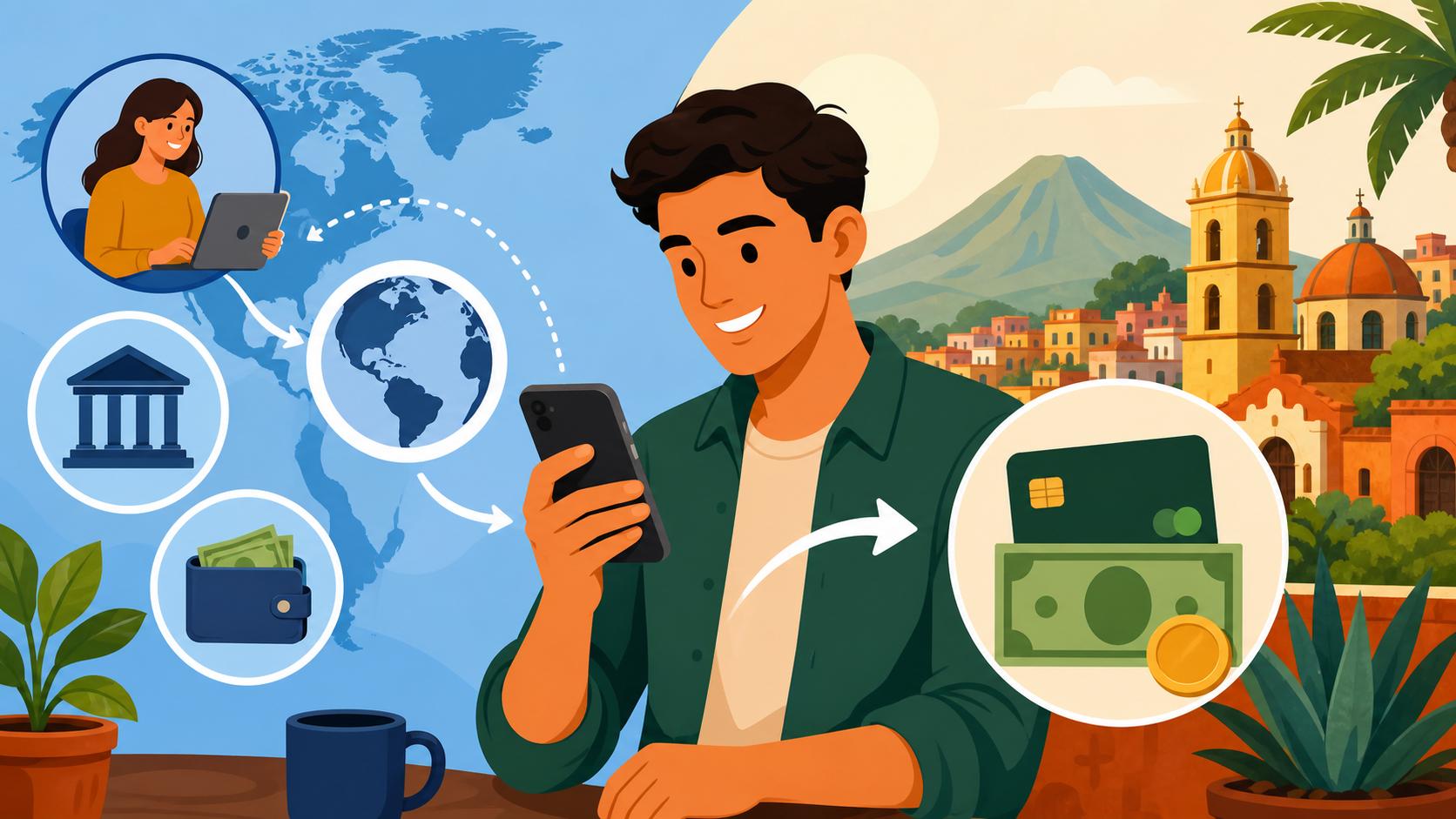
Getting Paid from Abroad: Best Ways for Expats to Receive Money in Mexico
Waiting for a paycheck only to realize your home bank and a Mexican intermediary have swallowed fifty dollars in "processing fees" is a heartbreaking rite of passage. I remember my first month in Querétaro, staring at a bank statement and wondering where ten percent of my hard-earned salary had vanished during its flight over the border. This guide solves the headache of international transfers, ensuring your money actually makes it to your pocket intact.
Disclosure: This post may contain affiliate links. We may earn a commission at no extra cost to you if you make a purchase through these links. Read full disclosure.
The Reality of International Transfers to Mexico
When you first move to Mexico, the administrative hurdles feel endless, but nothing is quite as high-stakes as ensuring your foreign income arrives safely. Whether you are a remote worker receiving a USD salary, a freelancer with global clients, or a retiree waiting on a pension, the path your money takes is fraught with hidden traps. Traditional banks often use the SWIFT network, which is reliable but involves a "daisy chain" of intermediary banks, each taking a small bite out of your transfer.
The biggest mistake most newcomers make is focusing solely on the flat "wire fee." While a $30 wire fee is annoying, the real killer is the exchange rate markup. Most traditional banks in Mexico and abroad will offer you a rate that is 3% to 5% worse than the mid-market rate you see on Google. Over a year of salary payments, that "hidden" fee can easily amount to thousands of dollars. Understanding the nuance of Managing Your Money in Mexico: Budgeting, Saving, and Currency Tips is essential to prevent this slow bleed of your resources.
Furthermore, Mexican banks are subject to strict anti-money laundering regulations. If a sudden, large wire transfer hits a brand-new account without prior warning, the bank may freeze the funds and demand "comprobantes de ingresos" (proof of income). I once had a transfer held for two weeks because I hadn't yet updated my file with the bank to show I was working for a foreign entity. Being prepared with your contract and tax documents is just as important as choosing the right transfer platform.
The Role of the Intermediary Bank
Most people don't realize that a transfer from, say, a credit union in Ohio to a BBVA account in Mexico doesn't go "direct." It usually stops at a major clearinghouse bank like JP Morgan or Citibank in between. Each of these stops adds a layer of complexity and a potential fee. If your home bank doesn't have a direct relationship with your Mexican bank, the money can bounce around the system for days.
I always recommend that expats look for platforms that bypass this archaic system. Modern fintech solutions have local accounts in both countries, meaning the money never actually "crosses" the border in the traditional sense; they simply pay you out from their local Mexican reserves. This is why services like Wise are so popular among the expat community. By using a platform like Wise, you often get the real exchange rate and pay a transparent, upfront fee that is significantly lower than any commercial bank could offer.
Understanding the CLABE System
To receive any money into a Mexican bank account, you must understand the CLABE (Clave Bancaria Estandarizada). This is an 18-digit number that is unique to your account. It is not your account number, and it is not your card number. It is a standardized code used to ensure domestic and international transfers reach the correct destination.
When providing instructions to your employer or client, you must provide the CLABE, the bank's name, and the Swift/BIC code. If you are still in the process of setting up your local finances, you might be wondering What Is a CLABE? Understanding Mexican Bank Account Numbers and how it differs from systems back home. Getting this number wrong by even one digit will result in a "transfer rejected" notification that can take weeks to resolve, leaving you without funds in a foreign country.
Top Platforms for Receiving Foreign Income
Choosing the right tool for the job depends entirely on the volume of money you are moving and the frequency of the payments. For most digital nomads and remote workers, the priority is speed and the exchange rate. For high-net-worth individuals or those living off significant investment dividends, the priority might be security and integration with brokerage accounts.
If you are just starting out, you might find that How to Open a Bank Account in Mexico: Requirements and Tips is your first logical step, but you don't always need a local account to survive. Many expats use international borderless accounts for months before they ever step foot inside a Mexican bank. This flexibility is key to a low-stress transition into Mexican life.
Digital Wallets and Fintech Solutions
The gold standard for many of us is Wise. The primary advantage here is the ability to hold a "Multi-Currency Account." You can provide your employer with local US, Canadian, or UK bank details, receive your salary in your home currency, and then convert it to Pesos only when the rate is favorable. This puts the power back in your hands. Instead of your bank choosing a random Tuesday to convert your money at a terrible rate, you can wait for a dip in the Peso and move your money then.
Another heavy hitter in the space for those who deal with significant assets is Interactive Brokers. While primarily an investment platform, Interactive Brokers offers some of the best currency conversion rates in the world—literally the wholesale rates that big banks use. For expats who are moving large sums to purchase property or who receive large quarterly dividends, using Interactive Brokers to convert currency and then sending it to a local Mexican account via a standard wire can save a fortune. It is a slightly more "pro" move, but the savings are undeniable.
Comparison of Popular Payment Methods
| Method | Estimated Speed | Relative Cost | Best Used For |
|---|---|---|---|
| Wise | 1 – 2 Business Days | Very Low | Monthly salaries and small business invoices. |
| Interactive Brokers | 2 – 5 Business Days | Minimal | Converting large sums (investments/property). |
| Traditional SWIFT Wire | 3 – 7 Business Days | High | Official transactions where a "Bank Letter" is needed. |
| PayPal | Instant (to wallet) | Very High | Small, urgent payments (avoid for large sums). |
| Remitly / Western Union | Minutes to Hours | Moderate | Cash pickups or quick transfers to local debit cards. |
The PayPal Trap
I have to mention PayPal because so many freelancers use it. While it is incredibly convenient, PayPal is arguably the most expensive way to get paid in Mexico. They charge a percentage fee to receive the money, and then they apply an internal exchange rate that is often 4% below market value. To make matters worse, withdrawing from PayPal Mexico to a local bank can sometimes trigger additional delays or "verification" loops that freeze your cash for 48 hours or more. If a client insists on PayPal, try to negotiate a higher rate to cover the nearly 7-9% total loss you will incur after all the conversions.
Practical Steps to Set Up Your Payment Pipeline
Once you have chosen your platform, you need to build the "pipeline" that connects your foreign employer to your Mexican life. This is where the bureaucracy of two countries meets. You need to ensure that your home country's tax authorities are happy and that the Mexican authorities (the SAT) don't see your income as "unexplained wealth."
For many, the question is: Do You Need a Mexican Bank Account or Can You Rely on Your Home Bank? The answer is often "both." You want a home bank to maintain your credit score and pay home-country bills, but you need a local account to pay your Mexican utilities, rent, and the guy who delivers your "garrafones" of water.
Setting Up a Multi-Currency Bridge
The most efficient setup I have found involves three steps. First, have your income deposited into a "bridge" account like Wise in your home currency. Second, convert only what you need for the month into Mexican Pesos within that app. Third, send that Peso amount to your local Mexican bank via "SPEI" (Mexico's instant domestic transfer system).
SPEI transfers are usually instant and free. By moving your Pesos from your bridge account to a local bank like Banamex or BBVA via SPEI, you ensure you have local cash for the ATM or for paying rent via the bank's app. This setup also keeps your main salary "hidden" from the local bank until you choose to move it, which can sometimes simplify your interactions with bank managers who might otherwise try to sell you expensive insurance products the moment they see a large balance.
Navigating Local Bank Limits
Be aware that many basic Mexican bank accounts (Nivel 2) have a monthly deposit limit. As of 2026, many of these "easy-open" accounts limit you to around 23,000 to 30,000 Pesos in deposits per month. If your foreign salary is higher than that, the transfer will be rejected and sent back to the source.
To receive a full salary, you will likely need a Nivel 4 account, which requires an in-person visit to the branch with your residency card and proof of address. When you are at the bank, don't just ask for an account; specifically tell them you will be receiving international transfers of "X" amount. This helps them set the internal limits correctly from day one. You can find more details on this process in the Best Banks in Mexico for Expats: Comparing Fees and Services guide to ensure you pick a bank that handles high-limit accounts with minimal fuss.
Tax and Regulatory Considerations for Expats
Getting paid isn't just about the technology; it's about the law. Mexico is increasingly digital in its tax enforcement. The SAT (Servicio de Administración Tributaria) monitors bank accounts closely. If you are living in Mexico on a residency visa, you are eventually going to need an RFC (Registro Federal de Contribuyentes).
Many expats believe that if they are paid in USD into a US account, the Mexican government doesn't care. However, if you are physically performing the work while sitting in an apartment in Roma Norte, you may technically have tax obligations in Mexico. Navigating Remote Work & Taxes: Do Digital Nomads in Mexico Owe Mexican Taxes? is a vital part of your financial planning.
The Importance of the RFC
The RFC is your Mexican tax ID. Even if you don't think you owe taxes, you will find that many banks require an RFC to keep your account open or to increase your deposit limits. Moreover, if you want to pay for a high-speed internet contract or a car lease, they will ask for your RFC.
In the eyes of the bank, an account with an RFC attached is much more "legitimate" than one without. It signals that you are part of the formal economy. If you are struggling with the paperwork, take a look at Do You Need an RFC Number? Why a Tax ID Matters for Expats' Finances to understand why this string of letters and numbers is the key to financial stability in Mexico.
Reporting Foreign Income
Mexico has a residency-based tax system. If you spend more than 183 days in the country, you are generally considered a tax resident. This means you are technically required to report your global income. Fortunately, Mexico has double-taxation treaties with many countries, including the US and Canada, meaning you won't be taxed twice on the same dollar.
However, you still have to file the paperwork. This usually involves "Declaring Foreign Income," which can be a complex process if you have multiple income streams. I highly recommend finding a local "contador" (accountant) who specializes in expats. They can help you navigate Declaring Foreign Income in Mexico: Tax Rules for Expats so that you stay on the right side of the law while keeping as much of your salary as possible.
Using SWIFT for Large Transactions
While I have praised fintech apps for monthly salaries, there are times when the "old way" is better. If you are buying a home or a piece of land, the "notario" (notary) and the seller will often require a formal bank-to-bank SWIFT transfer. They want to see a clear paper trail from a traditional institution to satisfy their own "know your customer" requirements.
In these cases, you will need to know How to Wire Money to Mexico: SWIFT Codes and Bank Details Explained. Be prepared for your home bank to call you to verify the transaction. I once sat on the phone with a fraud department in London for two hours trying to explain that, yes, I really was trying to send a large sum of money to a Mexican escrow account. It is stressful, but for large-scale legal transactions, it is often the only accepted method.
Summary of the Best Approach
For the vast majority of expats, the most empathetic advice I can give is to stay flexible. Don't rely on just one way to get paid. I keep a Wise account for my primary salary, a small balance in PayPal for "emergencies," and an Interactive Brokers account for long-term savings and large currency conversions.
By diversifying how you receive money, you protect yourself against a single point of failure. If one app changes its terms or a bank's server goes down (which happens more than you'd think in Mexico), you won't be left at the grocery store with a card that doesn't work. Living here is an adventure, and that includes the adventure of managing your finances. With the right tools and a little bit of preparation, you can spend less time worrying about exchange rates and more time enjoying the sunset with a cold drink.
Disclaimer
This article is for informational purposes only and does not constitute financial, legal, or tax advice. Financial regulations and exchange rates change frequently. Always consult with a qualified professional, such as a certified accountant or financial advisor, before making significant financial decisions in Mexico.