Digital Nomads in Mexico: eSIM vs Local Plan for a Three-Month Stay
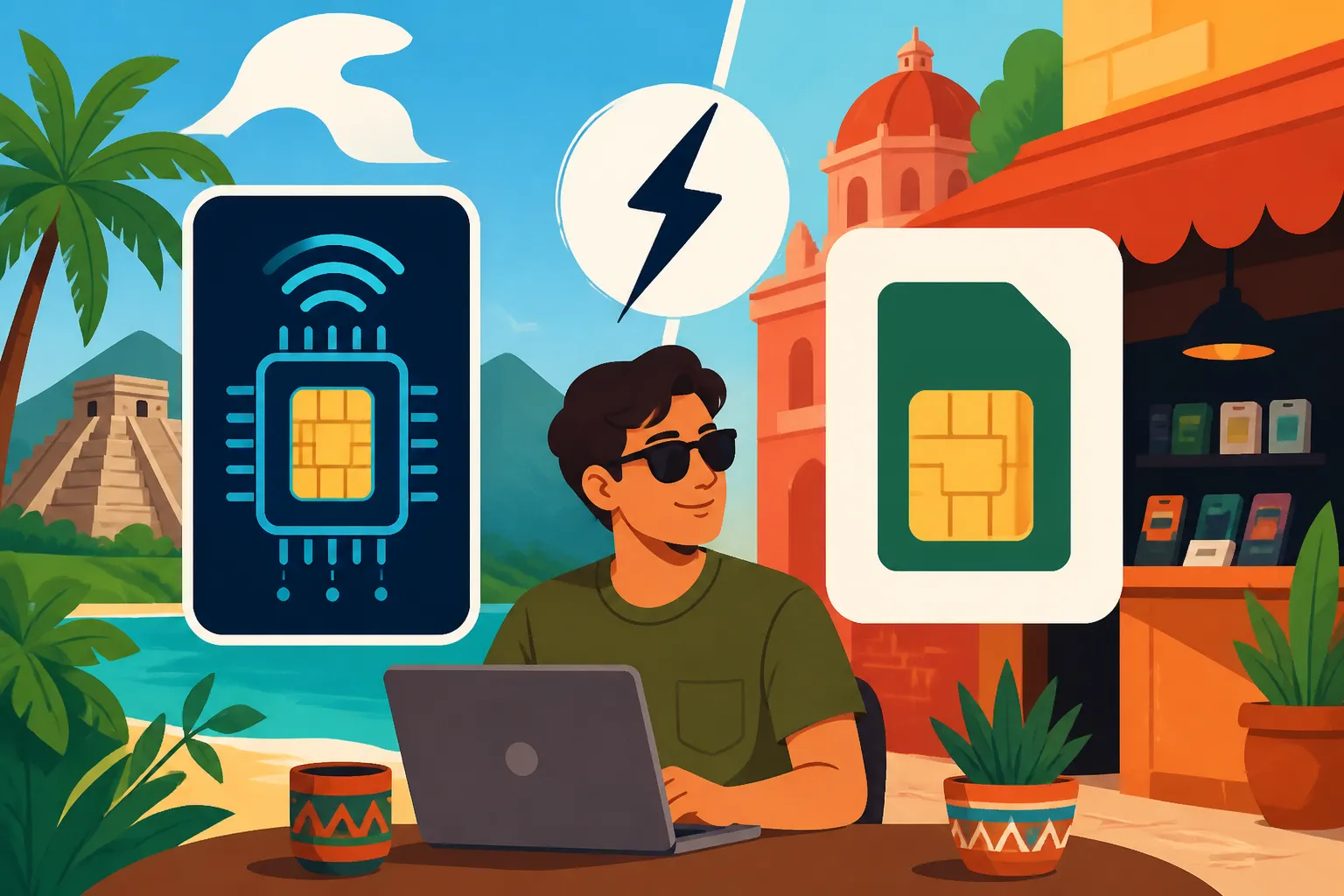
One of the first hurdles you’ll face as a digital nomad landing in Mexico, after navigating the airport chaos and figuring out how to get to your Airbnb, is the burning question: how do I stay connected? You need reliable internet for work, for Google Maps, for contacting your host, for everything. For a three-month stay, the choice between an eSIM and a local physical SIM card isn't just about cost; it's about convenience, flexibility, and saving your sanity. This guide will help you sort through the options and strongly recommend why an eSIM, particularly from a provider like Airalo, is likely your best bet.
Disclosure: This post may contain affiliate links. We may earn a commission at no extra cost to you if you make a purchase through these links. Read full disclosure.
The Digital Nomad's Connectivity Conundrum in Mexico
Ah, Mexico! The promise of vibrant culture, delicious food, and a lower cost of living draws so many of us here. But let's be real, beneath the allure of sun-drenched beaches and bustling city squares lies the ever-present expat challenge: bureaucracy and connectivity. As a digital nomad, your lifeline is the internet. Without it, your "remote work paradise" quickly devolves into a stressful scramble. I've been there, staring blankly at my phone, desperately trying to load a map or send an urgent email, with no signal in sight. It's frustrating, and it's a common experience if you don't plan ahead.
The initial days, or even weeks, of settling into a new place like Mexico can be a whirlwind. You're trying to figure out where to buy groceries, how public transport works, and perhaps even navigating the initial steps for your Mexico Temporary Resident Visa: Comprehensive Guide for Expats (2026 Update). The last thing you want is to add a complicated cell phone plan setup to the mix.
The Initial Rush: Why Immediate Connectivity Matters
Imagine this: you've just landed at Benito Juárez International Airport in Mexico City. You're tired from the flight, maybe a little disoriented by the sheer scale of the place, and all you want to do is get to your pre-booked apartment. You pull out your phone to order an Uber or check the Metro route, and bam! No service. Or worse, your home country's exorbitant roaming charges start racking up faster than you can say "¡Ay, caramba!" This scenario is all too common and utterly avoidable.
Immediate, reliable data is not a luxury for digital nomads; it's an absolute necessity. From calling an Uber using your preferred app to finding your way with Google Maps, or even just letting your family know you've landed safely, being instantly connected reduces a huge amount of stress. Plus, if you're like most digital nomads, your work begins almost immediately. You might have calls to take or emails to send even before you've fully unpacked. The peace of mind that comes with knowing you have a working phone from the moment you step off the plane is invaluable. It prevents that cold sweat moment when you realize you're truly disconnected in a foreign land.
Understanding Your Stay Length: Three Months Isn't Just a "Tourist" Trip
A three-month stay in Mexico sits in a peculiar sweet spot. It's long enough that you'll want more than just sporadic Wi-Fi access, but often not long enough to justify the full commitment and potential paperwork hassle of a long-term local contract. Many digital nomads arrive on a tourist visa (which typically allows up to 180 days, though this is changing – always check the latest FMM and Tourist Entry to Mexico rules), making a three-month stay a perfectly legal and common duration for those testing the waters or working on specific projects.
For this duration, you're past the "vacation mode" where you might just rely on hotel Wi-Fi. You'll be establishing routines, exploring further afield, and relying on your phone for everyday tasks. Yet, you're not quite a long-term resident digging into every aspect of local life, like opening a local bank account or setting up utilities. This intermediate length means you need a solution that offers robust service without demanding a deep dive into local bureaucracy or long-term commitment. The ease of setup and management becomes paramount, often outweighing marginal cost differences.
eSIMs for Digital Nomads: Convenience at Your Fingertips
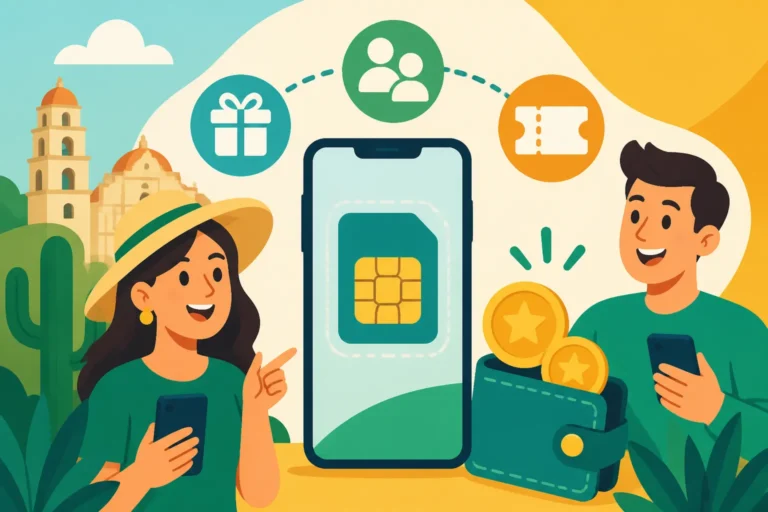
For anyone staying in Mexico for around three months, an eSIM is, hands down, the most straightforward and stress-free option. An eSIM, or "embedded SIM," is a digital SIM card that allows you to activate a cellular plan from a provider without needing a physical SIM card. It's built right into your phone. This means no more fumbling with tiny trays, no more worrying about losing your home SIM, and definitely no more trying to find a cell phone store in a new city while juggling luggage and a language barrier.
Leading the pack in the eSIM world is Airalo. This service truly understands the needs of international travelers and digital nomads. With Airalo, you can purchase data plans for Mexico (and countless other countries) before you even leave home. It's an absolute game-changer for immediate connectivity.
The Unbeatable Advantages of eSIM for Short-Term Stays (Like Airalo)
The benefits of opting for an eSIM, especially for a three-month stint, are compelling:
-
Instant Activation, Zero Fuss: This is the biggest draw. You can buy your Airalo eSIM plan online, install it with a few taps on your phone, and activate it either before you leave or as soon as you land in Mexico. No queues, no paperwork, no Spanish required. Imagine stepping off the plane, turning on your phone, and instantly having data for your Uber. It’s glorious. Airalo's process is designed for maximum ease, getting you connected in minutes.
-
Unrivaled Flexibility: Life as a digital nomad is all about flexibility, and your phone plan should be too. With Airalo, you can choose from various data packages that suit your needs – typically 7, 15, or 30 days, and you can easily top up or purchase new plans as needed. This means you only pay for what you use, and you're not locked into a contract. If your three months turn into two, or four, adjusting your plan is as simple as opening an app.
-
Cost-Effectiveness for Shorter Stays: While local SIMs can sometimes be cheaper for very long, permanent stays, for a three-month duration, an eSIM like Airalo often comes out ahead when you factor in the value of convenience. You avoid expensive international roaming fees from your home provider and get competitive local data rates without the overhead of physical SIM purchase or activation fees. Plus, many traditional carriers don't offer truly flexible short-term data plans at reasonable rates.
-
Keep Your Home Number Active: This is crucial. Your bank might send two-factor authentication codes to your home number, your family and friends still call or text that number, and many online services are tied to it. An eSIM runs alongside your physical SIM (if your phone supports dual SIMs), meaning you can keep your primary number active for incoming calls and texts (which often incur minimal or no cost depending on your home plan) while using the eSIM for all your data needs. No more swapping tiny SIM cards!
-
No Physical SIM Card Hassle: Seriously, who needs another tiny piece of plastic to keep track of? With an eSIM, there's nothing to lose, nothing to insert incorrectly, and no need to wonder if your phone is unlocked to accept a foreign SIM. It's all digital, sleek, and perfectly suited for the modern traveler. Airalo makes this process so smooth, you'll wonder why you ever bothered with physical SIMs.
Potential Drawbacks and Considerations for eSIM
While I'm clearly a huge fan, it's important to present a balanced view. There are a couple of things to consider with eSIMs:
-
Device Compatibility: Not all phones support eSIM technology. It's primarily found in newer smartphone models (iPhone XS and newer, Google Pixel 3 and newer, Samsung Galaxy S20 and newer, etc.). Before you commit, you absolutely need to check if your specific device is eSIM compatible. A quick Google search for "[your phone model] eSIM compatibility" should give you the answer.
-
Data-Only Focus: Most eSIM plans, including Airalo, are data-only. This means they don't provide you with a local Mexican phone number for traditional calls or SMS. However, in Mexico, and for digital nomads generally, this is rarely an issue. WhatsApp is king here; everyone uses it for messaging and calls. With a strong data connection from your Airalo eSIM, you can use WhatsApp, Google Voice, Skype, or any other VoIP app for all your communication needs, often even making calls to local Mexican numbers.
-
Reliance on Data for Calls: Since you won't have a traditional local number for calls, you'll be relying on your data connection for all voice communication. This isn't a drawback if you have a reliable data plan, but it's something to be aware of. Just ensure your data package is robust enough for your communication habits.
-
Initial Learning Curve: If you've never used an eSIM before, there might be a slight learning curve. However, providers like Airalo have intuitive apps and clear instructions that walk you through the installation process step-by-step, making it very user-friendly.
Why Airalo Shines for Your Three-Month Mexico Adventure
Airalo isn't just another eSIM provider; it's practically tailor-made for the digital nomad lifestyle, especially for stays around three months. Its ease of use, extensive global coverage (leveraging strong local networks in Mexico like Telcel), and transparent pricing structure make it an undeniable frontrunner.
Think about it: for your three-month journey, you'll likely be moving around. You might spend a month in Mexico City, then head to the beaches of Oaxaca, and finally explore San Miguel de Allende. With Airalo, you don't have to worry about whether your phone plan will work in each new location because it utilizes the best local networks. Its consistent performance means you can reliably attend virtual meetings, upload files, stream content, and navigate without a hitch. The ability to simply top up your data plan via their app ensures you're never caught without connectivity, which is critical for staying productive and safe. This level of hassle-free connectivity is priceless when you're focusing on your work and enjoying your experience in Mexico.
I highly recommend looking into Airalo's options for Mexico. It removes a significant layer of stress, letting you focus on the fantastic experience of being a digital nomad here. It’s simply the most convenient and effective way to ensure you're connected from day one to day ninety.
Local SIM Cards: Deep Dive into Mexican Providers
Now, let's talk about local physical SIM cards. This is the traditional route, and it comes with its own set of experiences. While it might seem appealing to go "fully local," for a three-month stay, it often involves more effort than you might anticipate. I've heard countless stories (and experienced a few myself) of expats struggling with the process.
The Big Three: Telcel, AT&T, and Movistar
Mexico's mobile landscape is dominated by three main players:
- Telcel: This is by far the largest and most widely used network in Mexico. They boast the best coverage, especially in rural areas, and generally offer the most reliable service. However, they are also typically the most expensive. You'll usually buy a chip (SIM card) and then add saldo (credit) or purchase paquetes (packages) that include data, calls, and SMS.
- AT&T México: For those coming from the U.S., AT&T México might sound familiar. They offer decent coverage in urban and semi-urban areas and often have attractive promotions. Their plans and customer service can feel a bit more aligned with North American expectations, but their rural coverage isn't as extensive as Telcel's.
- Movistar: Generally the most budget-friendly option, Movistar can be a good choice if you're looking to save a few pesos. However, their coverage can be spotty, particularly once you venture outside major cities or popular tourist zones. If reliable, uninterrupted service is paramount for your work, Movistar might not be the safest bet.
Getting a local SIM involves a trip to a store (OXXO convenience stores sometimes sell them, but activation is usually better at an official branch), showing your passport and potentially your FMM (tourist card) or residency card, and navigating the various plans. If your Spanish isn't up to par, this can be a real challenge. You'll need to know How to Get a SIM Card in Mexico as a Foreigner.
Advantages of a Local SIM Card
Despite the potential headaches, local SIMs do offer a few specific advantages:
- Local Phone Number: With a local SIM, you get a Mexican phone number. This can be useful for certain local services, deliveries, or if you need to provide a local contact number for things like setting up utilities (though many accept foreign numbers or you can use your new WhatsApp number). For the most part, however, your reliance on a local number for traditional calls has diminished significantly with the prevalence of WhatsApp.
- Potentially Cheaper for Very Long Stays: If you were planning to stay for six months, a year, or even longer, and you put in the legwork to find a great long-term plan, a local SIM might end up being slightly cheaper than continuously topping up an eSIM. But for three months, the difference is often negligible when you factor in the value of convenience.
- Direct Access to Customer Service: If you have an issue, you can walk into a local store and speak to a representative. This requires a certain level of Spanish proficiency and patience, but it's an option that eSIMs don't physically offer.
- True Unlimited Plans: Some post-paid plans from providers like Telcel offer truly unlimited data, calls, and SMS. However, securing a post-paid plan as a temporary resident can be difficult, often requiring a local credit history, an RFC (tax ID), or a significant upfront deposit, making them less viable for a three-month stay.
The Hurdles of Going Local for a Three-Month Stint
Now for the downsides, which for a digital nomad on a three-month stay, often outweigh the benefits:
- Initial Setup is a Hassle: You have to physically go to a store. This can involve waiting in line, battling a language barrier, filling out forms, and potentially dealing with aggressive sales tactics. It's not the seamless, immediate experience you get with Airalo.
- Variable Coverage: While Telcel has the best coverage, there are still dead zones, especially if you plan on exploring remote pueblos or working from off-the-beaten-path locations. Movistar and AT&T's coverage can be significantly spottier. If your livelihood depends on a stable connection, this unpredictability is a major stressor.
- Confusing Plans and Hidden Fees: Mexican phone plans can be a bit opaque. Promotions change frequently, and understanding the nuances of how data rollovers work, international calls are billed, or what exactly is included in your paquete can be a challenge, even with decent Spanish.
- Losing Your Home Number: Unless you have a dual-SIM phone (which many modern smartphones are), using a physical local SIM means swapping out your home country's SIM. This means you won't receive texts or calls to your primary number, which can be problematic for banking, 2FA, and staying in touch with loved ones back home.
- Less Flexibility for Short Stays: You're often buying a minimum of a 30-day package. If you leave early, you lose that value. If you want to change providers, it means another trip to a store, another purchase, another activation. It’s simply less adaptable to the dynamic nature of digital nomad life.
Making Your Decision for a Three-Month Stay: eSIM vs. Local SIM
So, which path should you choose for your three-month digital nomad adventure in Mexico? For most people in this situation, the answer is clear.
When eSIM is Your Best Bet
For the vast majority of digital nomads planning a three-month stay in Mexico, an eSIM like Airalo is the hands-down champion. It offers:
- Unmatched Convenience: You can get connected before you even arrive, saving you precious time and mental energy that you can better spend exploring the local markets or setting up your perfect remote workspace.
- Seamless Integration: Keep your home number for critical communications while enjoying robust local data. This dual functionality is invaluable for maintaining connections and security.
- Flexibility and Control: Easily manage your data usage, top up plans as needed, and never be tied down to a physical store or confusing contract. Airalo's app gives you full control.
- Reliable for Work: With access to Mexico's top networks, you can expect consistent data speeds vital for video calls, uploads, and all your online work.
Consider it an investment in your productivity and peace of mind. For a three-month stay, the slight potential cost savings of a local SIM are often negated by the sheer hassle and potential stress involved.
When a Local SIM Might Be Considered (and Why It's Less Ideal for 3 Months)
A local physical SIM might only be a faint consideration if:
- You're Extending to a Longer Stay: If your three months turn into six, nine, or even a year, and you truly want to integrate, learn the language, and get a local phone number for specific administrative reasons, then the upfront effort might eventually pay off.
- You Have a Very Old Phone: If your smartphone is pre-2018 and doesn't support eSIMs, then a local physical SIM is your only option for local service (unless you invest in a new phone or a portable Wi-Fi hotspot).
- Your Budget is the Absolute Only Factor, and You Don't Value Convenience: Even then, the cost difference for three months might not be significant enough to justify the effort and potential frustration.
For 99% of digital nomads visiting Mexico for three months, the benefits of Airalo or another reputable eSIM provider simply outweigh any potential advantages of a local physical SIM.
Practical Tips for Staying Connected in Mexico
Regardless of your choice, here are some universal tips for staying connected as a digital nomad in Mexico:
- Download Offline Maps: Before heading out, download offline maps for Mexico on Google Maps or Citymapper. This is a lifesaver if you hit a dead zone or temporarily run out of data.
- WhatsApp is King: Embrace WhatsApp. Seriously. Everyone uses it here – friends, family, businesses, landlords. You'll use it for texts, calls, and even sharing your location.
- Utilize Wi-Fi: Most cafes, restaurants, and co-working spaces in Mexico offer free Wi-Fi. Many Airbnb rentals also come with robust internet. Be sure to check this when booking your accommodation. Exploring Coworking Spaces in Mexico: Top Locations for Remote Workers can also provide excellent connectivity.
- Portable Hotspot: If you have multiple devices or need constant, secure internet, consider bringing a portable Wi-Fi hotspot or using your phone's hotspot feature (if your data plan allows).
- Learn Basic Spanish: Even with an eSIM, learning a few phrases will help you in daily life, like asking for the Wi-Fi password or clarifying directions. Check out Learning Spanish in Mexico: Top Tips and Resources for Expats.
- Prioritize Safety: Always having a working phone is also a critical part of Staying Safe in Mexico: Practical Tips for Travelers.
| Feature / Option | eSIM (e.g., Airalo) | Local Physical SIM (e.g., Telcel) |
|---|---|---|
| Setup Process | Instant, digital activation via app (before or upon arrival) | Physical trip to store, potential paperwork, language barrier |
| Local Phone Number | No (data-only, use VoIP apps like WhatsApp) | Yes |
| Keep Home Number | Yes, if dual-SIM compatible | No (unless dual-SIM or phone swapping) |
| Flexibility | High (easy top-ups, plan changes via app) | Moderate (requires store visit for changes/top-ups) |
| Cost for 3 Months | Very competitive, especially valuing convenience | Potentially slightly cheaper, but often not worth the hassle |
| Coverage | Leverages local networks (e.g., Telcel, AT&T) | Varies by provider (Telcel best, Movistar spotty) |
| Recommended for Digital Nomads? | YES – Highly Recommended | No, generally too much hassle for a 3-month stay |
In the end, for your three-month digital nomad stay in Mexico, the choice is clear: prioritize ease, flexibility, and immediate connectivity. An eSIM, particularly one from a user-friendly provider like Airalo, will free you from connectivity worries, letting you fully embrace the incredible experience of living and working in Mexico.
Disclaimer
The information provided in this guide is for general informational purposes only and does not constitute professional advice. While we strive to keep the information up-to-date and correct, rules and regulations regarding visas, immigration, mobile services, and costs in Mexico can change frequently. Always consult official sources, immigration authorities, and service providers for the most current and accurate information relevant to your specific situation. We are not responsible for any decisions made based on this information.