Childhood Vaccination Schedule in Mexico: A Guide for Expat Parents
Figuring out where to get my toddler’s routine shots in a foreign language left me completely overwhelmed during our first month in Mexico. As an expat parent, navigating a new healthcare system while keeping your child’s immunizations on track is terrifying. This guide breaks down the official Mexican childhood vaccination schedule, how to access vaccines, and what records you need.
Disclosure: This post may contain affiliate links. We may earn a commission at no extra cost to you if you make a purchase through these links. Read full disclosure.
Understanding the Cartilla Nacional de Salud
When you move to Mexico with young children, the very first piece of medical bureaucracy you must conquer is obtaining the national health booklet. You cannot simply hand a Mexican school administrator your printed pediatric records from the United States or Europe and expect them to accept it. You must integrate into the local tracking system.
What is the Official Health Booklet
The Cartilla Nacional de Salud is the cornerstone of pediatric healthcare in Mexico. For children aged zero to nine years old, this document is a small, bright green booklet that functions as a comprehensive health passport. It is issued by the Mexican federal government and is universally recognized by every public clinic and private hospital in the country.
This booklet is significantly more detailed than a simple immunization card you might receive back home. In addition to tracking every single vaccine dose and its specific batch number, the Cartilla contains dedicated sections for tracking your child’s physical growth. Doctors use it to plot height, weight, and body mass index across standardized percentile charts during every routine well-child visit.
Furthermore, the Cartilla serves as a preventative health checklist. It outlines expected developmental milestones, dental check-up schedules, and nutritional guidelines. Because it is an official federal document validated by the Secretariat of Health, maintaining this green booklet in pristine condition is critical. Without it, you will face massive administrative roadblocks when interacting with the local educational and medical systems.
For expat parents, the most daunting aspect of the Cartilla is that it is printed entirely in Spanish. If you are not fluent in medical terminology, reading the fine print regarding vaccine schedules can be highly confusing. To grasp how this document fits into the broader national infrastructure, I highly recommend reviewing our primer on Public Healthcare in Mexico: IMSS and IMSS Bienestar Explained for Expats.
How to Obtain and Register Your Childs Cartilla
Fortunately, obtaining a Cartilla Nacional de Salud is a completely free and relatively straightforward process, even for foreign residents. You do not need to pay a private pediatrician to issue one. You simply need to visit the preventative medicine department of your local public health clinic, known as a Centro de Salud, or your assigned IMSS family clinic.
To register your child, you must bring a specific set of documents. The clinic will require your child’s original birth certificate (which should ideally be apostilled and translated into Spanish if issued abroad), the parents’ valid passports or residency cards, a recent utility bill as proof of address, and your child’s CURP. If you have not yet navigated the federal registry to obtain this crucial identifier, you must read How to Get a CURP as a Foreigner: The Mexican ID Number Explained before visiting the clinic.
When you present your foreign vaccination records, the triage nurse will painstakingly transcribe your child’s previous shots into the new Mexican booklet. They will match the chemical formulations from your home country to the Mexican equivalents. It is highly recommended to bring a translated cheat sheet of your child’s medical history to ensure no doses are lost in translation.
Once issued, treat this green booklet like a passport. If you lose it, the replacement process requires filing a formal administrative request and trying to reconstruct the physical stamps from past clinic visits, which is an absolute nightmare. Always keep a high-quality digital scan of every updated page stored securely on your phone or computer.
The Official Mexican Childhood Vaccination Schedule
The Mexican national immunization program is robust, highly structured, and strictly enforced. While it shares many similarities with the schedules in North America and Europe, there are specific differences regarding the timing of boosters and the inclusion of region-specific vaccines that routinely catch expat parents off guard.
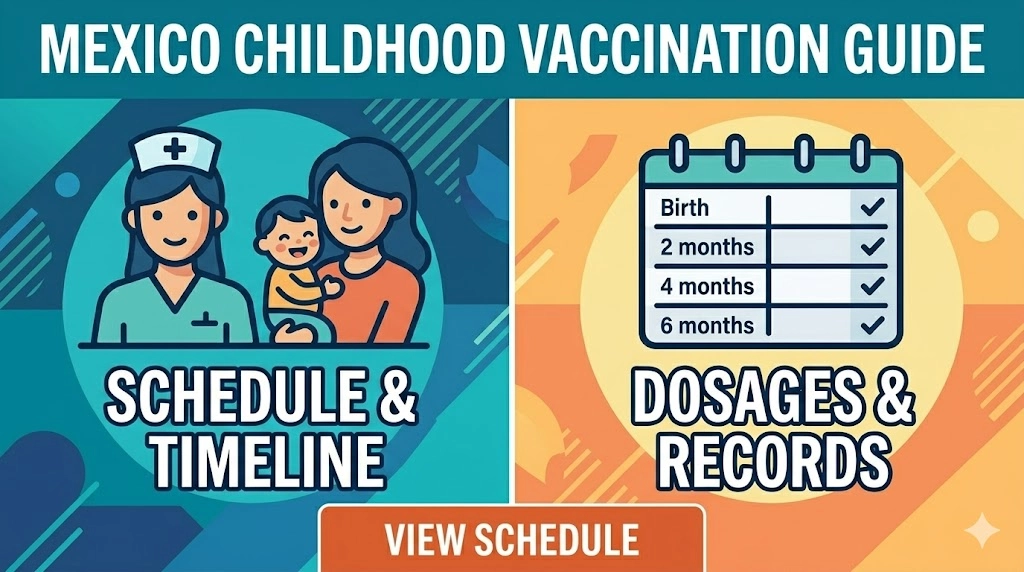
Vaccines Administered from Birth to Eleven Months
The Mexican vaccination schedule begins aggressively on the exact day your child is born. Before a newborn is even discharged from a Mexican hospital, they are administered the Hepatitis B vaccine and the BCG (Bacillus Calmette-Guérin) vaccine. The BCG vaccine protects against severe forms of tuberculosis, which remains endemic in certain regions of Latin America. Many expats from the US or Canada are shocked by this, as BCG is not routinely given back home, and it leaves a permanent, small circular scar on the right shoulder.
At the two, four, and six-month milestones, the schedule becomes heavy. The primary workhorse of infant immunization in Mexico is the Hexavalent vaccine (Hexavalente acelular). This single injection protects against six diseases: Diphtheria, Tetanus, Pertussis (Whooping Cough), Polio, Haemophilus influenzae type b (Hib), and Hepatitis B. At the two- and four-month visits, infants also receive the Pneumococcal conjugate vaccine (Neumocócica conjugada) to prevent pneumonia, and the oral Rotavirus vaccine to prevent severe, dehydrating gastrointestinal infections.
Starting at six months of age, infants are also integrated into the seasonal Influenza vaccination campaigns. The first time a baby receives the flu shot, it is administered in two separate doses spaced one month apart, followed by an annual booster every winter. Managing a fussy, feverish baby after these intense rounds of injections is stressful. While local pharmacies carry basic infant paracetamol, many expat parents rely on iHerb to order their trusted organic teething drops, natural gripe water, and specialized infant vitamin D drops, as the local Mexican pharmacy selection for organic baby remedies is extremely limited. To understand what you can reliably find locally, check out Pharmacies in Mexico: How to Get Medications OTC vs Prescription.
Toddler and Preschool Boosters from Ages One to Six
As your child crosses the one-year mark, the vaccination focus shifts to highly contagious viral diseases. At twelve months, toddlers receive their third and final dose of the Pneumococcal conjugate vaccine, along with their first dose of the SRP vaccine (Triple Viral), which protects against Measles, Mumps, and Rubella (Sarampión, Rubéola, Parotiditis).
At eighteen months, the schedule requires a critical booster round. Toddlers receive a reinforcement dose of the Hexavalent vaccine. Crucially, the Mexican Secretariat of Health recently updated the national guidelines regarding the second dose of the SRP vaccine. Historically administered at six years of age, the second SRP dose has now been moved up to eighteen months to combat recent global measles outbreaks. Ensuring your clinic is following this updated, accelerated timeline is vital.
At four years of age, children receive the DPT booster, which reinforces immunity against Diphtheria, Pertussis, and Tetanus. As children enter the local preschool system (kínder), they are exposed to a massive influx of new local germs and seasonal illnesses. To keep their little immune systems resilient, many expat parents utilize iHerb to continuously stock up on high-quality elderberry syrups, clean children’s multivitamins, and specialized immune-boosting gummies that are simply unavailable in local supermarkets.
| Vaccine Name (Mexican Term) | Age Administered | Diseases Prevented |
| BCG | Birth | Tuberculosis |
| Hepatitis B | Birth | Hepatitis B |
| Hexavalente | 2, 4, 6, and 18 months | Diphtheria, Tetanus, Pertussis, Polio, Hib, Hep B |
| Neumocócica conjugada | 2, 4, and 12 months | Pneumonia, Meningitis |
| Rotavirus | 2 and 4 months | Severe Gastroenteritis |
| SRP (Triple Viral) | 12 and 18 months | Measles, Mumps, Rubella |
| DPT | 4 years | Diphtheria, Pertussis, Tetanus |
Public Health Clinics vs Private Pediatric Care
When the time comes to actually get the shots, expats face a significant choice: utilize the free public clinics or pay out of pocket for a private pediatrician. Both avenues offer distinct advantages and frustrating drawbacks.
Utilizing the Free Public System
The Mexican government guarantees free, universal access to all vaccines listed on the national schedule, regardless of your socioeconomic status or nationality, provided you have legal residency. These vaccines are administered at local Centros de Salud or IMSS family clinics. The government also runs massive, highly publicized vaccination campaigns (Semanas Nacionales de Salud) several times a year, where nurses literally set up booths in town squares and public parks to vaccinate children.
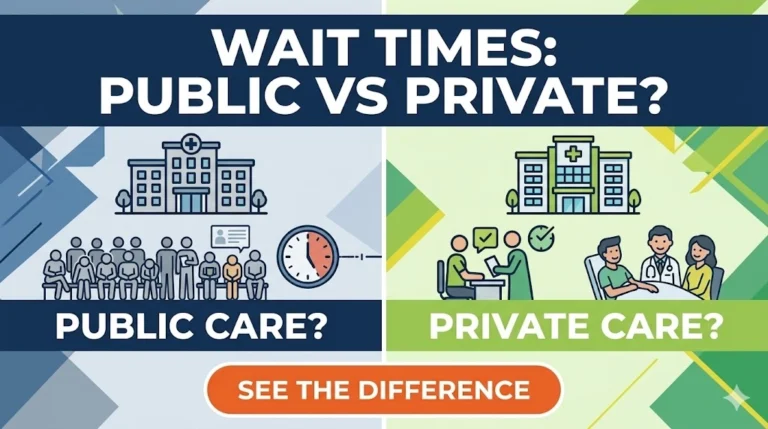
The primary advantage of the public system is the cost—it is completely free. However, the logistics of a public clinic visit can test your patience. Appointments are rarely respected. You must typically arrive early in the morning, pull a paper ticket, and sit in a crowded, un-air-conditioned waiting room alongside dozens of sick patients for hours. Furthermore, the public system frequently suffers from severe supply chain shortages. It is incredibly common to wait three hours only to be told that the clinic ran out of the Hexavalent vaccine two days ago and you must come back next month.
Language barriers in the public sector are absolute. The overwhelmed nursing staff will speak rapid-fire medical Spanish and will not have the time or patience to translate the side effects of each shot for you. If you are determined to navigate this system to save money, you must arrive prepared. Brushing up on your medical vocabulary and understanding the specific terminology outlined in our guide to Healthcare in Mexico: Complete Guide for Expats Public vs Private is an absolute necessity.
The Advantages of Private Pediatricians
To avoid the chaotic waiting rooms and supply shortages of the public clinics, the vast majority of expats opt to manage their children’s vaccinations through private pediatricians. Private clinics in Mexico are generally world-class. They offer pristine waiting rooms, exact appointment times, and doctors who frequently speak fluent, medical-grade English.
Private pediatricians also have the flexibility to source and administer vaccines that are not currently covered universally by the Mexican public schedule. For instance, the Varicella (Chickenpox) vaccine and the Hepatitis A vaccine are often recommended by private doctors and can be administered in their offices, whereas public clinics may reserve these specifically for high-risk populations or regional outbreaks. If you need help sourcing a trusted, bilingual professional for your family, reviewing Finding English-Speaking Doctors and Specialists in Mexico will point you in the right direction.
The glaring downside to private vaccination is the exorbitant cost. While the doctor’s consultation fee might only be $40 USD, the imported vaccines themselves are marked up significantly. A single dose of the private Hexavalent vaccine or a specialized Meningococcal shot can cost upwards of $100 to $150 USD out of pocket. If you are paying cash for a two-month-old infant who needs three different injections in one visit, the bill will easily exceed $300 USD. To understand how these specific pediatric costs impact your overall family budget, you must read Healthcare Costs in Mexico: Doctor Visits, Hospital Stays, and Surgery Expenses.
This is exactly why carrying a premium international health insurance policy like Cigna Global is highly strategic. Many comprehensive Cigna Global family policies include well-child benefits that cover the costs of routine private pediatric visits and scheduled vaccinations. By leveraging a Cigna Global plan, you can access the absolute best, English-speaking private pediatricians in Mexico without bearing the massive out-of-pocket pharmaceutical markups.
Handling Missing Vaccines and Boosting Natural Immunity
Moving across international borders with a toddler often means arriving with a fragmented immunization record. Coordinating the differences between your home country’s schedule and the Mexican requirements requires careful pediatric planning and proactive health management.
Catch Up Schedules and Vaccine Equivalencies
If you arrive in Mexico and realize your child is behind on the local schedule—perhaps because your home country spaces out the Polio and DTaP vaccines differently than the Mexican Hexavalent combo—you must work with a doctor to establish a catch-up protocol. The Mexican Secretariat of Health publishes strict national guidelines on how to safely condense delayed vaccination schedules without overwhelming a child’s immune system.
You may also encounter discrepancies regarding specific boosters. For example, if your child received a vaccine brand back home that requires three doses, but the Mexican equivalent only requires two, your local pediatrician must carefully cross-reference the chemical formulations to ensure adequate antibody protection. Never attempt to guess these equivalencies yourself; always defer to a board-certified Mexican pediatrician who understands international vaccination protocols.
During these catch-up phases, your child might experience stronger immune responses, resulting in unexpected fevers or lethargy. Knowing exactly what to do when your child spikes a sudden, high fever in a foreign country is critical. You do not want to be frantically searching for a hospital at 2:00 AM. Having a policy from Cigna Global ensures that if a severe vaccine reaction occurs, you can immediately access the highest-tier private emergency rooms without worrying about massive upfront cash deposits. To prepare for these sudden late-night crises, review Medical Emergencies in Mexico: What Expats Should Know and Prepare.
Supporting Your Childs Immune System During Transitions
Beyond the formal vaccination schedule, expat children face unique immunological challenges. Moving to Mexico exposes them to entirely new environmental allergens, different municipal water treatments, and unfamiliar bacterial flora in the local food supply. It is entirely normal for expat children to experience a higher frequency of mild stomach bugs or respiratory sniffles during their first six months in the country.
Proactively supporting their gut health and natural immunity is the best defense against this transitional sickness. Because commercial Mexican pharmacies cater mostly to reactive medicine (antibiotics and strong painkillers), finding clean, organic preventative supplements for children is incredibly frustrating. This is why veteran expat parents rely exclusively on iHerb.
By ordering through iHerb, you can secure high-quality, specialized children’s probiotics that help rebuild their digestive flora after exposure to new local foods. Furthermore, maintaining a steady supply of premium omega-3 gummies, liquid vitamin C, and organic zinc supplements via iHerb ensures your child’s nutritional baseline remains strong, even if they become picky eaters while adjusting to the local Mexican cuisine. Relying on iHerb allows you to maintain the exact same standard of holistic pediatric care you expected in your home country.
School Enrollment and Private Insurance Integration
Keeping your child’s vaccines up to date is not merely a health recommendation in Mexico; it is a strict legal and administrative requirement for integrating your family into the local community.
Vaccination Requirements for Mexican Schools
The Mexican Secretariat of Public Education (SEP) strictly mandates that all children must present an up-to-date vaccination record to enroll in any recognized educational institution. This rule applies equally to local public schools and elite international private academies.
When you apply for school admission, the administration will explicitly request a physical copy of your child’s green Cartilla Nacional de Salud. Presenting a printed PDF from your pediatrician in Texas or London will almost universally be rejected by the school secretary. The records must be formalized within the Mexican booklet. Furthermore, Mexico does not legally recognize religious, philosophical, or personal belief exemptions for childhood vaccinations in the public school system.
In addition to the Cartilla, most schools require a formal medical certificate (certificado médico) at the beginning of every academic year. This is a signed, stamped document from a licensed Mexican doctor stating your child is healthy, free of infectious diseases, and physically fit to participate in school activities. Navigating these bureaucratic school requirements is much easier if your child is already established with a local private clinic.
Maximizing Pediatric Coverage with International Insurance
Raising a child abroad involves inherent medical unpredictability. An innocent playground scrape can turn into a nasty tropical staph infection, or a mild cough can rapidly escalate into severe bronchitis. Relying on out-of-pocket cash for every private pediatric visit quickly drains a family’s savings, while relying on the overwhelmed public system induces massive anxiety.
Local domestic Mexican health insurance policies often fail expat families because they feature exorbitant deductibles for pediatric care and strictly limit coverage to specific domestic hospital networks. To truly protect your child’s health and your family’s finances, securing a comprehensive international plan from Cigna Global is the ultimate solution. To understand the glaring limitations of local policies compared to global coverage, you must thoroughly read Choosing Private Health Insurance: Local Mexican Plans vs International Coverage.
A robust family policy from Cigna Global provides absolute peace of mind. It allows you to bypass public waitlists, utilize Mexico’s premier private pediatric hospitals for emergencies, and ensures your child remains fully covered whether you are living in Mexico City, vacationing in Europe, or visiting family back in your home country. By combining the proactive, holistic wellness support of iHerb with the elite, catastrophic financial protection of Cigna Global, expat parents can confidently raise healthy, resilient children in Mexico without ever compromising their standard of medical care.
References
Primary Sources (Official)
- Secretaría de Salud – Cartillas Nacionales de Salud Versión 2023. https://www.gob.mx/salud/documentos/cartillas-nacionales-de-vacunacion-version-2023
Other Helpful Sources
- World Health Organization (WHO) – Immunization Data portal for the Region of the Americas. https://immunizationdata.who.int/dashboard/regions/region-of-the-americas
- Sociedad Mexicana de Salud Pública – Consenso de Vacunación Infantil en México. https://www.smsp.org.mx/docs/publicaciones/consenso-vacunacion-infantil.pdf
Disclaimer
The information provided in this guide is for educational, logistical, and informational purposes only and does not constitute formal medical, legal, or pediatric advice. The Mexican national vaccination schedule, school enrollment requirements, and public clinic protocols are subject to frequent updates and regional variations by the Secretariat of Health. Always consult with a licensed, board-certified Mexican pediatrician regarding your child’s specific medical needs, catch-up vaccination protocols, and physical health, and verify insurance coverage limits directly with your provider prior to seeking private treatment.