Telemedicine in Mexico: Accessing Online Doctor Consultations as an Expat
Facing a severe stomach bug or unexpected infection during a torrential downpour makes the thought of navigating unfamiliar streets to find a local clinic completely unbearable for many expats. I once suffered in bed for days in Puerto Vallarta simply because I did not realize digital doctors were a legally recognized option here. This guide explains exactly how to access telemedicine, book online consultations, and legally fill digital prescriptions across Mexico.
Disclosure: This post may contain affiliate links. We may earn a commission at no extra cost to you if you make a purchase through these links. Read full disclosure.
The Legality and Infrastructure of Digital Healthcare in Mexico
Telemedicine is not just a temporary, pandemic-era workaround in Mexico; it has evolved into a permanent, highly regulated fixture of the national healthcare system. The federal government, through initiatives championed by the Secretariat of Health, actively promotes tele-health to bridge the massive geographical gaps between high-tech urban hospitals and rural, medically underserved communities. For expats, this rapidly expanding infrastructure means you can access top-tier medical specialists located in cosmopolitan hubs like Mexico City or Monterrey directly from the comfort of your remote beachfront rental in Oaxaca or Baja California Sur, completely legally and safely.
The regulatory framework governing this digital medical practice is stringently overseen by COFEPRIS (Comisión Federal para la Protección contra Riesgos Sanitarios), which acts as the national health authority. COFEPRIS has established strict technical and legal guidelines for how digital consultations must be conducted and, crucially, how electronic prescriptions (recetas electrónicas) must be issued to prevent pharmaceutical fraud. A legitimate electronic prescription in Mexico is not merely an informal email from a doctor stating what you should take. It is a highly formalized, legally binding medical document that must explicitly contain the physician’s full name, their professional license number (cédula profesional), the academic institution that issued their medical degree, and a verifiable digital signature or secure QR code.
Understanding this legal baseline is vital because it directly dictates the quality of care you will receive. When you utilize official Mexican telemedicine platforms, you are not speaking to an unvetted advisor; you are consulting with board-certified physicians whose academic credentials and right to practice have been rigorously authenticated by federal databases. If you are an expat still trying to understand how this modern digital framework fits into the broader, often confusing medical landscape, reviewing our comprehensive Healthcare in Mexico: Complete Guide for Expats (Public vs Private) will give you a much clearer picture of the country’s dual healthcare infrastructure.
However, the success of your telemedicine experience is inherently tied to the stability of your local internet connection. Mexico’s coastal towns and remote mountain villages are notorious for sudden power outages and fluctuating Wi-Fi speeds. If you are planning to rely heavily on digital healthcare while living as a digital nomad in a surf town, investing in a robust cellular data backup plan or a satellite internet connection is a mandatory precaution to ensure your medical video calls do not drop mid-diagnosis.
Booking Your Virtual Appointment and Avoiding Cross Border Pitfalls
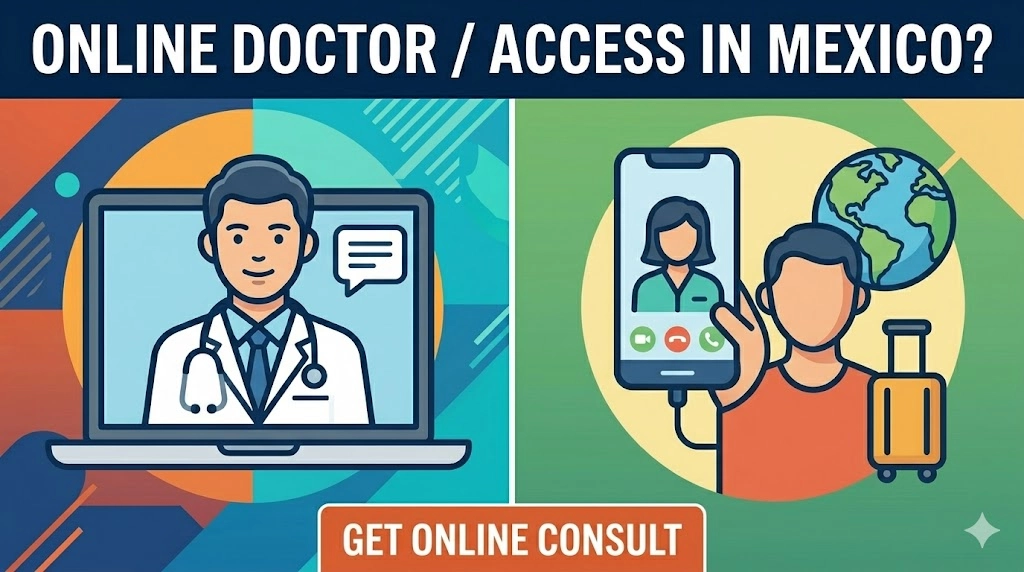
Finding a reputable doctor online in Mexico has become incredibly streamlined thanks to the proliferation of dedicated digital health platforms. The most popular and heavily vetted network for booking virtual consultations is Doctoralia. This platform functions as a massive, interactive directory of private specialists, therapists, and general practitioners across the entire country. You can filter doctors by their specific medical specialty, read hundreds of verified patient reviews, and most importantly for new arrivals, filter specifically for doctors who speak fluent English.
One of the most critical mistakes newly arrived expats make is attempting to use their home-country telehealth services—such as a United States-based digital health app—while physically sitting in Mexico. While you might be able to successfully complete the video call with your physician back home, the digital prescription they issue you will be completely useless locally. Mexican pharmacies are legally prohibited from dispensing regulated medications based on foreign prescriptions, whether they are physical or digital. You must utilize a locally licensed Mexican physician to generate a valid receta electrónica. If you are unsure of how to find the right local medical professional for your specific underlying condition, our guide on Finding English-Speaking Doctors and Specialists in Mexico provides targeted, actionable strategies for locating top-tier bilingual care.
Preparing for your Mexican digital appointment requires a bit of proactive organization. Because the doctor cannot physically palpate your abdomen or listen to your lungs with a stethoscope, your ability to articulate your symptoms clearly and accurately is paramount. Even if you manage to book an English-speaking doctor, having your complex medical history, current medications, and specific symptoms translated into Spanish as a backup document is highly recommended in case technical issues disrupt the audio feed.
You should also gather any previous physical lab work, current pill bottles, and baseline vital signs—such as your temperature, weight, and blood pressure if you have home monitors—to present to the doctor clearly on camera. If you frequently experience anxiety regarding miscommunications during these vital medical exchanges, utilizing the communication strategies outlined in Overcoming Language Barriers at the Doctor: Tips for Expats will help you advocate for your health effectively.
Navigating Electronic Prescriptions and Pharmacy Fulfillment
The ultimate goal of almost every telemedicine appointment is securing a prescription to quickly treat your illness. Once your virtual consultation concludes, the attending doctor will generate your receta electrónica and send it directly to your smartphone, typically via email or through a secure WhatsApp PDF file. You can then take your phone directly to the counter of a major national pharmacy chain, such as Farmacias del Ahorro, Farmacias Guadalajara, or Farmacias San Pablo. The pharmacist will scan the barcode or QR code displayed on your screen, which verifies the document against the national registry, allowing them to legally dispense the medication.
However, there is a massive, highly enforced limitation to telemedicine in Mexico that expats frequently misunderstand. Under strict COFEPRIS regulations, all medications sold in the country are divided into six distinct classifications, known as Fracciones. Heavy, controlled substances that fall under Fractions I, II, and III—which include strong opioid painkillers, severe psychiatric medications, and certain highly regulated ADHD stimulants—absolutely cannot be prescribed via a standard digital PDF. These highly regulated narcotics require a special, physical paper prescription featuring a sequential barcode issued directly by the federal government, which the pharmacy must physically stamp and retain for their legal audits. If you rely daily on these specific, tightly controlled medications, a telemedicine doctor cannot legally help you secure a refill; you must schedule an in-person visit with a licensed specialist.
For standard therapeutic medications falling under Fraction IV, which notably includes all common antibiotics and strong antivirals, electronic prescriptions are perfectly valid and widely accepted, provided the pharmacy has the updated point-of-sale technology to scan and register the digital folio. To avoid the immense frustration of being turned away at the pharmacy counter while battling a fever, it is essential to understand exactly how these local drug stores operate by reading Pharmacies in Mexico: How to Get Medications (OTC vs Prescription). Additionally, if you are specifically searching for standard antibiotics to rapidly treat a severe case of traveler’s diarrhea, you must review the strict fulfillment rules detailed in Can You Buy Antibiotics Without a Prescription in Mexico?.
If your medical issue is relatively minor, or if you are simply looking to maintain a holistic wellness routine without the administrative hassle of securing formal local prescriptions, your best strategy is often to bypass the Mexican pharmacy system entirely. Expats consistently rely on iHerb for their non-prescription, holistic health needs. Local pharmacies often lack diverse, high-quality nutritional supplements, but by ordering specialized probiotics, digestive enzymes, and immune-boosting vitamins through iHerb, you can have premium wellness products shipped directly to your Mexican residential address. This ensures you have the necessary preventative care on hand to maintain your health before you ever need to log on and call a digital doctor. Utilizing iHerb for your ongoing nutritional and holistic needs drastically reduces your reliance on navigating foreign pharmaceutical regulations. Furthermore, if you discover that a specific, non-controlled medication you relied on back home is simply not manufactured or sold in Mexico, our resource on What If a Medication You Need Isn’t Available in Mexico? will guide you through finding safe local equivalents.
Costs Payment Methods and Insurance Integration
The financial accessibility of telemedicine in Mexico is arguably one of its greatest advantages for uninsured expats and digital nomads. If you are paying entirely out of pocket, a virtual consultation with a licensed general practitioner usually costs between 400 and 600 MXN (roughly $20 to $30 USD). Even highly specialized doctors, such as neurologists, dermatologists, or endocrinologists, typically charge between 800 and 1,500 MXN for a comprehensive, thirty-minute video consultation. This is a mere fraction of the exorbitant out-of-pocket costs you would face if you walked into a private hospital’s emergency room for a non-life-threatening issue. To put these consultation numbers into a broader, realistic financial context for your monthly budget, you can compare them against the extensive data provided in Healthcare Costs in Mexico: Doctor Visits, Hospital Stays, and Surgery Expenses.
Despite these low out-of-pocket costs, executing the actual payment for a digital consultation can be frustratingly complex for new arrivals. Many independent Mexican doctors simply run their telehealth practices directly through WhatsApp video calls rather than dedicated, complex web portals. This informal approach is entirely culturally normal in Mexico. However, they will require upfront payment via a direct bank transfer, known locally as a SPEI transfer. If you do not yet have a Mexican bank account and attempt to use a foreign credit card on a local payment gateway, the transaction will frequently be rejected by international fraud algorithms.
Furthermore, relying entirely on cash payments leaves you incredibly vulnerable if a virtual doctor identifies a severe, undetected issue during the call and directs you to immediately check into a physical hospital for emergency surgery. This is precisely why carrying a premium international health insurance policy becomes non-negotiable for long-term residents. Leading global providers like Cigna Global offer incredibly robust, multilingual telemedicine solutions built directly into their core coverage. With a Cigna Global plan, you do not have to hunt through local Mexican directories or worry about failed SPEI bank transfers; you simply log into the Cigna Global proprietary telehealth application and connect with a vetted, English-speaking international doctor instantly. Furthermore, should that virtual doctor prescribe a costly, long-term maintenance medication, premium policies from Cigna Global often include comprehensive outpatient pharmacy benefits that allow you to claim back the cost of the drugs.
When deciding how to manage your medical care and risk tolerance as an expat, understanding exactly how your specific insurance policy interacts with these modern digital services is critical. If your international insurance operates on a reimbursement model, you must ensure the telemedicine doctor provides you with a formal, government-stamped electronic invoice, known as a factura. Without this highly specific tax document, your claims department back home will likely deny your reimbursement request, regardless of how legitimate the medical consultation was.
If you are currently evaluating your coverage options and want to avoid massive out-of-pocket hospital deposits, thoroughly reading Choosing Private Health Insurance: Local Mexican Plans vs International Coverage will help you select a policy that integrates seamlessly with modern telehealth infrastructure. And for those miserable days when you secure your digital prescription but are simply too ill to leave your apartment and walk to the pharmacy, you should familiarize yourself with local logistical conveniences by reading Prescription Delivery: Can Pharmacies Deliver Medicine to Your Door?.
To help you decide which medical route is best for your immediate health needs and financial situation, here is a quick comparative breakdown of your primary consultation options across Mexico:
| Care Option | Typical Cost (USD) | Average Wait Time | Best Suited For |
| Telemedicine Consultation | $20 – $50 | 1 – 2 Hours | Non-emergency illnesses, basic prescriptions (Fraction IV), lab test reviews. |
| Pharmacy Adjacent Clinic | $3 – $5 | 15 – 45 Minutes | Minor infections, immediate physical ailments, extreme budget care. |
| Private Hospital ER | $100+ (plus massive deposit) | Immediate | Severe physical trauma, life-threatening emergencies, complex diagnostics. |
| Public Clinic (IMSS) | Varies (Annual Fee Required) | Weeks to Months | Routine preventative care for legal residents operating on a strict fixed budget. |
References
Primary sources (official)
- Centro Nacional de Excelencia Tecnológica en Salud (CENETEC) – The official federal agency within the Mexican Secretariat of Health that establishes the technical, clinical, and infrastructure guidelines for telehealth across the country. https://www.gob.mx/salud/cenetec
Other helpful sources
- Secretaría de Salud – Telemedicina satelital y conectividad hospitalaria: https://www.gob.mx/salud/prensa/telemedicina-satelital-conecta-35-hospitales-publicos-y-centros-de-salud-en-zonas-urbanas-y-rurales-que-atienden-covid-19-243918
Disclaimer
The information provided in this guide is for educational and informational purposes only and does not constitute formal medical or legal advice. Mexican health regulations, COFEPRIS drug classifications, and the legal framework surrounding electronic prescriptions (recetas electrónicas) are subject to frequent and sudden changes by the federal government. Always consult with a licensed, board-certified Mexican physician regarding your specific health condition, and verify telemedicine coverage and reimbursement requirements directly with your health insurance provider prior to booking a consultation.