Quality of Care in Small Towns vs Big Cities: Healthcare Access in Different Regions
Moving to a sleepy Mexican beach town sounds idyllic until you experience a sudden medical emergency and realize the nearest fully equipped hospital is a three-hour drive away. I once had to endure a grueling, bumpy taxi ride from a rural Oaxacan village to the capital just to get a proper MRI for a torn ligament. This guide explains the stark differences in healthcare access between rural towns and major Mexican metropolitan areas so you can choose your new home safely.
Disclosure: This post may contain affiliate links. We may earn a commission at no extra cost to you if you make a purchase through these links. Read full disclosure.
The Reality of Healthcare in Major Mexican Cities
When expats ask about the quality of healthcare in Mexico, the answer depends entirely on their zip code. In the country’s major metropolitan powerhouses, the private healthcare sector is not just adequate; it frequently rivals or exceeds the standards found in the United States, Canada, or Western Europe.
Apex Facilities and International Accreditations
Mexico City, Guadalajara, and Monterrey are the undisputed medical capitals of the country. In these hubs, you will find massive, state-of-the-art private hospitals that cater to both wealthy locals and a booming medical tourism industry. Facilities like Centro Médico ABC in Mexico City, Hospital San Javier in Guadalajara, and Christus Muguerza in Monterrey frequently hold Joint Commission International (JCI) accreditations. This is the global gold standard for hospital care, meaning their infection control, surgical safety protocols, and administrative transparency are rigorously audited by external international bodies.
If you choose to settle in one of these massive urban centers, you will have immediate access to cutting-edge robotic surgery, comprehensive neonatal intensive care units, and advanced oncology wings. To understand the landscape of the capital specifically, review Healthcare in Mexico City: Top Hospitals and Clinics for Expats. Accessing these apex facilities without facing financial ruin requires premium international health insurance. Policies like Cigna Global are designed specifically for this tier of care, offering direct billing agreements with JCI-accredited hospitals so you are not forced to pay tens of thousands of dollars out of pocket before a surgery begins.
Specialist Availability and Language Barriers
Beyond the physical infrastructure, big cities offer an unparalleled concentration of highly specialized medical talent. If you have a rare autoimmune disorder or require a pediatric cardiologist, you will almost certainly need to be in a major city. Many of the specialists operating in these urban private hospitals completed their fellowships or residencies abroad, often in the US, the UK, or Spain.
Because of this international training, finding a doctor who speaks fluent, medical-grade English is remarkably easy in a big city. You do not have to worry about a dangerous misdiagnosis occurring because of a language barrier. For actionable advice on locating these bilingual professionals, read Finding English-Speaking Doctors and Specialists in Mexico. If you are comparing the overall infrastructure of the country’s second-largest city, Healthcare in Guadalajara: Medical Facilities and Services for Foreign Residents provides an excellent baseline.
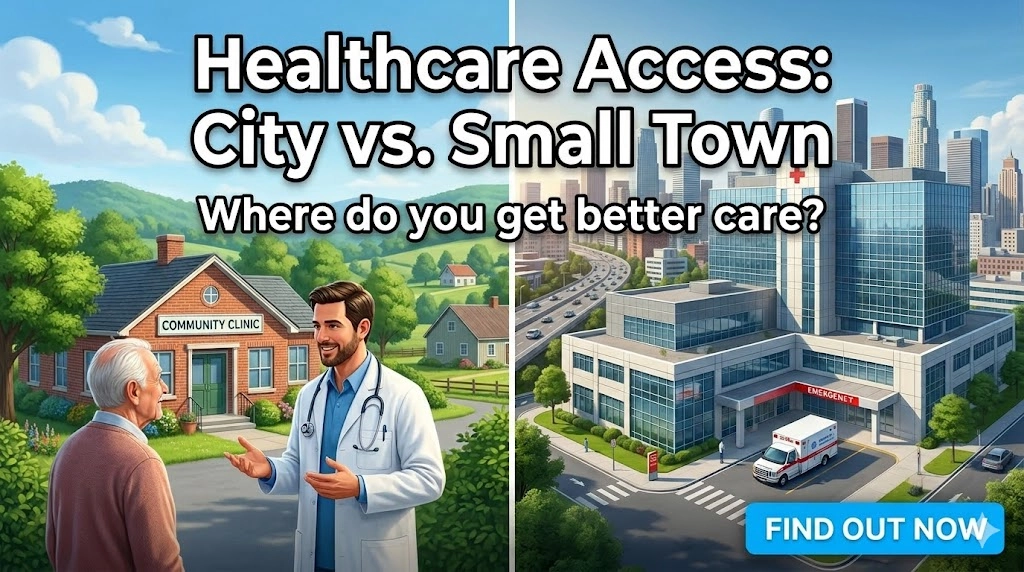
Navigating Medical Care in Small Towns and Rural Areas
The romantic appeal of moving to a tiny fishing village in Baja California or a remote mountain pueblo in Chiapas is undeniable. However, the trade-off for this tranquility is a severe reduction in immediate medical infrastructure.
The Role of Local Clinics and General Practitioners
In rural Mexico, healthcare is highly localized and primarily handled by general practitioners operating out of small private clinics (clínicas) or the consulting rooms attached to local pharmacies (consultorios de farmacia). For minor ailments, such as traveler’s diarrhea, a basic ear infection, or a mild allergic reaction—these local doctors are fantastic. They are highly accessible, deeply embedded in the community, and usually charge less than $10 USD for a basic consultation.
However, rural clinics are fundamentally unequipped for trauma or complex diagnostics. A small town clinic will likely not have a CT scanner, an MRI machine, or a fully stocked blood bank. If you suffer a severe heart attack or a major car accident in a rural area, the local clinic can only stabilize you minimally before you must be transferred to a larger city. Understanding these severe logistical limitations is crucial; you should thoroughly review Emergency Medical Services in Rural Mexico: Challenges and Tips for Expats before signing a lease outside of a major city.
Furthermore, these rural doctors operate almost exclusively on a cash basis. They will not accept foreign credit cards, and they certainly cannot process direct billing with international insurers. Expats living in rural areas frequently use Wise to transfer funds from their home bank accounts to their local Mexican debit cards, ensuring they always have enough physical pesos on hand to pay for unexpected local medical consultations and immediate pharmacy runs.
Pharmacy Limitations and Holistic Health
Small town pharmacies stock all the basic antibiotics, painkillers, and common maintenance medications for blood pressure and diabetes. However, if you require specialized holistic support, complex biological injectables, or highly specific nutritional supplements to manage a chronic condition, a rural Mexican pharmacy will simply not carry them. The supply chains in remote areas prioritize essential, high-turnover medicines.
Expats living in small coastal towns or isolated mountain communities bridge this gap by using iHerb. Because iHerb ships a massive variety of specialized vitamins, specific probiotic strains, and alternative wellness products directly to residential addresses in Mexico via reliable international couriers, you can maintain your holistic health regimen without having to drive four hours to a specialty health food store in the nearest metropolis.
If you are looking for a compromise between rural charm and urban amenities, mid-sized cities often provide a sweet spot. To see how these secondary hubs balance infrastructure and lifestyle, check out Healthcare in Mérida: Quality of Medical Care in Yucatán.
Comparing Regional Healthcare Access for Expats
To help you visualize the stark differences in medical infrastructure, here is a breakdown of what you can realistically expect depending on the size and location of your chosen Mexican home.
| Healthcare Feature | Major Metropolitan Cities (e.g., CDMX, Guadalajara, Monterrey) | Mid-Sized Expat Hubs (e.g., Merida, Puerto Vallarta, San Miguel) | Small Towns and Rural Areas (e.g., Sayulita, Mazunte, Lake Chapala outskirts) |
| Emergency Trauma Care | World-class; Level 1 trauma centers available 24/7. | Good; capable of handling most emergencies, but may lack niche surgical teams. | Basic stabilization only; immediate transfer required for major trauma. |
| Diagnostic Equipment | Advanced (PET scans, specialized MRIs, genetic labs). | Standard (CT scans, basic MRIs, standard blood labs). | Very limited (Basic X-rays and ultrasounds only). |
| English-Speaking Staff | Abundant; entire international patient departments exist. | Common; many doctors cater specifically to the expat retiree community. | Rare; you must be fluent in Spanish or bring a local translator. |
| Insurance Acceptance | High; routine direct billing with premium networks like Cigna Global. | Moderate; some direct billing, but reimbursement models are common. | None; strictly out-of-pocket cash payments required. |
| Specialist Availability | Every conceivable sub-specialty is represented locally. | Most major specialists available, but wait times can vary. | General practitioners only; specialists visit once a month or not at all. |
Understanding these regional disparities is vital when planning your emergency protocols. If you are unsure of how to physically reach these different tiers of care during a crisis, read Calling an Ambulance in Mexico: How Emergency Services Operate.
Strategies for Bridging the Regional Gap
If your dream is to live in a secluded Mexican paradise, you do not have to abandon it out of medical fear. You simply have to build a proactive, bulletproof healthcare strategy that accounts for your geographic isolation.
Embracing Telemedicine and Digital Health
The greatest equalizer for rural expats in recent years has been the explosion of telemedicine. You no longer have to drive three hours to a major city just to have a specialist look at a persistent rash or adjust your thyroid medication dosage. Many top-tier doctors in Mexico City and Monterrey now offer robust digital consultations.
Through these secure video portals, you can consult with an English-speaking specialist, show them your local lab results, and receive a digitally signed prescription (receta electrónica) sent straight to your phone, which you can then fill at your local small-town pharmacy. To learn how to set up these digital networks before you actually need them, consult Telemedicine in Mexico: Accessing Online Doctor Consultations as an Expat.
When paying for these remote consultations, doctors will require a bank transfer (SPEI) rather than a credit card payment over the phone. Using Wise allows you to execute these transfers instantly from your phone, converting your home currency to pesos at the mid-market rate and ensuring the doctor is paid promptly before your video call begins.
Medical Evacuation Insurance is Non-Negotiable
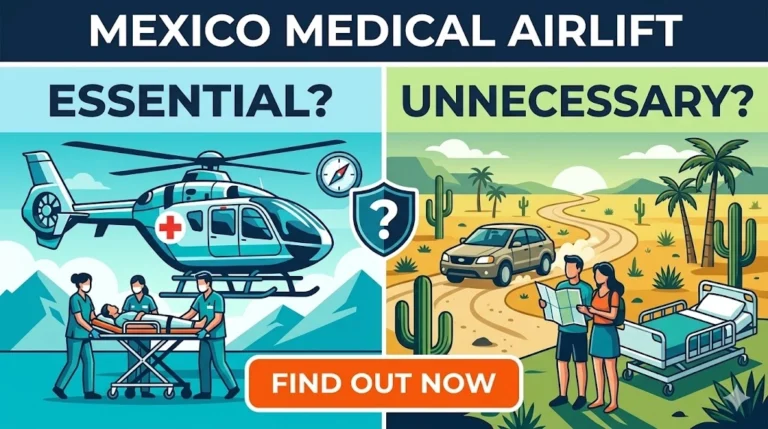
If you live more than an hour away from a major, JCI-accredited hospital, relying solely on ground ambulances is a fatal miscalculation. Mexican highways can be unpredictable, blocked by accidents, protests, or severe weather washouts. In a true life-or-death scenario—such as a stroke or a severe spinal injury—you need to be airlifted to a major urban center immediately.
Medical evacuation (MedEvac) insurance is arguably the most important policy a rural expat can hold. Standard local health insurance will not cover a $25,000 helicopter ride. Premium international plans, like those offered by Cigna Global, often include or offer add-on coverage for emergency medical evacuation. This guarantees that if your local rural clinic cannot handle your trauma, a private air ambulance will be dispatched to transport you to an apex facility in Mexico City or even back to the United States. To understand the intricacies of this specific coverage, read Medical Evacuation Insurance: Do Expats in Mexico Need Airlift Coverage?.
Preventative Planning and Stockpiling
Living rurally means you must be your own first responder. You cannot wait for an emergency to figure out where the nearest antivenom is stocked or how to treat a deep laceration while waiting for a rural ambulance.
Every expat living outside of a major city must maintain a comprehensive, trauma-ready medical kit in their home and vehicle. This goes far beyond band-aids; it should include specialized burn dressings, tourniquets, oral rehydration salts, and backup supplies of all your critical prescription medications. You can find a complete checklist for building this essential safety net in Building a First Aid Kit: Essential Medical Supplies for Expats in Mexico.
Furthermore, you should proactively order your specialized holistic supports and preventative vitamins through iHerb well before you run out, as delivery times to rural Mexican addresses can take over a week. By combining preventative holistic care, a robust digital telemedicine network, and the financial backing of Cigna Global, you can safely enjoy the tranquility of rural Mexico without compromising your long-term health and safety.
References
Primary sources (official)
- World Health Organization (WHO) – Primary Health Care Systems (PRIMASYS) in Mexico: https://iris.who.int/server/api/core/bitstreams/e19dee6d-c5fe-4687-b64f-79de92cc26a7/content
- U.S. Embassy & Consulates in Mexico – Emergency Medical Assistance and Consular Regions: https://mx.usembassy.gov/services/
Other helpful sources
- National Institutes of Health (NIH) – Assessing Quality across Health Care Subsystems in Mexico: https://pmc.ncbi.nlm.nih.gov/articles/PMC3296558/
- Frontiers in Public Health – A comparison of rural–urban differences in healthcare access among older Mexicans: https://www.frontiersin.org/journals/public-health/articles/10.3389/fpubh.2022.1025159/full
Disclaimer
The information provided in this guide is for educational and informational purposes only and does not constitute medical advice or a formal endorsement of any specific healthcare facility. The quality, availability, and emergency response times of medical services in Mexico vary drastically by region, municipality, and facility type. Always consult with a qualified healthcare professional regarding your specific medical needs and verify local emergency infrastructure and insurance direct-billing networks prior to relocating to a rural or urban area in Mexico.