Wise Card vs a Mexican Debit Card: Where Each One Is Actually Cheaper
One of the biggest headaches when you first move to Mexico, or even if you've been here a while, is figuring out the best way to handle your money without getting eaten alive by fees. Between fluctuating exchange rates and mysterious international transaction charges, it can feel like your pesos are vanishing into thin air. This guide will cut through the confusion, comparing the widely popular Wise Card with local Mexican debit cards to show you which one truly keeps more money in your pocket for different situations.
Disclosure: This post may contain affiliate links. We may earn a commission at no extra cost to you if you make a purchase through these links. Read full disclosure.
The Hidden Costs of Your Home Country Bank Card in Mexico
Before diving into the local options, let's address the elephant in the room: continuing to rely on your debit or credit card from back home. Many expats do this initially, thinking it's convenient, but often they're bleeding money without even realizing it. Those seemingly small fees and less-than-ideal exchange rates add up, fast.
ATM Fees and Exchange Rates that Eat Your Pesos Alive
Picture this: you've just arrived in Mexico, excited to grab some street tacos, but your wallet is full of dollars. You head to the nearest ATM, perhaps one associated with a major Mexican bank like BBVA or Banorte, and insert your home country debit card. First, you'll likely face a withdrawal fee from your own bank (often $3-$5 USD or more), then a separate usage fee from the Mexican bank (which can be anywhere from 30 to 100 pesos, or roughly $1.50 to $5 USD). Immediately, you're down $5 to $10 before you even get your cash.
But it doesn't stop there. The exchange rate you get from an ATM is often less favorable than the interbank rate that services like Wise offer. Many ATMs, especially those in tourist areas, will also hit you with something called Dynamic Currency Conversion (DCC). This is where the ATM asks if you want to be charged in your home currency (e.g., USD) or in pesos. Always, always choose pesos! If you select your home currency, the ATM provider gets to set their own, often terrible, exchange rate, adding another hidden layer of cost to your withdrawal. It's a classic trap for unsuspecting tourists and new expats alike. For more ways to navigate these waters, check out our guide on Using ATMs in Mexico: Avoiding Fees and Staying Secure.
International Transaction Fees: The Silent Killers
Beyond ATM withdrawals, using your foreign debit or credit card for purchases in Mexico comes with its own set of financial vampires: international transaction fees. Most banks in the US, Canada, and Europe charge a percentage fee, typically between 1% and 3%, on every single purchase made in a foreign currency. This means if you buy groceries for 1,000 pesos (about $50 USD), you might pay an extra $0.50 to $1.50 without realizing it. It might not seem like much for one purchase.
However, consider your weekly grocery run, your morning coffee, your utility bills, and all the small daily expenditures that accumulate over a month. That 1-3% adds up quickly and steadily, silently eroding your budget. Over the course of a year, these fees can easily amount to hundreds of dollars. It’s a frustrating reality for expats trying to stretch their budget in a new country, especially when you’re constantly making purchases in pesos. This is precisely where a dedicated solution like Wise comes into play, designed to cut these very costs. Our comprehensive guide on the Cost of Living in Mexico: 2026 Comprehensive Guide further illustrates how these small fees impact your overall expenses.
Understanding the Wise Card: Your Expat Financial Game Changer
Let's shift gears and talk about a service that has truly revolutionized how many expats manage their money abroad: the Wise Card. Formerly known as TransferWise, this platform and its associated debit card are built specifically to handle international money transfers and multi-currency spending with transparency and minimal fees. It’s designed to be a digital lifeline for those of us living between countries.
How Wise Works for Expats in Mexico
At its core, Wise offers a multi-currency account. This isn't just a fancy name; it's a game-changer. You can hold money in over 50 different currencies, including Mexican pesos (MXN), US dollars (USD), Canadian dollars (CAD), Euros (EUR), and British pounds (GBP). The key benefit for expats in Mexico is the ability to convert your home currency into pesos within your Wise account before you spend, usually at the mid-market exchange rate with a tiny, transparent conversion fee. This is a far cry from the inflated rates traditional banks offer.
Once you have pesos in your Wise account, you can use your Wise debit Mastercard just like a local Mexican debit card. You can swipe it at shops, pay for services, or withdraw cash from ATMs (though ATM fees still apply from the local machine, Wise usually allows a certain amount of free withdrawals before they add their own small fee). The beauty is, by converting funds beforehand, you control the exchange rate and avoid those nasty international transaction fees from your old bank. It’s like having a local bank account without the hassle of opening one when you first arrive.
The Cost Advantages of Using Wise in Mexico
The primary advantage of the Wise Card is its commitment to the real mid-market exchange rate. This is the rate banks use to trade currency among themselves, and it's almost always better than the "tourist" or "retail" rates you'd get from traditional banks or currency exchange booths. Wise adds a small, upfront fee for conversion, which is clearly displayed, so you always know exactly what you're paying. This transparency is a breath of fresh air compared to the opaque markups of conventional banking.
Let's put it into perspective: if you're transferring money from your US bank account to a Mexican bank account, your bank will typically give you a poorer exchange rate and charge a hefty wire transfer fee. With Wise, you can send money directly to a Mexican bank account, or load your Wise account in your home currency and convert it to pesos yourself. The conversion fees are significantly lower, often just a fraction of a percent, and the exchange rate is much closer to the real market value. For those regularly Transferring Money Internationally: Best Ways to Send Money to/from Mexico, Wise consistently comes out on top for its efficiency and cost-effectiveness.
Practical Scenarios for Wise Use
Imagine you're paying your monthly rent to a Mexican landlord who only accepts pesos. Instead of wiring money through your home bank and losing a chunk to fees and bad exchange rates, you can transfer money to your Wise account, convert it to pesos, and then easily send those pesos to your landlord's Mexican bank account, often with just a local transfer fee (or even free for certain amounts). This is particularly useful if your landlord doesn't accept credit card payments, which is common in Mexico.
Another common scenario: you’re at the local mercado buying fresh produce and local crafts. While many vendors prefer cash, some larger stalls or small businesses might accept card payments. Using your Wise Card with pesos already loaded means no foreign transaction fees on your purchase, giving you the best possible rate. When you do need cash, Wise typically allows two free ATM withdrawals up to a certain monthly limit (e.g., $200-$250 USD, check their current terms as these can change), after which a small fee applies. Even with that small fee, the combined savings on exchange rates and avoided international transaction fees often make it cheaper than relying on your home bank's debit card. This approach works wonderfully for everyday expenses, making your financial life in Mexico much smoother and more affordable.
Navigating Mexican Debit Cards: Local Banking for Expats
While the Wise Card is an incredible tool for expats, a local Mexican debit card still plays a crucial role in truly integrating into the financial system here. It's not just about spending; it's about establishing roots and handling those distinctly local transactions that can sometimes be tricky with foreign cards.
Opening a Mexican Bank Account: The Reality
Opening a bank account in Mexico can sometimes feel like navigating a bureaucratic labyrinth, but it's entirely doable. Major banks like BBVA, Banorte, and Santander are popular choices among expats. The key requirements typically include your Temporary or Permanent Resident card (FMMs or tourist visas usually won't cut it for a full debit account), a utility bill (CFE, Telmex, or water bill) in your name as proof of address, and a valid passport. Some banks might also ask for your CURP (Clave Única de Registro de Población), which is Mexico's national identity number, or even an RFC (Registro Federal de Contribuyentes), which is your tax ID.
The process often involves multiple visits to the bank, lengthy forms, and a lot of patience. Don't be surprised if the rules seem to change depending on the branch or even the person helping you. It's a common expat frustration! However, once you've successfully opened an account, you'll receive a local debit card linked to your Mexican pesos account. For a detailed walkthrough of this often daunting process, our guide on How to Open a Bank Account in Mexico as a Foreigner is an invaluable resource. Also, consider researching Best Banks in Mexico for Expats: Comparing Fees and Services to find the one that best fits your needs.
Pros and Cons of a Local Mexican Debit Card
Having a local Mexican debit card comes with several undeniable advantages. Firstly, it simplifies local transactions immensely. Paying utility bills, such as your CFE electricity or Telmex internet, is often easiest with a Mexican debit card, whether online or at an OXXO convenience store. Many landlords and service providers prefer or even require transfers from a Mexican bank account, eliminating potential friction. It's also essential for setting up How to Set Up Automatic Bill Payments in Mexico, which can be a huge time-saver. Receiving direct deposits, perhaps from a local employer or from a Wise transfer, also becomes seamless.
However, there are also drawbacks. Mexican debit cards often come with international transaction fees if you use them outside of Mexico, similar to your home country card. Their fraud protection might not be as robust as what you're used to from banks in the US or Canada, so vigilance is key. Moreover, if you're regularly receiving money from abroad, you'll still need to factor in the costs of international transfers to get funds into your Mexican account, which is where services like Wise often prove cheaper than traditional bank wires. While some newer fintech options are emerging, like those discussed in Mexican Fintech and Digital Banks (Nu, Klar, and More), traditional Mexican banks can still have higher fees for certain services.
When a Mexican Debit Card Shines (and When it Doesn't)
A Mexican debit card truly shines for anything that requires deep integration into the local financial system. This includes paying rent directly to your landlord via SPEI (Sistema de Pagos Electrónicos Interbancarios) transfers, which are free and instantaneous between Mexican banks. It's also indispensable for setting up recurring payments for utilities, phone plans, and other local services. If you eventually plan to build a local credit history, having an active bank account is a foundational step, as detailed in Building Credit in Mexico: How Foreigners Can Establish Credit History. For everyday local cash withdrawals from your own bank's ATM, there are usually no fees.
However, for international purchases, receiving money from abroad (unless it's a direct bank transfer from Wise, for instance), or for ATM withdrawals of funds transferred from your home currency, a Mexican debit card often incurs conversion fees or less favorable exchange rates. If you’re just visiting, or you’re a new expat still testing the waters, the initial hassle of opening a Mexican bank account might not be worth it compared to relying on a Wise Card for most transactions. The optimal strategy often involves a careful balance between the two, leveraging each for its specific strengths.
Wise Card vs. Mexican Debit Card: A Direct Comparison (and the Winner)
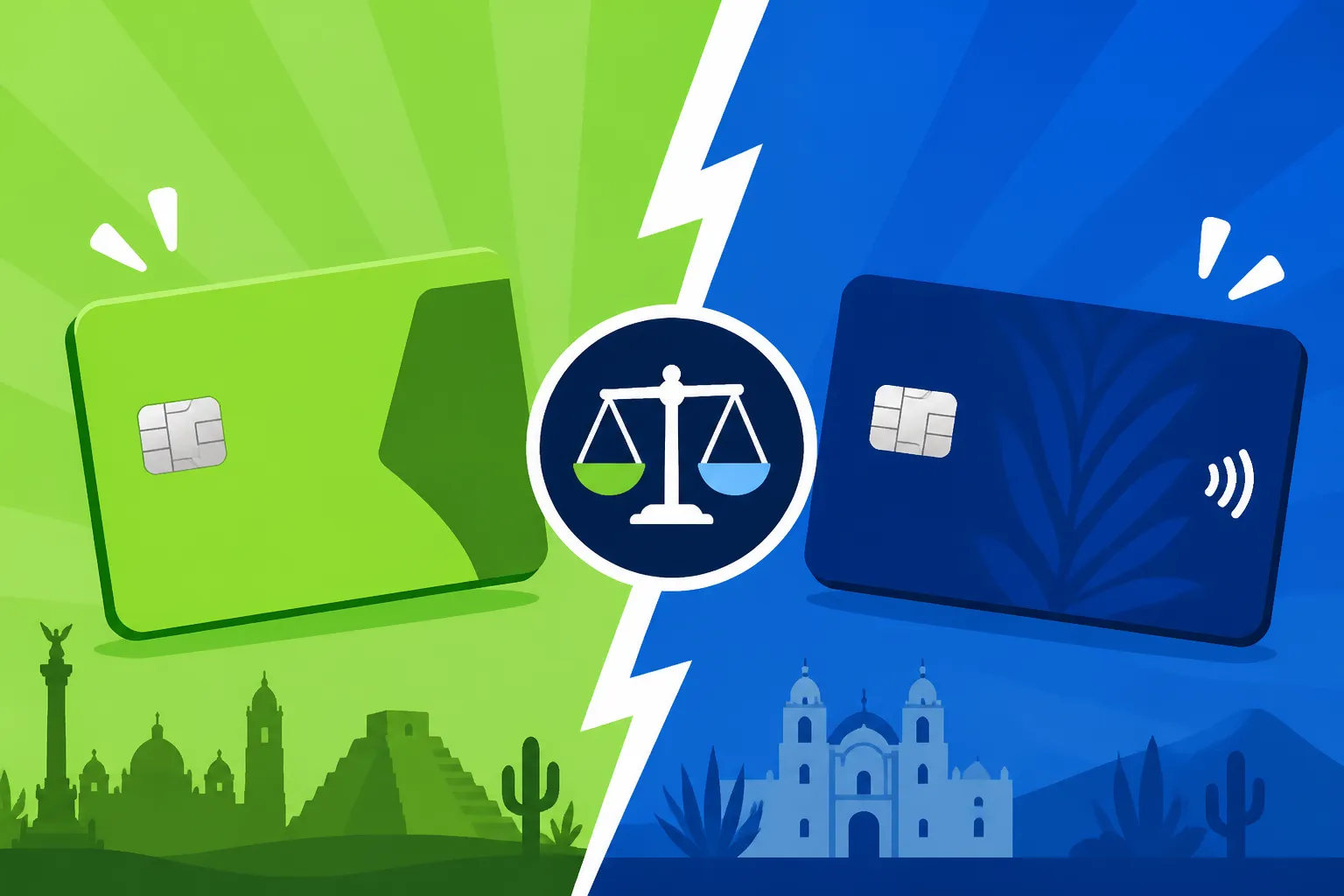
So, you're an expat in Mexico, trying to figure out the absolute cheapest way to manage your money. Is it the innovative Wise Card, or a traditional Mexican debit card? The truth, as with most things in expat life, isn't a simple "either/or" but often a "both/and." Let's break down the direct costs and advantages.
Fee Structures and Exchange Rates Side-by-Side
To really understand where each card excels, let's look at the scenarios most common for expats and how each card handles them. This table will clarify the typical costs you might encounter. Keep in mind that specific bank fees in Mexico can vary, as can Wise's policies, so always check the latest terms.
| Feature / Transaction Type | Wise Card (with MXN balance) | Mexican Debit Card (local bank) | Home Country Debit Card (for comparison) |
|---|---|---|---|
| Exchange Rate | Mid-market rate + small, transparent conversion fee | Bank's retail rate (often less favorable than Wise) | Bank's retail rate (often significantly worse) + DCC |
| International Transfer In | Free (from Wise to MXN account) or low fee to load in home currency, then convert to MXN | Varies greatly; typically high fees from sender's bank | N/A (not designed for this) |
| International Transfer Out | Low, transparent fee (e.g., to USD, CAD) | High wire transfer fees (e.g., $25-50 USD equivalent) | High wire transfer fees (e.g., $25-50 USD equivalent) |
| ATM Withdrawal (Local MXN) | Free up to monthly limit (e.g., $200 USD), then small fee + local ATM fee | Free at own bank's ATMs, fees at other banks (30-100 MXN) | Bank fees (home + local) + poor exchange rate/DCC |
| ATM Withdrawal (Intl. Currency) | Not applicable (convert to MXN first) | Not applicable (local currency only) | Home bank fees + poor exchange rate + DCC |
| Local Purchase (MXN) | Free (if MXN balance available) | Free | 1-3% foreign transaction fee + poor exchange rate |
| Online Purchase (Non-MXN) | Free (if foreign currency balance available) | 1-3% foreign transaction fee | 1-3% foreign transaction fee |
| Receiving Salary (Local Job) | Possible, but less common; preferred local account | Free (direct deposit) | Not possible for local direct deposits |
| Paying Bills (CFE, Telmex) | Possible with MXN balance (online or certain apps) | Easiest method (online, direct debit, OXXO) | Difficult; often incurs foreign transaction fees |
As you can see, the Wise Card generally offers superior exchange rates and lower fees for anything involving currency conversion or cross-border money movement. It's particularly fantastic for ensuring you get a fair shake on your international funds. When it comes to everyday purchases in pesos, both the Wise Card (with a pre-loaded MXN balance) and a local Mexican debit card are essentially free.
The Best Strategy for Expats: A Hybrid Approach
For the savvy expat, the real winner isn't one card over the other, but a strategic combination of both. The Wise Card should be your go-to solution for anything involving money coming into Mexico, for making larger transfers, and for spending money converted from your home currency. It’s perfect for bridging the gap between your previous financial life and your new one in Mexico. You can easily receive money in different currencies, convert it at excellent rates, and use the Wise card for daily purchases or controlled cash withdrawals, minimizing your exposure to unfavorable bank rates and hidden international fees. Truly, if you're not using Wise, you're likely losing money.
However, a local Mexican debit card is indispensable for local financial integration. It’s what you’ll use to pay most of your bills, often automatically, without any fuss. It's also what most employers will use for direct deposits, and it makes sending money to local friends or service providers via SPEI effortless. So, while Wise excels at international transactions and getting your money into pesos cheaply, a Mexican debit card provides the vital local infrastructure. Our recommendation? Open a Mexican bank account to handle local nuances like bill payments and local income, and rely heavily on Wise for all your international money transfers and for most of your daily spending in pesos that originates from funds brought from abroad. This dual approach gives you the best of both worlds, ensuring you save money, enjoy convenience, and navigate the Mexican financial landscape like a pro.
Common Expat Financial Pitfalls and How to Avoid Them
Even with the right cards in your wallet, the financial landscape in a new country can throw curveballs. Expats, particularly new ones, are susceptible to a few common traps that can quickly deplete their hard-earned money. Being aware of these pitfalls is just as important as choosing the right payment methods.
Dynamic Currency Conversion (DCC) Traps
We touched on this earlier, but it bears repeating because it's such a pervasive scam. When you're making a payment or withdrawing cash in Mexico, and the terminal or ATM asks if you want to be charged in your home currency (e.g., USD, CAD, EUR) instead of Mexican pesos (MXN), always choose MXN. This is dynamic currency conversion, and it's almost always a terrible deal. The merchant or ATM provider gets to set their own exchange rate, which is invariably worse than the rate your bank or a service like Wise would give you.
It feels counterintuitive for many people because seeing your home currency provides a false sense of security, but it’s a trap. By opting for pesos, you allow your card issuer (or Wise, if you're using it) to handle the conversion at their rate, which will almost certainly be more favorable. This simple trick can save you a significant amount over time, especially if you're frequently making card purchases or ATM withdrawals. Always be vigilant at point-of-sale terminals and ATMs, and insist on being charged in the local currency.
Over-Reliance on Cash or Single Card
While cash is king in many parts of Mexico, and definitely essential for smaller vendors, local markets, and many street food stalls, relying solely on cash presents its own set of risks and inconveniences. Carrying large amounts of cash can make you a target for theft, and it's easy to lose track of your spending without a digital record. Plus, those frequent ATM withdrawals to replenish your cash supply can rack up fees, as discussed. Conversely, relying exclusively on one card, especially a foreign one, can leave you stranded if it's lost, stolen, or blocked by your bank for "suspicious activity" in a foreign country.
The smart approach is to diversify your payment methods. Have a good mix of cash (enough for a day or two), your Wise Card (for most purchases and calculated ATM withdrawals), and your local Mexican debit card (for specific local payments). It's also wise to have a backup credit card from your home country, ideally one with no foreign transaction fees, just for emergencies or large, unexpected expenses. This multi-pronged strategy ensures you're prepared for almost any financial situation, providing both convenience and security. For more on navigating payment methods, our article on Using Credit and Debit Cards in Mexico: What Expats Need to Know offers further insights.
Disclaimer
The information provided in this guide is for general informational purposes only and does not constitute financial, legal, or immigration advice. While we strive to provide accurate and up-to-date information, regulations and policies in Mexico can change rapidly. Always consult with a qualified financial advisor, tax professional, or immigration expert for advice tailored to your specific situation. We are not responsible for any actions taken based on the information provided here.