Why You Still Need a Mexican Number: Banks, Deliveries, and Verification Codes
Trying to navigate life in Mexico with just your home country's phone number is like trying to drive a car with a flat tire – you might get a little way, but you're going to hit a wall, often and frustratingly. Seriously, as expats, we've all been there, clinging to our familiar numbers, only to find ourselves locked out of bank accounts, missing crucial delivery calls, or just plain struggling to communicate. This guide is going to walk you through exactly why a local Mexican number isn't just a convenience, but an absolute necessity, and how you can get one set up with minimal fuss.
Disclosure: This post may contain affiliate links. We may earn a commission at no extra cost to you if you make a purchase through these links. Read full disclosure.
The Lifeline of Expat Life: Why Your Foreign Number Just Won't Cut It
When you move to Mexico, you quickly realize that your U.S., Canadian, or European phone number is often more of a hindrance than a help. It's not just about international roaming fees; it's about integration into the very fabric of daily life here. Mexico runs on local numbers, and if you don't have one, you're effectively off the grid for a surprising number of essential services.
Banking and Financial Transactions: More Than Just Money
This is arguably the most critical area where a foreign number will leave you stranded. Mexican banks are incredibly particular, and for good reason – security. They simply won't recognize or accept a foreign phone number for many crucial functions.
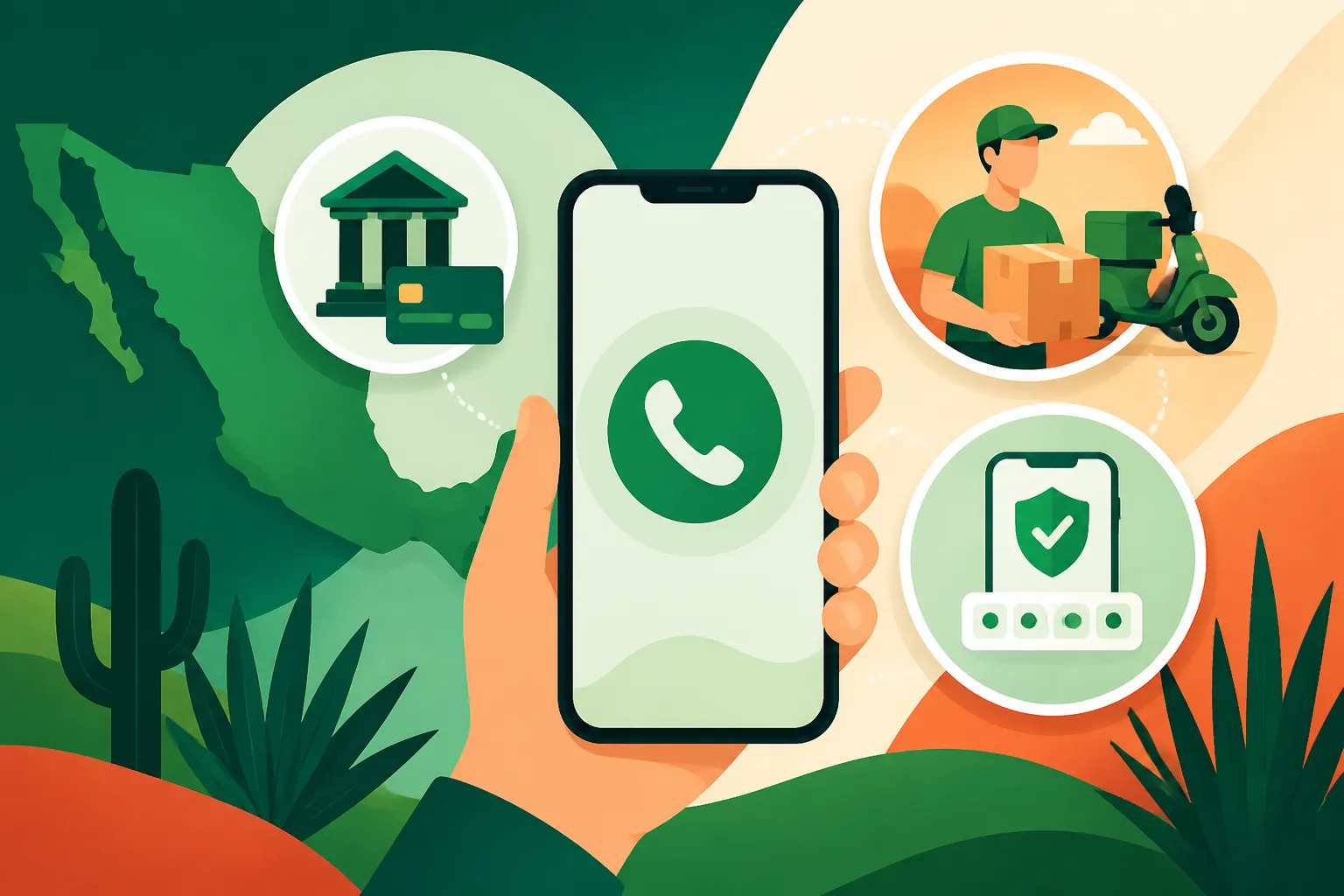
Think about opening a bank account in Mexico. Whether you're trying to set up an account with Banorte, BBVA, Santander, or any other major institution, they will almost always demand a local Mexican phone number during the application process. It’s non-negotiable. This number becomes your primary contact for everything from account alerts to fraud notifications. If you're hoping to dive into the Mexican financial system, having a local number is the first step. You can read more about how to open a bank account in Mexico as a foreigner.
But it doesn't stop there. Once your account is open, imagine trying to log into your bank's mobile app or make an online transfer. Two-factor authentication (2FA) is standard, meaning a verification code will be sent to your registered phone number. If that number is foreign, many banking apps won't even try to send the SMS. Or, if they do, it might be delayed or simply not arrive due to international carrier issues. I've heard countless stories of expats stuck in a digital limbo, unable to access their own money because their foreign number couldn't receive a simple text. It's a massive headache you absolutely want to avoid.
Deliveries and Logistics: Getting Your Goods to Your Door
Ah, the convenience of online shopping. Amazon Mexico, Mercado Libre, Coppel, Liverpool – they all deliver straight to your door. But what happens when the delivery driver needs to find your apartment in a sprawling colonia, or they arrive and there's a problem with access, or they just need to confirm you're home? They're going to call your registered phone number.
If you've provided a foreign number, you'll likely run into one of several problems:
- They can't call you: Mexican delivery drivers usually have local phones and often won't call international numbers due to cost, complexity, or simply a lack of familiarity with dialing international prefixes.
- You miss the call: You might not recognize the foreign number calling you and assume it's spam.
- Communication breakdown: Even if you connect, the language barrier combined with poor reception might make effective communication impossible.
I remember ordering a new mattress, and the delivery guy called me three times in five minutes when he couldn't find my exact building entrance. Had I not had my local number, that mattress would have been returned to sender, leaving me sleeping on the floor. The same goes for food delivery services like Uber Eats or Rappi. When your tacos al pastor are getting cold because the driver can't reach you, you'll quickly understand the profound importance of that local digit.
Essential Services and Appointments: From Doctors to Repairmen
Life in Mexico, just like anywhere, requires appointments and service calls. Whether you're trying to book a doctor's appointment, a haircut, or get your leaky faucet fixed, they’ll ask for a phone number.
When you call a clinic to make a doctor's appointment, or a taller (workshop) for car repairs, or even a local estilista (hairstylist), they'll expect a local number for confirmation calls or if they need to reschedule. Providing a foreign number often elicits a blank stare or a polite "We'll call you," which almost certainly means "We won't call you." Similarly, setting up utilities like electricity (CFE) or internet (Telmex, Totalplay) often requires a local contact number for installation appointments and service inquiries. Imagine waiting all day for the internet technician, only to find out they tried to call your foreign number and gave up. It's a common frustration many expats face when they first arrive. For more on getting healthcare set up, check out our guide on finding English-speaking doctors and specialists in Mexico.
Navigating Bureaucracy and Official Business
Mexico's administrative landscape can be… an adventure, to put it mildly. And a local phone number is one of your most reliable tools to navigate it. From immigration paperwork to job applications, your Mexican number ties you into the official communication channels.
Immigration and Government Processes: Your Official Contact
When you’re dealing with the National Institute of Migration (INM) for your residency visa, applying for your CURP (Clave Única de Registro de Población), or getting your RFC (Registro Federal de Contribuyentes) for tax purposes, you will be asked for a local contact number. This isn't just a formality. The INM might call to clarify something on your application, or your contador (accountant) might need to confirm details for your tax filings with the SAT.
If you're going through the process of getting your Mexican residency, you'll quickly learn that every single piece of official documentation, every online portal, every government agency, requires a local number. Missing a call from INM could delay your application significantly. Having a reliable, local number is crucial for these high-stakes interactions. It's part of the official digital footprint you'll establish in Mexico. Our guide on how to get a CURP as a foreigner in Mexico further emphasizes this point.
Job Hunting and Professional Networking: Local Credibility
If you're planning to work in Mexico, even remotely for a Mexican company, a local number is indispensable. When you put together your Mexican-style CV, potential employers will look for a local contact. Seeing an international number on a resume can instantly signal that you're not fully integrated or serious about long-term commitment, especially for roles that require frequent local communication.
Imagine a hiring manager sifting through applications. They see a Mexican number, they call it. They see a foreign number, they might hesitate, thinking about the hassle of international calls or potential communication issues. This small detail can make a big difference in securing an interview or even a job offer. Even for networking events or professional introductions, exchanging local numbers for WhatsApp communication is standard. It signals you're here, you're accessible, and you're ready to engage. If you're thinking about a career here, our article on working in Mexico: Job Market, Work Culture, and Opportunities for Foreigners offers more insights.
Daily Life and Social Integration: Staying Connected
Beyond the official stuff, a Mexican phone number deeply impacts your everyday interactions and your ability to connect with the local community. It's about being part of the conversation.
WhatsApp is King: The Unofficial Communication Standard
I cannot stress this enough: WhatsApp is the default communication method in Mexico, for absolutely everything. Seriously, it's not just for friends and family. Your landlord will use it, your cleaner will use it, the guy who fixes your car will use it, your gym will send class updates on it, and local businesses will take orders or appointments through it. Even some government offices are starting to use it for quick queries.
Without a Mexican number, you’re essentially cut off from this entire ecosystem. While you can use WhatsApp with a foreign number, you'll still face the challenge of people trying to call or text your number directly, or having difficulties adding you to local WhatsApp groups. Getting a local number means you're easily added to groups for your building, your expat community, or your local sports league. It makes communication seamless and immediate, which is how things get done here.
Local Business Interactions: From Taquerías to Taller Automotriz
It’s the small, everyday interactions that really underscore the need for a local number. You want to order takeout from that amazing taquería that doesn't use delivery apps? You call them. Your washing machine breaks down, and you need a repairman? You call them. You want to make a reservation at a popular local restaurant? You call them.
These local businesses operate on local numbers. They aren't set up for international calls, and they certainly don't have time to try to navigate international dialing codes. Having a local number makes you a part of the local economy and enables you to access services without a second thought. It helps you get the best deals, the quickest service, and build rapport with your local community.
How to Get a Mexican Number: Options for Expats
So, you’re convinced you need a Mexican number. Great! Now, how do you actually get one? There are a couple of main routes, and the modern world offers some fantastic, hassle-free solutions.
Traditional SIM Cards: Telcel, AT&T, Movistar
For years, the standard approach was to buy a physical SIM card. You’d head to a OXXO, a dedicated carrier store, or even a supermarket, pick up a SIM card from a major provider like Telcel, AT&T, or Movistar, and activate it.
The process usually involves:
- Purchasing the SIM: This is generally inexpensive, sometimes even free with a small credit purchase.
- Activation: This can vary. Sometimes it's plug-and-play, other times you might need an ID and assistance from a store employee.
- Topping Up (Recargas): Most Mexican plans are prepaid. You buy credit (a recarga) as needed, which gives you data, calls, and texts for a certain period. You can do this at OXXO stores, supermarkets, or online.
While this works, it does involve finding a store, possibly dealing with a language barrier, and if you have a newer phone without a physical SIM tray, it might not even be an option. Also, if you want to keep your home country’s number active for specific calls or texts, you’re stuck juggling two physical SIM cards, which can be a pain.
The Modern Solution: eSIMs for Instant Connectivity
This is where technology really shines for expats! eSIMs (embedded SIMs) are rapidly becoming the go-to solution for seamless international travel and residency. Instead of a physical card, your phone has a digital SIM profile, which you can activate instantly by scanning a QR code or entering a few details.
Here’s why an eSIM, especially through a service like Airalo, is a game-changer for getting your Mexican number:
- Instant Activation: No need to find a store, wait in line, or swap physical cards. You can buy and activate your Mexican eSIM from Airalo before you even leave home, or minutes after you land.
- Dual SIM Capability: Most modern phones support both a physical SIM (your home country's number) and an eSIM (your Mexican number) simultaneously. This means you can receive calls and texts on both numbers without juggling anything. You can choose which line to use for data, calls, and messages. This is incredibly convenient for keeping your international contacts while being fully integrated locally.
- Flexibility and Variety: Airalo offers various data packages and durations specifically for Mexico, allowing you to choose what fits your needs best. Need a lot of data for a month? They have it. Just need a basic plan for a few weeks? Also available.
- Cost-Effective: Often, Airalo plans are very competitively priced, especially when compared to international roaming charges or even some local prepaid plans if you're not a heavy user.
- No Physical Hassle: If you have a phone that only supports eSIMs, or you simply despise dealing with tiny physical cards, Airalo is your knight in shining armor.
Imagine this: You land at Mexico City International Airport, scan a QR code from Airalo on your phone, and instantly have a local Mexican number and data. No fumbling with airport kiosks, no trying to explain what you need in broken Spanish, just immediate connectivity. This local number will then allow you to immediately set up your bank’s 2FA, get those crucial delivery calls, and seamlessly integrate into the local WhatsApp culture. Airalo makes the initial hurdle of getting connected incredibly simple and stress-free, ensuring you have that essential local lifeline from day one. It's the modern, smart choice for any expat or long-term visitor to Mexico.
Making the Switch: Tips for a Smooth Transition
Getting your new Mexican number is just the first step. To truly integrate and avoid headaches, you need to manage the transition properly.
Porting Your Old Number vs Getting a New One
This is a decision many expats grapple with.
- Porting: In some countries, you can transfer your existing number to a new carrier. In Mexico, porting a foreign number to a Mexican carrier is generally not an option, or it's prohibitively complex. You'll almost certainly be getting a new, distinct Mexican number.
- Keeping your foreign number (via eSIM/dual SIM): If your phone supports dual SIM (physical SIM + eSIM or dual eSIMs), you can keep your home country's number active on your primary SIM for calls/texts from home, and use your Airalo Mexican eSIM for local calls, texts, and data. This is often the best of both worlds.
- Getting a completely new number: If you don't need to keep your old number active, a fresh start with a new Mexican number is the simplest approach.
The dual SIM approach, easily facilitated by an Airalo eSIM, is what most savvy expats choose. It avoids the hassle of porting while maintaining connectivity to your roots.
Informing Key Contacts and Updating Accounts
Once you have your Mexican number, you'll need to update a few crucial places:
- Banks and Financial Institutions: This is paramount. Log into all your Mexican banking apps and portals to update your contact number. For foreign banks, decide if you still need their 2FA to go to your home number or if you prefer to change it to your Mexican number for convenience while in Mexico.
- Government Agencies: If you've started any immigration or tax processes, make sure your new Mexican number is on file with INM and SAT.
- Online Services & Subscriptions: Change your phone number on platforms like Amazon, Mercado Libre, Uber, Rappi, Airbnb, or any other service you frequently use for deliveries or local bookings.
- Email and Cloud Services: Update your contact number for recovery purposes on Google, Apple, Microsoft accounts, etc.
- Family and Friends: Let your loved ones know your new Mexican number for local contact, especially for WhatsApp.
- Work/Business Contacts: If you're working locally or freelancing in Mexico, update your professional network.
It might seem like a lot, but taking the time to update these details upfront will save you countless headaches down the line. Remember, the goal is seamless integration, and your phone number is the cornerstone of that.
| Feature | Traditional Physical SIM (e.g., Telcel) | eSIM (e.g., Airalo) |
|---|---|---|
| Purchase Method | Buy at store (OXXO, carrier shop, supermarket) | Online purchase via app or website |
| Activation | Insert SIM, may require in-store assistance/ID for registration | Instant download & activation via QR code or manual input |
| Setup Time | Minutes to hours (depending on store visit, queues) | Seconds to minutes |
| Dual SIM Support | Requires a dual SIM phone (physical + physical) or swapping SIMs | Allows use of physical SIM + eSIM simultaneously on compatible devices |
| Physical Card | Yes, a tangible plastic card | No, entirely digital |
| Cost (Initial) | Low (often includes some credit), but requires store visit | Varies by data package, bought online. Check Airalo for current deals. |
| Flexibility | Tied to one carrier; swapping requires new physical SIM | Easy to switch carriers/plans digitally; multiple eSIMs can be stored |
| Best For | Long-term, heavy local use; those with older phones | Expats, digital nomads, frequent travelers, modern smartphone users |
| Convenience for Expats | Can be cumbersome, especially initially due to setup and language barriers | Highly convenient, instant setup, great for managing two numbers simultaneously |
Disclaimer
Please note that immigration laws, financial regulations, and telecommunications policies in Mexico can change. While we strive to provide the most accurate and up-to-date information, it is always advisable to consult with official government sources, legal professionals, or service providers directly for the latest requirements and personalized advice. This guide is intended for informational purposes only and does not constitute professional advice.