Connectivity Before You Have a CURP or Address: What You Can Buy on Arrival
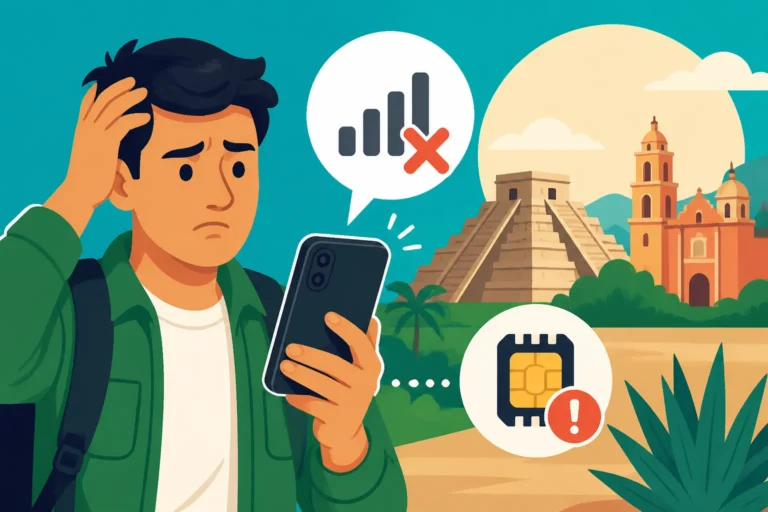
Ah, the classic expat conundrum! You've just landed in Mexico, bags in hand, a head full of dreams, and probably a slight daze from the travel. The first thing most of us want to do after finding our taxi is tell loved ones we've arrived safely, look up our Airbnb, or just scroll through social media to decompress. But then reality hits: you need internet, a working phone, and suddenly you're faced with the dreaded Mexican bureaucracy – specifically, the need for a CURP or a local address to get a simple SIM card. It's enough to make you want to pull your hair out! This guide is here to cut through that frustration and give you the real talk on how to get connected immediately upon arrival, making Airalo your absolute hero in these crucial first days and weeks.
Disclosure: This post may contain affiliate links. We may earn a commission at no extra cost to you if you make a purchase through these links. Read full disclosure.
The Frustrating Reality of Traditional Connectivity for New Arrivals
Let's be honest, the administrative hurdles in Mexico can be a real dolor de cabeza (headache), especially when you're fresh off the plane and still figuring out where the nearest Oxxo is. Getting basic services like a phone line feels like it should be simple, but it often isn't.
Why a CURP and Proof of Address Are Essential for Local SIM Cards
When you walk into a store for a major Mexican telecom provider like Telcel, AT&T Mexico, or Movistar, hoping to grab a pay-as-you-go SIM card, you'll quickly run into a wall of paperwork. For a contract plan, it's even more stringent, requiring a residency card, proof of income, and sometimes even a local bank account. But even for a simple prepaid SIM, you'll often be asked for your CURP (Clave Única de Registro de Población) and a comprobante de domicilio (proof of address).
Now, if you're a brand-new expat, you likely don't have either of these things yet. Your CURP is a unique identification code issued by the Mexican government, and while your residency process will eventually get you one, it's not something you get on day one. As for a comprobante de domicilio, that's typically a utility bill (electricity, water, internet) in your name. If you're renting short-term, staying in a hotel, or haven't even secured your long-term rental yet, you won't have this. Imagine the exasperation: you need a phone to call your landlord to get the address to get the proof of address! It’s a classic Catch-22 that leaves many new arrivals feeling utterly stranded.
The Pitfalls of Relying on Public WiFi
So, you think, "No problem, I'll just use public WiFi!" Oh, my friend, if only it were that simple and reliable. While many cafes, restaurants, and even some public squares offer free WiFi, it comes with a whole host of caveats.
First, there's the security risk. Public WiFi networks are notoriously unsecured, making your personal information vulnerable to opportunistic hackers. Sending sensitive data like banking details or even just logging into your email on an open network is a gamble. As tempting as it is, it's really not worth the risk.
Second, there's the reliability and speed factor. Mexico's internet infrastructure has come a long way, but public WiFi can still be incredibly spotty, slow, and prone to disconnecting. You might be trying to load directions, communicate with your new landlord, or deal with an urgent message, only for the connection to drop out. Imagine being in a new city, maybe a little lost, and your only connection to the outside world fails you. It's stressful, to say the least.
Lastly, coverage is limited. Public WiFi only exists in specific spots. The moment you step out of that café or move down the street, you're back offline. You can't rely on it for navigation while walking or driving, for calling an Uber or Didi, or for handling unexpected situations when you're out and about. It's a temporary patch, not a sustainable solution for anyone genuinely trying to settle in.
Your Immediate Lifeline: eSIMs for Instant Connection (Hello, Airalo!)
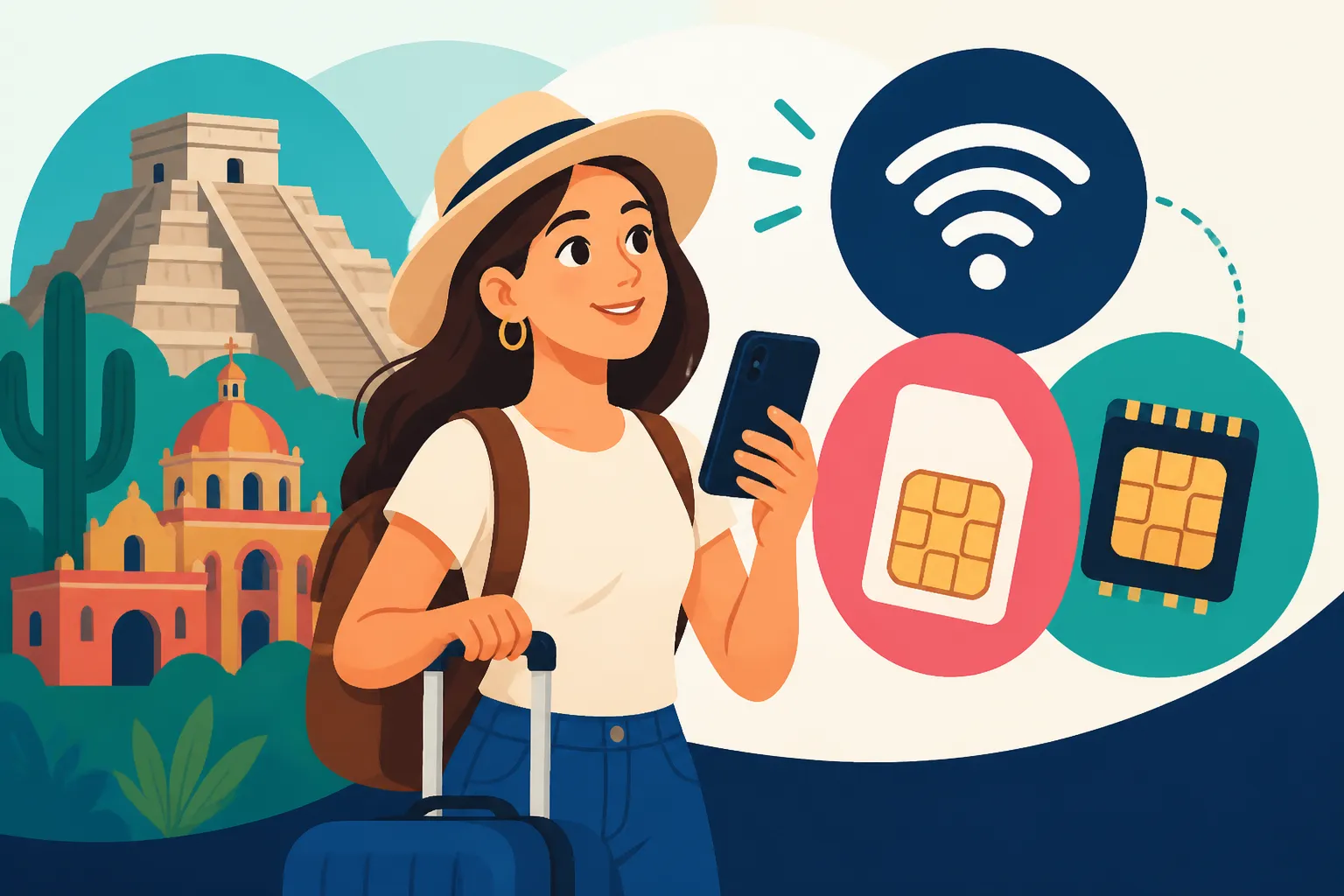
This is where the magic happens, and believe me, it’s a total game-changer for new expats. Forget the frustrating hunt for a physical SIM card and the endless paperwork. The future of connectivity for travelers and new arrivals is firmly in the realm of eSIMs, and Airalo is leading the charge.
What Exactly is an eSIM and Why It's a Game-Changer
An eSIM, or "embedded SIM," is exactly what it sounds like: a digital SIM card that's built directly into your compatible smartphone or device. Unlike traditional physical SIM cards that you have to insert and remove, an eSIM can be activated and managed entirely digitally. This technological marvel allows you to switch between network plans and providers from different countries without ever needing to touch a tiny piece of plastic.
For new expats in Mexico, the eSIM is nothing short of revolutionary. It bypasses all the traditional headaches:
- No physical card needed: No need to find a store, wait in line, or even carry a SIM ejector tool.
- No documents required: This is the big one! Since the eSIM is provisioned digitally, providers like Airalo don't need your CURP, your proof of address, or any other Mexican identification. Your passport (or whatever ID you used to travel) and a compatible phone are all you need.
- Instant activation: You can often purchase and activate an eSIM plan before you even leave your home country, meaning you're connected the moment your plane lands in Mexico.
- Flexibility: You can have multiple eSIM profiles on your phone, allowing you to keep your home country's number active while using your Airalo Mexico data plan simultaneously.
Airalo: The Ultimate Solution for Expats Arriving in Mexico
When it comes to getting immediate, no-fuss connectivity in Mexico, Airalo is simply the best option out there for new arrivals. Think of it as your digital safety net, ensuring you're never disconnected during those critical first days and weeks.
Here's why Airalo stands out as the ultimate hero for expats:
- Zero Bureaucracy: This cannot be stressed enough. You don't need a CURP, you don't need a local address, you don't even need to speak Spanish to get set up. Simply download the Airalo app, choose a Mexico eSIM plan, pay, and activate. It's entirely self-service and happens in minutes. This saves you immense stress when you're dealing with everything else that comes with moving to a new country.
- Pre-Arrival Setup: You can buy and install your Airalo Mexico eSIM plan before you even board your flight. Imagine landing at Mexico City's Benito Juárez International Airport (MEX) or Cancun International Airport (CUN), switching on your phone, and instantly having data. No scrambling for WiFi, no worrying about getting lost, just seamless connection.
- Flexible Data Packages: Airalo offers a variety of data packages, from smaller bundles perfect for a short trip to larger ones that can tide you over for weeks or even a month while you get settled. This flexibility means you only pay for what you need, making it a cost-effective choice for bridging the gap. You can easily top up your data through the app if you run low.
- Reliable Coverage: Airalo partners with local networks in Mexico (often leveraging the strong Telcel infrastructure), so you get reliable data coverage in most urban areas and popular expat destinations like Mexico City, Guadalajara, Mérida, and the Riviera Maya. You’ll have signal where you need it most.
- Cost-Effective Bridge: While long-term local plans might eventually be cheaper, for those first few weeks, the sheer convenience and peace of mind that Airalo offers is invaluable. It removes one massive item from your "things to worry about" list right at the beginning of your Mexican adventure. It’s an investment in sanity!
For anyone stepping off the plane in Mexico, the smart move is to already have your Airalo eSIM installed and ready to go. It’s truly the simplest way to get connected without a CURP or a fixed address.
Practical Steps to Get Connected with Airalo and Beyond
Okay, so you're convinced that an eSIM from Airalo is the way to go for your initial connectivity. Now, let's walk through how to actually get it up and running and what to do once you're more settled.
Activating Your Airalo eSIM: A Step-by-Step Guide
The beauty of Airalo is its simplicity. Here’s how you can get connected, often before you even arrive:
- Check Device Compatibility: First things first, ensure your smartphone is eSIM compatible and unlocked. Most newer iPhones (XS onwards), Samsung Galaxy (S20 onwards), Google Pixel (3a onwards), and many other modern flagship phones support eSIMs. A quick search on Airalo's website can confirm if your specific model is supported.
- Download the Airalo App: Head to your phone's app store (Apple App Store or Google Play Store) and download the free Airalo app.
- Choose Your Mexico eSIM: Open the app and search for "Mexico." You'll see various data packages for Mexico with different data allowances and validity periods. Pick the one that suits your initial needs – maybe a 1GB plan for 7 days if you're expecting to get a local SIM quickly, or a 5GB plan for 30 days if you anticipate a longer setup time.
- Purchase the Plan: Follow the prompts to purchase your chosen plan within the app. It's a straightforward process, just like any other app purchase.
- Install the eSIM: This is crucial. Airalo provides clear, step-by-step instructions for installation, often with screenshots or videos. Generally, you'll go into your phone's cellular settings, add a new cellular plan, and either scan a QR code provided by Airalo or manually enter activation details. Important: Install the eSIM before you need it, preferably before you travel. You will need an internet connection (like your home WiFi) to download the eSIM profile.
- Activate the eSIM: Once installed, you might need to enable data roaming for your Airalo eSIM line and select it as your primary data source when you land. The Airalo instructions will guide you through this, but typically, the plan activates automatically once it connects to a supported network in Mexico. You’ll usually get a notification from Airalo confirming your plan is active.
And just like that, you’re connected! You'll have mobile data to navigate, use WhatsApp, call Ubers, and stay in touch with the world without the hassle of local paperwork. For that immediate peace of mind and connectivity, I truly recommend checking out Airalo before your trip.
Transitioning to Local Providers Once You’re Settled
While Airalo is fantastic for getting you started, for long-term residency, you'll likely want to transition to a local Mexican provider for a more permanent and potentially more cost-effective solution, especially if you need a local phone number for calls and texts extensively.
Once you have your temporary or permanent residency visa in hand, and you've gone through the process of getting your CURP, and secured a long-term rental with a utility bill in your name (your comprobante de domicilio), the world of Mexican telecom opens up.
You can then visit a service center for major carriers like Telcel (the largest network, generally best coverage), AT&T Mexico, or Movistar. With your official ID (residency card), CURP, and proof of address, you can sign up for a local prepaid plan (often called "Amigo" or "Prepago") or even a postpaid contract plan. Having a local number (a 10-digit Mexican number starting with a 55 for Mexico City, or other prefixes for different states) is essential for many local services, from setting up bank accounts to dealing with government offices.
Until then, your Airalo eSIM will serve as an excellent bridge. It allows you to function fully, communicating and navigating, while you slowly but surely tackle the other administrative tasks of settling into life in Mexico. You can learn more about how to set up your utilities and get essential documents like your CURP in our other guides, such as How to Get a CURP in Mexico or Setting Up Utilities in Mexico: CFE, Water, and Gas.
Making the Most of Your Connectivity in Mexico
Having reliable internet access from day one, thanks to a service like Airalo, isn't just a convenience; it's a necessity for a smooth transition. Let's look at how to leverage it fully.
Essential Apps and Services for Expats in Mexico
With your Airalo data flowing, you’ll be able to immediately access and utilize the apps that will become your daily companions in Mexico. Don't underestimate how much these can ease your initial days:
- WhatsApp: This is the dominant communication app in Mexico. Everyone uses it – friends, landlords, service providers, businesses. You'll need it for messaging, voice calls, and video calls. Your Airalo data will keep you connected on WhatsApp without a hitch.
- Google Maps/Waze: Essential for navigation, whether you're walking, driving, or taking public transport. Live traffic updates and accurate directions are critical in sprawling cities like Mexico City or Guadalajara.
- Ride-Sharing Apps (Uber/Didi): For safe and convenient transportation, especially when you're not yet familiar with local taxis or public transport routes.
- Translation Apps (Google Translate/DeepL): While you're working on your Spanish (and you should definitely prioritize Learning Spanish in Mexico: Top Tips and Resources for Expats), a good translation app is your best friend for menus, signs, and conversations.
- Banking Apps: If you’re opening a Mexican bank account, you’ll need constant connectivity to manage it, set up transfers (SPEI), and monitor your finances. Even for your home country bank, reliable internet is key. Our guide How to Open a Bank Account in Mexico: Requirements and Tips can help you with that step.
- Social Media: To stay connected with family and friends back home, share your new adventures, and even find expat groups for local advice and meetups.
The ability to use these apps reliably from the moment you arrive, powered by your Airalo eSIM, removes a huge layer of stress and allows you to hit the ground running.
Balancing Costs: Airalo for Arrival, Local SIM for Long-Term
It's natural to think about costs, especially when moving abroad. Here’s a pragmatic approach to your connectivity budget:
| Feature | Airalo eSIM (Arrival/Short-term) | Local Physical SIM (Long-term) | Public WiFi (Emergency/Backup) |
|---|---|---|---|
| Ease of Access | Very Easy (digital purchase, no docs) | Moderate (requires CURP, proof of address, in-store visit) | Easy (find a hotspot) |
| Documents Req. | None | Yes (CURP, official ID, proof of address for most plans) | None |
| Reliability | High (uses local partner networks) | High (dedicated local network) | Low (spotty, slow, prone to drops) |
| Security | High (private connection) | High (private connection) | Low (unsecured networks, vulnerable to hacks) |
| Cost | Moderate (premium for convenience, data-only) | Low-Moderate (more data for less, local calls/texts included) | Free (but with high hidden costs like frustration and security risks) |
| Coverage | Excellent in urban/tourist areas (depends on local partner) | Excellent (nationwide with major carriers like Telcel) | Very Limited (only at specific hotspots) |
| Best Use | Immediate connectivity upon arrival, short trips, bridging period | Daily use, primary phone service, local number for everything | Very occasional, light browsing, non-sensitive tasks |
As you can see, Airalo fills a crucial gap for new arrivals. It’s a smart, initial investment in convenience, security, and peace of mind. While it might cost a bit more per gigabyte than a long-term local plan, the value it provides in those first few weeks, when you're navigating an entirely new country and its bureaucracy, is immeasurable. It allows you to bypass the hassle of getting a local SIM when you don't have the necessary documentation, ensuring you’re always connected.
Once you’re settled, have your residency card, CURP, and an address, you can explore the various local providers for a long-term plan that fits your budget. But until then, trust in Airalo to keep you linked to the world.
Disclaimer
The information provided in this guide is intended for general informational purposes only and does not constitute legal, financial, or immigration advice. While we strive to provide accurate and up-to-date information, regulations and procedures in Mexico can change frequently. Readers are strongly advised to verify all information with official sources, immigration attorneys, financial advisors, or relevant government agencies before making any decisions. The author and publisher are not responsible for any actions taken based on the information contained herein.