Backup Connectivity for Remote Workers in Mexico: When Your Fibre Goes Down
Living and working remotely in Mexico is a dream for many, offering a vibrant culture and lower cost of living, but nothing shatters that dream faster than a sudden internet outage when you're on a deadline. The reality is, even with robust fiber optic lines becoming more common, connectivity can be unpredictable here, leaving remote workers scrambling. This comprehensive guide will walk you through the most reliable backup solutions, focusing on how you can stay connected and productive, no matter what Mexico's internet infrastructure throws your way, with a special emphasis on the unbeatable flexibility and reliability of Airalo.
Disclosure: This post may contain affiliate links. We may earn a commission at no extra cost to you if you make a purchase through these links. Read full disclosure.
The Remote Worker's Nightmare: Internet Outages in Mexico
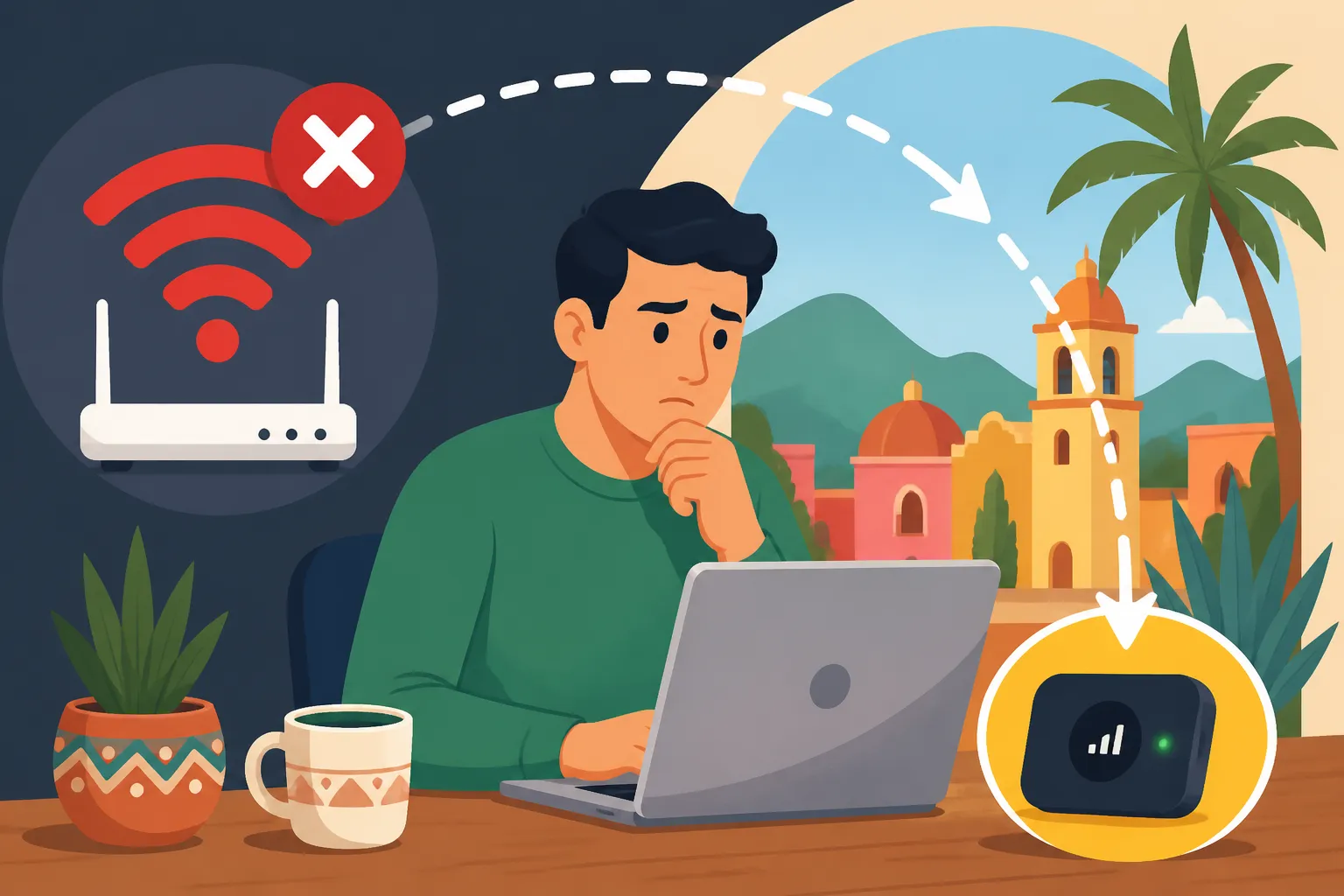
Ah, the life of a remote worker in Mexico! You’re typing away on your laptop, a fresh cup of café de olla beside you, maybe a gentle breeze coming through the window… and then, poof. Your internet connection drops. The spinning wheel on your video call freezes, your Slack messages stop sending, and suddenly, that idyllic Mexican workday feels a lot less tranquil. This scenario isn't a rare occurrence; it's a common frustration many expats face.
The Reality of Mexican Internet Infrastructure
Let’s be honest: while Mexico has made huge strides in internet connectivity over the past decade, especially in major cities and popular expat havens like Mexico City, Guadalajara, Mérida, or the Riviera Maya, the infrastructure can still be… shall we say, a work in progress. It's not if your internet will go down, but when. You might have a fantastic fiber optic connection from Telmex, Totalplay, or Izzi that's lightning-fast most of the time, but external factors can still bring it to a grinding halt.
Common culprits include unexpected fiber cuts caused by construction (a surprisingly frequent occurrence), power fluctuations or outages that affect local network equipment, or even just general service issues from your provider. Sometimes it’s a localized problem, affecting only your street or neighborhood. Other times, it’s a broader regional issue. The frustration is universal, especially when you're trying to meet a crucial deadline or attend an important virtual meeting. Understanding these realities is the first step toward preparing for them, because a little foresight can save you a whole lot of stress when the inevitable happens.
Impact on Productivity and Peace of Mind
For remote workers, a sudden internet outage isn't just an inconvenience; it can have serious repercussions. Imagine being in the middle of a client presentation, or about to submit a major project, and your connection vanishes. The immediate impact is lost work, missed communications, and the potential damage to your professional reputation. It's incredibly stressful, and that feeling of helplessness when you can't control the situation can be overwhelming.
Beyond the immediate professional fallout, there's the long-term toll on your peace of mind. Constantly worrying about your internet connection can detract from the very reasons you moved to Mexico – to enjoy a different pace of life, immerse yourself in the culture, and have a better work-life balance. Having reliable backup connectivity isn't just about ensuring your work gets done; it's about reclaiming your mental space, allowing you to relax and truly enjoy your expat experience without the constant anxiety of a looming internet disaster. It ensures that the moments of unexpected downtime become minor blips, rather than full-blown crises.
Essential Backup Connectivity Options for Expats
When your home internet decides to take an unannounced siesta, having a plan B (or C, or D!) is crucial. Many expats find themselves weighing different options, each with its own set of pros and cons. It's about finding the right balance of cost, convenience, and reliability for your specific needs. The goal is to minimize downtime and keep your workflow smooth, even when the unexpected happens.
Mobile Hotspots and Personal Phones
One of the most common and immediate solutions for many is simply turning your personal smartphone into a mobile hotspot. Most modern smartphones have this capability, allowing you to share your phone's cellular data connection with your laptop, tablet, or other devices. If you've already invested in a local Mexican SIM card – which you absolutely should, if you're living here for any length of time – this can be a lifesaver.
The primary advantage is convenience. You already own the device, and setting it up is usually a matter of a few taps in your phone's settings. It’s perfect for those sudden, short-term outages where you just need to send an email, finish a quick task, or jump on a brief call. However, there are significant drawbacks. Using your phone as a hotspot can drain its battery incredibly quickly, leaving you with two dead devices instead of one. Data plans for standard phone SIMs might also be limited, and relying on it for prolonged periods can quickly eat through your allocated gigabytes, leading to slower speeds or costly overage charges. Furthermore, the speed and reliability are entirely dependent on the cellular network coverage in your specific location, which can vary wildly even within the same city. For more on staying connected generally, check out our guide on Internet and Mobile Phone Plans in Mexico: Staying Connected as an Expat.
Portable Wi-Fi Devices MiFis
For those who anticipate needing a more robust and dedicated mobile internet solution, a portable Wi-Fi device, often called a MiFi or pocket Wi-Fi, might be a better fit. These are small, battery-powered devices that take a physical SIM card and create a Wi-Fi network, allowing multiple devices to connect. They essentially serve as a personal, portable internet router.
The benefits here include a dedicated power source, meaning they generally have better battery life than a smartphone acting as a hotspot, and they won't drain your phone. They're also designed specifically for sharing internet, often offering more stable connections and potentially supporting more connected devices simultaneously. However, they do come with their own set of considerations. You’ll need to purchase the device itself, which is an additional upfront cost. You'll also need to buy a separate data plan for the MiFi, distinct from your phone plan. This means another device to carry, another battery to charge, and another bill to manage. While they offer more reliability than a phone in some scenarios, their performance is still bound by the strength and speed of the underlying cellular network. You can find these devices from major carriers like Telcel or AT&T in Mexico, but always compare their dedicated data plans carefully.
The Rise of eSIMs: A Game Changer for Remote Workers
When it comes to flexible, on-demand backup connectivity, eSIM technology has truly emerged as a game-changer for remote workers, especially those of us navigating the unique challenges of staying connected in Mexico. It offers a blend of convenience and cost-effectiveness that traditional physical SIM cards and dedicated MiFi devices often can't match.
What is an eSIM and How Does It Work
An eSIM, short for embedded SIM, is essentially a digital SIM card that's built directly into your compatible smartphone, tablet, or wearable device. Unlike a traditional physical SIM card that you have to insert and remove, an eSIM profile can be downloaded and activated digitally. This means no more fiddling with tiny cards, no more searching for a paperclip to open the tray, and no more worries about losing your primary SIM while traveling. It's all managed directly through your device's settings or a dedicated app.
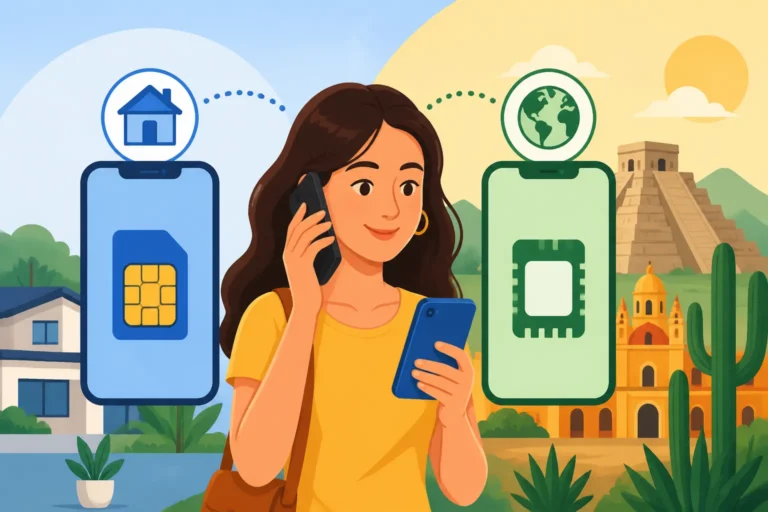
The beauty of the eSIM lies in its flexibility. You can store multiple eSIM profiles on a single device, switching between them as needed. For example, you might have your primary Mexican physical SIM for calls and texts, and an eSIM for backup data when your home internet fails or when you're traveling within the country and need extra connectivity. Activation is typically a breeze: you purchase a data package from a provider, receive a QR code or activation details, scan or input them, and you're good to go. It’s a seamless, paperless way to manage your mobile connectivity. If you're wondering about general connectivity options, our post on Getting a SIM Card in Mexico (Telcel, AT&T, Movistar) provides a good overview of the local providers.
Why eSIMs are Ideal for Backup Connectivity
For remote workers in Mexico, especially those who rely heavily on a stable internet connection for their livelihood, eSIMs are a near-perfect solution for backup connectivity. The advantages are numerous and directly address the pain points of sudden outages. First and foremost is the instant activation. When your fiber goes down, you don't have time to go to an OXXO to buy a new SIM card or visit a Telcel store. With an eSIM like Airalo, you can literally buy a data package and activate it in minutes from your phone, getting back online almost immediately.
Secondly, eSIMs are incredibly cost-effective for emergency or occasional use. Instead of committing to a monthly contract or a large data bundle for a MiFi that you might not use regularly, you can purchase small, short-term data packages (e.g., 1GB for 7 days) precisely when you need them. This "pay-as-you-go" flexibility ensures you're not spending money on data you don't use. Many phones now support dual SIM functionality (one physical SIM, one eSIM), allowing you to keep your primary Mexican phone number active for calls and texts while using the eSIM for dedicated backup data. This means you maintain your local presence while having a powerful, flexible internet safety net. This is particularly valuable for digital nomads who are frequently on the move, and you can learn more about how they manage their setup in our Digital Nomads in Mexico: Remote Work Living Guide.
Deep Dive into Airalo: Your Go-To Backup Solution
When the internet gods frown upon your home setup in Mexico, having a reliable, instantly deployable backup is priceless. This is where Airalo shines, making it an indispensable tool for any remote worker or expat who can't afford to be offline. Airalo is, without a doubt, a premier choice for seamless backup connectivity, and it has consistently proven its worth to me and countless other expats.
Airalo Plans and Coverage in Mexico
Airalo offers a fantastic range of data packages specifically for Mexico, catering to different needs and budgets. You can find plans ranging from smaller bundles, perfect for quick emergency use, to larger packages suitable for a few days or weeks of heavy usage. For instance, you might find options like 1 GB for 7 days, 3 GB for 15 days, or 5 GB for 30 days. The pricing is transparent, and you know exactly what you're paying for before you commit.
One of the most crucial aspects of any mobile data service is coverage, and Airalo leverages the existing, robust networks within Mexico. Through its partnerships, Airalo utilizes the infrastructure of major local carriers like Movistar and AT&T. This means that in most major expat cities – like Mexico City, Guadalajara, Puebla, or along the Yucatán Peninsula – and many smaller towns, you'll benefit from strong, reliable signal. I've personally used Airalo in various parts of the country, from bustling urban centers to more remote pueblos mágicos, and have almost always found dependable connectivity. The ease of top-up through the app means you can extend your plan or add more data without any hassle, right from your phone, which is a huge relief when you're in a bind.
Step-by-Step: Getting and Activating Your Airalo eSIM
Getting set up with Airalo is incredibly straightforward, even when you're under pressure from an internet outage. Here’s a quick walkthrough:
- Download the Airalo App: First things first, download the Airalo app from your smartphone's app store (available for both iOS and Android). Do this before you need it, preferably while you still have Wi-Fi!
- Choose Your Mexico Plan: Open the app and search for "Mexico." You'll see a list of available data packages. Select the one that best suits your immediate needs in terms of data volume and validity period.
- Install the eSIM: Once you've purchased your plan, Airalo will provide clear, step-by-step instructions for installation. This typically involves scanning a QR code with your phone's camera or manually entering a few details in your phone's cellular settings. The app guides you through it seamlessly.
- Activate and Connect: After installation, you'll need to enable the eSIM line in your phone settings and, crucially, turn on "data roaming" for that eSIM. Don't worry, with Airalo, data roaming is how it works and it won't incur extra charges beyond your purchased package. Within moments, your phone should connect to the local network, and you'll be back online.
The entire process, from purchase to connectivity, can often be completed in less than five minutes. This speed and simplicity are what make Airalo truly invaluable as a backup.
Real-World Scenarios: When Airalo Saves the Day
Let me tell you, Airalo has been my personal hero on more than one occasion living in Mexico. It's not just a theoretical solution; it's a practical, on-the-ground lifesaver.
Consider this: You're in Mérida, enjoying the colonial charm and working from your Airbnb, when suddenly, the city's power grid blips, taking out your fiber connection right as you’re about to join a crucial client video call. Panic sets in. But then you remember Airalo. A few taps, a quick purchase of a 3GB plan, and within minutes, your laptop is tethered to your phone's newly activated Airalo eSIM, and you’re back in the meeting, smooth as silk. The client never even noticed the hiccup.
Or maybe you’ve decided to escape the city and work from a quieter pueblo mágico for a week. The local internet here is notoriously spotty, dropping out at random intervals. Instead of constantly refreshing your router, you proactively purchase an Airalo eSIM for supplemental data. When the local Wi-Fi goes down for hours, you seamlessly switch to your Airalo connection and continue your work without missing a beat, still enjoying the serene surroundings. It allows you to maintain your productivity and peace of mind even in areas with less reliable infrastructure. For more on finding these hidden gems, check out our guide on Best Cities in Mexico for Digital Nomads: Connectivity and Lifestyle.
Even on travel days, whether you're working from a comfortable ADO bus or waiting for a domestic flight, Airalo ensures you stay connected. Need to quickly respond to an email or check something online? Instead of relying on patchy public Wi-Fi or expensive roaming, Airalo provides a secure and fast connection. It truly frees you from the stress of being dependent on a single internet source, offering the flexibility to work from virtually anywhere.
Beyond Connectivity: Other Considerations for Remote Workers
While sorting out your internet backup is paramount, staying productive and stress-free as a remote worker in Mexico means looking at the bigger picture. Connectivity is just one piece of the puzzle; power, security, and routine also play critical roles in a seamless remote work experience. It's about building a resilient ecosystem around your work.
Power Backup Solutions
What's internet without power? Absolutely useless! This is a lesson many expats learn quickly here. Power outages, or apagones, can be as common as internet disruptions, sometimes even causing them. So, investing in power backup solutions is just as critical as your data plan. For your essential devices like your laptop and router (if it’s separate from your modem), a good Uninterruptible Power Supply (UPS) is a game-changer. It provides a few minutes to an hour of power, enough time to save your work, gracefully shut down, or switch to your backup internet like Airalo. For more general advice on dealing with Mexican bureaucracy, including utility issues, our post on Dealing with Bureaucracy in Mexico: Tips for Handling Paperwork and Appointments might offer some useful context.
Beyond that, portable power banks are essential for keeping your phone, tablet, and any portable MiFi devices charged. They're relatively inexpensive and can provide hours of extra juice. For more extensive or frequent outages, some expats even consider small generators, especially if they live in an area prone to long blackouts or rely on specific equipment. However, for most remote workers, a solid UPS and a few good power banks will cover the majority of power-related disruptions, allowing you to keep working even when the lights go out.
VPNs and Cybersecurity While on Public/Mobile Networks
When you're relying on mobile networks, whether it's your phone's hotspot, a MiFi, or an Airalo eSIM, you're generally safer than on an open public Wi-Fi network. However, the importance of a Virtual Private Network (VPN) cannot be overstated for remote workers. A VPN encrypts your internet traffic, creating a secure tunnel between your device and the internet. This is particularly crucial if you're handling sensitive client data, company information, or even just your personal banking.
Even on seemingly secure mobile networks, using a VPN adds an extra layer of protection against potential eavesdropping or data interception. If you find yourself needing to connect to a café's Wi-Fi because your home internet and mobile backup are both failing (it happens!), a VPN becomes absolutely indispensable. It protects your privacy and the integrity of your work, ensuring that your digital footprint remains secure, regardless of the network you're temporarily utilizing.
Setting Up a Dedicated Workspace and Routine
Finally, optimizing your remote work setup in Mexico goes beyond just the technical tools; it includes your physical environment and your work habits. Having a dedicated workspace, even if it's just a specific corner of your apartment, helps psychologically separate work from leisure. Crucially, this space should be set up with your backup plans in mind. Can you easily switch from your main router to your phone's hotspot or a MiFi without having to move your entire desk? Are your power banks and charging cables always within reach?
Establishing a routine also makes a huge difference. Build in buffers for potential internet or power hiccups. Communicate proactively with your clients and team about your working hours in Mexico and any potential connectivity challenges. Let them know you have robust backup plans, including Airalo, to minimize disruption. This not only sets realistic expectations but also showcases your professionalism and preparedness. Many expats find Mexico to be a great place for professional growth, and you can explore more about this in our guide on Working in Mexico: Job Market, Work Culture, and Opportunities for Foreigners. By integrating these physical and habitual preparations with your technical backup solutions, you'll create a resilient remote work environment that can weather almost any storm.
Comparative Overview of Backup Connectivity Options
To help you visualize the different backup connectivity options, here’s a quick comparison of the most popular choices for remote workers in Mexico. Each has its place, but for maximum flexibility and ease of use in emergencies, the benefits of eSIMs like Airalo often stand out.
| Feature | Mobile Hotspot (Phone) | Portable Wi-Fi (MiFi) | eSIM (e.g., Airalo) |
|---|---|---|---|
| Cost (Initial) | Low (if you already own a smartphone) | Moderate (cost of the device itself, usually $50-$150) | Very Low (no device to buy, just data plans) |
| Cost (Ongoing) | Varies (depends on your phone's data plan; can be costly if you exceed limits) | Varies (dedicated data plans, often monthly or prepaid) | Pay-as-you-go, flexible (purchase data only when needed) |
| Convenience | High (already in your pocket, quick to activate) | Moderate (another device to carry and manage) | Very High (digital, no physical SIM swapping) |
| Setup Time | Immediate | Moderate (need to purchase device, get physical SIM) | Instant (download and activate in minutes) |
| Battery Life | Drains phone battery quickly, reduces phone usability | Good (dedicated battery, often lasts 6-10 hours) | N/A (uses your phone's battery when activated) |
| Device Required | Smartphone | Dedicated MiFi device | eSIM-compatible smartphone |
| Data Plans | Often tied to your primary phone plan, potentially limited | Dedicated plans, usually offer larger data bundles | Flexible, international options, short-term packages |
| Best For | Short, unplanned outages where speed isn't critical | Frequent, longer usage sessions, multiple device support | Instant, flexible, and cost-effective backup for emergencies and travel |
As you can see, each option has its strengths. Your personal situation, how often you experience outages, and your budget will dictate the best choice. For the ultimate peace of mind and quick recovery from internet woes, a combination of a robust primary internet connection, a local physical SIM for your phone, and a readily available Airalo eSIM profile on your device is truly the expat remote worker's dream team.
Staying Resilient in Mexico
Embracing the remote work lifestyle in Mexico is an incredible adventure, full of vibrant culture, delicious food, and breathtaking scenery. But like any adventure, it comes with its unique set of challenges, and internet connectivity can definitely be one of them. The key to thriving, not just surviving, as a remote worker here is preparation and resilience.
By understanding the local infrastructure, proactively setting up robust backup solutions like Airalo, investing in power backups, and implementing good cybersecurity practices, you can minimize stress and maximize your productivity. Airalo truly stands out as a reliable, convenient, and cost-effective solution that empowers you to stay connected and in control, no matter where your Mexican journey takes you. So, set up your backup plan today, and enjoy the unparalleled freedom that comes with knowing you're always connected, ready to tackle any challenge – or simply, any client call – that comes your way.
Disclaimer
Please note that immigration laws, visa requirements, and financial regulations in Mexico can change frequently. While we strive to provide the most accurate and up-to-date information, this guide is for informational purposes only and does not constitute legal or financial advice. Always consult with a qualified legal or financial professional for personalized guidance regarding your specific situation. Providers like Airalo operate on third-party networks, and actual coverage and speeds may vary depending on location and network conditions.