Moving to Mexico from the UK: Sea Freight Routes and Timelines
Moving your entire life across an ocean from the UK to Mexico feels less like a simple relocation and more like planning an international expedition. Between figuring out visas, finding a place to live, and just generally getting your head around a whole new way of life, the thought of shipping your cherished belongings can feel utterly overwhelming. You’re probably picturing endless paperwork, mountains of boxes, and trying to decipher shipping jargon while still figuring out the difference between tú and usted. This guide is here to cut through that noise, specifically looking at how sea freight works from the UK to Mexico, what routes your possessions will take, how long it actually takes, and how a service like Sirelo can simplify this colossal task, connecting you with reliable movers who speak your language and understand the unique challenges of a UK-Mexico move.
Disclosure: This post may contain affiliate links. We may earn a commission at no extra cost to you if you make a purchase through these links. Read full disclosure.
The Grand Voyage: Understanding Sea Freight for Your Mexico Move
When you’re eyeing a move from the rainy shores of the UK to the vibrant landscapes of Mexico, the question of how to get your entire life there is paramount. Air freight might seem tempting for speed, but for anything beyond a few suitcases, it quickly becomes an eye-watering expense. This is where sea freight truly shines, offering a practical and often more affordable solution for transporting your household goods.
Why Sea Freight is Often the Best Bet from the UK
Let’s be honest, sea freight isn’t known for its speed. It's a slow boat to China, or in this case, to Mexico! But for expats like us who are making a permanent or long-term move, it’s usually the most sensible option. Imagine trying to cram a three-bedroom house into an airplane cargo hold – impossible and astronomically expensive. Sea freight allows you to bring your furniture, your sentimental items, your extensive book collection, and even your car (with special considerations, of course, as detailed in our guide on Bringing Your Car vs Buying in Mexico: Impact on Visa and Legal Status) without having to take out a second mortgage.
The sheer volume you can ship via sea freight is its biggest advantage. If you're planning to set up a proper home in Mexico, rather than just living out of a suitcase, then shipping your belongings is a no-brainer. While you wait for your ship to come in, you can focus on other aspects of settling down, like navigating Mexican bureaucracy (trust me, you'll need all your focus there, as we discuss in Dealing with Bureaucracy in Mexico: Tips for Handling Paperwork and Appointments) or getting your residency sorted. It's a trade-off: time for cost and capacity.
Full Container Load FCL vs Less than Container Load LCL
When you opt for sea freight, you'll generally encounter two main options: Full Container Load (FCL) or Less than Container Load (LCL). Understanding the difference is crucial for both your budget and your sanity.
FCL (Full Container Load) means you get an entire shipping container all to yourself – typically a 20-foot or 40-foot container. This is ideal if you’re shipping a significant amount of household goods, perhaps a 3-4 bedroom home’s worth. The perks? It’s faster because your container goes directly from origin to destination without intermediate stops for consolidation. It's also generally more secure, as your items aren't mixed with anyone else's, reducing the risk of damage or misplacement. However, if your belongings don't fill the container, you’re still paying for the entire space, which can be inefficient and costly for smaller moves.
LCL (Less than Container Load) is for those with smaller shipments that don’t warrant an entire container. With LCL, your belongings are consolidated with other people’s shipments into one container. This is a cost-effective solution because you only pay for the space your items occupy, usually calculated by volume. The downside is that it takes longer. The container needs to be filled with other shipments, then unloaded and sorted at the destination port, adding several weeks to the overall transit time. There's also a slightly higher risk of damage due to increased handling. Think of it like a shared taxi versus a private car – one is cheaper but has more stops, the other is pricier but more direct.
What You Can and Cannot Ship via Sea Freight
This is where things get tricky, and where a good moving company, like those found through Sirelo, can save you a lot of headaches. Generally, you can ship most household items: furniture, clothes, books, kitchenware, and personal effects. However, Mexican customs, much like any country's, has strict rules on what can and cannot enter.
Prohibited items usually include anything dangerous or illegal. This means no firearms, no narcotics (obviously!), no flammable liquids, aerosols, or corrosives. Even seemingly innocent items like large quantities of certain prescription medications can be problematic without proper documentation (check our guide on Bringing Prescription Medications from Home: Rules and Tips for Expats). Certain food items, especially fresh produce or meats, are typically prohibited to prevent the spread of pests and diseases. Some electronics with large lithium batteries might also fall under restrictions or require special handling. Always, always check with your chosen moving company and Mexican customs regulations before packing anything questionable. Accuracy in your inventory list is paramount to avoid delays and potential penalties, especially when dealing with Import Duties and Customs: Taxes on Bringing Goods into Mexico.
Navigating the Waters: Key UK Departure Ports and Mexican Arrival Ports
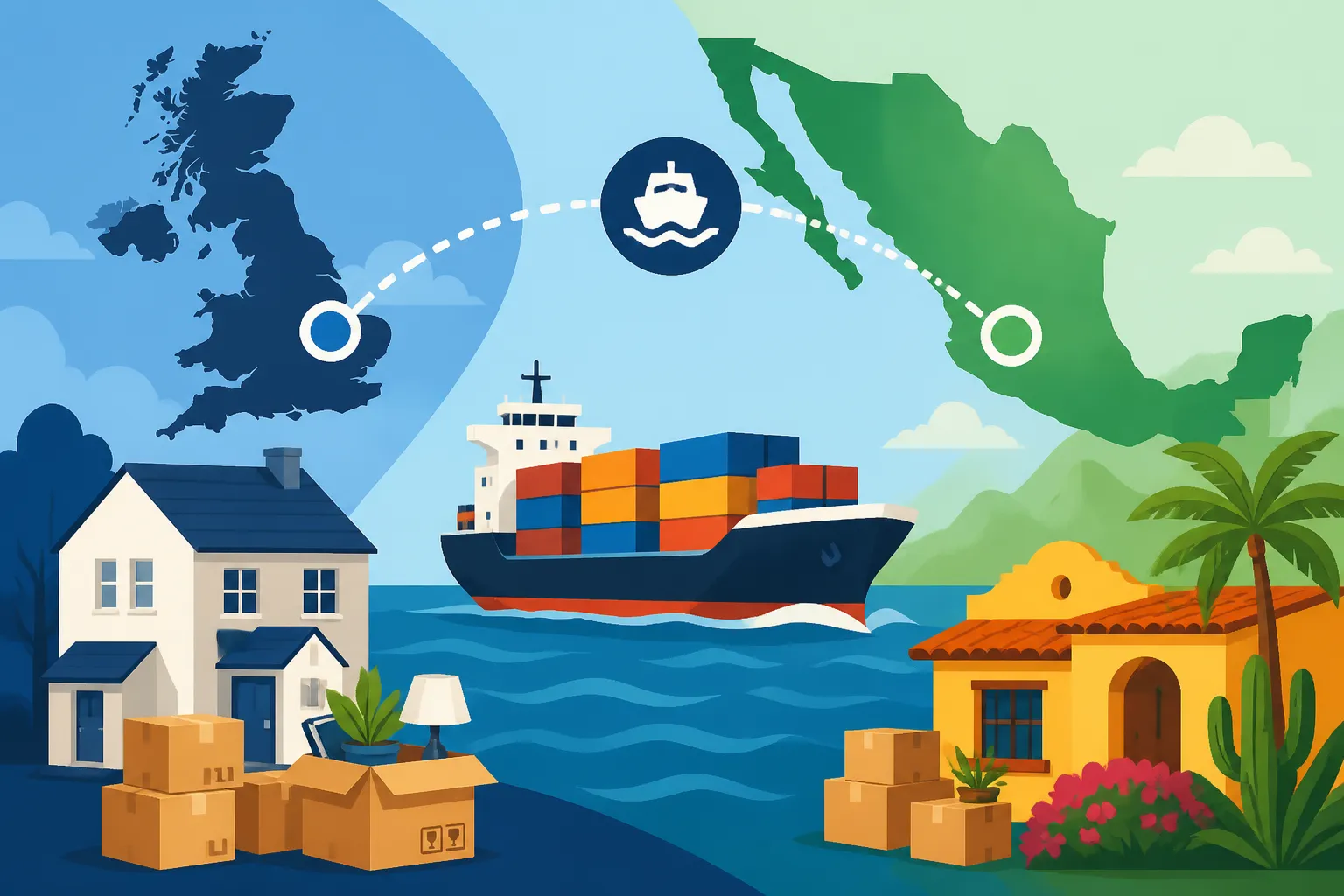
The journey your belongings take from the UK to Mexico isn't just a straight line across the Atlantic. It involves specific ports, each with its own rhythm and role in the global shipping network. Knowing these can help you understand the logistics and potential bottlenecks of your move.
Major UK Ports for International Shipments
When shipping from the UK, your belongings will most likely depart from one of a few major commercial ports that handle international container traffic. These are bustling hubs designed to efficiently move goods around the world.
Felixstowe in Suffolk is the UK's largest container port and handles a significant proportion of the country's containerized trade. It's a natural choice for many international movers due to its extensive global connections and high volume of traffic. Southampton on the south coast is another major player, especially known for its deep-water access and connections to global shipping lanes. London Gateway is a newer, highly automated deep-sea port on the Thames Estuary, designed to handle the largest container ships. The choice of port often depends on the shipping line your mover uses and the most efficient route they have established for Mexico-bound cargo. The location of your UK home might also influence which port is more convenient for your mover to collect your goods from, affecting initial logistics.
Primary Mexican Entry Ports for Sea Freight
Once your container has traversed the Atlantic, it will arrive at one of Mexico's main commercial ports. The choice of arrival port significantly impacts the final leg of your journey – the inland transit to your new home.
On Mexico's Gulf Coast, Veracruz is historically the most important port and remains a primary entry point for goods from Europe. It's strategically located to serve central Mexico, including Mexico City and much of the expat-dense highlands. Further north on the Gulf is Altamira, a modern industrial port that also handles a substantial amount of container traffic, particularly for goods destined for northern and central Mexico. On the Pacific Coast, Manzanillo in Colima is Mexico's busiest port by cargo volume, serving as a crucial gateway for goods from Asia, but also handling traffic from other regions. It’s the go-to port for expats settling in western or central Mexico, including areas around Guadalajara, Lake Chapala (see Living at Lake Chapala and Ajijic: Retiree Guide), or Puerto Vallarta (refer to Living in Puerto Vallarta: Coastal Living Guide for Expats). The specific port chosen by your moving company will depend on where you’re settling in Mexico and which port offers the most efficient customs clearance and inland transport routes.
Inland Transit from Port to Your Mexican Home
Once your precious cargo clears customs at a Mexican port, the journey isn't over. This is the "last mile," and sometimes it's the trickiest. Your belongings will need to be transported from the port, often hundreds of kilometers, to your final destination in Mexico. This involves local logistics, which can sometimes move at a different pace than you might be used to in the UK.
Your international moving company, especially if you use a reputable one found through Sirelo, will have local partners or agents in Mexico. These local teams are responsible for the customs clearance process at the Mexican port and arranging the inland transport. This could involve trucking your container directly to your home if it's FCL, or trucking your consolidated LCL shipment to a local warehouse for deconsolidation before individual delivery. The condition of Mexican roads, potential for unforeseen delays (like protests or vehicle breakdowns), and the specific geography of your new home (e.g., a bustling city versus a remote village) can all affect this final leg of the journey. For instance, getting your furniture from Veracruz to a smaller town in the mountains of Oaxaca will be a more complex and potentially longer process than moving it from Manzanillo to Guadalajara.
The Tick-Tock of the Ocean: Understanding Sea Freight Timelines
One of the biggest questions on any expat’s mind when shipping their life overseas is, "How long will it actually take?" The truth is, it's rarely a quick process, and patience becomes your most valuable asset. Sea freight from the UK to Mexico involves multiple stages, and each stage has its own timeline and potential for delays.
Typical Transit Times from UK to Mexico
Let's talk numbers, but remember these are estimates and can fluctuate wildly. For a direct, port-to-port FCL shipment from the UK to Mexico, you're generally looking at 4 to 8 weeks. This is just the time the ship spends at sea. However, if you're going with LCL, which involves consolidation and deconsolidation at both ends, you should brace yourself for 6 to 12 weeks for port-to-port transit.
Several factors can influence these times. The specific shipping line and their schedule, whether there are direct routes or transshipments (where your container gets moved from one vessel to another at an intermediate port), and even global events or weather patterns (like hurricane season in the Gulf of Mexico, which typically runs from June to November) can add extra days or even weeks. It's a complex logistical dance, and sometimes the music changes unexpectedly.
Pre-Shipping and Post-Arrival Timelines
The port-to-port transit time is only one piece of the puzzle. You need to factor in the time before your goods even get on the ship and after they arrive in Mexico.
Pre-shipping: Once you've chosen your mover (hopefully through Sirelo, connecting you with reliable pros), there's the packing and collection phase. This alone can take a few days to a week depending on the size of your home. Then, your mover needs to transport your goods to the UK departure port and get them through UK customs. This usually adds another 1 to 2 weeks to the overall timeline. You'll need to have all your documentation, like your Menaje de Casa (more on that later), ready well in advance. Without it, your shipment won't even leave the UK, let alone clear Mexican customs.
Post-arrival: This is where the notorious "Mexico time" often comes into play. Once your ship docks in Mexico, your container needs to be unloaded. Then, it goes through Mexican customs clearance, which is a rigorous process. If your documentation isn't absolutely perfect, or if your shipment is selected for a physical inspection, this stage can easily take 2 to 4 weeks, or even longer. After clearance, your local agent arranges inland transport to your home and the final delivery. So, when you add it all up, a typical door-to-door move from the UK to Mexico via sea freight can easily range from 8 to 16 weeks. Yes, you read that right. It’s a marathon, not a sprint. This is why many expats choose to arrive in Mexico with a few essentials and rent a furnished place while their belongings slowly make their way.
Seasonal Influences and Peak Shipping Periods
Just like air travel, sea freight has its peak seasons. If you're planning your move, being aware of these can help you avoid unnecessary delays and potentially higher costs.
The holiday season, particularly leading up to Christmas and New Year, is a notoriously busy time for shipping globally. Ports become more congested, and schedules can get backed up. Similarly, the period around Chinese New Year (which usually falls in late January or February) can have a ripple effect on global shipping, as many factories and ports in Asia shut down, impacting vessel availability and container flow worldwide. During these times, securing space on a vessel can be harder, and transit times may increase.
Weather also plays a role, especially if your route involves the hurricane-prone Gulf of Mexico. From June to November, storms can cause ships to reroute or delay docking, adding days or weeks to your shipment. Planning your move during the quieter seasons – perhaps early spring or late autumn (avoiding the immediate lead-up to holidays) – can sometimes result in a smoother, albeit still slow, journey for your belongings.
The Paper Trail and Peso Pains: Documentation and Costs of Sea Freight
Ah, bureaucracy and money – two topics that can send shivers down any expat’s spine, especially when combined with international shipping. Navigating the paperwork and understanding the true cost of sea freight from the UK to Mexico is critical to avoiding nasty surprises.
Essential Documentation for Mexican Customs
This is arguably the most crucial part of your entire shipping process: getting your documents in order. Mexico has specific requirements for importing household goods, and if you don't meet them, your shipment will be held up, incurring storage fees and major stress.
The absolute cornerstone is the Menaje de Casa, which translates to "household goods list." This document certifies that the items you are importing are your personal effects and are not intended for commercial sale. Crucially, obtaining a Menaje de Casa waiver often exempts you from paying import duties on these items. You apply for this at a Mexican consulate in the UK before you ship your goods and after you have your The Ultimate Guide to Mexico's Visa and Residency Options (2027 Edition) or specifically your Mexico Temporary Resident Visa: Comprehensive Guide for Expats (2026 Update). It requires a detailed, itemized inventory of everything you’re shipping, sworn before a consulate official, along with proof of your residency status and proof of your UK address. Accuracy is key; if customs finds discrepancies, it can lead to hefty fines or even seizure of goods.
Beyond the Menaje de Casa, you'll need your valid passport, your Mexican residency visa, the Bill of Lading (a document issued by the carrier confirming receipt of goods), and a meticulously prepared packing list that matches your Menaje de Casa. Any good international mover found through Sirelo will guide you through this, emphasizing the importance of getting it right the first time.
Deconstructing Sea Freight Costs
The cost of sea freight isn't just one big number; it’s a compilation of various charges that can add up. Understanding these components helps you budget and compare quotes effectively.
Firstly, there are the base freight charges, which cover the actual transport of your container or consolidated cargo from the UK to Mexico. This is influenced by the volume (for LCL) or container size (for FCL) and the current market rates. Then come the terminal handling charges (THC) at both the origin (UK) and destination (Mexico) ports – these cover the loading and unloading of the container from the vessel. Customs duties and taxes are a big one, though your Menaje de Casa should largely exempt you from duties on personal effects. However, if you ship new items or things not covered by the Menaje de Casa, you’ll pay import taxes, including Mexico's IVA (Impuesto al Valor Agregado), currently 16%, on the declared value plus duties.
You'll also need to factor in insurance. This is non-negotiable for an international move; imagine everything you own floating across the ocean uninsured! Most movers offer transit insurance, and it's highly recommended. Lastly, there's the inland transportation cost from the Mexican port to your final home, which depends on distance and accessibility. Getting a comprehensive quote that breaks down all these charges is vital when working with a moving company, and Sirelo can help you compare these transparently.
Budgeting for the Unexpected: Hidden Fees and Contingencies
This is where many expats get caught out: the unexpected fees that crop up along the way. Planning a contingency budget for your move is not just smart, it's essential.
One of the most common hidden costs is demurrage. This is a fee charged by the shipping line if your container remains at the port for longer than the allotted "free time" – often due to customs delays, incomplete documentation, or your inability to take delivery. Similarly, detention fees are charged by the shipping line if you keep their container beyond the free time period at your destination for unloading. These fees can quickly accumulate, sometimes hundreds of dollars per day!
You'll also need to budget for customs broker fees. Even if you handle much of the documentation yourself, having a local customs broker in Mexico to navigate the intricacies of Mexican customs is almost always necessary and worth the expense to prevent delays. Sometimes, depending on the service level, these fees are rolled into your moving company's quote, but always confirm. For broader financial planning, consider reviewing our guide on the Cost of Living in Mexico: 2026 Comprehensive Guide to help prepare for your overall expenses. Being prepared for these potential extras is key to a less stressful move. This is exactly where a platform like Sirelo shines, helping you compare detailed quotes and ask the right questions about potential hidden costs upfront.
Choosing Your Crew: Finding a Reliable Shipping Partner
Embarking on an international move from the UK to Mexico is not something you want to tackle alone, especially when it comes to shipping your precious belongings. The right moving company is more than just a transporter; they are your guide, your advocate, and your lifeline through a complex process.
What to Look for in an International Moving Company
Finding a mover that genuinely understands the nuances of a UK-Mexico relocation is paramount. It’s not just about packing boxes; it's about navigating international regulations, cultural differences in logistics, and the specific requirements of both UK export and Mexican import.
First and foremost, look for a company with proven experience on the UK-Mexico route. They should be intimately familiar with Mexican customs regulations, particularly the Menaje de Casa process, and have established relationships with reliable agents at Mexican ports like Veracruz or Manzanillo. Ask about their track record, look for reviews, and don't hesitate to ask specific questions about potential challenges they've faced. Secondly, seek transparent pricing. A reputable mover will provide a detailed quote that breaks down all the aforementioned costs – freight, port charges, customs fees, insurance, and inland transport. Avoid quotes that seem too good to be true, as they often hide unexpected charges. Thirdly, communication and tracking capabilities are vital. You'll want to know where your shipment is at every step of its long journey. A good mover will offer regular updates and have a system for you to track your container. Lastly, ensure they offer comprehensive insurance options and clearly explain what is covered and what isn't. The peace of mind alone is worth the investment.
The Sirelo Advantage: Simplifying Your UK-Mexico Move
This is where Sirelo becomes your ultimate ally. When faced with a myriad of international moving companies, all promising the world (and often charging exorbitant prices for it), it's hard to know who to trust. Sirelo acts as a neutral, intelligent platform designed to cut through the noise and connect you with thoroughly vetted, experienced international moving companies that specialize in routes like the UK to Mexico.
Here's how Sirelo helps make your move smoother: instead of spending hours researching individual companies, requesting quotes, and sifting through jargon, you submit your moving details to Sirelo once. They then match you with up to five reputable movers who are equipped to handle your specific needs. This isn't just any random selection; Sirelo focuses on companies with a strong track record for international removals, especially those with expertise in the UK-Mexico corridor. You get to compare detailed, transparent quotes side-by-side, reading genuine customer reviews and making an informed decision without the pressure of a direct sales pitch. Sirelo empowers you to choose a mover that offers the best value, reliability, and understanding of the unique administrative hoops (like the Menaje de Casa) required for your move to Mexico. By using Sirelo, you're not just finding a mover; you're finding a partner that understands the specific challenges you face, allowing you to focus on the exciting parts of your new life in Mexico.
Tips for a Smooth Shipping Experience
Even with the best moving company (found easily through Sirelo, of course!), a successful sea freight experience from the UK to Mexico requires some proactive steps on your part.
Start early, and be ruthless with decluttering. Seriously, every item you ship costs money. Before you even get quotes, go through your belongings with a critical eye. Do you really need that ancient armchair, or could you buy something similar and perhaps more suitable for a Mexican climate once you arrive? Our guide Moving to Mexico: What to Pack and What to Buy Locally offers more insights into this decision. The less you ship, the less it costs, and the less hassle you’ll encounter at customs. Pack smartly and create a meticulous inventory. Your Menaje de Casa needs to be precise. Label every box clearly with its contents, and keep a digital copy of your inventory, ideally with photos of valuable items. This is crucial for customs and insurance purposes. Maintain clear and consistent communication with your chosen moving company. Don't be afraid to ask questions, no matter how small they seem. A good mover appreciates an engaged client. Finally, cultivate patience and flexibility. International shipping is a logistical marvel, but it's not immune to delays. Unexpected weather, port congestion, or a random customs inspection can happen. Expecting a few bumps in the road will save you a lot of stress. Embrace the "mañana" mentality, and trust that your belongings, with the help of a solid moving partner found through Sirelo, will eventually reach your beautiful new home in Mexico.
Comparison Table: FCL vs LCL for UK-Mexico Sea Freight
| Feature | Full Container Load (FCL) | Less than Container Load (LCL) |
|---|---|---|
| Cost | Higher overall price (paying for entire container) | Lower overall price (paying only for space used) |
| Speed | Faster transit (direct port-to-port) | Slower transit (consolidation/deconsolidation adds time) |
| Security | Higher (sealed container, less handling) | Moderate (mixed cargo, more handling) |
| Volume | Ideal for large volumes (3+ bedroom homes, vehicles) | Ideal for smaller volumes (1-2 bedroom homes, specific items) |
| Ideal For | Large family moves, those shipping a car, less urgent moves where volume is key. | Smaller moves, students, those on a tighter budget, less urgent moves. |
Important Disclaimer
The information provided in this guide is for general informational purposes only and does not constitute legal or professional advice. Immigration laws, customs regulations, and shipping procedures in Mexico and the UK are subject to change. Always consult with a qualified immigration attorney, a reputable international moving company, and the official government sources (such as the Mexican consulate or INM) for the most up-to-date and personalized advice regarding your specific situation.