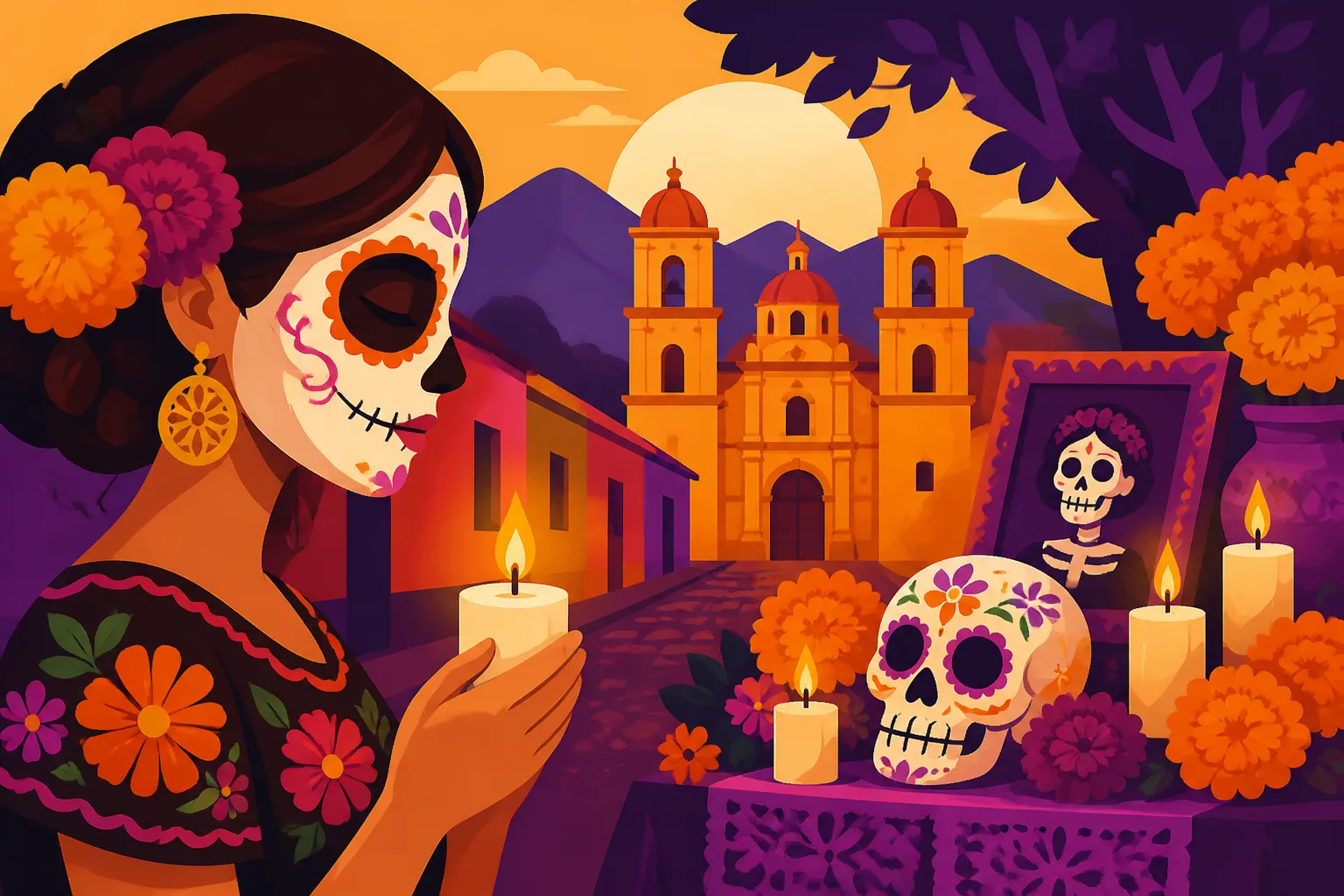
How to Experience Day of the Dead Respectfully in Oaxaca
Many travelers arrive in Oaxaca thinking Day of the Dead is simply Mexico’s version of Halloween, leading to awkward moments, unintended disrespect, and a shallow experience that misses the spiritual heart of the tradition. This guide solves that by providing an expat’s insider perspective on navigating the altars, cemeteries, and parades with the cultural sensitivity and deep respect this sacred time demands.
Disclosure: This post may contain affiliate links. We may earn a commission at no extra cost to you if you make a purchase through these links. Read full disclosure.
Understanding the Spiritual Heart of Muertos in Oaxaca
When you first move to Mexico, you hear about Día de Muertos months in advance. It’s the event everyone circles on their calendar. But as a resident, you quickly learn that in Oaxaca, this isn't just a festival; it is a homecoming. The belief is that the gates of heaven open at midnight on October 31st, allowing the souls of the departed to return to the world of the living for a brief visit. Families spend weeks preparing, cleaning gravesites, and building elaborate ofrendas (altars) in their homes.
As a visitor, it is easy to get caught up in the vibrant colors of the cempasúchil (marigold) flowers and the smell of copal incense, but you must remember that for the person sitting next to you at a grave, this is a deeply personal moment of reunion. Validating the frustration of locals is important here; they often see tourists treating their grandparents' resting places as "content" for social media. To experience this respectfully, you need to shift your mindset from being a spectator to being a quiet guest in a very large, very old family home.
The ofrendas you see in shops and restaurants are beautiful, but the real ones are the private altars. Each element has a specific meaning. The salt represents purification, the water quenches the soul’s thirst after the long journey from the afterlife, and the bright orange petals of the marigold are believed to guide the spirits home with their scent and color. If you are lucky enough to be invited into a local home to see an altar, never enter empty-handed. Bringing a bag of bread or some fruit is a standard sign of respect. For more on the culinary side of these traditions, you might find our guide on Mexican Food Culture: Eating and Drinking as a Visitor quite illuminating.
Navigating the Logistics of Your Visit
Oaxaca City is the epicenter of the celebration, but the festivities are spread out across different neighborhoods and nearby villages. Because this is the busiest time of the year, getting around requires a bit of strategy. Most people start their journey by flying into the city or taking a long-distance bus from Mexico City. If you are coming from the capital, I always recommend checking Busbud to compare the ADO Platino or GL lines, as the mountain roads to Oaxaca are notoriously winding and a little extra comfort goes a long way.
Once you are in the city, the sheer volume of people can be overwhelming. The historic center (Centro Histórico) becomes a pedestrian-only zone in many areas, and taxis can be hard to flag down. If you are staying further out in neighborhoods like Reforma or San Felipe del Agua, give yourself twice as much time as you think you need to get anywhere. Many expats find that booking their accommodation months in advance is the only way to stay within walking distance of the main zócalo. Using a platform like Booking.com early in the year is essential to avoid being stuck on the far outskirts of town.
For those looking to venture to the famous cemeteries in Santa Cruz Xoxocotlán or San Agustín Etla, transportation becomes even more complex. Local "colectivos" (shared taxis) run constantly, but they will be packed to the brim. If you prefer a more structured approach that handles the transport for you, looking into curated experiences on Viator can save you the headache of navigating rural roads in the middle of the night. If you're wondering how to manage your transit across the country, check out our article on How to Travel Between Cities in Mexico by Bus.
The Ethics of Cemetery Visits
The panteones (cemeteries) are where the most profound moments of Day of the Dead happen. This is where the "respectful" part of your journey is tested the most. In Oaxaca, the night of October 31st and November 1st are spent in the cemeteries. Families bring chairs, blankets, food, and often a bottle of mezcal to share with their "visitantes" (the dead).
The most important rule I can give you as a veteran expat is this: do not use flash photography. Ever. Imagine you are at a funeral for someone you loved dearly. Now imagine a stranger sticking a camera with a bright flash in your face while you are trying to talk to your late mother. It is intrusive and incredibly rude. If you must take a photo, do it from a distance with a low-light lens, and always ask for permission if you are focusing on a specific family or grave. Usually, a simple "Disculpe, ¿puedo tomar una foto?" with a respectful nod is enough. If they say no, accept it gracefully and move on.
Alcohol consumption is another area where tourists often miss the mark. While you will see locals drinking mezcal or beer, it is done as a toast to the deceased. It is not a frat party. If you find yourself getting tipsy or loud, it is time to leave the cemetery. The atmosphere should be one of "joyful solemnity"—there is music and laughter, yes, but it is rooted in memory and love, not rowdiness. To understand more about the local spirits, you might want to read our deep dive on Tequila, Mezcal, and Mexican Drinking Culture.
| Cemetery Name | Primary Celebration Date | Known For | Vibe |
|---|---|---|---|
| Panteón General (San Miguel) | Oct 31 – Nov 2 | Central location, candlelit niches | Artistic and very busy |
| Xoxocotlán (Old & New) | Oct 31 | Mass candlelight, elaborate grave displays | Iconic, very traditional, crowded |
| San Felipe del Agua | Nov 1 | Local feel, smaller crowds | Quiet, intimate, respectful |
| Atzompa | Oct 31 | Hillside location, pottery tradition | Stunning views, very spiritual |
Participating in Comparsas and Public Events
While the cemeteries are for quiet reflection, the comparsas are the heartbeat of the street celebrations. A comparsa is essentially a theatrical, musical parade where locals dress up as skeletons, devils, or traditional characters. They move through the streets with a "banda" (brass band), dancing and stopping at specific houses to perform.
In recent years, the comparsas in the city center have become massive, sometimes attracting thousands of tourists. For a more authentic experience, I recommend heading to the neighborhood of Jalatlaco or Xochimilco. These areas have a smaller, more community-focused feel. If you decide to follow a comparsa, remember that you are a guest in their neighborhood. Don't block the path of the dancers or the musicians.
Many visitors choose to get their faces painted as "Catrinas." This is a wonderful way to participate, but try to support the local artists set up in the plazas rather than doing it yourself. It's a small way to put money back into the local economy. Also, keep in mind that even if you are in costume, the standard rules of etiquette apply. For more tips on how to handle your finances during these busy events, refer to Cash vs Card in Mexico: What Visitors Should Know.
Essential Etiquette and Practical Tips
The language barrier can sometimes lead to misunderstandings during such a busy time. Even if your Spanish isn't perfect, knowing a few key phrases goes a long way. People in Oaxaca are incredibly warm, but they appreciate the effort. If you find yourself needing help or directions, start with a polite "Buenos días" or "Buenas noches" before launching into your question.
Tipping is another common area of confusion for new arrivals. During Day of the Dead, service staff are working grueling hours. Being a generous tipper is a direct way to show respect for the labor that makes your holiday possible. You can find specific guidelines in our post How Much Should You Tip in Mexico?. Furthermore, the streets of Oaxaca can be a bit treacherous with uneven cobblestones and massive crowds. If you happen to overindulge in street food or find the altitude affecting you, it’s good to know where to go. Check out Finding English-Speaking Doctors and Specialists in Mexico just in case you need medical assistance during your stay.
Speaking of food, you cannot experience Muertos without eating pan de muerto and drinking Oaxacan hot chocolate. In Oaxaca, the bread is unique—it often features a small "carita" (little face) made of flour and water, representing the soul. The best place to find these is in the local markets like Mercado 20 de Noviembre. If you're worried about the hygiene of the local stalls, our guide on Is Street Food Safe to Eat in Mexico? provides some great pointers on what to look for.
Finally, keep your belongings secure. Like any major international event, the crowds can attract pickpockets. Wear a cross-body bag and keep your phone tucked away when you aren't using it. Staying safe and healthy allows you to focus on what really matters: the incredible opportunity to witness one of the world's most beautiful expressions of love and memory.
Cultural Sensitivity and Dressing the Part
One question I get asked a lot is what people should wear. You don't need to wear a suit or a formal dress, but avoid anything too revealing or "beachy." Think of it as "smart casual." Darker colors are always a safe bet for the cemetery visits, as they align with the somber aspects of the tradition. If you’re planning on being out all night—which many people do—bring layers. Oaxaca is in a valley, and while it is warm during the day, the temperature drops significantly once the sun goes down.
If you are traveling with children, please keep a close eye on them. The cemeteries are crowded and dark, and it is very easy to lose sight of a little one. It's also a good idea to explain the meaning of the holiday to them beforehand so they understand why people are crying or why there are skulls everywhere. It’s a teaching moment about the cycle of life that stays with kids forever. For more logistics on getting around safely, you might look into How to Use Uber and Ride-Hailing Safely in Mexico.
Lastly, be patient. Everything takes longer during Día de Muertos. The restaurants will have wait times, the ATMs might run out of cash, and the traffic will be at a standstill. If you approach the chaos with a smile and a "no pasa nada" attitude, you will have a much better time. You are here to witness a culture that has survived for thousands of years; a 20-minute wait for a table is a small price to pay for that privilege.
Summary of Respectful Behavior
To wrap things up, let's look at a quick checklist for your Oaxacan adventure. If you follow these simple guidelines, you’ll not only have a more meaningful trip but you’ll also be welcomed back by the locals who call this beautiful city home.
- Always ask before taking photos of individuals or private altars.
- Keep your voice down in cemeteries; it is a place of prayer for many.
- Support local by buying your flowers, bread, and crafts from the traditional markets.
- Don't touch the ofrendas. They are sacred spaces, and moving an item could disrupt the family's tribute.
- Be mindful of your space. Don't sit on graves unless you are invited by the family.
- Manage your waste. Don't leave trash in the cemeteries; take it back to the city with you.
Experience Day of the Dead for what it is: a beautiful, heartbreaking, and ultimately life-affirming celebration. By following these tips, you'll find that the "Magic of Oaxaca" isn't just a marketing slogan—it's a very real feeling that happens when the living and the dead share a drink under the Oaxacan moon.
Disclaimer
The information provided in this guide is for educational and informational purposes only. Cultural traditions and local regulations in Mexico can change, and visitors are encouraged to verify current practices and safety recommendations with local authorities or official tourism boards before their trip. This guide does not constitute legal or professional travel advice.