What Is the Difference Between Tequila and Mezcal?
If you have spent any time wandering the cobblestone streets of a Mexican pueblo or navigating the trendy bars of Roma Norte, you have likely stared at a back bar filled with hundreds of unlabeled glass jugs and ornate bottles, wondering why your waiter is treating tequila and mezcal like two entirely different religions. This guide solves that confusion by breaking down the botanical, geographical, and production differences between Mexico’s two most iconic spirits.
Disclosure: This post may contain affiliate links. We may earn a commission at no extra cost to you if you make a purchase through these links. Read full disclosure.
The Botanical and Geographical Roots
When you first arrive in Mexico, the sheer variety of agave spirits can be overwhelming. I remember my first trip to a local liquor store where I thought I was just buying "cactus juice." I quickly learned that locals take their agave very seriously, and the first major difference between tequila and mezcal starts in the soil and the species of the plant itself.
Agave Varieties: Blue Weber vs. The World
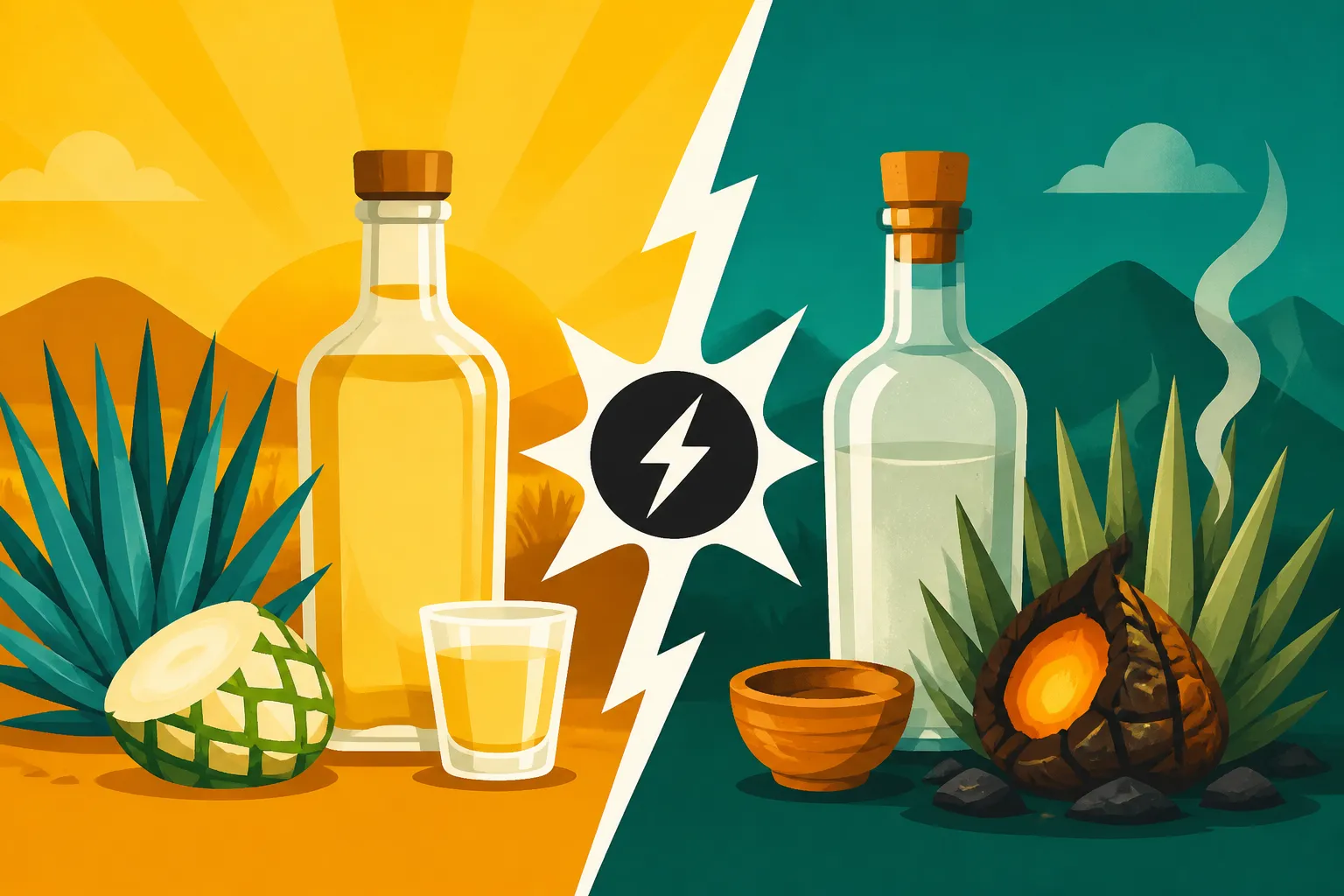
The most fundamental rule to remember is that tequila is a type of mezcal, but mezcal is not tequila. Think of it like bourbon and whiskey. To be legally labeled as tequila, the spirit must be made from exactly one species of plant: the Agave tequilana Weber, commonly known as Blue Weber Agave. This plant has a high sugar content and a relatively short growing cycle of about six to eight years. Because it is a monoculture, tequila production is often highly industrialized and consistent in flavor.
Mezcal, on the other hand, is the wild, rebellious cousin. It can be made from over 30 different species of agave, some of which are wild and take up to 25 or 30 years to mature. The most common variety used is Espadín, but if you want to explore the deep end of the pool, you will find Tobalá, Tepeztate, and Cuishe. Each species offers a wildly different flavor profile, ranging from floral and citrusy to earthy and mineral-heavy. When you are learning about Tequila 101: How to Taste and Where to Visit, you begin to appreciate how the singularity of the Blue Weber agave creates that crisp, recognizable bite we all know.
Denomination of Origin: Where It Is Legally Made
In Mexico, both spirits are protected by a "Denominación de Origen" (DO). This means you cannot just ferment some agave in your backyard in Arizona and call it tequila. For tequila, the production is strictly limited to the state of Jalisco and small parts of four other states: Guanajuato, Michoacán, Nayarit, and Tamaulipas. Most of the action, however, happens in the Highlands (Los Altos) or the Lowlands (El Valle) of Jalisco.
Mezcal has its own DO, which covers nine different states, but Oaxaca is the undisputed heartland, producing about 90% of the world's supply. Other states like Guerrero, Durango, and San Luis Potosí also have thriving mezcal cultures. If you are planning a trip to see these regions, you can easily find transport options on Busbud to get between the major agave hubs. The geography matters because the "terroir"—the soil, altitude, and climate—vastly changes the sugar content and mineral notes of the plant. A Blue Weber agave grown in the red, iron-rich soil of Los Altos will taste much sweeter and more floral than one grown in the volcanic soil of the valley.
The Production Process: How the Flavor is Forged
The biggest differentiator for most people is the taste. If you have ever taken a sip of mezcal and thought it tasted like a campfire, you are picking up on the most significant difference in how these two spirits are cooked. While tequila aims for a clean, agave-forward profile, mezcal embraces the elements of earth and smoke.
Steaming vs. Roasting: The Secret to the Smoke
The production of tequila is largely a modern, streamlined affair. Once the piñas (the heart of the agave) are harvested, they are typically steamed in large industrial ovens called autoclaves or traditional brick ovens known as hornos. This steaming process converts the starches into fermentable sugars without adding any external flavors. This is why tequila often has those bright, peppery, and citrusy notes.
Mezcal is a much more primal experience. To cook the agave hearts, producers (known as palenqueros) dig a large conical pit in the ground. They line the pit with volcanic rocks, light a wood fire at the bottom, and once the rocks are glowing red, they pile the piñas on top. They cover the whole thing with earth, agave fibers, and mats, effectively creating a giant underground slow cooker. The agave roasts for days, absorbing the smoke from the wood and the minerals from the earth. This is exactly why Mezcal in Oaxaca: Tours and Tastings often feel like a journey back in time; the process has changed very little in centuries.
Distillation Methods: Copper Stills vs. Clay Pots
The way the fermented agave juice is turned into a high-proof spirit also varies. Most tequila is distilled in large copper pot stills or column stills, which allow for a very high degree of purity and consistency. It is efficient and clean. If you are interested in the technical side, you might want to look into How to Visit a Tequila Distillery Near Guadalajara to see these massive operations in person.
Mezcal producers, particularly those making "Ancestral" or "Artisanal" mezcal, often use much smaller, more primitive setups. In parts of Oaxaca and Michoacán, you will find spirits distilled in clay pots or hollowed-out tree trunks. These materials are porous and interact with the vapor, adding a "clay" or "earthy" texture to the final liquid that you simply won't find in a mass-produced tequila. When you are learning How to Taste Tequila Like a Connoisseur, you learn to look for clarity; with mezcal, you are often looking for complexity and "flaws" that give the spirit its character.
Understanding the Categories and Aging
Once the liquid comes out of the still, it is classified based on how long it sits in wood—or if it sits in wood at all. This is where a lot of foreigners get tripped up, especially when trying to figure out which bottle is worth the premium price tag.
Blanco, Reposado, and Añejo: Deciphering the Labels
The aging process is relatively standardized across both spirits, though it is much more common to find aged tequilas than aged mezcals. In the world of agave, "Blanco" or "Joven" is the purest expression of the plant. It is either unaged or aged for less than two months. Many aficionados prefer this because the wood of a barrel can often mask the delicate flavors of the agave itself.
| Category | Aging Duration | Flavor Profile |
|---|---|---|
| Blanco / Joven | 0 – 2 Months | Bright, peppery, citrusy, raw agave |
| Reposado | 2 Months – 1 Year | Smooth, vanilla, light oak, honey |
| Añejo | 1 – 3 Years | Dark, caramel, chocolate, heavy oak |
| Extra Añejo | 3+ Years | Rich, complex, similar to cognac or scotch |
If you are looking for a hotel near the best tasting rooms in Jalisco, check Booking.com for boutique options in the town of Tequila itself. While tequila is often aged in American or French oak barrels to create those smooth, caramel-like Reposados and Añejos, mezcal is traditionally consumed "Joven" (young). Because mezcal has so much inherent flavor from the roasting process and the different agave species, many believe that putting it in a barrel actually ruins the spirit. However, Reposado mezcals are becoming more popular for those who want to bridge the gap between the two spirits.
How to Drink Them: Neat, Salt/Lime, or Orange/Sal de Gusano
The cultural etiquette of drinking these spirits is a major part of Mexican Drinking Culture. In the US or Canada, you might be used to slamming a shot of tequila with a lick of salt and a squeeze of lime. In Mexico, if you do that with a high-quality spirit, you might get a few side-eyes from the locals. Good tequila and mezcal are meant to be "besado"—kissed. You take small sips, letting the liquid coat your tongue.
Mezcal is traditionally served with orange slices and sal de gusano (worm salt), which is a mix of sea salt, toasted ground agave worms, and chili. The sweetness of the orange and the savory, earthy salt perfectly complement the smokiness of the mezcal. Tequila is often served with a side of sangrita, a spicy, tomato-based chaser that cleanses the palate between sips. If you find yourself in one of the many Cantinas and Mexican Bar Culture for Visitors, try ordering a "Bandera" (The Flag), which consists of three separate glasses: lime juice (green), blanco tequila (white), and sangrita (red).
Practical Tips for the Expat and Enthusiast
Navigating the world of agave spirits is a lifelong journey, but there are a few "expat secrets" that can save you from a nasty hangover or a bad purchase during your first few months in the country.
Buying Quality: Avoiding the "Mixto" Trap
The most important thing you can look for on a label—whether it is tequila or mezcal—is the phrase "100% Agave." If it doesn't say that, it is likely a "Mixto." This means the producer only had to use 51% agave sugars and could fill the rest with cheap cane sugar, corn syrup, and artificial flavorings or colors. Mixtos are the primary reason people have "horror stories" about tequila from their college days. The sugar fermentation in Mixtos creates a much more aggressive hangover than pure agave spirits.
Also, pay attention to the NOM (Norma Oficial Mexicana). This is a four-digit number on the back of every legal bottle of tequila that identifies the distillery where it was produced. You can look up these numbers online to see if your favorite "boutique" brand is actually being mass-produced in the same factory as twenty other cheap labels. Mezcal is a bit more fragmented, but looking for a "Holistic" or "Artisanal" certification on the bottle is a good sign that the producer is following traditional methods.
Planning a Tasting Trip: Tequila vs. Oaxaca
If you really want to understand the difference, you have to go to the source. A trip to the town of Tequila is a polished, beautiful experience. You can take a train from Guadalajara, tour the massive Jose Cuervo or Sauza estates, and walk through manicured fields of blue agave. It is a world-class tourism operation. You can book these experiences through platforms like Viator to ensure you get a guide who can explain the history in English.
Oaxaca is a different beast entirely. Tasting mezcal often involves driving down dusty dirt roads to find a small family-run palenque in the middle of nowhere. You will likely taste the spirit out of a plastic cup while the producer's chickens run around your feet. It is raw, authentic, and incredibly rewarding. For many expats, the journey to find a favorite mezcal becomes a rite of passage. Whether you prefer the refined elegance of a Highland tequila or the wild, smoky complexity of an Oaxacan mezcal, understanding the craft behind the bottle will make your next "salud" much more meaningful.
Disclaimer
This guide is for informational and cultural purposes only. Alcohol consumption in Mexico is subject to local laws, and the legal drinking age is 18. Please drink responsibly and never drink and drive. The flavor profiles and production methods described reflect traditional and common practices but can vary significantly between individual brands and regional producers. Always verify specific distillery details if you have health concerns or allergies.