How to Drive From the US Border Into Mexico
The prospect of driving across the US border into Mexico often triggers a mix of excitement and absolute paralysis. From the horror stories of complex paperwork and long lines to the genuine fear of navigating unfamiliar roads, many expats and travelers find themselves overwhelmed before they even turn the key. This guide breaks down every administrative and practical hurdle to ensure your transition into Mexico is smooth, legal, and entirely stress-free.
Disclosure: This post may contain affiliate links. We may earn a commission at no extra cost to you if you make a purchase through these links. Read full disclosure.
Preparation and Paperwork: The Pre-Drive Checklist
I cannot stress this enough: your US or Canadian auto insurance is functionally useless the second you cross the imaginary line in the dirt. One of the most common mistakes I see newcomers make is assuming their "comprehensive" policy from home will cover them. It won't. Mexico requires third-party liability insurance issued by a Mexican provider. If you are involved in an accident and cannot show proof of a valid Mexican policy, you risk being detained. You should look into Car Insurance in Mexico: Understanding Coverage and Costs to get a sense of what you need. Most veteran drivers purchase their policy online a few days before the trip to avoid the overpriced kiosks at the border.
The next big hurdle is the Temporary Import Permit, commonly known as the TIP. This is the document that allows your foreign-plated vehicle to be in Mexico legally. It is important to note that if you are only driving in the "Free Zone"—which includes the Baja Peninsula and a specific perimeter along the border—you generally do not need a TIP. However, if you plan on driving into the heart of the country, this is non-negotiable. You can apply for this through the Banjercito website or at the border, but doing it in advance can save you hours of standing in a humid office. For those moving here more permanently, it’s worth researching How Much It Costs to Import or Nationalize a Car in Mexico? to see if keeping your foreign plates is even the right move for you.
Lastly, you need to ensure your vehicle title is in your name. If you are driving a car that is financed, you must have a notarized letter from your lender specifically authorizing you to take the vehicle into Mexico. Mexican customs officials are increasingly strict about this. They want to ensure that the car isn't being "imported" illegally to be sold. Carry the original title, a current registration, and multiple physical copies of everything. Digital copies are great, but in a dusty office in Laredo, a piece of paper is king.
Navigating the Border: What Actually Happens at the Gate
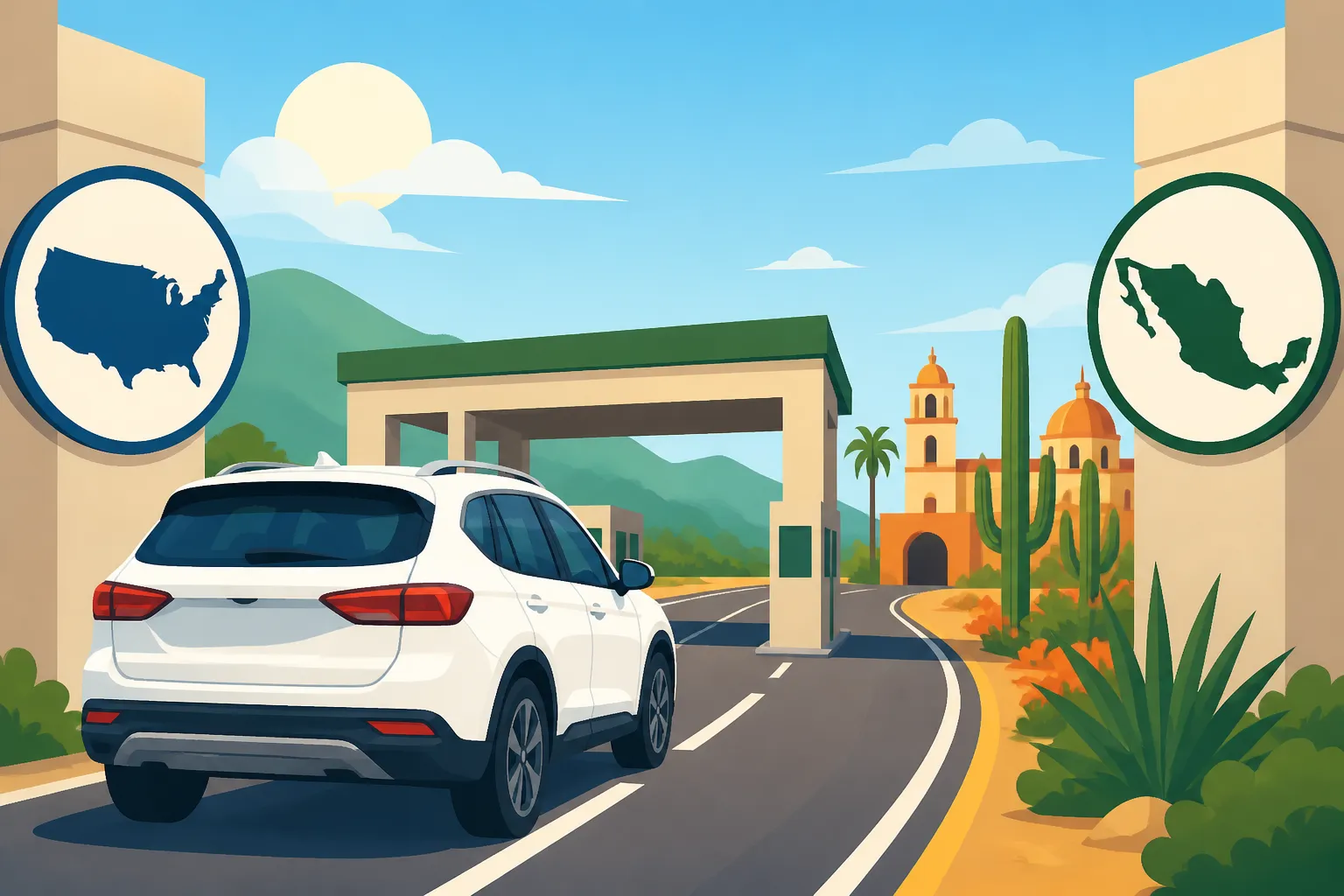
The physical act of crossing the border is often much less dramatic than people expect, but it requires patience. As you approach the Mexican customs area (Aduana), you will likely see a "Stop" and "Go" light system. This is a random inspection selector. If you get a green light, you generally proceed to the parking area to finalize your paperwork. If you get a red light, you will be directed to a secondary inspection area where officials will look through your trunk and belongings. Don't panic; they are mostly looking for commercial quantities of goods or prohibited items like weapons and ammunition.
Once you are through the initial gate, your first stop must be the INM (Instituto Nacional de Migración) office to get your FMM or residency stamp. Even if you are a tourist, you must have your Mexico Tourist Card (FMM) Explained: Entry Requirements for 2026 handled correctly. Many people forget this step and just keep driving, only to realize hundreds of miles later that they are technically in the country illegally. After your passport is stamped, head to the Banjercito window to finalize your TIP if you haven't done it online. You will have to pay a deposit, which is refunded when you cancel the permit upon leaving the country.
While you are waiting in these lines, it’s a good time to double-check your logistics. While some travelers prefer the flexibility of their own car, I’ve met many who decided mid-trip that the stress wasn't for them. In those cases, platforms like Busbud are fantastic for checking alternative long-distance travel options if you decide to leave the car at a secure storage facility and continue by luxury bus. However, if you’re committed to the drive, make sure you have small denominations of Mexican pesos ready for the toll roads you are about to encounter.
Common Border Crossing Points Comparison
| Crossing Point | Best For | Vibe / Difficulty |
|---|---|---|
| San Ysidro / Tijuana | Baja travelers, Southern California residents | High traffic, very busy, can be chaotic |
| Nogales, AZ | Travelers heading to Mazatlán or Puerto Vallarta | Efficient, well-marked, good mountain views |
| Laredo / Columbia Solidaridad | Expats heading to San Miguel or Lake Chapala | Professional, preferred for TIP processing |
| Eagle Pass / Piedras Negras | Those wanting a quieter, less congested experience | Low wait times, very straightforward |
Staying Safe on the Open Road: Driving Realities in Mexico
The moment you pull away from the border and into the interior, the rules of the road change subtly but significantly. The most important piece of advice I give anyone is to stick to the "Cuotas." These are the private toll roads, and they are significantly safer and better maintained than the "Libres" (free roads). Not only are the surfaces better, but the cuotas are also patrolled by the Green Angels (Angeles Verdes), a fleet of bilingual mechanics who provide free roadside assistance. For a deeper dive into this, check out Driving in Mexico: Toll Roads (Cuotas) vs Free Roads (Libres) to understand why that extra few hundred pesos is the best investment you'll make.
One of the biggest adjustments for North American drivers is the "Topes." These are speed bumps, but that word doesn't quite do them justice. In Mexico, topes can range from small yellow dots to massive concrete ridges that can rip the oil pan right out of your car if you hit them at speed. They are often unpainted and poorly marked. If you see the car in front of you suddenly brake for no apparent reason, assume there is a tope and do the same. This is just one of the many reasons why Is It Safe to Drive at Night in Mexico? Road Safety Tips for Expats is mandatory reading. Driving at night is the number one risk for travelers, not because of "banditos," but because of invisible topes, wandering livestock, and unlit vehicles.
Gas stations in Mexico are almost exclusively Pemex or newer brands like Gulf and Chevron, but the protocol remains the same: they are full-service. You do not pump your own gas. When you pull up, specify the type (Magna is 87 octane, Premium is 92) and tell them "lleno" for a full tank. Always watch the pump to ensure it is reset to zero before they start. It is customary to tip the attendant a few pesos, especially if they wash your windshield. While you're at the pump, use your phone to check Booking.com for your next stop; I always look for hotels that specifically list "secure private parking" to keep my car and belongings safe overnight.
Checkpoints and Local Interactions: What to Expect
As you drive south, you will inevitably encounter military or police checkpoints. These are usually routine and are part of the government's efforts to curb the transport of illegal goods. When you approach, slow down, roll down your windows, and turn off your music. Usually, they will just ask where you are going (¿A dónde va?) and where you are coming from (¿De dónde viene?). Be polite, maintain eye contact, and have your Temporary Import Permit (TIP) for Cars: What Residents Should Know and passport handy. In 99% of cases, they will just wave you through with a smile.
However, there is always the concern about the "mordida" or bribe. While the government has made massive strides in reducing corruption, it still happens, particularly with local municipal police in tourist-heavy areas. If you are pulled over, remain calm. Often, they will claim you committed a minor infraction and suggest you need to go to the station to pay a fine—unless you want to "resolve it here." My advice is always to ask for a written ticket. Often, the threat of paperwork makes a dishonest cop move on. For a full strategy on this, read What to Do If You’re Pulled Over by Police in Mexico.
Finally, remember that the drive is part of the experience. Mexico is a stunningly beautiful country with diverse landscapes that change every few hours. Once you reach your destination and get settled, you can really begin to enjoy the culture. I often recommend using Viator to book a local walking tour or a food experience in your new city. It’s the best way to get your bearings without having to worry about parking or navigating one-way streets in a colonial center. Driving here takes a bit of "Ganas" (hustle) and a lot of patience, but once you’ve done it once, that border crossing won't feel nearly as intimidating the second time around.
Disclaimer
This guide is for informational purposes only and does not constitute legal or professional advice. Immigration laws, vehicle import regulations, and safety conditions in Mexico can change rapidly. Always verify current requirements with the official Mexican consulate or the Banjercito website before your trip. The author and publisher are not responsible for any legal issues, fines, or safety incidents that may occur during your travel.