Getting Around Mexico City: Metro, Metrobús, and Apps
Mexico City, or CDMX as us old-timers lovingly call it, is a beast—a vibrant, sprawling, mesmerizing beast. Its sheer size and notorious traffic can feel incredibly intimidating for anyone, whether you're a fresh-off-the-plane tourist or a seasoned expat trying to figure out how to get to your trámite appointment without losing your mind. But don't despair; this guide will cut through the chaos, helping you master the Metro, conquer the Metrobús, and smartly use ride-hailing apps to navigate this incredible metropolis like a local.
Disclosure: This post may contain affiliate links. We may earn a commission at no extra cost to you if you make a purchase through these links. Read full disclosure.
Navigating Mexico City's Public Transport System: An Overview
Mexico City is one of the largest cities in the world, a true megalopolis that sprawls across the Valle de México. While its sheer scale is part of its charm, it also means that getting from one point to another isn't always as simple as hailing a cab or hopping on a single bus. The good news is that CDMX has a remarkably extensive and affordable public transportation network, which, once you get the hang of it, can be your best friend.
The Sheer Scale of CDMX: Why Public Transport is Essential
Picture this: You arrive, wide-eyed and excited, ready to explore everything from the historic Centro to the trendy streets of Roma Norte. But then you look at a map, and the distance between the Museo Nacional de Antropología and the Frida Kahlo Casa Azul seems like a journey across continents. That's Mexico City for you. The city is massive, dense, and constantly buzzing. Relying solely on taxis or ride-hailing apps for every trip will quickly drain your budget and test your patience with traffic. This is why understanding the public transport options is not just convenient, it's absolutely essential for anyone looking to truly experience life here, whether you're just passing through or settling in long-term.
Think about the sheer number of vehicles on the road on any given weekday. The traffic in CDMX is legendary for a reason, often turning what looks like a short drive into an hour-long ordeal. Public transport, especially the Metro and Metrobús with their dedicated lanes, offers a crucial alternative, allowing you to bypass much of this gridlock. It’s a core part of the daily rhythm, and frankly, a rite of passage for living in or visiting Mexico City. Learning how to use it is not only practical but also offers a glimpse into the everyday life of millions of chilangos (Mexico City residents).
Understanding the Labyrinth: Initial Culture Shock and Why It's Okay
For many newcomers, the first dive into Mexico City's public transportation can feel like being dropped into a complex, fast-moving labyrinth. The crowds, the announcements in rapid-fire Spanish, the sheer number of lines and transfers – it’s a lot to take in. You might feel overwhelmed, confused, or even a little silly for not immediately grasping the system. Let me tell you, that feeling is completely normal. We’ve all been there! Even seasoned expats remember their first few weeks of deciphering the Metro map.
The key is to give yourself grace and realize that it’s a learning curve. Don’t expect to be an expert on day one. Start with simpler routes, use mapping apps (Google Maps works wonders here, offering real-time public transport directions), and don’t be afraid to ask for help. Most locals are incredibly friendly and understanding if you approach them politely. It’s also a good idea to know some basic Spanish phrases for navigating, which can really smooth over any communication bumps. If you’re serious about making Mexico your home, investing time in Learning Spanish in Mexico: Top Tips and Resources for Expats will make a huge difference in your daily life, including transport.
The Mexico City Metro: Your Underground Lifeline
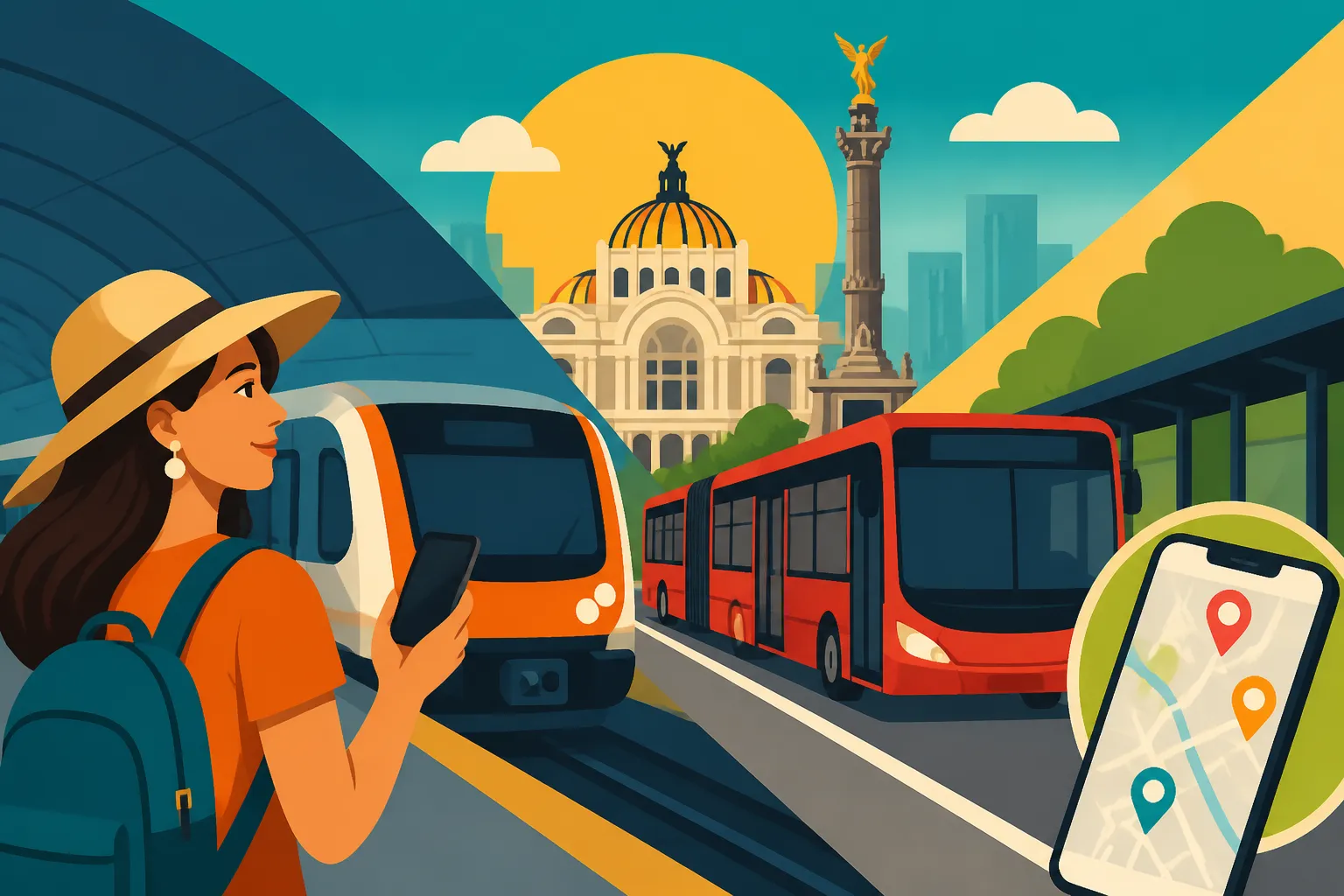
Ah, the Metro! This is arguably the backbone of public transportation in Mexico City, a sprawling underground (and sometimes overground) network that moves millions of people every day. It's fast, incredibly cheap, and often the quickest way to traverse long distances across the city, especially when traffic above ground is at a standstill.
How to Ride the Metro: Tickets, Cards, and Entry
Forget paper tickets; Mexico City's public transport system, including the Metro, relies on the Tarjeta de Movilidad Integrada (Integrated Mobility Card). This little plastic card is your golden ticket to the Metro, Metrobús, Cablebús, and Tren Ligero. You can purchase these cards at any Metro or Metrobús station for a small fee, usually around 15 pesos, plus whatever credit you want to load onto it. These cards are widely available at ticket booths (taquillas) or automated vending machines.
When you're at the taquilla, simply say "una tarjeta, por favor" (one card, please) and specify how much money you want to add, for example, "con cincuenta pesos" (with fifty pesos). If using the vending machines, they usually have English language options, or you can just follow the visual prompts. The process is straightforward: insert your card, insert your cash or use a credit/debit card, and confirm. Keep your card topped up, as you'll need to tap it to enter the turnstiles. Each ride costs a flat 5 pesos, regardless of distance or transfers within the system. For a comprehensive look at budgeting, check out our guide on Cost of Living in Mexico City (2026): Detailed Expat Budget Guide.
Metro Lines and Key Destinations
The Mexico City Metro boasts 12 lines, each color-coded and numbered, crisscrossing the city and reaching an impressive array of neighborhoods and attractions. Line 1 (pink), for example, is one of the oldest and most central, running from Pantitlán to Observatorio and connecting important areas like Pino Suárez and Insurgentes. Line 2 (blue) goes through the historic Centro, passing by Bellas Artes and Zócalo. Line 3 (green) connects areas like Indios Verdes to Universidad, a key route for students and visitors to Coyoacán.
During peak hours (roughly 7-10 AM and 5-8 PM on weekdays), the Metro can be incredibly crowded, almost uncomfortably so. A crucial tip for women: many Metro lines have exclusive cars for women and children at the front of the train during these busy times. These are clearly marked with pink signage on the platform and train cars, offering a safer and more comfortable space. Don't be shy about using them! For an even deeper dive into navigating this system, you might find our guide How to Use the Mexico City Metro as a First-Time Visitor particularly helpful.
Pros and Cons of Metro Travel
The Metro, despite its occasional chaos, offers significant advantages. First and foremost, it's incredibly cheap. At just 5 pesos a ride, you can travel across the city for less than the cost of a single candy bar. Secondly, it's remarkably fast. By going underground, you bypass the notorious CDMX traffic, making it the most efficient way to cover long distances during rush hour. It's also an extensive network, connecting most major tourist sites, business districts, and residential areas. You can reach nearly any part of the city, often with just one transfer.
However, the Metro isn't without its drawbacks. The crowds during peak hours can be overwhelming, especially if you're not used to being packed like sardines. This also makes pickpocketing a concern, so always keep your valuables secure and out of sight. While the network is extensive, some popular neighborhoods, particularly in the western parts of the city like Polanco or Santa Fe, aren't directly served, requiring a transfer to another mode of transport. Also, for those with mobility issues, not all stations are fully accessible, though improvements are continually being made.
Metrobús: Above-Ground Efficiency
Complementing the Metro, the Metrobús system offers another excellent way to get around Mexico City. This Bus Rapid Transit (BRT) system operates on dedicated lanes, meaning it often moves much faster than regular city buses, cutting through traffic in a way that feels almost magical.
What is the Metrobús and How Does it Work?
The Metrobús is essentially a bus system that acts like a surface-level train. It runs on designated corridors, often in the middle of major avenues, with sleek, modern stations that resemble mini-Metro stops. The beauty of the Metrobús is its efficiency. Because it has its own lanes, it's far less susceptible to the typical Mexico City traffic jams. Just like the Metro, you use the same Tarjeta de Movilidad Integrada to pay for your ride. You tap your card at the turnstile before entering the platform, and the fare is also a consistent 6 pesos per ride.
The Metrobús system has grown significantly over the years and now consists of multiple lines. Each line serves specific routes, designed to connect major points of interest, residential areas, and, crucially, to integrate with the Metro network. It’s often used as a convenient alternative or a seamless connector for areas where the Metro doesn’t reach directly. For instance, if you're traveling from the airport to the city center, the Metrobús Line 4 offers a direct and affordable route, making it a popular choice for both tourists and returning expats.
Key Metrobús Corridors and Connections
Several Metrobús lines are particularly useful for expats and visitors. Line 1, which runs along the iconic Avenida Insurgentes, is one of the longest and busiest lines, connecting neighborhoods from the south (like the UNAM university area) all the way to the north. This line is fantastic for accessing areas like Roma Norte and Condesa, as well as the World Trade Center. Line 3 is another popular choice, running through the city center and connecting with various Metro lines.
Line 4 is especially noteworthy as it provides direct service to both Terminals 1 and 2 of the Mexico City International Airport (AICM), making it a lifeline for travelers. This line also goes through the historic Centro and offers a crucial link for many who are arriving or departing. When you're trying to figure out how to get from your accommodation to a local market or a specific museum, checking the Metrobús routes on Google Maps can often reveal a surprisingly direct and quick option. For any longer journeys out of the city, platforms like Busbud can help you find and book inter-city bus tickets from Mexico City to other destinations.
Pros and Cons of Metrobús Travel
The Metrobús offers several compelling advantages. Its dedicated lanes mean it's usually much faster than regular buses, helping you avoid significant traffic delays. The stations are typically clean, well-lit, and often more spacious than some of the older Metro stations, providing a more comfortable waiting experience. For many routes, it offers a direct surface connection that allows you to see the city as you travel, which is a nice change from the underground Metro. It also tends to be less crowded than the Metro, though certain lines and times can still get busy.
On the flip side, while faster than regular buses, the Metrobús is still subject to some traffic delays, particularly at intersections or when its dedicated lanes are occasionally obstructed. The system can be a bit confusing at first glance, especially knowing which side of the street to wait on for your desired direction. Like any public transport, knowing some Spanish phrases for questions or directions can be very useful for overcoming language barriers at the station. However, for a convenient and relatively quick way to navigate the surface streets of CDMX, the Metrobús is a fantastic option.
Ride-Hailing Apps and Taxis: Convenience at Your Fingertips
While public transport is a staple, there will undoubtedly be times when you crave the convenience of a door-to-door ride. Mexico City offers a robust ecosystem of ride-hailing apps and traditional taxis, each with its own set of benefits and considerations.
Uber, Didi, and Cabify: The App-Based Revolution
For many expats and tourists, ride-hailing apps like Uber, Didi, and Cabify have become indispensable. These services offer unparalleled convenience, allowing you to request a car directly from your smartphone, see the estimated fare upfront, and pay electronically. The biggest advantage is the safety and transparency they offer. You can share your trip details with friends or family, track your ride in real-time, and drivers are registered with the platform. This removes much of the anxiety associated with traditional street taxis, especially when language might be a barrier, as the destination is entered into the app.
Uber is perhaps the most globally recognized and widely used, but Didi (a Chinese-owned company) and Cabify (a Spanish company) are also incredibly popular and competitive in Mexico City. Often, it's worth checking all three apps, especially during peak times or bad weather, as surge pricing can vary significantly between them. You might find a substantially cheaper ride on Didi when Uber is charging premium rates. These apps are generally very reliable, with cars usually arriving within minutes in most central neighborhoods. For detailed safety guidance, especially when using these services late at night, our article on Staying Safe in Mexico: Practical Tips for Travelers has some excellent advice.
Traditional Taxis: "Libres" and "Sitios"
Before the advent of ride-hailing apps, traditional taxis were the primary private transport option. You’ll still see plenty of them on the streets of CDMX. They typically come in two forms: taxis libres (free taxis) and taxis de sitio (stand taxis). Taxis libres are those you hail directly off the street. They are plentiful and can be convenient if you're in a hurry, but they also carry the highest risk for tourists, including potential overcharging or less scrupulous drivers. While reforms have been made, it’s still generally advisable to avoid hailing a taxi libre directly if you have other options, especially at night.
Taxis de sitio are a much safer alternative. These taxis operate from designated stands (or sitios) and are usually associated with a specific location, like a hotel, shopping mall, or a busy intersection. You often go to a small booth or speak to a dispatcher at the sitio to arrange your ride, and you'll typically be given a slip with a set fare or a metered ride. They are generally more reliable and secure than street taxis, as the drivers are registered with the sitio. While they might be slightly more expensive than a hailed libre, the peace of mind is often worth the extra pesos. Always confirm the fare or ensure the meter is running before starting your journey.
Pros and Cons of App-Based vs. Traditional Taxis
When choosing between app-based services and traditional taxis, it comes down to balancing convenience, cost, and safety. App-based services like Uber, Didi, and Cabify shine with their transparency, accountability, and safety features. You know who your driver is, their license plate, and the route taken, and payments are seamless. This removes the language barrier for directions and the hassle of cash payments or fare negotiations. The downside can be surge pricing during high demand, and in heavy traffic, the estimated arrival time might not always be accurate, though the price is generally locked in.
Traditional taxis, particularly sitios, offer immediate availability without needing a smartphone or data plan, which can be useful in areas with poor signal. They can sometimes navigate alleyways or shortcuts that app-based drivers might avoid, potentially getting you to your destination quicker in certain situations. However, taxis libres pose safety concerns and the potential for overcharging if you're unfamiliar with the city or don't speak Spanish well. Sitios are safer but may require you to walk to a designated stand. For general budgeting and financial tips related to transport and daily life, check out our guide on Money-Saving Tips: How Expats Can Cut Costs Living in Mexico.
Other Transportation Options and General Tips
Beyond the main public transit hubs and ride-hailing apps, Mexico City offers other fascinating ways to move around, and a few general tips can make your journeys even smoother.
Ecobici and Walking: Embracing Active Transport
For shorter distances and exploring specific neighborhoods, Ecobici is a fantastic option. This public bike-sharing system has stations densely packed across central neighborhoods like Roma, Condesa, Polanco, and the Centro Histórico. You can register for a daily, weekly, or annual membership using a credit card and then pick up and drop off bikes at any station. It's a wonderful way to experience the city at a more leisurely pace, get some exercise, and enjoy CDMX's increasing number of bike lanes. Just be aware of the traffic and be confident riding in a busy urban environment.
Walking is, of course, the most direct and immersive way to explore. Many of Mexico City's most charming neighborhoods—Roma, Condesa, Coyoacán, the Centro Histórico—are incredibly walkable, filled with beautiful architecture, parks, cafes, and shops. Strolling through these areas allows you to truly soak in the atmosphere. However, for longer distances or if you’re venturing into less pedestrian-friendly areas, or at night, other transport methods are usually a better choice. Always be aware of your surroundings, especially with uneven sidewalks and busy streets. For more general advice on safety while exploring, our post on Travel Logistics in Mexico: Safety, Money, and Connectivity is a valuable resource.
General Safety and Navigation Tips
Navigating a massive city like CDMX, especially in a foreign language, requires a bit of savvy. Here are some essential tips:
- Offline Maps and Data: Always have a reliable mapping app (like Google Maps) on your phone, and ideally, have a local SIM card with data. Even better, download offline maps of Mexico City, as cell signal can sometimes be spotty underground in the Metro. This can also help you use apps like Booking.com to find accommodations well-connected to these transit lines.
- Avoid Peak Hours if Possible: If your schedule allows, try to avoid public transport during the morning and evening rush hours (roughly 7-10 AM and 5-8 PM). The trains and buses are less crowded, making for a much more pleasant experience.
- Be Aware of Your Valuables: This is crucial everywhere, but especially in crowded places like the Metro. Keep your phone, wallet, and passport secured in front pockets, an anti-theft bag, or a money belt.
- Basic Spanish Phrases: Even a few basic phrases like "dónde está la estación?" (where is the station?), "cuánto cuesta?" (how much does it cost?), or "para dónde va?" (where is this going?) can be incredibly helpful. Don't be afraid to ask for help; Mexicans are generally very kind and willing to assist.
- Consider Inter-City Travel: When you're ready to explore beyond CDMX, remember that Mexico has an excellent network of long-distance buses. Services like Busbud can help you book tickets for comfortable and affordable journeys to other cities, seamlessly integrating your intra-city navigation with wider travel plans. Our guide to Getting Around Mexico: Buses, Flights, and Car Hire offers more on this.
- Plan Your Route: Before heading out, take a moment to plan your route, especially if it involves transfers. Knowing which lines you need and approximately how many stops will reduce stress.
- Don't Be Afraid to Mix Modes: Often, the most efficient journey involves a combination: a Metro ride for the longest stretch, then a Metrobús or a short app-based taxi ride for the "last mile." This blend of options is often what locals do.
Comparing Your Mexico City Transport Options
To give you a quick overview, here’s a comparison of the main ways to get around Mexico City:
| Feature | Metro (Subway) | Metrobús (BRT) | Ride-Hailing Apps (Uber, Didi, Cabify) | Traditional Taxis (Sitio/Libre) |
|---|---|---|---|---|
| Cost (approx.) | 5 MXN per ride | 6 MXN per ride | Variable, surge pricing, generally higher than public transit | Variable, negotiation possible, sitio fares may be fixed |
| Speed | Very fast (avoids traffic) | Fast (dedicated lanes, avoids most traffic) | Traffic-dependent | Traffic-dependent, local knowledge helps |
| Coverage | Extensive city-wide | Good, complements Metro, key corridors | Door-to-door, city-wide | Widely available |
| Safety | Generally safe, be mindful of pickpockets in crowds | Generally safe | High (tracked, rated drivers) | Variable (Sitios safer, Libres less so) |
| Convenience | High, frequent trains | High, frequent buses | Very high (door-to-door, cashless) | High (immediate availability) |
| Payment | Tarjeta MI (cash/card reload) | Tarjeta MI (cash/card reload) | App (credit card, cash options) | Cash preferred, some accept cards |
| Language Needs | Minimal, signs are clear | Minimal, signs are clear | Minimal, destination in app | Moderate to high (negotiation, directions) |
Understanding these options and when to use each will make your time in Mexico City much more enjoyable and efficient. Whether you're exploring the bustling markets, historical sites, or vibrant nightlife, mastering your movement through CDMX is key to truly immersing yourself in this incredible city.
Disclaimer
The information provided in this guide is intended for general informational purposes only and may not constitute the most up-to-date legal, financial, or immigration advice. While we strive to keep our content current and accurate, policies and regulations in Mexico can change frequently. Readers are strongly advised to verify all information with official sources or consult with appropriate professionals (e.g., immigration lawyers, financial advisors, local authorities) for their specific circumstances. We do not assume any liability for actions taken based on the information contained herein.