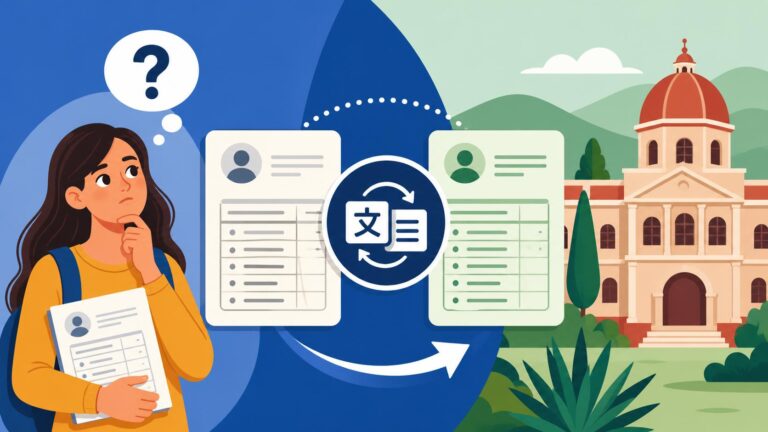
Freelancing in Mexico as a Foreigner
Landing your first local client in Mexico is an exhilarating milestone, but that excitement quickly turns into a bureaucratic migraine when they ask you for your "RFC" and a "factura" before they can send a single peso to your account. I remember sitting in a sun-drenched cafe in Coyoacán, staring at an email from a local marketing agency, realizing that my "digital nomad" setup was completely useless for the reality of the Mexican tax system. This guide is your roadmap to navigating the legal, financial, and cultural maze of freelancing in Mexico without losing your mind.
Disclosure: This post may contain affiliate links. We may earn a commission at no extra cost to you if you make a purchase through these links. Read full disclosure.
The Legal Framework: Can You Actually Freelance in Mexico?
The question of whether you can legally freelance in Mexico depends entirely on who is paying you and where that money is landing. Most foreigners arrive on a tourist permit, assuming that as long as they are working on a laptop, they are "invisible" to the authorities. While it is true that many people fly under the radar while working for companies back in the US or Europe, the moment you want to bill a Mexican company or establish a long-term life here, the rules change significantly.
Understanding Your Visa Status
To freelance for Mexican clients, you generally cannot remain on a tourist permit. You need to transition to a residency status that allows for "lucrative activities." Most expats start with a Mexico Temporary Resident Visa: Comprehensive Guide for Expats (2026 Update). This visa is usually obtained at a consulate outside of Mexico and then exchanged for a card once you arrive. However, a standard temporary residency does not automatically give you the right to work for Mexican entities.
If you already have your residency card but it says "no lucrativa," you are essentially a guest who is not supposed to be earning money within the Mexican economy. To fix this, you have to apply for a change of status at the National Institute of Migration (INM). This involves a specific process that I've seen trip up even the most prepared expats. You can find the specific steps in our guide on How to Add Work Authorization to Your Temporary Residency in Mexico. Without this explicit permission, you cannot legally register with the tax authorities, which means you cannot issue the invoices required to get paid by local businesses.
Working for Foreign vs. Local Clients
There is a massive distinction in the Mexican legal system between a "Remote Worker" and a "Freelancer in Mexico." If 100% of your income comes from outside Mexico, is paid into a foreign bank account, and you are not utilizing Mexican infrastructure to generate that income (a gray area, admittedly), the SAT (Mexico’s tax authority) typically doesn't come knocking. However, if you are living here year-round, you are technically a tax resident.
The real "I've-been-there" moment happens when you realize that even if you work for foreign clients, having Mexican residency and a local tax ID can actually save you money. Mexico has a very favorable tax regime for small-scale freelancers that can often be lower than what you’d pay in your home country. This is where services like Taxes for Expats become invaluable, as they help you navigate the complex world of double taxation treaties, ensuring you aren't paying the IRS and the SAT on the same dollar of income.
The Risks of Working "Under the Table"
I have met dozens of foreigners who try to freelance "off the books" to avoid the paperwork. In Mexico, this is particularly risky because of how the banking system is monitored. The SAT has become incredibly sophisticated in recent years, and they have "eyes" on most Mexican bank accounts. If you are receiving regular deposits from Mexican companies without corresponding tax filings, your account can be frozen with very little notice.
Furthermore, legitimate Mexican companies are legally required to collect a "factura" (an electronic invoice) for every expense they claim. If you can’t provide one, they simply won't hire you. You’re essentially cutting yourself off from the highest-paying local opportunities by not being legal. It might seem like a hassle to set up, but the peace of mind of being able to show your residency card and tax ID at any time is worth the initial legwork.
Navigating the SAT: Tax ID and Registration
The SAT (Servicio de Administración Tributaria) is often the "bogeyman" for expats, but once you understand the system, it’s actually quite logical—if a bit pedantic. Your first step toward any professional life in Mexico is obtaining your RFC (Registro Federal de Contribuyentes). This is your unique tax ID, and it is the key that unlocks everything from bank accounts to high-speed internet contracts.
The Adventure of Getting Your RFC
Getting your RFC is a rite of passage. You cannot do this entirely online as a foreigner; you must book an appointment (cita) at a local SAT office. These appointments can be notoriously hard to get, often requiring you to check the SAT portal at midnight or use a "gestor" (a professional fixer) to snag a slot. When you finally go, you’ll need your passport, your residency card with work authorization, and a "comprobante de domicilio" (proof of address, usually a utility bill).
I remember my first SAT appointment in Mexico City. I had all my papers in a neat folder, but I didn’t realize they needed my proof of address to be less than three months old. I had to run to a nearby internet cafe, print a newer bill, and sprint back before they gave my slot away. For a deep dive into this specific hurdle, check out The RFC and SAT: Mexico's Tax System for Foreigners. Once you have your RFC and your e.firma (digital signature), you are officially in the system.
The RESICO Regime: A Freelancer's Dream?
The best thing to happen to freelancers in Mexico in the last decade is the introduction of the RESICO (Régimen Simplificado de Confianza). If you are an individual earning less than 3.5 million pesos a year (roughly $200,000 USD), you likely qualify. Under RESICO, your income tax (ISR) rate is incredibly low, ranging from 1% to 2.5% of your gross income.
However, there is a catch: you cannot deduct expenses under RESICO. For most freelancers—writers, designers, developers—who have very low overhead, this is a phenomenal deal. But if you have high business costs (like a photographer with expensive gear rentals), you might be better off in the standard "Persona Física con Actividad Empresarial" regime. We break down the math in our guide on The RESICO Tax Regime in Mexico Explained. Deciding which regime to choose is a critical first step, and it's something I highly recommend discussing with a local accountant who understands the expat context.
Monthly Filings and Compliance
Unlike some countries where you only think about taxes once a year, Mexican freelancers have monthly obligations. You (or your accountant) must file a declaration by the 17th of every month, reporting your income and paying any applicable IVA (Value Added Tax). IVA is usually 16% in Mexico. If you bill a Mexican company, you add 16% to your invoice, they pay it to you, and you "pass it through" to the SAT.
It sounds complicated, but modern software makes this relatively easy. Most expats find that hiring a local accountant for about $50-$100 USD a month is the best investment they can make. They ensure you stay compliant and don't accidentally lose your RESICO status—which can happen if you miss even one filing. You can learn more about the specifics of the registration process in How to Register as a Freelancer With the SAT in Mexico.
Managing Finances and Payments
Once you are legal and registered, you need a way to actually touch your money. This is where many expats get frustrated, as Mexican banks are famously bureaucratic and often have different rules for foreigners than for citizens.
Local vs. Foreign Bank Accounts
While you can technically freelance for foreign clients using a US or Canadian bank account, you will eventually want a local Mexican account. Why? Because paying your electricity bill, your rent, and even your cell phone plan is significantly easier via SPEI (Mexico's instant bank transfer system). Moreover, if you have local clients, they will insist on paying you via SPEI into a Mexican bank.
I’ve tried several banks over the years, and the experience varies wildly. BBVA tends to have the best app, but Santander and Banorte are also popular. When you go to open an account, bring your residency card, your RFC, and plenty of patience. For a comparison of the best options, take a look at Best Banks in Mexico for Expats: Comparing Fees and Services. Some newer fintech options like Nu or Klar are also gaining popularity for their ease of use, though they may have lower deposit limits than traditional banks.
The Magic of the Factura
In Mexico, a "factura" is not just a PDF you make in Canva. It is an XML file that is digitally signed and "stamped" (timbrado) by the SAT's servers. Every time you get paid by a Mexican client, you must issue this official document. This is how the SAT tracks the flow of money in real-time. If you don't issue a factura, the company paying you cannot legally count that payment as a business expense.
To issue facturas, you’ll use your e.firma and a "facturación" service (many are free or very cheap). It’s a bit of a learning curve—you have to choose the correct "uso de CFDI" (use of invoice) and the right "clave de producto" (product code) for your services. I once spent an entire afternoon trying to figure out if my copywriting fell under "advertising" or "literary services." It’s worth getting it right the first time to avoid having to cancel and re-issue invoices later. You can find a step-by-step tutorial in How to Issue a Factura (CFDI) in Mexico.
Payment Comparison for Freelancers
| Method | Pros | Cons | Best For |
|---|---|---|---|
| SPEI (Mexican Transfer) | Instant, No Fees, Tax Compliant | Requires Mexican Bank Account | Local Clients |
| Wise / Payoneer | Great Exchange Rates, Easy to Use | Can be tricky for local tax tracking | Foreign Clients |
| PayPal | Widely Recognized | Very high fees, Poor exchange rates | Small one-off payments |
| Stripe | Professional, Multi-currency | Takes 3-7 days for payout in Mexico | E-commerce / Subscriptions |
Building a Sustainable Freelance Life
Being a successful freelancer in Mexico isn't just about the paperwork; it's about the lifestyle and the community. Mexico is an incredibly social country, and the "lonely freelancer" trope doesn't play well here. To thrive, you need to get out of your apartment.
Finding Clients and Networking
In many Western cultures, we rely on LinkedIn or job boards. In Mexico, "el compadrazgo" (the system of connections and friendships) is everything. Most of my best local gigs didn't come from an ad; they came from a conversation at a coworking space or a recommendation from a friend.
If you are in a major hub like CDMX, Guadalajara, or Mérida, the coworking scene is vibrant. These aren't just offices; they are the heart of the professional expat community. Spending a few days a week at a place like WeWork or a local boutique coworking space can lead to more opportunities than a month of cold-emailing. Check out our list of Coworking Spaces in Mexico City and Beyond to find a spot that fits your vibe.
Language Barriers and Learning Spanish
You can certainly find English-speaking clients in the tech and tourism sectors, but your earning potential in the local market triples if you can speak Spanish. Even if you're not fluent, the effort goes a long way. Mexican business culture is built on "plática"—the small talk before the business starts. If you can talk about the weather, the food, or the local football team, you are much more likely to close the deal.
I personally found that using iTalki was a game-changer for my business Spanish. I specifically looked for tutors who had a background in marketing or law so they could teach me the vocabulary I actually needed for my facturas and contracts. Having a few sessions a week can give you the confidence to handle a client meeting without looking like a deer in headlights.
Navigating the "Mañana" Culture
One of the biggest culture shocks for foreign freelancers is the approach to deadlines. In the US or Germany, "Friday at 5 PM" means Friday at 5 PM. In Mexico, it might mean Monday morning, or it might mean "whenever I get around to it." This isn't laziness; it's a different prioritization of time and social obligations.
The trick is to build "buffer time" into your project schedules and to send friendly reminders. A quick WhatsApp message (the lifeblood of Mexican business) is much more effective than a formal email. "Hola, just checking in on the feedback for the draft!" is standard practice. Learning to navigate this without getting frustrated is key to your long-term mental health as an expat.
Practical Considerations for Remote Workers
Beyond the taxes and the clients, you have to manage your actual work environment. Mexico's infrastructure has improved massively, but it still has its quirks that can derail a workday if you aren't prepared.
High-Speed Internet and Infrastructure
If your job involves video calls or large file transfers, you cannot rely on the basic Wi-Fi provided in many "furnished for digital nomads" apartments. You want a fiber optic connection (Fibra Óptica). Telmex (Infinitum) and Totalplay are the two big players. Totalplay is generally considered more reliable for high-speed needs, but Telmex has better coverage in older colonial neighborhoods.
Always ask for a speed test before signing a lease. And here's a pro-tip: power outages are common during the rainy season. I highly recommend buying a "No-Break" (an Uninterruptible Power Supply or UPS) for your router and your computer. There is nothing worse than being in the middle of a client presentation and having the power flicker for three seconds, which then takes your router five minutes to reboot.
Health and Social Security
As a freelancer, you don't have an employer providing you with a health plan. You have two main options in Mexico: the public system (IMSS) or private insurance. Most expats choose private insurance for the speed and quality of care, but if you are on a budget, you can voluntarily enroll in IMSS for a relatively low annual fee.
The IMSS system is great for catastrophic issues but can have long wait times for specialists. You can read all about the pros and cons in our Healthcare in Mexico: Complete Guide for Expats (2026 Private vs Public). If you want to dive deeper into the public option, see IMSS Explained: Mexico's Public Health Insurance for Residents. For day-to-day issues, the "Consultorios" attached to pharmacies (like Farmacias del Ahorro) are a lifesaver for quick, $5 USD doctor visits.
Managing the "Digital Nomad" vs. "Resident" Identity
Finally, there is a psychological shift that happens when you move from being a traveler to being a resident freelancer. You start caring about things like property taxes, local politics, and supporting local businesses. This transition is what makes the experience of living in Mexico truly rich.
When you start paying into the Mexican tax system, you aren't just a guest anymore; you are a contributor. You’ll find that the local community respects you more when they know you are "doing things right." It opens doors that remain closed to those who are just passing through on a tourist visa. It’s a journey that starts with a stressful SAT appointment and ends with you calling Mexico "home."
Summary of Freelance Setup in Mexico
| Stage | Action Item | Estimated Time | Key Document Needed |
|---|---|---|---|
| Legal | Get Residency with Work Authorization | 1-3 Months | Passport / Financial Records |
| Tax | Obtain RFC and e.firma at SAT | 1-4 Weeks | Residency Card / Proof of Address |
| Financial | Open Mexican Bank Account | 1-2 Days | RFC / Residency Card |
| Operations | Set up Facturación System | 1-2 Hours | e.firma (Digital Files) |
| Compliance | Hire a local Contador (Accountant) | Ongoing | Your monthly income totals |
Disclaimer
The information provided in this article is for informational purposes only and does not constitute legal, financial, or tax advice. Laws and regulations regarding immigration and taxation in Mexico are subject to frequent change. We strongly recommend consulting with a qualified Mexican immigration attorney and a certified tax accountant to discuss your specific situation before making any decisions. This content was created based on the best available information at the time of writing, but we make no guarantees regarding its accuracy or completeness in the future.