How to Take the DELE Exam in Mexico
Trying to prove your Spanish proficiency in Mexico can feel like a never-ending riddle, especially when applying for jobs, university programs, or even just impressing your suegra. You speak Spanish every day, navigate local markets, and understand the nuances of Mexican slang, but without an official credential, it’s just, well, your word. This guide is here to cut through that frustration, walking you through everything you need to know about taking the DELE exam right here in Mexico, turning your lived experience into certified proof.
Disclosure: This post may contain affiliate links. We may earn a commission at no extra cost to you if you make a purchase through these links. Read full disclosure.
Understanding the DELE Exam and Why It Matters in Mexico
When you’re an expat in Mexico, you quickly realize that while a friendly "hola" gets you by, true integration often requires proving a deeper understanding of the language. The DELE exam isn't just another language test; it's a globally recognized benchmark of your Spanish prowess, and having it can unlock a whole new level of opportunities and respect in your Mexican life.
What Is DELE and Its Global Recognition?
The DELE, or Diplomas de Español como Lengua Extranjera, literally translates to "Diplomas of Spanish as a Foreign Language." These are official accreditations of the degree of competence and mastery of the Spanish language, granted by the Cervantes Institute on behalf of the Ministry of Education and Vocational Training of Spain. Think of it as the gold standard for Spanish language certification, recognized not just in Mexico but across the globe in over 100 countries. It's aligned with the Common European Framework of Reference for Languages (CEFR), which means when you get a B2 DELE, people worldwide understand exactly what that level signifies. This consistency is incredibly valuable, especially when your Mexican residency journey might eventually lead to applying for citizenship or needing to present official documents for Mexican Citizenship by Naturalization: The Process.
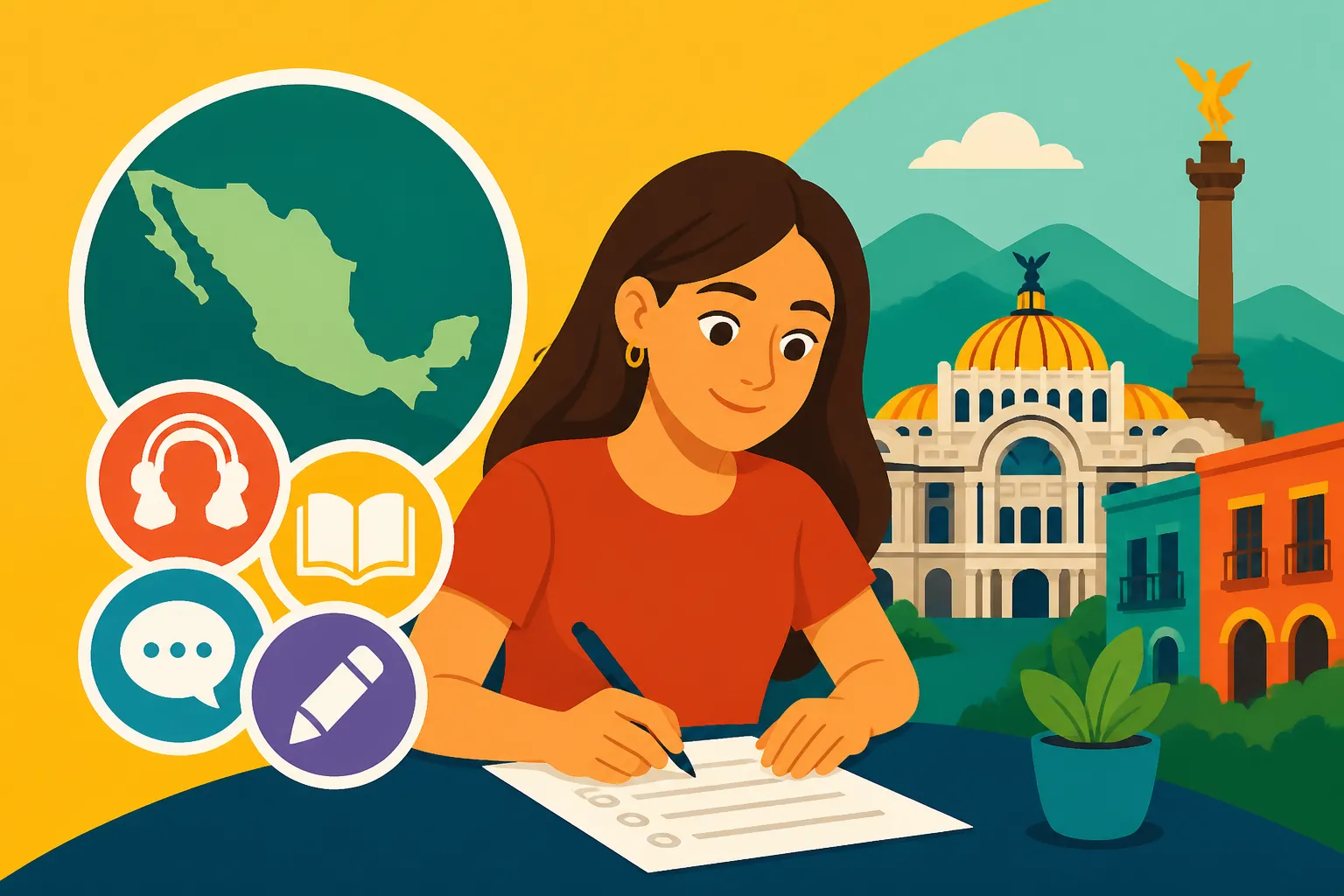
Unlike some other language tests, the DELE is designed to assess your ability to use Spanish in real-world situations, covering all four core language skills: reading, writing, listening, and speaking. From a beginner A1 to a near-native C2, there's a level for every learner. Having a DELE diploma means you don't just say you speak Spanish; you have an official, internationally accepted document to back it up.
Why Expats in Mexico Should Consider DELE Certification
Living in Mexico, you're constantly exposed to Spanish, which is fantastic for immersion. But for many expats, the practical benefits of DELE extend far beyond casual conversation. For starters, if you're looking to work in Mexico, especially in professional roles outside of purely English-speaking environments, a DELE certificate can be a significant advantage on your resume. Mexican employers, like those elsewhere, appreciate tangible proof of skills. It signals to them that you're serious about integrating, and it removes any doubt about your ability to communicate effectively in the workplace. Even if you're a digital nomad, understanding Mexican labor laws and communicating clearly is crucial, and a DELE helps bridge that gap.
Beyond work, think about higher education. If you or your children are considering studying in Mexico, universities often require proof of Spanish proficiency, and the DELE is universally accepted. It simplifies the application process immensely, saving you the headache of proving your language skills through other means. Even for something as seemingly simple as navigating complex bureaucratic processes or understanding your rights concerning Taxes in Mexico for Expats: A Complete Guide to Income Tax and More, a strong, certified grasp of Spanish can empower you. It’s about more than just words; it’s about confidence and credibility in your new home. For those running a business or even just wanting to deepen their connection with local culture, having that certification offers a level of confidence and respect that mere conversational fluency often doesn't provide.
Navigating the DELE Exam Application Process in Mexico
Alright, you're convinced! Now, how do you actually get this thing done? The process of applying for the DELE exam in Mexico is fairly straightforward, but like many administrative tasks here, it requires attention to detail and a bit of patience. Let's walk through it.
Finding an Official Examination Center Near You
The first step is locating an official DELE examination center. The Cervantes Institute partners with various universities and cultural institutions across Mexico to administer these exams. Major cities with significant expat populations usually have several options. For example, you’ll find centers in places like Mexico City, Guadalajara, Monterrey, Puebla, Mérida, and even smaller cities like Oaxaca and San Miguel de Allende.
To find the most up-to-date list and contact information, your best bet is to consult the official Cervantes Institute website. They have a search tool where you can input "Mexico" and see all the accredited centers. Each center will list the specific DELE levels they offer and their available examination dates. It's a good idea to check out a few different centers if possible, as dates and availability can vary. Some popular ones include the Universidad Nacional Autónoma de México (UNAM) in Mexico City, the Instituto Mexicano de Estudios Culturales (IMEC) in Guadalajara, or specific cultural centers that are authorized by the Cervantes Institute. Always verify directly with the center for their current protocols and specific registration instructions, as these can sometimes have local variations from the general guidelines.
Step-by-Step Registration: From Online Portal to Payment
Once you’ve chosen your center and a suitable date, it’s time to register. This is typically done online through the Cervantes Institute’s dedicated platform. Here’s a general rundown of what to expect:
- Create an Account: You'll need to set up a user account on the Cervantes Institute's examination portal. This involves providing personal details like your name, nationality, date of birth, and email address.
- Select Your Exam: Choose the DELE level (A1, A2, B1, B2, C1, C2) you wish to take and the examination session (date) that works for you. Make sure you're selecting a session offered at your chosen center.
- Fill Out the Application Form: The online form will ask for additional information, including your passport number or official ID, and details about your education. Double-check everything for accuracy, as this information will appear on your diploma.
- Upload Required Documents: You'll typically need to upload a clear scan of a valid identification document (like your passport or Mexican residency card). Ensure the document is current and clearly shows your photo, name, and signature.
- Make Payment: This is where you finalize your registration. Exam fees vary by DELE level and can change annually. The fees are usually paid in Mexican Pesos (MXN) directly through the online portal, often with a credit or debit card. Some centers might also offer bank transfer options. Important: Once paid, these fees are generally non-refundable, so be absolutely certain of your chosen level and date before confirming. Expect the cost to be a few thousand pesos, similar to other professional certifications.
- Confirmation: After successful payment, you'll receive a confirmation email with your registration details. Hold onto this email; it's your proof of registration and will contain important information about your exam day.
The registration period usually closes several weeks before the actual exam date, so don't leave it to the last minute. Keep an eye on the official dates!
Key Dates and Deadlines to Mark on Your Calendar
The Cervantes Institute offers multiple DELE exam sessions throughout the year. Typically, these are in February, April, May, July, September, and November, though not all levels are available in every session. For example, some centers might only offer the C2 exam once or twice a year.
It's crucial to consult the official DELE exam calendar on the Cervantes Institute's website well in advance. This calendar will list:
- Registration Periods: The specific windows during which you can sign up for each exam session. These are strict, and once they close, you cannot register for that session.
- Examination Dates: The actual days when the written and oral components of the exam will take place. The oral exam might be scheduled on a different day than the written one, usually within the same week.
- Publication of Results Dates: The approximate timeframe when you can expect to receive your results. This can take a couple of months, so plan accordingly if you need the certificate by a specific deadline.
My advice? If you know you want to take the DELE, check the calendar at the beginning of the year and pick a date. Then, work backward to plan your study schedule and ensure you register within the designated period. Missing a deadline here often means waiting a few more months for the next opportunity, and nobody wants that!
Preparing for the DELE Exam: Resources and Strategies for Success
You've got your exam date, now it’s time to hit the books! Preparing for the DELE is a marathon, not a sprint, and a well-thought-out strategy can make all the difference. Remember, this isn't just about passing; it's about confidently demonstrating your real-world Spanish skills.
Official Study Materials and Practice Tests
The Cervantes Institute wants you to succeed, so they provide excellent official resources. Their website is a treasure trove of information, including:
- Exam Guides: For each DELE level, you can download a comprehensive guide that breaks down the exam structure, types of tasks for each section (reading, writing, listening, speaking), and evaluation criteria. These are invaluable for understanding what exactly the examiners are looking for.
- Model Exams: Perhaps the most useful resource are the past exam papers or "modelos de examen." These are full-length practice tests that simulate the actual exam experience. Doing these under timed conditions is crucial for familiarizing yourself with the format, managing your time effectively, and identifying areas where you need more practice. You can find these available for free download on the Instituto Cervantes website. Some might even include audio files for the listening comprehension sections.
- Bibliografía: They also provide a bibliography of recommended textbooks and grammar resources that align with each DELE level. While not mandatory, these can be very helpful for structured learning.
Don't skip these official resources! They are the most accurate representation of what you'll face on exam day.
Language Schools and Tutors in Mexico
While self-study is great, sometimes you need a little more structure and personalized feedback. This is where language schools and private tutors come in handy, especially when you're preparing for something as specific as the DELE.
Mexico has a plethora of Spanish language schools, particularly in expat-dense areas and university towns. Many of these schools offer specialized DELE preparation courses. These courses are designed to walk you through each section of the exam, provide targeted practice, and give you feedback on your performance. The benefit here is learning in a structured environment with other students, often practicing speaking with native teachers. Some well-regarded options might be found through the major university language centers, or dedicated private academies in cities like Guanajuato, Oaxaca, or San Miguel de Allende, which are known for their Spanish immersion programs.
If a group setting isn't for you, or you need more flexible scheduling, a private tutor can be a game-changer. A good tutor can assess your current level, pinpoint your weaknesses, and tailor lessons specifically to the DELE exam format. They can provide intensive practice for the oral component, helping you with fluency, pronunciation, and argumentation skills. Platforms like iTalki are fantastic for finding experienced Spanish tutors, many of whom specialize in DELE prep. You can connect with native Spanish speakers from Mexico (or other Spanish-speaking countries) and work on specific skills, often for a fraction of the cost of in-person lessons. This can be especially useful for practicing your speaking and getting personalized feedback on your writing.
Self-Study Tips and Immersion Techniques
Even if you enroll in a course or hire a tutor, self-study will be a huge part of your DELE journey. Here are some tips to maximize your learning while living in Mexico:
- Read Everything: Don't just read Spanish textbooks. Read Mexican newspapers (like Reforma or El Universal), magazines, online articles, and even local restaurant menus. This exposes you to real-world vocabulary, grammar structures, and cultural nuances. Choose materials that align with your DELE level.
- Listen Actively: Immerse yourself in spoken Spanish. Watch Mexican TV shows, movies, and YouTube channels. Listen to local radio stations and podcasts. Try to transcribe what you hear, or summarize it to practice comprehension and active recall. Even just listening to the announcements on the Metro or in a supermarket is practice!
- Write Regularly: Practice all types of writing tasks that appear on the DELE exam: formal letters, informal emails, essays, summaries, and opinion pieces. Get feedback on your writing, either from a tutor, a language exchange partner, or by using online grammar checkers.
- Speak, Speak, Speak: This is where living in Mexico truly shines. Don't be shy! Engage in conversations with locals, practice ordering at restaurants, ask for directions, and participate in community events. Try to actively use new vocabulary and grammar points you’ve learned. Consider joining local conversation groups or intercambios.
- Flashcards and Vocabulary Apps: Build your vocabulary systematically. Apps like Anki or Quizlet are excellent for creating digital flashcards and reviewing new words and phrases regularly.
- Simulate Exam Conditions: As you get closer to your exam date, dedicate specific blocks of time to completing full practice exams under strict timed conditions. This helps you build stamina and manage your stress on the actual day.
Remember, the goal is not just memorization, but developing a deep, practical fluency. Live and breathe Spanish, and you'll be much better prepared.
What to Expect on Exam Day and Beyond
The big day arrives! It's natural to feel a mix of nerves and excitement. Knowing what to expect on exam day and how to interpret your results can help alleviate some of that pressure.
The Exam Format: Written, Oral, and Everything In Between
The DELE exam is typically divided into two main parts, usually taken on the same day or across two consecutive days (with the oral portion sometimes on a separate day):
-
Written Component: This includes the Reading Comprehension (Comprensión de Lectura), Listening Comprehension (Comprensión Auditiva), and Written Expression and Interaction (Expresión e Interacción Escritas) sections.
- Reading: You'll read various texts (articles, advertisements, official notices) and answer multiple-choice questions or match information.
- Listening: You'll listen to audio recordings (conversations, news reports, announcements) and answer comprehension questions.
- Writing: You'll be given prompts to write texts, such as an email, a formal letter, an opinion essay, or a blog post, depending on the level. You'll need to demonstrate appropriate vocabulary, grammar, and coherence.
-
Oral Component: This is the Speaking and Oral Interaction (Expresión e Interacción Orales) section. You'll have a one-on-one interview with two examiners. This usually involves:
- Prepared Monologue: You might be given a topic or a series of images to prepare a short monologue (e.g., 2-3 minutes) about. You’ll have prep time beforehand.
- Conversation/Interaction: The examiners will engage you in a conversation, asking questions related to your monologue or other general topics, and possibly asking you to discuss a given scenario or set of arguments. They're assessing your fluency, pronunciation, grammar, vocabulary, and ability to interact naturally.
Each section has a specific time limit, which is strictly enforced. It's crucial to arrive at the examination center well in advance, bring your official identification (the one you registered with), and your confirmation email. They'll likely provide all necessary writing materials. Expect a quiet, focused environment, and remember to turn off your phone!
Receiving Your Results and Official Diploma
After the exam, the waiting game begins. The Cervantes Institute typically takes approximately two to three months to process and publish the results. You can check your results online through your personal account on the Cervantes Institute's examination portal. You'll receive a notification when they are available.
The results will indicate whether you've passed or failed. If you passed, you'll see a breakdown of your performance in each section, usually indicating "Apto" (Pass) or "No Apto" (Fail) for each part (grouped by reading/writing and listening/speaking). You need to pass both groups to get the diploma.
Once the results are officially published and you've passed, your official DELE diploma will be issued. This is a physical document, a high-quality certificate, which will be sent to the examination center where you took the exam. The center will notify you when it's ready for pick-up. This usually involves presenting your identification again. The diploma is valid indefinitely, which is a huge bonus—you only need to earn it once!
Leveraging Your DELE Certificate for Life in Mexico
So you've got that shiny new DELE diploma in hand – ¡felicidades! Now, how can you make it work for you here in Mexico? This isn't just a piece of paper; it's a key to deeper integration and new opportunities.
A DELE certificate, especially at a B1 or B2 level, can significantly boost your prospects if you're looking for employment in Mexico. It signals to potential employers that you possess proven language skills, making you a more attractive candidate, particularly in industries that require interaction with Mexican clients, colleagues, or the public. Whether you're thinking of a corporate job, a role in tourism, or even starting your own business and needing to converse with local suppliers, your DELE can make a tangible difference. It’s a formal endorsement that complements your daily immersion.
Beyond employment, it can be beneficial for academic pursuits. If you plan to enroll in a Mexican university or even a specialized course, the DELE will almost certainly satisfy any Spanish language proficiency requirements. This streamlines the application process and removes a potential barrier to entry. For parents with children in local schools, it can even give you more confidence when engaging with teachers and school administration about important topics like their education or health care.
Furthermore, having a DELE can simplify certain bureaucratic processes. While not always a strict requirement, presenting a DELE certificate can demonstrate your integration and commitment to life in Mexico, potentially smoothing interactions when dealing with government offices like the INM (Instituto Nacional de Migración) or when applying for other official documents. It's a testament to your efforts to truly become part of the Mexican tapestry.
Most importantly, the process of studying for and passing the DELE will undeniably deepen your understanding of the Spanish language and, by extension, Mexican culture. It's a journey that validates your expat experience, transforming your everyday interactions into a certified skill. Whether you're discussing complex topics with a new friend, understanding the nuances of local humor, or simply feeling more confident in your daily life, your DELE diploma is a testament to your dedication to your life in Mexico.
| DELE Level | CEFR Equivalence | Typical Proficiency | Common Uses for Expats in Mexico |
|---|---|---|---|
| A1 | Beginner | Basic phrases, introductions | Everyday survival, simple transactions |
| A2 | Elementary | Simple communication, personal info | Basic conversations, shopping, asking directions |
| B1 | Intermediate | Independent communication, travel | Most daily situations, basic work/study, travel |
| B2 | Upper-Intermediate | Fluent and spontaneous interaction | Professional roles, university, deeper social integration |
| C1 | Advanced | Effective operational proficiency | Complex work tasks, academic study, nuanced discussions |
| C2 | Mastery | Near-native, subtle distinctions | High-level professional/academic, full cultural immersion |
You might even consider expanding your language skills beyond just conversational Spanish. For example, understanding specific phrases to Pharmacy Spanish: Phrases to Help You Buy Medicine in Mexico can be incredibly helpful, and your DELE foundation will make learning such niche vocabulary much easier. Learning a new language is challenging, but taking the DELE exam is a concrete step to affirm your progress and open up new avenues in your vibrant life here in Mexico.
Disclaimer
Please remember that immigration laws, exam dates, fees, and requirements are subject to change by the Mexican government and the Cervantes Institute. Always consult the official websites of the Instituto Cervantes and Mexico's immigration authorities (INM) for the most current and accurate information. This guide is for informational purposes only and does not constitute official legal or immigration advice.