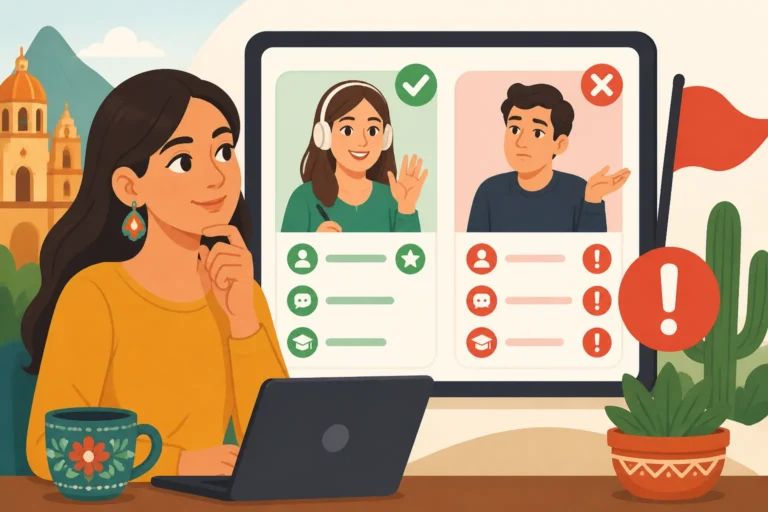
Jobs in Mexico That Don’t Require Spanish: Options for English Speakers
Landing in Mexico eager to work, only to realize most job postings demand native-level Spanish fluency, is incredibly discouraging. I spent weeks staring at rejection emails because my Spanish was limited to ordering tacos. This guide outlines the specific Mexican industries where your native English is your greatest asset and how to secure a lucrative role without speaking the local language.
Disclosure: This post may contain affiliate links. We may earn a commission at no extra cost to you if you make a purchase through these links. Read full disclosure.
The Technology and IT Sector: Where English is the Lingua Franca
Over the past decade, Mexico has quietly transformed into one of the most robust technology and IT hubs in Latin America. For expats with a background in software development, data science, or IT infrastructure, the lack of Spanish fluency is rarely a dealbreaker. The tech industry operates on a global scale, and English is the undisputed universal language of code.
Software Engineering and Development Hubs
Cities like Guadalajara, often dubbed the “Silicon Valley of Mexico,” and Mexico City host massive campuses for global tech giants including Oracle, IBM, and Intel. Alongside these behemoths, hundreds of agile software development agencies specifically cater to North American clients. When applying for senior engineering roles, full-stack development positions, or cloud architecture jobs in these cities, you will find that the technical interviews, the documentation, and the daily team scrums are conducted entirely in English.
The demand for highly specialized technical talent currently outpaces the local supply, heavily incentivizing Mexican companies to hire foreign experts. They need professionals who can seamlessly integrate with their US or Canadian client base without any communication friction. Furthermore, the compensation for these senior roles provides an exceptionally comfortable lifestyle when converted to the local cost of living. To understand how these technical salaries translate to actual purchasing power, review our detailed breakdown on Salary Expectations: Comparing Mexican Salaries to US/Canada.
However, it is a mistake to assume you can survive entirely in an English bubble. While your code and technical deliverables are in English, interacting with the local human resources department, participating in casual office networking, and understanding company-wide announcements will require a basic grasp of the local language. Using a structured platform like SpanishPod101 to learn essential office vocabulary prevents you from feeling totally isolated during team lunches and helps you build vital rapport with your Mexican colleagues.
FinTech Startups and Corporate Infrastructure
Beyond traditional software development, Mexico City boasts an explosive startup ecosystem, particularly in the FinTech (Financial Technology) sector. Startups aiming to disrupt traditional banking in Latin America are receiving billions in venture capital and are constantly scaling their executive and technical teams to manage rapid growth.
These rapidly expanding companies actively seek out expats who have prior experience scaling operations in more mature markets like San Francisco, London, or Toronto. Roles such as Product Manager, UX/UI Director, and Growth Marketing Lead are frequently filled by non-Spanish speakers because the primary objective is implementing global best practices. The internal culture at these startups is highly international, fast-paced, and heavily reliant on English for strategic planning.
Even in this modern environment, you will inevitably have to navigate local administrative tasks, such as setting up your Mexican payroll account or dealing with the building’s security staff. Taking the time to study the targeted audio lessons on SpanishPod101 gives you the practical language skills needed to handle these daily logistical hurdles efficiently, ensuring your lack of Spanish does not become an administrative bottleneck for your employer.

High-End Tourism and Luxury Hospitality
Mexico consistently ranks as one of the most visited countries on the planet. The economic engine driving the coasts relies entirely on international tourism, creating a massive industry that specifically caters to English-speaking guests. If you have a background in luxury hospitality, your native English is an invaluable commodity.
Resort Management and Guest Relations
In apex tourist destinations like Cancun, the Riviera Maya, Los Cabos, and Punta Mita, enormous luxury resorts cater almost exclusively to affluent travelers from the United States, Canada, and the United Kingdom. These ultra-high-end properties frequently hire expats for upper-management roles. Positions such as General Manager, Director of Guest Experience, and Executive Chef are commonly held by foreigners who inherently understand the exacting standards of North American consumers.
These mega-resorts want managers who can handle a demanding VIP guest in flawless English, de-escalate customer service issues, and ensure the property meets global luxury standards. The compensation packages for these roles are often highly lucrative and typically include housing on the resort grounds, private health insurance, and annual flights home. If you are eyeing one of these demanding roles, our deep dive into Working in Cancun: Jobs in Tourism for Expats provides a realistic look at the grueling but rewarding coastal hospitality grind.
The major caveat to these roles is the internal staff dynamic. While the guests you cater to speak English, your entire operational staff—from the housekeeping team to the groundskeepers and line cooks—will communicate almost exclusively in Spanish. Attempting to run a 500-room resort without speaking the local language is a recipe for operational disaster. You can utilize the targeted management modules on SpanishPod101 to quickly learn the vocabulary needed to give clear, respectful instructions and build morale within a large, diverse workforce.
Specialized Guiding and Scuba Instruction
For expats who want to escape the corporate suit-and-tie environment entirely, specialized tourism offers a lifestyle-focused career path that requires zero Spanish to secure a job. Scuba diving instructors, yacht charter captains, deep-sea fishing guides, and specialized eco-tour leaders are in extremely high demand across the Baja Peninsula and the Yucatan coastline.
Tour operators specifically seek out foreign guides because they can connect easily with the international tourists, handle complex liability waivers in perfect English, and ensure a high standard of safety communication underwater or on the open ocean. If you hold internationally recognized certifications like a PADI Master Scuba Diver rating, your resume goes straight to the top of the pile at local dive shops. You can explore the specific legalities of this sector by reading Do You Need to Speak Spanish to Work in Mexico? Language Requirements by Industry.
While your safety briefings and tourist interactions are strictly in English, the logistical background of your job requires local coordination. When working as a dive instructor or tour guide, coordinating departure times and weather conditions with the local boat captains (capitanes) requires a working knowledge of Spanish. Brushing up on nautical and directional terms with SpanishPod101 ensures your tours run smoothly, safely, and without scheduling miscommunications.
Real Estate and Expat Relocation Services
The boom in digital nomads and foreign retirees moving to Mexico has created a parallel boom in the real estate and relocation sectors. Expats looking to spend hundreds of thousands of dollars on property strongly prefer dealing with someone who speaks their native language and shares their cultural anxieties regarding foreign property laws.
Catering to Foreign Buyers in Coastal Havens
Working as a real estate agent in popular expat havens like San Miguel de Allende, Lake Chapala, Puerto Vallarta, and Merida can be incredibly lucrative. English-speaking agents act as a bridge of trust. Foreign buyers rely on you to explain the complex fideicomiso (bank trust) system used to purchase property in restricted coastal zones, completely in English.
This role is almost entirely commission-based and requires you to be an aggressive networker deeply embedded in the local expat community. Your clients will be native English speakers, and your marketing materials will be entirely in English. However, to actually close a deal, you must process the paperwork through local Mexican notaries (notarios) who operate under strict Mexican legal frameworks.
Property Management and Concierge Services
Property management is a massive tangential industry that heavily recruits English speakers. Foreigners who buy vacation homes or investment properties need reliable, bilingual individuals to manage the day-to-day operations, oversee their Airbnb listings, and handle guest check-ins while they are out of the country. This requires excellent customer service skills in English to appease the renters.
However, the actual maintenance of the property is a distinctly local affair. Managing a property means negotiating with local plumbers, electricians, landscapers, and cleaning crews. Engaging with the construction and home maintenance modules on SpanishPod101 is absolutely critical if you want to successfully coordinate repairs and avoid getting overcharged by local contractors who assume you do not understand the going rates.
Education and English Language Teaching
Teaching is the classic, time-honored entry point for expats moving to Mexico. It is one of the few industries explicitly designed around your native English ability, making it a highly accessible route for securing legal residency and experiencing a deep cultural immersion.
Private International Schools
If you are a licensed teacher in your home country (holding a B.Ed, PGCE, or state teaching license), you should target private international schools rather than local language institutes. Major cities like Mexico City, Monterrey, and Guadalajara host prestigious international schools that cater specifically to the children of foreign diplomats, international executives, and wealthy local families.
These institutions teach the US, British, or International Baccalaureate (IB) curriculum entirely in English. The schools require native English-speaking teachers who are formally credentialed, and your lack of Spanish is entirely irrelevant to your hiring. The compensation packages are excellent and often include housing stipends, private health insurance, and visa sponsorship. For detailed advice on navigating these specific, highly competitive applications, consult Teaching at International Schools: Opportunities for Certified Teachers.
While your classroom is strictly an English-only zone, navigating the school’s administration, the security protocols, and the payroll department is not. Consistently practicing with SpanishPod101 helps you handle the bureaucratic hurdles of your employment, communicate effectively with the school’s maintenance staff, and navigate your daily commute without needing a bilingual translator holding your hand.
Corporate English Training and Private Tutoring
If you do not have a formal teaching degree but hold a bachelor’s degree and a TEFL certification, your most viable route is corporate English training. In major business hubs, multinational companies pay specialized language institutes to send native speakers to their offices to train their mid-level Mexican managers in business English.
You will spend your days traveling between corporate high-rises, teaching adults how to write professional emails, conduct conference calls, and negotiate contracts in English. The demand for native speakers in this sector is massive, as Mexican executives know that English fluency is the key to their own career advancement. To understand the landscape of these language institutes and how to apply, review Finding English Teaching Jobs: Best Schools and Institutes for ESL Teachers.
Corporate Management and Multinational Transfers
Mexico’s economy is deeply intertwined with the global market, particularly in manufacturing and consumer goods. Multinational corporations operate on massive scales here, creating specialized roles for English-speaking executives and managers.
The Maquiladora System and Cross-Border Manufacturing
Cities along the US border, such as Tijuana and Ciudad Juárez, as well as inland industrial powerhouses like Monterrey, are dominated by the maquiladora system. These are massive manufacturing plants owned by foreign companies (US, Japanese, German) that assemble products in Mexico for export. These international corporations frequently send expat managers to oversee operations and ensure quality control standards meet global requirements.
Roles in cross-border logistics, supply chain optimization, and plant directorship are heavily populated by foreigners. Your job is to act as the liaison between the Mexican production floor and the corporate headquarters abroad, meaning all your reporting and strategic planning is conducted in English. For a closer look at life in the industrial heartland, read Working in Monterrey: Expats in Mexico’s Industrial Capital.
Despite the corporate reporting structure, you will be managing massive local workforces of unionized labor. You will be the direct line of communication between the English-speaking corporate executives and the Spanish-speaking factory floor. Dedicating time to the advanced business modules on SpanishPod101 allows you to give direct, authoritative instructions regarding safety and production without sounding culturally insensitive to the local assembly teams.
Internal Company Transfers (Expat Assignments)
The most lucrative way to work in Mexico without speaking Spanish is to be transferred by your current multinational employer. Companies like Procter & Gamble, Pfizer, and Coca-Cola frequently transfer existing executives from their United States or European offices to their regional headquarters in Mexico City on formal “expat assignments.”
When you are brought in as an executive transfer, your lack of Spanish is accommodated. Your contract often covers a bilingual assistant, luxury housing, private school tuition for your children, and a driver. Your daily corporate interactions at the executive level will likely be in English.
Even on a lucrative expat package with a driver and an English-speaking assistant, relying on others for every single daily interaction is exhausting and isolating. Taking just twenty minutes a day to study with SpanishPod101 gives you the independence to navigate your new city, order at local restaurants, and interact with your neighbors on your own terms, vastly improving your overall quality of life.
The Digital Nomad Route: Bypassing Local Employers
If you cannot find a local Mexican company to hire you, the modern solution is to bypass the local job market entirely. The rise of remote work has allowed thousands of expats to live in Mexico while remaining employed by companies in the US, Canada, or Europe.
Working Online for Foreign Companies
By working as a digital nomad, your language requirement is zero because your employer and your clients remain in your home country. This lifestyle allows you to earn a salary in strong currencies like USD or Euros while spending in Mexican Pesos, effectively utilizing geographic arbitrage to significantly boost your standard of living.
Whether you are a freelance graphic designer, a remote marketing consultant, or an online therapist, living in Mexico simply becomes a matter of finding a reliable internet connection. You can live in vibrant, culturally rich cities like Oaxaca or beach towns like Puerto Escondido without ever having to submit a resume to a Mexican HR department.
Visa and Legal Considerations for Remote Workers
The critical factor for digital nomads is securing the legal right to live in Mexico long-term. Because you are not employed by a Mexican company, you cannot apply for a standard work visa sponsored by an employer. Instead, you must navigate the temporary residency process designed for remote workers, which relies on demonstrating consistent monthly income or significant savings to prove economic solvency.
You can learn exactly how to qualify for this status by reading our comprehensive guide on Digital Nomads in Mexico: Visa Options for Remote Workers in 2027. The application process begins at a Mexican consulate abroad and is finalized at an immigration (INM) office within Mexico.
When dealing with the immigration office (INM) to finalize your residency card, the agents will strictly speak Spanish, and bringing a translator is not always permitted. Preparing for your specific visa appointments using the bureaucratic dialogue modules on SpanishPod101 can save you from having your application delayed or rejected due to a simple misunderstanding of the agent’s instructions. For a broader look at the legalities of working in the country, review the Work Permit Process: How Employer Sponsorship Works in Mexico.
Industry Comparison Summary
To help you evaluate which sector aligns best with your skills, here is a summary of the industries hiring English speakers:
| Industry | Visa Sponsorship Likelihood | Salary Potential | Spanish Needed for Hiring | Key Expat Hubs |
| Technology & IT | High (Established firms) | Excellent | None to Low | Guadalajara, CDMX |
| Luxury Tourism | Medium (Management roles) | Good | Low | Cancun, Los Cabos |
| Real Estate | Low (Independent contractors) | Variable (Commission) | Low | Puerto Vallarta, SMA |
| Education/ESL | High (International Schools) | Moderate to Good | None | Nationwide |
| Corporate Mfg | High (Multinationals) | Excellent | Low | Monterrey, Tijuana |
References
Primary sources (official)
- Instituto Nacional de Migración (INM) – Preguntas frecuentes para solicitar visa por oferta de empleo: https://www.gob.mx/inm/documentos/preguntas-frecuentes-para-solicitar-visa-por-oferta-de-empleo
Other helpful sources
- International Schools Database – Teaching in Mexico City: https://www.international-schools-database.com/in/mexico-city
- ExpatDen – The Complete Guide to Finding Work in Mexico: https://www.expatden.com/mexico/finding-work-in-mexico/
Disclaimer
The information provided in this guide is for educational and informational purposes only and does not constitute legal, immigration, or financial advice. Job market dynamics, immigration laws, and specific work visa requirements in Mexico are subject to frequent change. Always consult with a qualified Mexican immigration attorney or a formal corporate human resources representative regarding your specific employment situation and legal right to work or reside in Mexico.