Setting Up Utilities in Mexico: CFE, Water, and Gas
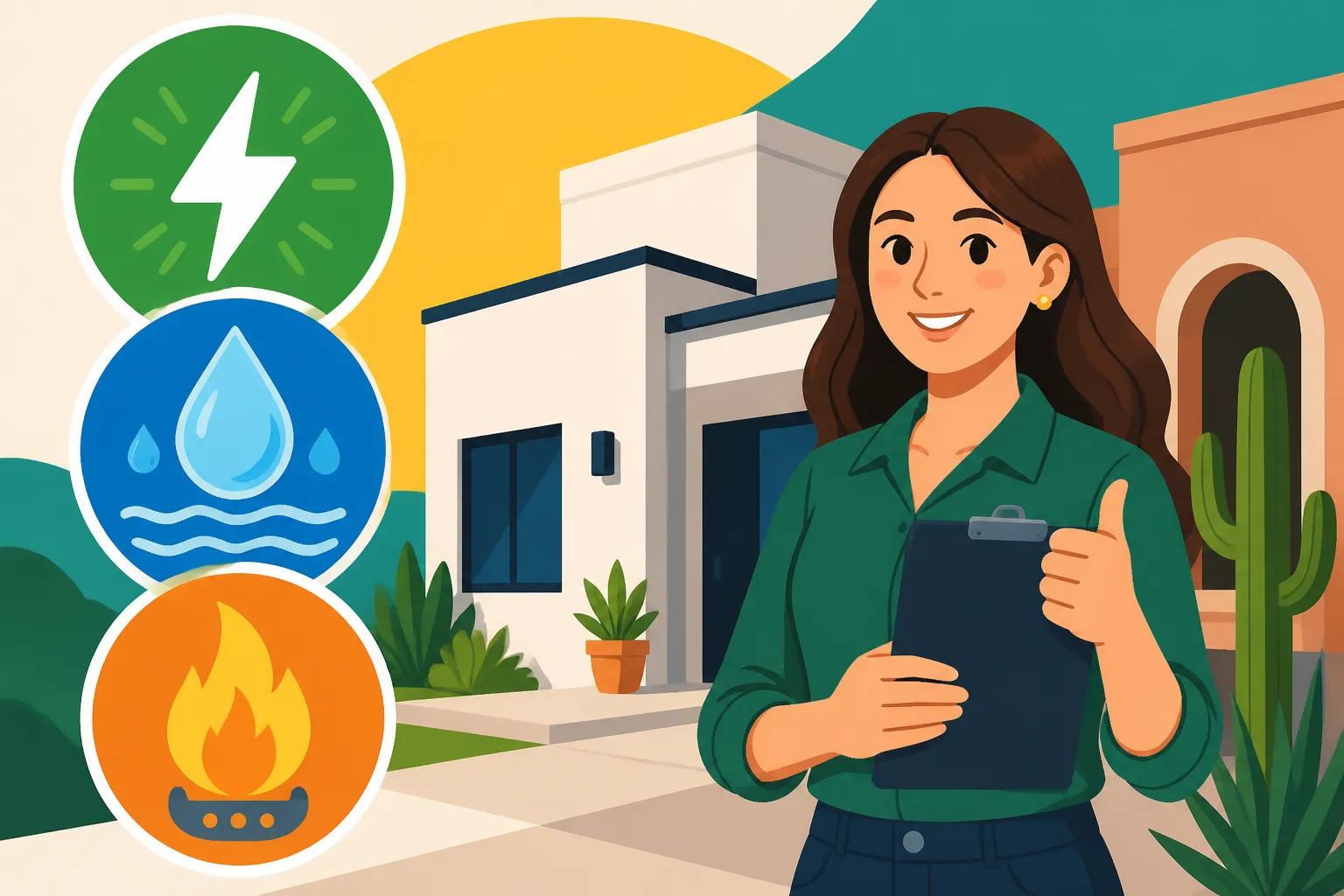
Moving into a new home in Mexico often comes with a sudden, jarring realization: the lights might not turn on, and the water might not flow until you navigate a maze of bureaucratic offices. I remember standing in my first empty apartment in Guadalajara, clutching a lease and realized I had no idea how to even find my electricity meter. This guide simplifies the process of setting up CFE, water, and gas so you can settle in without the stress.
Disclosure: This post may contain affiliate links. We may earn a commission at no extra cost to you if you make a purchase through these links. Read full disclosure.
Navigating the Power Maze: Setting Up Electricity with CFE
The Comisión Federal de Electricidad, or CFE, is the sole provider of electricity in Mexico. Unlike some countries where you can choose between various private providers, here you are dealing with a government-run monopoly. While this means you don't have to shop around for rates, it also means you are subject to their specific, sometimes rigid, administrative procedures. If you are moving your entire household, you might have used a service like Sirelo to get your belongings here, but once those boxes are inside, the responsibility for power lies entirely with you and your local CFE branch.
In most rental situations, the electricity is already connected, and you simply need to pay the bill that arrives every two months. However, if you are moving into a brand-new build or if the previous tenant formally disconnected the service, you will need to establish a new contract. This requires a visit to a "Centro de Atención a Clientes" with a stack of documents. You will typically need your rental contract or property deed, a valid ID (like your passport and residency card), and the "número de servicio" from a previous bill at that address if available.
Understanding the Registration Process
The "contratación" process can feel overwhelming if your Spanish is still a work in progress. You will need to provide the exact address of the property, including the "colonia" and postal code. CFE technicians will then visit the property to ensure a meter is installed and functioning. I found that showing up early in the morning, right when the office opens, is the best way to avoid a three-hour wait in a plastic chair. If you are still waiting for your residency documents, you might need to check How to Get a CURP as a Foreigner: The Mexican ID Number Explained as this identification number is often requested during the setup process.
Once the contract is signed, the service is usually activated within 2 to 5 business days in urban areas. It is vital to confirm whether the property has a "medidor" (meter) already installed. If the meter is missing, the wait time can extend significantly. During this transitional period, many expats choose to stay at a flexible location like Selina, which provides reliable utilities and workspace while you wait for your permanent home to become fully functional.
Managing Your Bill: Rates and DAC
Mexico uses a tiered pricing system for electricity. The more you use, the more you pay per kilowatt-hour. There is a "subsidy" for basic and intermediate consumption levels, which keeps bills relatively low for most households. However, if your usage exceeds a certain threshold over a rolling 12-month period, you will be moved to the "Doméstica de Alto Consumo" (DAC) rate. This rate removes the government subsidy and can triple or quadruple your bill overnight.
To avoid the dreaded DAC rate, it is essential to be mindful of air conditioning usage, especially in coastal regions or during the sweltering summer months. For more detailed strategies on managing these costs, you should read How to Set Up Electricity (CFE) in a Mexican Home. Many veteran expats invest in solar panels if they own their homes, as the Mexican sun provides an incredible return on investment for reducing CFE liabilities. If you are just starting out, simply learning how to read your meter and checking your bimonthly statement is the first step toward financial sanity in your new life.
Quenching the Thirst: Managing Water Services
Water in Mexico is managed at the municipal level, meaning the name of the provider and the quality of service will change depending on where you live. In Mexico City, you deal with SACMEX; in Puerto Vallarta, it is SEAPAL; and in Guadalajara, you will likely interact with SIAPA. Unlike electricity, which is fairly consistent nationwide, water pressure and availability can vary wildly from one street to the next. Understanding the local infrastructure is the only way to avoid the literal headache of a dry tap.
When you move in, the water service is almost always already active. However, you must ensure that the previous owner or tenant hasn't left a massive unpaid balance. In Mexico, water debts stay with the property, not the person. This means if the previous resident didn't pay for two years, the municipal office may shut off your water until that debt is settled. Always ask for a "constancia de no adeudo" or a recent paid receipt before signing a lease or closing on a house.
Dealing with Local Municipal Water
Setting up a new account or changing the name on an existing one requires a trip to the local water board office. Similar to CFE, you will need your property documents and identification. The billing cycles for water are often monthly or bimonthly, and in many cities, you can pay for an entire year in advance during January or February to receive a significant discount (often around 10%). This is a popular move for retirees and those on a fixed budget as it removes one more administrative task from the calendar.
If you find yourself in a situation where the municipal supply is interrupted—a common occurrence in many parts of Mexico—you may need to order a "pipa." A pipa is a private water truck that comes to your home and pumps several thousand liters of water into your storage system. Learning how to call for a pipa is a rite of passage for any expat. For a broader look at what it costs to maintain these services, refer to the Cost of Living in Mexico: 2026 Comprehensive Guide.
The Gravity of the Tank: Tinacos and Cisterns
Most Mexican homes do not rely on direct pressure from the street. Instead, they use a two-part system: a "cisterna" (an underground tank) and a "tinaco" (a black or beige plastic tank on the roof). Water flows from the street into your cistern; a pump then pushes that water up to the tinaco, and gravity provides the pressure for your showers and sinks. If your water stops working, the first place to check is the cistern to see if it is empty, and the second is the pump to see if it has burned out or lost power.
Maintaining these tanks is your responsibility. It is recommended to have your cistern and tinaco cleaned and disinfected at least once a year to prevent the buildup of sediment and bacteria. This is a task you can easily hire a local "fontanero" (plumber) to handle for a reasonable fee. Neglecting this can lead to clogged pipes and skin irritation. To help with the language side of hiring help, you might look into How to Hire a Housekeeper or Cleaner in Mexico, as many domestic workers can also recommend reliable local tradespeople.
Potable Water: The Garrafón Culture
A crucial rule for any newcomer: do not drink the tap water. While municipal plants treat the water, the aging pipe infrastructure and the state of individual cisterns and tinacos mean the water reaching your glass is not safe for consumption. Most expats and locals alike rely on "garrafones," which are 20-liter jugs of purified water. You can have these delivered to your door by companies like Bonafont or Epura, or you can exchange empty jugs at the local "tienda de la esquina" (corner store).
The delivery trucks usually circulate through neighborhoods a few times a week, often playing a specific jingle or honking a distinctive horn. You simply wave them down, and they will swap your empty jug for a full one. It is a physical workout, but it is the cheapest and most reliable way to stay hydrated. For those who prefer a more permanent solution, installing a high-quality reverse osmosis filter system under the sink is a popular alternative. For more tips on this, check out How to Get Drinking Water Delivered in Mexico (Garrafones).
Cooking and Comfort: Mastering Gas Delivery
Gas is the primary fuel for cooking and heating water in the vast majority of Mexican households. Unlike in many US or European cities, there is rarely a centralized gas line running under the street. Instead, you are dealing with Liquid Petroleum Gas (LPG) stored in tanks on your property. This requires a proactive approach; if you forget to check your gas level, you might find yourself in the middle of a cold shower on a Monday morning.
When you are first setting up your life, perhaps after arriving with your belongings through Sirelo, you’ll want to identify which type of gas system your home uses. There are two main setups: the "tanque estacionario" (a large, fixed tank usually located on the roof) and "cilindros" (portable 20kg or 30kg tanks). Each has a different method for ordering and refilling, and knowing which one you have is essential before you pick up the phone.
Gas Estacionario vs. Cylinders
A "tanque estacionario" is much more convenient. It has a gauge (medidor) that tells you exactly how much gas is left. When you get down to about 20%, you call a gas company (like Zeta Gas or Gas Noel), and they send a truck with a long hose to fill the tank directly on your roof. You pay by the liter, and many companies now accept credit cards or bank transfers through their apps, though cash is still king for many deliveries.
Cylinders, on the other hand, are the standard for older homes or smaller apartments. When one runs out, you have to physically disconnect it and swap it for a full one. This often involves waiting for the gas truck to drive by with its loudspeaker blaring "el gaaaas" and flagging them down. The delivery men are remarkably strong and will carry the heavy tanks up multiple flights of stairs for you. For more specifics on the setup, see How to Set Up Gas (Estacionario or Tank) in a Mexican Home.
How to Order and Schedule Refills
Ordering gas used to involve a lot of phone calls and "waiting for the truck," but the process has modernized significantly. Most major cities have apps or WhatsApp numbers where you can schedule a delivery. If you are staying in a temporary rental like Selina while searching for your long-term home, you won't have to worry about this, but once you are on your own, I recommend finding a "repartidor" (delivery driver) you trust and getting his direct WhatsApp number.
Always be present when the gas is being delivered. For stationary tanks, check the gauge before and after the fill to ensure you are getting the amount you paid for. It is customary to give a small tip (10 to 20 pesos) to the drivers, especially if they had to navigate difficult stairs or a tricky roof access.
Safety and Maintenance Tips
Gas safety is something you cannot afford to ignore. Because tanks are often exposed to the elements on rooftops, they can rust over time. It is vital to check the valves and hoses for leaks. A simple spray bottle with soapy water can help you identify bubbles that indicate a leak. If you smell gas inside your home, turn off the main valve immediately and open all windows.
Stationary tanks have an expiration date, usually around 10 years after manufacture. If your tank is old, the gas company may refuse to fill it for safety reasons. In this case, you will need to purchase a new tank, which can be a significant expense but a necessary one for your peace of mind. For those planning their move, understanding these maintenance costs is part of the broader financial picture, which you can explore in Managing Your Money in Mexico: Budgeting, Saving, and Currency Tips.
Staying Connected: Internet and Mobile Essentials
While not a "utility" in the traditional sense like water or power, internet and mobile data are arguably just as essential for the modern expat. Setting these up can sometimes be faster than CFE, but it requires its own set of considerations. Mexico’s fiber-optic infrastructure has expanded rapidly, and in most major cities, you can get speeds comparable to those in the US or Canada for a fraction of the cost.
Upon arrival, before your home internet is even a possibility, you need a way to navigate and communicate. I always recommend using Airalo for an immediate eSIM. It allows you to have data the moment you land, which is a lifesaver when you are trying to coordinate with a landlord or find your way to a new neighborhood. Once you are physically in your home, you can start the process of getting a "línea fija" (landline) and fiber internet.
Fiber Optic and Local Providers
The major players in the Mexican internet market are Telmex (Infinitum), Totalplay, and Izzi. Totalplay and Telmex offer extensive fiber-optic (fibra óptica) networks. Telmex is the legacy provider and has the widest reach, especially in smaller towns, but Totalplay often wins on customer service and installation speed in urban centers. To get started, you will usually need your ID and a "comprobante de domicilio" (proof of address), which can be the CFE bill you just set up.
Installation typically happens within 24 to 72 hours of signing the contract. Most plans are "simétricos," meaning you get the same upload and download speeds, which is great for digital nomads. If you are curious about the specifics of the installation process, check out How to Get Internet Installed in Mexico. If your home has thick concrete walls—common in Mexico—you might also need to invest in a mesh Wi-Fi system to ensure the signal reaches every room.
Mobile Data and Regional Solutions
For your mobile phone, you have the choice between "prepago" (prepaid) and "plan de renta" (monthly contract). Telcel has the best coverage across the country, especially in rural areas, while AT&T and Movistar offer competitive plans in the cities. For most expats, a prepaid Telcel SIM card is the easiest path. You can "recargar" (top up) your balance at any OXXO or through the Mi Telcel app.
If you are moving around the country or haven't settled on a permanent address yet, using an eSIM service like Airalo remains a fantastic backup. It prevents you from having to hunt for a physical SIM card every time you cross a border or enter a new region. For a deeper dive into staying connected, read Internet and Mobile Phone Plans in Mexico: Staying Connected as an Expat. Having a local number is also helpful for setting up accounts with delivery apps like Rappi or Uber Eats, which will make your first few weeks much more comfortable.
Paying the Bills: Navigating the Payment Ecosystem
Once your utilities are active, the next challenge is paying them on time to avoid disconnection. CFE is particularly aggressive; if you are even one day late, they may pull your meter, and getting it reinstalled involves a lengthy process and extra fees. Fortunately, paying bills in Mexico has become much easier than it was a decade ago, with several digital and physical options available.
One of the most important habits to develop is checking your physical mailbox or the CFE app regularly. Bimonthly bills can sometimes go missing, but the lack of a paper bill is not an excuse for non-payment. For those who prefer a hands-off approach, some banks allow for "domiciliación," where the bill is automatically debited from your Mexican bank account. You can learn more about managing these transactions in Banking in Mexico: Complete Guide for Foreigners.
The OXXO and Supermarket Strategy
The OXXO convenience store is the unofficial payment hub of Mexico. You can pay almost any utility bill—CFE, water, internet, and even some property taxes—at the counter. You simply hand the clerk your bill, they scan the barcode, and you pay in cash or with a card (though cash is more reliable for bill payments at OXXO). They charge a small convenience fee, usually around 10 to 15 pesos, but the accessibility is unbeatable.
Major supermarkets like Walmart, Soriana, and Chedraui also offer bill payment services at their customer service desks or "cajas." This is convenient if you are already doing your weekly grocery shopping. For more on this, see Paying Bills at OXXO: A Handy Option for Expats in Mexico. It is vital to keep your receipts (comprobantes) for at least a year, as errors in the system do happen, and the receipt is your only proof of payment.
Digital Payments and Apps
For those who prefer to handle everything from their smartphone, most utility companies now have dedicated apps. The "CFE Contigo" app is surprisingly robust, allowing you to view your current balance, download PDF statements, and pay using a credit or debit card. Most municipal water boards also have online portals, though their quality varies significantly from city to city.
If you have a Mexican bank account, the "SPEI" (Sistema de Pagos Electrónicos Interbancarios) system is your best friend. It allows for near-instant bank transfers between different institutions. Many internet providers and even some gas companies allow you to pay via SPEI using a unique "CLABE" (account number) assigned to your contract. For a breakdown of how these digital systems work, check out How to Pay Your CFE Electricity Bill in Mexico.
Comparison of Utility Setup Basics
To give you a quick overview of what to expect, the following table summarizes the key aspects of the three main utilities we have discussed.
| Utility | Provider Type | Billing Cycle | Main Payment Method | Setup Requirement |
|---|---|---|---|---|
| Electricity | Government (CFE) | Bimonthly | App, OXXO, CFE Mático | Rental Contract, ID, Previous Bill |
| Water | Municipal (Local) | Monthly/Bimonthly | Office, Bank, Some Apps | Property Deed/Lease, ID |
| Gas | Private Companies | As Needed | Cash, Card on Delivery, App | Identification of Tank Type |
| Internet | Private (Telmex, etc.) | Monthly | App, Bank Transfer, OXXO | ID, Proof of Address |
Setting up your home in Mexico is a process of patience and persistence. While the bureaucracy can be frustrating, there is a certain satisfaction in seeing your "recibo de luz" for the first time with your own name on it. It’s a sign that you are no longer just a visitor—you are truly becoming part of the local community. By staying organized and knowing which offices to visit, you’ll have your lights on and your water running in no time.
Disclaimer
The information provided in this guide is for informational purposes only and reflects the general procedures for setting up utilities in Mexico as of 2026. Administrative requirements, costs, and service availability can vary significantly by municipality and state. Always verify current requirements with your local utility provider or a qualified legal professional before making financial commitments.