Enrolling Voluntarily in IMSS as a Foreigner
Disclosure: This article contains affiliate links. If you buy through them, we may earn a commission at no extra cost to you. Read our full disclosure.
Trying to figure out Mexico’s public health system often feels like reading a manual written in code while standing in a three-hour line under the midday sun. I remember my first time walking into a government office with a stack of papers, feeling completely overwhelmed by the conflicting advice I’d read online. This guide clears the fog, showing you exactly how to navigate voluntary enrollment in the Instituto Mexicano del Seguro Social (IMSS).
Understanding IMSS: The Bedrock of Mexican Public Healthcare
The Instituto Mexicano del Seguro Social, or IMSS, is the massive government-run entity that provides healthcare, social services, and pensions to millions of Mexicans. For locals, it is a mandatory contribution system funded through their employers. For us foreigners, it is a fascinating, sometimes frustrating, but ultimately valuable safety net that offers a way to access comprehensive medical care without the price tag of a private hospital.
What Exactly is IMSS
IMSS is more than just a hospital; it is a nationwide network of clinics, specialty centers, and pharmacies. When you enroll voluntarily—specifically through the program known as Seguro de Salud para la Familia—you are essentially buying into this public system. Unlike a private insurance policy that reimburses you for expenses, IMSS is a "service-delivery" model. You go to their facilities, see their doctors, and receive their medications, all of which are included in your annual fee.
Newcomers are often told that IMSS is like a massive, well-oiled machine that moves slowly but surely. It handles everything from the common cold to complex surgeries and long-term maternity care. It is not designed for luxury; you won’t find private suites or gourmet hospital food here. What you will find is a robust system of highly trained doctors who are often the same specialists working in high-end private hospitals in the afternoons. Understanding Public Healthcare in Mexico: IMSS and IMSS Bienestar Explained for Expats is the first step toward deciding if this path suits your lifestyle.
Who is Eligible for Voluntary Enrollment
Eligibility is one of the biggest hurdles I see foreigners face. To enroll in the voluntary regime, you must hold a valid residency status. This means you need either a Temporary Resident (Residente Temporal) or Permanent Resident (Residente Permanente) card. Tourists on an FMM or a standard 180-day entry stamp are not eligible for IMSS enrollment.
Furthermore, you must be "unattached" to a formal Mexican employer. If you are working for a Mexican company, they are legally required to enroll you and pay the fees. The voluntary path is specifically for retirees, freelancers, or those living on foreign income. It is also important to note that you must apply as an individual or as a family unit. If you have pre-existing conditions, the "voluntary" part becomes more complicated, as there are strict exclusions that we will break down later. Many expats who are still in the process of getting residency often rely on International Health Insurance for Expats in Mexico or flexible plans like SafetyWing until they are eligible for the public system.
IMSS vs Private Insurance: Managing Expectations
Managing your expectations is the key to happiness in Mexico. IMSS is a socialized system, which means it serves the masses. In a private hospital, you are the customer; at IMSS, you are a "derechohabiente" (a rights-holder). This shift in status changes everything from how you are greeted at the front desk to how long you wait for an MRI.
Private insurance, such as plans from Cigna Global, allows you to skip the lines and choose your own specialists. IMSS, on the other hand, requires you to follow a strict hierarchy: you see your family doctor (GP) first, and they must refer you to a specialist. If you are used to calling up a cardiologist and booking an appointment for tomorrow, IMSS will be a culture shock. However, for those on a fixed budget, the cost-to-benefit ratio of IMSS is unbeatable. You can learn more about the differences in our guide on Healthcare in Mexico: Complete Guide for Expats (Public vs Private).
The Financials: Breaking Down the Costs of Voluntary Enrollment
One of the main reasons my fellow expats look into IMSS is the cost. In a world where private insurance premiums for those over 60 can skyrocket into the thousands of dollars, IMSS remains remarkably affordable. However, the pricing is not one-size-fits-all; it is tiered based on your age.
The Annual Fee Structure for 2026
Every year, IMSS updates its pricing based on the value of the UMA (Unit of Measure and Update). As of 2026, the fees remain age-dependent. The younger you are, the less you pay. It is important to remember that these payments are made annually and upfront. You cannot pay monthly. If you miss your renewal window, you may have to start the process from scratch, which often involves a new medical exam.
| Age Group | Estimated Annual Cost (Pesos) | Estimated Annual Cost (USD) |
|---|---|---|
| 0 – 19 | $8,500 | ~$425 |
| 20 – 29 | $11,200 | ~$560 |
| 30 – 39 | $12,500 | ~$625 |
| 40 – 49 | $16,800 | ~$840 |
| 50 – 59 | $17,500 | ~$875 |
| 60 – 69 | $25,200 | ~$1,260 |
| 70 – 79 | $26,500 | ~$1,325 |
| 80+ | $27,800 | ~$1,390 |
Note: Prices are approximate and subject to change based on the current UMA and exchange rates.
Hidden Costs and Payment Methods
While the annual fee covers most things, there are "soft costs" that people often forget. You will need to pay for certified translations of your birth certificate and, in some cases, your marriage certificate. You may also need to pay a small fee for the initial medical photos or copies of your documentation.
When it comes time to pay, you will usually be given a "linea de captura" (a payment slip with a barcode). You take this to a local bank (like BBVA or Santander) to pay in cash or via a Mexican bank transfer. Keeping the original receipt is non-negotiable. Some residents have lost their status simply because they didn't have the physical bank receipt to prove they paid. If you are budgeting for your move, check out Healthcare Costs in Mexico: Doctor Visits, Hospital Stays, and Surgery Expenses for a wider view of what to expect.
Why Some Expats Choose a Hybrid Approach
Many veterans in the expat community, myself included, don't rely solely on IMSS. We use what I call the "Hybrid Strategy." They enroll in IMSS for catastrophic coverage—like a major surgery or long-term illness that would drain a savings account—but they keep a high-deductible international plan like Cigna Global for more flexibility.
Alternatively, younger digital nomads might use SafetyWing for their day-to-day travel needs and emergency accidents while keeping IMSS as a backup for long-term residency peace of mind. This hybrid approach ensures you have the "speed" of private care for minor issues and the "depth" of the public system for major ones. It’s about not putting all your eggs in one bureaucratic basket.
The Reality Check: Pre-existing Conditions and Waiting Periods
This is the part where I have to be the bearer of somewhat tough news. IMSS is not a "pay and play" system if you are already sick. They are very protective of their resources, which means they have a strict list of exclusions and waiting periods that can catch people off guard.
The Dreaded Exclusions List
When you apply for voluntary enrollment, you will fill out a "Cuestionario Médico" (Medical Questionnaire). You must be honest. If you are found to have lied about a condition later, they can cancel your coverage without a refund. There are certain "Pre-existing Conditions of Preclusion," which means if you have them, you simply cannot join the voluntary regime.
Common exclusions include:
- Chronic heart, liver, or kidney disease.
- Active cancer or a history of certain malignant tumors.
- Diabetes with complications (like retinopathy or neuropathy).
- Autoimmune diseases like Lupus or HIV/AIDS.
- Chronic psychiatric illnesses.
It sounds harsh, but it's the reality of a burdened public system. If you fall into these categories, you should look into Does IMSS Cover Pre-existing Conditions in Mexico? for a deeper dive into the specific legalities.
Mandatory Waiting Periods Explained
Even if you are accepted, you don't get full coverage on day one. IMSS uses a "tiered" waiting period system to prevent people from joining only when they need an imminent surgery. For the first few months, you are generally covered for emergency accidents and basic consultations. However, for specific procedures, you have to wait.
For example, most surgical interventions have a six-month waiting period. Orthopedic surgeries or specialized chronic care often require a one-year wait. If you are pregnant when you join, the birth will likely not be covered under the voluntary regime because the "waiting period" is longer than a standard pregnancy. This is why many expats choose to maintain a policy with a provider like Cigna Global during their first year of IMSS to bridge that gap.
Dealing with Chronic Illness as a Foreigner
If you have a well-managed chronic illness that isn't on the "preclusion" list (like mild hypertension), you can still join, but you must be prepared for the bureaucracy. You will need to bring your previous medical records—translated into Spanish—to your first appointment.
IMSS doctors are excellent, but they are overworked. You have to be your own advocate. If you need a specific brand of medication that isn't on the IMSS formulary, you might have to buy it out of pocket. For more tips on this, read Managing Chronic Illness in Mexico: Access to Medication and Specialists.
Step-by-Step Guide to the Enrollment Process
Navigating the IMSS office (the Subdelegación) is a rite of passage for any long-term expat. It requires patience, a folder full of copies, and ideally, a basic grasp of Spanish.
Gathering Your Documentation
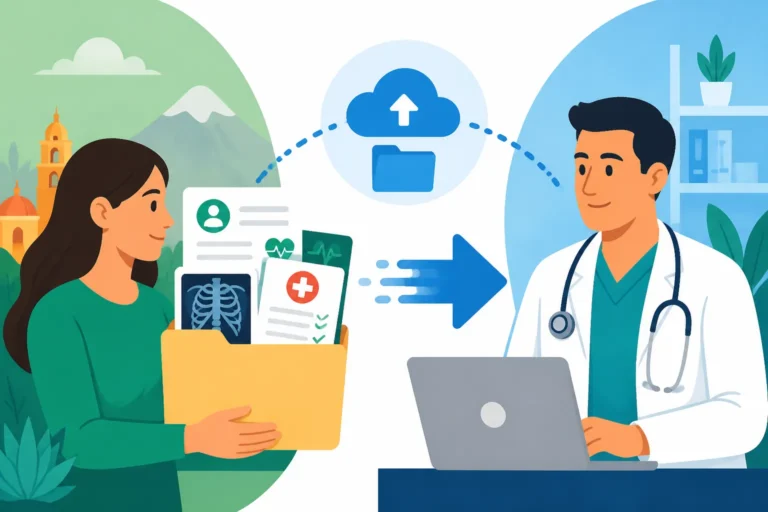
Before you even think about heading to the office, you need your "expediente" (file) ready. Mexican bureaucracy runs on paper and ink. You will need the original and at least three copies of the following:
- Residency Card: Temporary or Permanent.
- Passport: The photo page and the page with your entry stamp.
- CURP: Your unique population registry code (this is printed on your residency card or can be downloaded online).
- Proof of Address: A recent utility bill (CFE electricity or water) no older than three months. It doesn't have to be in your name, but it must match your residence.
- Birth Certificate: Translated into Spanish by a certified translator (Perito Traductor).
- Marriage Certificate: (If applying as a couple), also translated.
- Photos: Usually 2-4 "infantil" size photos (front view, no glasses).
Navigating the Subdelegación Office
You don't go to a hospital to enroll; you go to the Subdelegación Administrativa that corresponds to your address. I recommend arriving at least 30 minutes before they open. Once inside, you will wait to be called to a "ventanilla" (window).
The clerk will review your documents with a fine-tooth comb. If a single name is misspelled or a copy is blurry, they might send you away. Stay calm and polite. Once they accept your papers, they will generate your payment slip. After you pay at the bank, you return to the office (sometimes the same day, sometimes the next) to show the receipt. At this point, they will give you your "Formato de Incorporación." You are now officially in the system, but you aren't done yet. You can find more logistical help in our How to Enroll in IMSS: Step-by-Step Guide for Foreign Residents.
The Medical Exam and Final Approval
The final step is the medical screening. You will be assigned a Unidad de Medicina Familiar (UMF), which is your local clinic. You must go there to register with your specific doctor (consultorio). They will perform a basic physical, ask about your medical history, and perhaps order blood work.
This is where the "Cuestionario Médico" we discussed earlier is verified. Once the doctor signs off, you are issued your "Carnet"—a small paper booklet that acts as your medical ID. You must bring this booklet to every single appointment. It is your golden ticket to healthcare. For a perspective on what it’s like inside, check out What to Expect During a Hospital Stay in Mexico: A Patient’s Perspective.
Practical Tips for Navigating the IMSS System
Once you have your Carnet, the real journey begins. Learning how the system flows will save you hours of frustration.
Overcoming the Language Barrier
Except in very high-traffic expat areas like Ajijic or San Miguel de Allende, do not expect your IMSS doctor or the administrative staff to speak English. This is a Mexican government service. If your Spanish is shaky, bring a friend or hire a professional "facilitator" to go with you to your initial appointments.
Communication is vital when discussing symptoms or dosages. I’ve found that even if I can't speak perfectly, having my symptoms written down in Spanish beforehand helps tremendously. If you're worried about the language, read Overcoming Language Barriers at the Doctor: Tips for Expats for more practical advice.
Choosing Your Family Clinic (UMF)
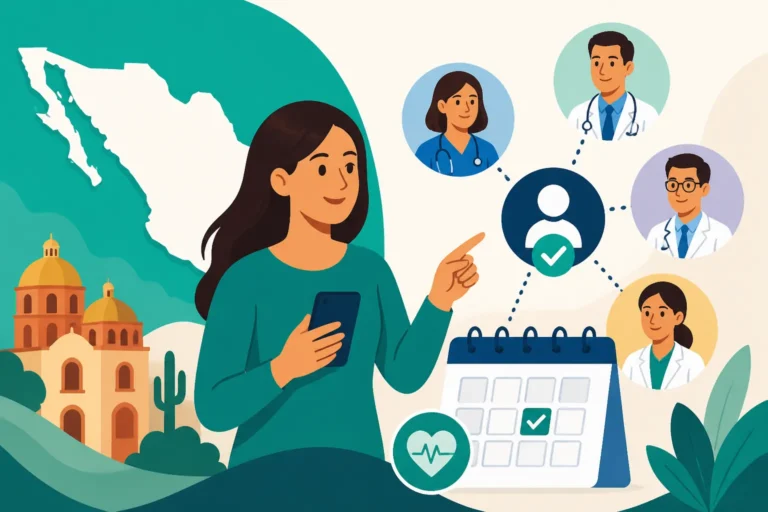
Your UMF is determined by your zip code. You don't get to shop around. This clinic is your gatekeeper. If you have a heart problem, you cannot go straight to the cardiology hospital; you must go to your UMF, see your assigned GP, and get a "pase" (referral).
One tip: get to know the "trabajadora social" (social worker) at your UMF. They are the ones who help navigate the schedule and can be a massive help if you are confused about where to go for a lab test or a specialist appointment. Knowing Navigating Hospitals and Clinics in Mexico: An Expat’s Guide to Medical Care will help you understand the hierarchy.
Prescription Medications and Pharmacy Realities
IMSS has its own pharmacies located within the clinics. When your doctor prescribes a medication, you walk down the hall and pick it up for free. However, the system sometimes runs out of specific drugs. If the IMSS pharmacy is out of stock, they will give you a "vale" (voucher) or simply tell you to wait.
Many expats find it easier to buy common medications at private pharmacies like Farmacias Similares or Guadalajara if the IMSS line is too long or the stock is low. It’s also worth reading Pharmacies in Mexico: How to Get Medications (OTC vs Prescription) to understand what you can buy over the counter versus what requires a government script.
Comparing Alternatives: When IMSS Might Not Be Enough
While IMSS is a fantastic resource, it isn't the right choice for everyone. Depending on your age, health status, and travel habits, you might need something else.
The Role of International Coverage like Cigna Global
If you spend six months in Mexico and six months in your home country (or traveling the world), IMSS is limited. It only covers you within Mexican territory. For true global citizens, a plan like Cigna Global offers the ability to seek treatment anywhere.
Furthermore, if you are uncomfortable with the "socialized" nature of public care—such as sharing a hospital room with four other people or waiting weeks for a non-urgent surgery—private insurance is a must. You can compare your options in Choosing Private Health Insurance: Local Mexican Plans vs International Coverage.
Flexibility for Nomads with SafetyWing
For the younger crowd or those who aren't yet permanent residents, SafetyWing provides a great middle ground. It's affordable, can be bought while you're already traveling, and covers those unexpected emergencies that happen while you're exploring a new "Pueblo Mágico." It doesn't replace the long-term chronic care of IMSS, but it’s a perfect bridge for those in transition. For more on this, look at Travel Insurance vs Local Insurance: Do Expats Need Both?.
Making the Final Decision for Your Lifestyle
Ultimately, enrolling in IMSS is a personal decision that depends on your "risk tolerance" and your budget. If you are a healthy retiree looking to save money and you are willing to navigate some bureaucracy, it is one of the best deals in the world. If you value speed, English-speaking staff, and private rooms, you should treat IMSS as a secondary backup and keep your private insurance active.
Many of us find that after a few years of living here, the system becomes familiar. You learn which days the clinic is less crowded (usually mid-week) and which doctors are the most thorough. Like everything else in Mexico, it works through relationships and patience. If you're still on the fence, I recommend checking out Wait Times in Mexico: Public vs Private Healthcare Services to see the trade-offs in real time.
Disclaimer
This guide is for informational purposes only and does not constitute legal or medical advice. Healthcare regulations, IMSS fees, and immigration laws in Mexico are subject to change by the federal government at any time. While we strive to keep this information updated for 2026, you should always verify requirements with your local IMSS Subdelegación or a qualified immigration professional before making financial commitments or discontinuing existing insurance policies. Enrollment is subject to medical approval and residency status.