Being a Good Neighbor: Etiquette Tips in Mexican Neighborhoods
You’ve finally moved into that gorgeous colonial house in Mérida or a sleek condo in Querétaro, only to be woken up at 2:00 AM by a brass band playing right outside your window. I remember my first week in Oaxaca, sitting bolt upright in bed, wondering if I should call the police or if there was a literal riot happening outside. This guide will help you navigate the unwritten social contracts of Mexican neighborhoods so you can build genuine community ties rather than becoming the "grumpy foreigner" everyone avoids.
Disclosure: This post may contain affiliate links. We may earn a commission at no extra cost to you if you make a purchase through these links. Read full disclosure.
The Social Foundation of the Mexican Vecindad
Living in a Mexican neighborhood, or vecindad, is fundamentally different from the "fences make good neighbors" philosophy common in the United States or Canada. In Mexico, the neighborhood is often an extension of the family unit. There is a deep, collective sense of looking out for one another that requires a bit of social legwork to access. If you remain a ghost who only slides in and out of your garage, you miss out on the security and warmth that local life offers.
The Essential Power of the Greeting
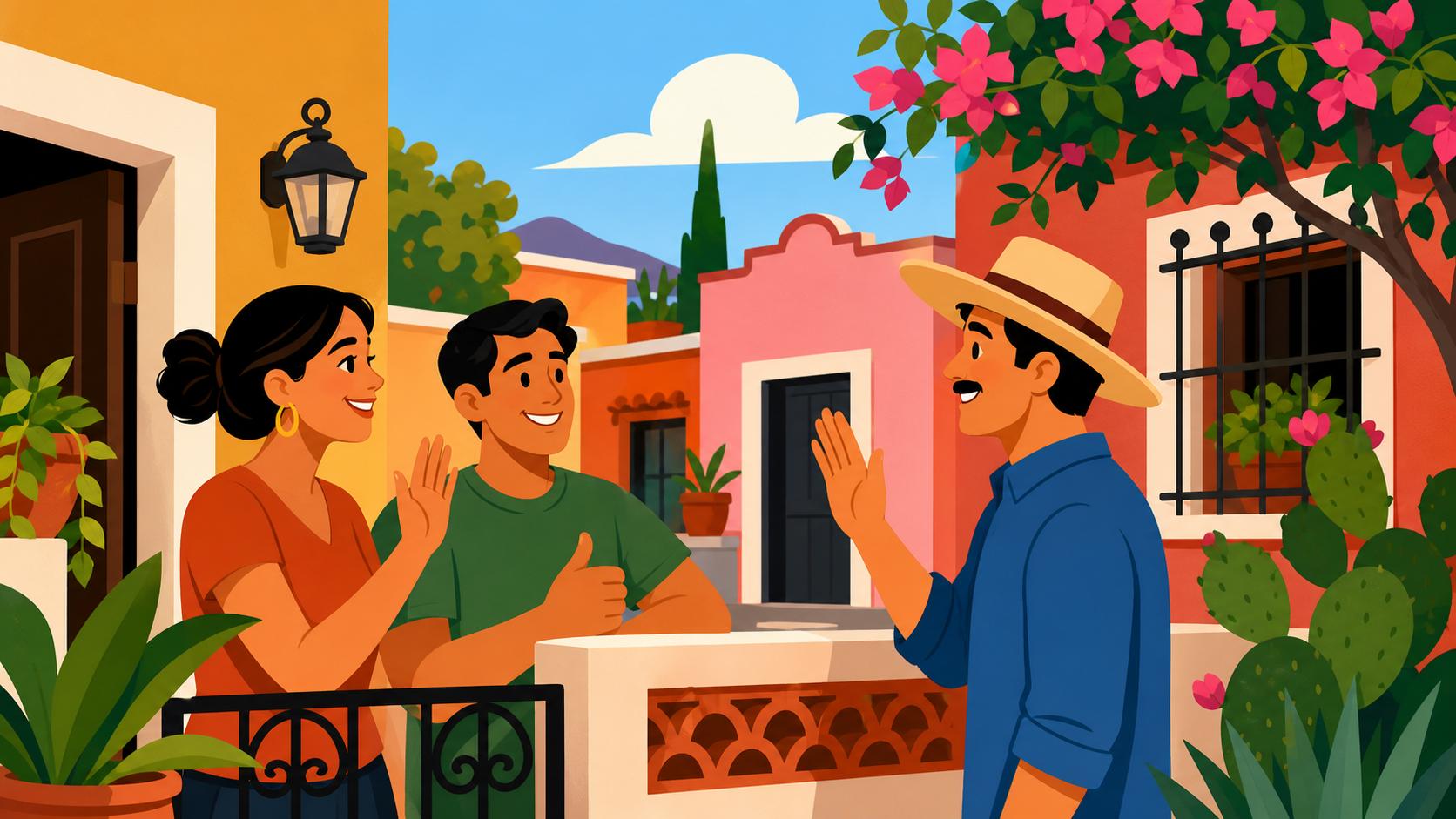
In many Western cultures, a quick nod or avoiding eye contact is standard. In Mexico, failing to greet your neighbors is often perceived as a sign of being pesado—literally "heavy" or arrogant. Whether you are walking to the corner tienda or taking out the trash, a clear "Buenos días," "Buenas tardes," or "Buenas noches" is mandatory. It isn't just about being polite; it is a way of signaling that you acknowledge the humanity of the people sharing your space.
I’ve found that even a struggle with the language doesn't matter as much as the effort. If you are still working on your fluency, check out Learning Spanish in Mexico: Top Tips and Resources for Expats to help bridge that gap. When you acknowledge the lady selling tamales or the man washing his car, you are woven into the fabric of the street. Over time, these small interactions lead to neighbors letting you know if you left your car window down or if the water delivery truck just passed by.
Understanding Indirect Communication and Politeness
Mexican culture is famously "high-context," meaning how something is said is often more important than the words themselves. Expats often struggle with the fact that many Mexicans find direct confrontation or a flat "no" to be incredibly rude. If you ask a neighbor to move their car and they say "ahorita" (literally "little now"), they might mean in five minutes, or they might mean "I’ll do it when I feel like it."
Learning to read these cues is vital for a peaceful existence. For more on this, you should read about Politeness and Indirect Communication: Understanding Mexican Social Cues. Instead of demanding a change, try framing your requests with plenty of "por favor" and "disculpe la molestia" (excuse the bother). Softening your language is the most effective way to get things done without creating a permanent rift with the person living next door.
Navigating the Auditory Landscape of Mexico
The most significant culture shock for almost every expat is the noise. Mexico is not a quiet country. Between the gas trucks playing catchy jingles, the "camote" (sweet potato) man with his whistling cart, and the church bells, there is a constant soundtrack to daily life. However, it is the social noise—parties and music—that creates the most friction between locals and foreigners.
The Unwritten Rules of the Fiesta
In many Mexican neighborhoods, a birthday, an anniversary, or even a Friday night is a valid reason for a massive celebration. These parties often involve large speakers set up on the sidewalk and can easily last until 4:00 or 5:00 AM. While your instinct might be to call the local authorities, doing so is often the fastest way to alienate yourself. In most traditional neighborhoods, the local police may not even respond to noise complaints for a private party unless there is actual violence involved.
The local etiquette is usually to "live and let live." The logic is that today it is their party, but tomorrow it might be yours. If the noise is truly unbearable, the best approach is to mention it to the neighbor the next day in a friendly manner, perhaps over a small gift or a compliment about their music choice. To better prepare yourself for these situations, take a look at our guide on Noisy Neighbors and Fireworks: Dealing with Noise in Mexico. Acceptance is usually a better strategy for your mental health than resistance.
Cohetes and Religious Celebrations
Then there are the cohetes—loud, window-rattling firecrackers used to announce religious festivals or processions. You will hear these at 6:00 AM or midnight, and they can be terrifying for pets. These are deeply tied to local traditions and the "pueblo" identity. Complaining about them is often seen as an attack on the culture itself.
Instead of fighting it, many expats use tools like Amazon Mexico to order noise-canceling headphones or white noise machines. These small investments make the transition to Mexican neighborhood life much smoother. If you are staying at a Selina location while looking for a permanent home, you’ll notice they often choose vibrant neighborhoods where this noise is part of the experience, providing a great "trial run" for the real thing.
Property Boundaries and Street Etiquette
In Mexico, the line between private property and public space is often blurred. The sidewalk in front of your house is technically public, but the person living there is usually responsible for cleaning it and often feels a sense of ownership over the parking space directly in front of their door.
The Battle for Parking
If you live in a city like Guadalajara or Mexico City, parking is a premium. You will often see people placing buckets, crates, or chairs in the street to "save" the spot in front of their house. While this is technically illegal in many municipalities, it is a widely accepted custom. Moving someone's bucket to park your car is seen as a major provocation.
If you have a car, it is often better to ask your neighbor if they mind you parking there or to offer a small monthly fee if they have a driveway they aren't using. For those still deciding on their transportation needs, reviewing the Pros and Cons of Living Car-Free can help you decide if the parking headache is even worth it. If you do drive, always ensure your insurance is up to date, which is covered in our Car Insurance in Mexico: Understanding Coverage and Costs guide.
Sidewalk Maintenance and Trash
Being a good neighbor means keeping your "frontage" clean. It is common to see neighbors out early in the morning sweeping the sidewalk and even the street in front of their homes. If you let leaves, trash, or dog waste accumulate in front of your house, you will quickly be judged as someone who doesn't care about the community.
Trash collection varies wildly. In some areas, a truck passes by ringing a bell, and you must run out to hand them your bags. In others, there are designated spots. Never leave your trash out overnight if there isn't a secure bin; the local street dogs will tear it apart, leaving a mess for your neighbors to deal with. This is one of those small details of Settling in Mexico: Step-by-Step Guide to Your First 30 Days as an Expat that can make or break your local reputation.
| Etiquette Topic | Expat Expectation | Mexican Neighborhood Reality |
|---|---|---|
| Noise Levels | Quiet hours begin at 10:00 PM. | Fiestas may last until sunrise; noise is a sign of life. |
| Greetings | A polite nod or avoiding eye contact is fine. | A verbal "Buenos días/tardes" is mandatory for respect. |
| Conflict | Call the authorities for rule-breaking. | Talk to the neighbor directly or let it go to maintain peace. |
| Parking | Public street means anyone can park anywhere. | The space in front of a house is often "reserved" by the owner. |
| Trash | Put it out whenever is convenient. | Follow specific truck schedules to avoid dog-scattered mess. |
Handling Conflict and Building Rapport
When a dispute does arise—whether it’s a water leak coming from your neighbor's wall or an overhanging tree—the "how" of your approach determines the "if" of the solution. The goal is always to keep the relationship intact because you will likely see this person every single day for years.
The Power of Small Gestures
I have seen more neighborhood problems solved with a plate of cookies or a "gift" of high-quality coffee than with legal threats. If you are moving in, consider bringing a small token to your immediate neighbors. Use Amazon Mexico to find something thoughtful if you can't get to a local market. Introducing yourself early sets the tone that you are a friend, not an intruder.
If you are a digital nomad using a local eSIM from Airalo to stay connected, you might even find yourself invited to the neighborhood WhatsApp group. These groups are the heartbeat of local security and gossip. Being active in these groups—even if you're just using a translator to say "Thanks for the heads up about the water shut-off"—shows you are part of the team. For more on the cultural nuances of these interactions, check out our Living in Mexico: Cultural and Practical Guide for New Expats.
When to Seek Help
If a neighborly chat doesn't work and the issue is serious (like property damage), it might be time to involve a professional. However, "professional" in Mexico often means a mediator or a local community leader before a lawyer. Jumping straight to legal action is seen as a "nuclear option" that will permanently sour the atmosphere of your street.
If you are navigating the complexities of Renting a Home in Mexico: Complete Expat Guide to Leases, Deposits, and More, your landlord might be the best person to intervene in neighbor disputes. They have the local "weight" and understanding of the specific neighborhood dynamics to handle the situation delicately.
Community Participation and Safety
In many Mexican neighborhoods, safety is a communal effort. Neighbors often know who belongs on the street and who doesn't. By being a "good neighbor," you are essentially enrolling in an informal security system.
Watching Each Other's Backs
When my neighbors in Querétaro realized I lived alone, they made a point of telling me which taxis were safe and which ones to avoid. They would keep an eye on my house when I went away for the weekend. This level of care only happens if you have invested the time in saying hello and being helpful. If you see a neighbor struggling with groceries or if their dog gets out, step in and help. These "deposits" into the neighborhood social bank pay off immensely when you are the one in need.
Supporting Local Businesses
Part of being a good neighbor is supporting the local ecosystem. Instead of doing all your shopping at big-box retailers, buy your eggs and water from the neighborhood tienda. Get your hair cut at the local salon. These small business owners are the gatekeepers of neighborhood information. For a deeper dive into how to navigate these local markets, read Grocery Shopping in Mexico: Supermarkets vs Local Markets. Supporting your neighbors' livelihoods is the ultimate sign of respect.
Disclaimer
This guide is intended for informational purposes and reflects the personal experiences and observations of the author. Neighborhood norms and local laws can vary significantly by state and municipality in Mexico. Always exercise common sense and cultural sensitivity when interacting with your community. While this advice aims to foster better relationships, it does not constitute legal advice for neighborhood disputes.