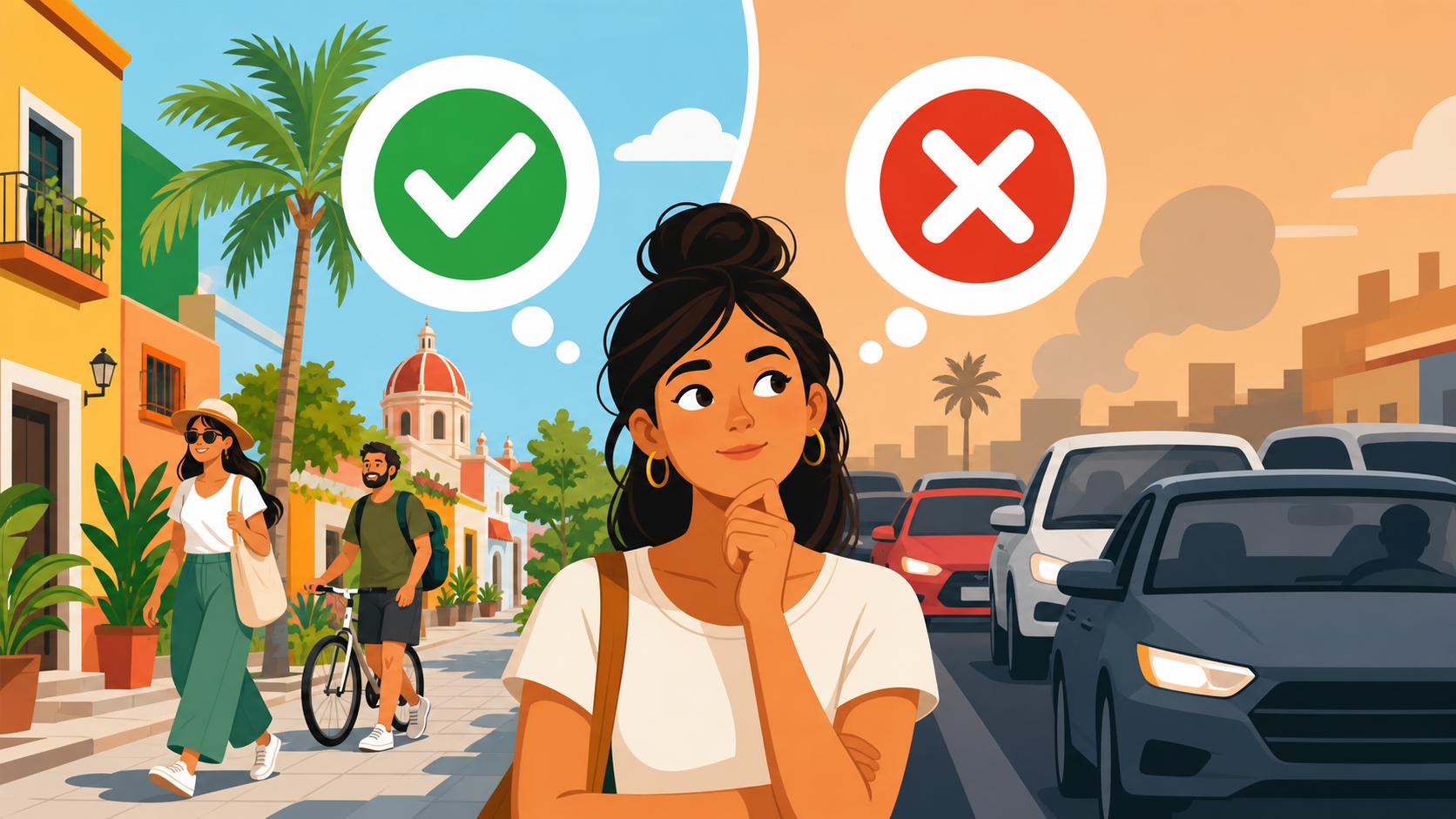
Do You Need a Car in Mexico? Pros and Cons of Living Car-Free
Navigating the transition to life in Mexico often boils down to one high-stakes question: can you survive without a set of wheels, or will you be trapped in your neighborhood? I remember the sheer panic of my first month in Mexico City, standing on a curb with six heavy grocery bags, trying to figure out if the approaching green microbus would actually stop for me or if I was destined to walk three miles in the humidity. This guide solves the car-versus-no-car dilemma by breaking down the infrastructure, costs, and lifestyle realities of living car-free in Mexico versus the freedom and frustration of owning a vehicle.
Disclosure: This post may contain affiliate links. We may earn a commission at no extra cost to you if you make a purchase through these links. Read full disclosure.
The Reality of Getting Around Without a Personal Vehicle
For many newcomers, the idea of not owning a car sounds like a loss of independence, but in many parts of Mexico, it is actually a liberation from one of the country's greatest stressors: traffic. If you are settling in a major metropolitan hub or a well-established expat enclave, the infrastructure for moving around is surprisingly robust, though it requires a bit of a learning curve to master the local nuances.
Public Transportation: From Subways to Microbuses
The backbone of urban life in Mexico is a complex web of public transport. In Mexico City, the Metro is legendary—both for its efficiency and its intense crowds during peak hours. At just five pesos a ride, it is one of the cheapest ways to traverse a massive megalopolis. However, if you are living in a city like Guadalajara or Monterrey, you will find light rail systems that are clean and modern, though perhaps less extensive.
Beyond the trains, you have the "peseros" or "microbuses." These are the smaller, often brightly colored buses that seem to have their own set of traffic laws. Navigating these requires a bit of courage and a basic grasp of Spanish, as you often have to shout your stop to the driver. While they can be chaotic, they reach corners of the city where no train would ever go. For a more organized experience, the Metrobús systems in various cities offer dedicated lanes that bypass the gridlock of standard traffic. When you are out exploring these routes, having a reliable data connection via Airalo is essential for checking routes on Google Maps or real-time transit apps, ensuring you don’t end up three colonias away from your intended destination.
Ride-Sharing and the Safety of Taxis
If the thought of a crowded bus doesn't appeal to you, ride-sharing is the expat’s best friend. Uber and Didi operate in almost every major city and offer a level of transparency that street taxis sometimes lack. You can see the driver’s rating, track your route, and pay digitally, which eliminates the "foreigner tax" that sometimes occurs with unmetered cabs. Many residents find that the monthly cost of Ubers is significantly lower than a car payment plus insurance and gas.
However, there is a distinct difference between "Sitio" taxis and street cabs. Sitio taxis are dispatched from a fixed location and are generally considered much safer and more reliable. For a deep dive into these differences, you should read our guide on Are Taxis Safe in Mexico? Using Cabs vs Ride-share Apps. In smaller towns, you might find that motor-taxis or "tuk-tuks" are the primary way to get around, offering a breezy, if somewhat bumpy, ride through cobblestone streets.
Inter-City Travel via Luxury Bus
One of the greatest surprises for expats is the quality of long-distance bus travel. Forget the image of a dusty old bus; lines like ETN, Primera Plus, and ADO GL offer "Executive Class" service that rivals first-class air travel. We are talking about fully reclining seats, individual entertainment screens, snacks, and sparkling clean bathrooms.
If you live car-free, these buses allow you to travel between states with zero stress. You can nap, work, or enjoy the scenery while a professional driver handles the mountain curves and "topes" (speed bumps). For more details on planning these trips, see our article on Traveling Within Mexico: A Guide to Domestic Flights and Buses for Expats. Many expats find they actually prefer this to driving because it removes the risk of highway fatigue or navigating unfamiliar rural roads at night.
The Pros and Cons of Owning a Car in Mexico
While a car-free life is possible, it isn't for everyone. Depending on your lifestyle, a car might be the difference between feeling like a local and feeling like a permanent tourist. However, the "pro" list comes with a very heavy "con" list that many expats underestimate before they sign a bill of sale.
The Benefits: Freedom and Logistics
The most obvious perk is the freedom to explore "Pueblos Mágicos" and hidden beaches on your own schedule. There are thousands of stunning locations in Mexico that are simply not accessible by public transport. If you enjoy hiking, surfing, or visiting remote archaeological sites, a car is almost mandatory.
Logistics also become much easier with a trunk. Buying a week's worth of groceries, a new lamp, or a bulk order of water can be a nightmare on a bus. Even though you can order almost anything from Amazon Mexico and have it delivered to your door, sometimes you just want the immediate gratification of a shopping trip to Costco or a local nursery. Owning a vehicle makes these errands effortless. If you are weighing the financial side of this, take a look at the Cost of Living in Mexico: 2026 Comprehensive Guide to see how car expenses fit into a typical monthly budget.
The Drawbacks: Traffic, Maintenance, and Bureaucracy
The "Cons" of car ownership in Mexico are led by one word: traffic. In cities like Mexico City or Querétaro, "hora pico" (rush hour) can turn a 20-minute drive into a two-hour ordeal. Then there are the driving restrictions. In the capital, the "Hoy No Circula" program restricts certain cars from driving on specific days based on their emissions and license plate numbers. You can read more about this in Driving Restrictions (Hoy No Circula) in Mexico City: What Expats Need to Know.
Beyond traffic, the bureaucracy is a significant hurdle. You have to deal with "tenencia" (annual taxes), "verificación" (emissions testing), and the constant threat of "mordidas" (bribes) from traffic police. Maintenance is also an adventure; while labor is cheap, parts for foreign-brand cars can be expensive or hard to find. If you are considering bringing your own vehicle across the border, you must understand the complexities of How Much Does It Cost to Import or Nationalize a Car in Mexico? to avoid having your vehicle impounded.
Safety and Security Concerns
Driving in Mexico is not for the faint of heart. The roads are often filled with "topes"—vicious, unmarked speed bumps that can destroy your suspension if hit at speed. Potholes can be deep enough to swallow a tire, and signage is often inconsistent.
There is also the security aspect. While most highways are safe during the day, it is widely recommended to avoid driving between cities at night due to poor lighting, livestock on the road, and security risks in certain regions. For a realistic look at road safety, check out Is It Safe to Drive at Night in Mexico? Road Safety Tips for Expats. If you do choose to drive, you will need to be hyper-vigilant and perhaps invest in a car with high clearance to handle the local terrain.
Living the Car-Free Lifestyle: Practical Tips
If you decide to skip the car, you need to be strategic about where and how you live. Living car-free in a suburban sprawl is a recipe for isolation, but in the right neighborhood, it’s a dream.
| Feature | Car-Free Living | Owning a Car |
|---|---|---|
| Monthly Cost | $100 – $300 (Ubers & Bus) | $400 – $800+ (Gas, Insurance, Maintenance) |
| Stress Level | Low (Someone else drives) | High (Traffic & Road Conditions) |
| Grocery Trips | Challenging (Requires delivery) | Easy (Trunk space) |
| Exploration | Limited to transit routes | Unlimited "Pueblos Mágicos" |
| Bureaucracy | None | High (Registration, Emissions, Taxes) |
Choosing the Right Neighborhood
Walkability is the most important factor for a car-free expat. Neighborhoods like Roma Norte or Condesa in Mexico City, or the Centro Histórico in Mérida, are designed for pedestrians. Everything you need—cafes, pharmacies, markets, and gyms—is within a ten-minute walk. If you are a digital nomad, staying at a Selina location often puts you right in the heart of these walkable zones, surrounded by everything you need to work and socialize without ever needing a key.
When scouting locations, use Google Maps to look for the proximity of a "Superama" or "Chedraui Selecto." If you can't walk to a grocery store, you will likely find yourself frustrated. For more advice on choosing a home based on lifestyle, see Living in Mexico City: An Expat's Guide to Neighborhoods and Lifestyle.
Managing Logistics and Errands Without a Trunk
The secret to a successful car-free life in Mexico is embracing the delivery economy. Apps like Rappi and Cornershop allow you to have everything from a single taco to a week's worth of groceries delivered for a small fee. For larger home items, Amazon Mexico is incredibly reliable and often offers next-day delivery in major cities.
For connectivity while you're managing these apps on the go, an Airalo eSIM is a lifesaver. It allows you to stay connected to your ride-share and delivery apps without hunting for public Wi-Fi, which is a major safety and convenience boost. This tech-forward approach is a cornerstone of the Digital Nomad Life in Mexico: Remote Work Living Guide.
Staying Social and Connected
One fear people have about not owning a car is missing out on social events. However, most expat communities are centered in walkable areas. By choosing to live in a dense, vibrant neighborhood, you are actually more likely to run into friends and discover local events than if you were tucked away in a gated community that requires a car to exit.
If you are a retiree, consider the "Expats of [City Name]" Facebook groups to find carpooling opportunities for group trips to nearby attractions. Many car-free expats split the cost of a private driver or a rental car for weekend getaways, which provides the benefits of a car without the year-round headache of ownership.
Making the Final Decision: Is a Car Right for You?
Deciding whether to buy a car often comes down to your specific location and your tolerance for "the Mexican way" of doing things. If you are living in a major city and working remotely, the answer is almost certainly: no, you do not need a car. The stress of parking, traffic, and police interactions far outweighs the occasional convenience of having your own vehicle.
On the other hand, if you are a family with young children, or if you live in a more rural area like the outskirts of Lake Chapala or the hills of San Miguel de Allende, a car becomes a necessity for daily life. Before making a permanent purchase, I always recommend that new arrivals spend at least three months living car-free. Use Ubers, take the luxury buses, and walk the streets. You might find that you enjoy the slower pace of life and the extra money in your pocket. If you do decide to buy, make sure you are prepared for the legal side by reading Bringing Your Car vs Buying in Mexico: Pros and Cons for Expats.
Disclaimer
This guide is for informational purposes only. Local laws, traffic regulations, and transportation costs in Mexico can change rapidly. Always verify current requirements with the official Mexican authorities (such as the Secretaría de Movilidad) before making significant financial or legal decisions regarding vehicle ownership or residency.