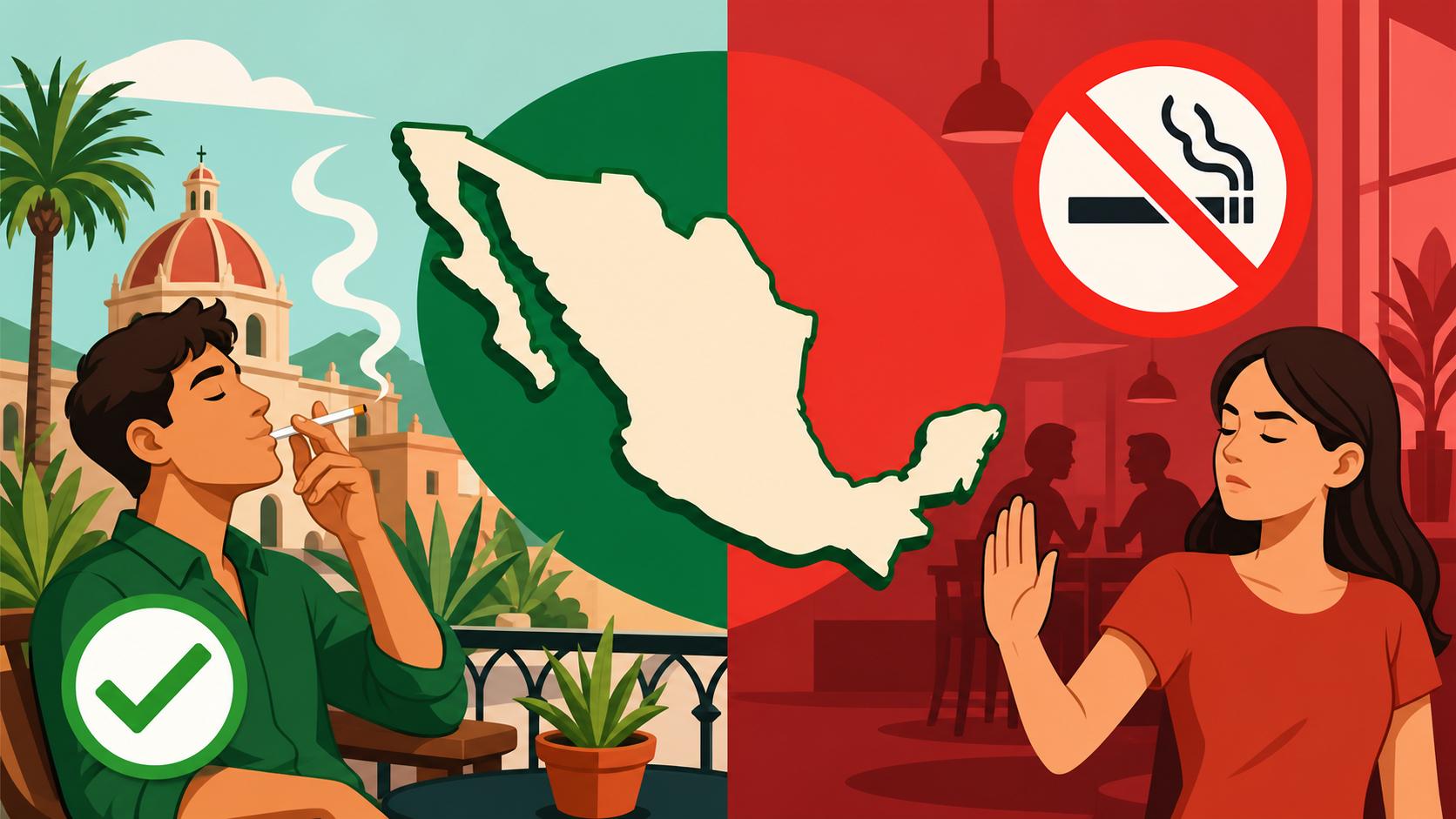
Smoking Laws in Mexico: Where Can You Smoke and Not Smoke?
Expats often arrive in Mexico expecting a laid-back, "anything goes" atmosphere, only to be hit with some of the strictest anti-tobacco laws in the world. I’ll never forget the confusion I felt when a security guard politely but firmly told me to extinguish my cigarette on a completely empty beach in Quintana Roo. This guide clarifies exactly where you can and cannot smoke to keep you out of legal trouble.
Disclosure: This post may contain affiliate links. We may earn a commission at no extra cost to you if you make a purchase through these links. Read full disclosure.
The New Reality: Understanding Mexico’s Strict Anti-Smoking Laws
If you lived in Mexico or visited a decade ago, you probably remember a country where smoking was culturally ubiquitous. You could light up in bars, on most restaurant terraces, and certainly on the beach. However, as of January 2023, the federal government enacted a massive overhaul of the General Law for Tobacco Control. This move effectively turned Mexico into one of the most restrictive environments for smokers globally. For those of us living here long-term, it was a seismic shift in how we navigate social life and public spaces.
The law isn't just a suggestion; it is a federal mandate that applies to every corner of the country, from the bustling streets of Mexico City to the quietest corners of the Oaxacan coast. The goal was to eliminate second-hand smoke exposure in public areas, but for many expats, it felt like an overnight disappearance of their social norms. You’ll find that while some smaller towns are slower to enforce these rules, major tourist hubs and cities are very proactive. When you are Living in Mexico: Cultural and Practical Guide for New Expats, understanding these social boundaries is essential to fitting into your new community.
If you are staying at a place like Selina, you might find they have very specific designated zones or house rules that reflect these national laws. Most co-living and hostel environments have had to strictly adapt their rooftop and common area policies to avoid massive fines that could shut them down. It’s always best to ask the staff about their specific "zona de fumar" before you light up in a courtyard that looks deceptively open-air.
Prohibited Zones: Where You Cannot Smoke
The list of places where smoking is now illegal is extensive and includes almost every place where people gather. It is no longer enough to be "outdoors." The law specifies that any space considered "public" is a smoke-free zone. This includes parks, plazas, and even the sidewalks in front of schools or government buildings. The most shocking change for many was the total ban on beaches. You cannot smoke on the sand, near the water, or on piers.
Restaurants and bars have also been stripped of their smoking sections. In the past, many establishments had a smoking terrace or a patio. Under the new regulations, these areas are illegal if they serve food or drinks. Even if an area is technically "outside," if it is part of a commercial establishment’s service area, it is off-limits. This has changed the nightlife scene significantly. People now have to step completely off the property, often onto a public street, which creates its own set of complications regarding Safety in Mexico: What Expats Need to Know About Staying Safe.
| Area Category | Smoking Status | Specific Examples |
|---|---|---|
| Public Beaches | Strictly Prohibited | Cancun, Playa del Carmen, Puerto Vallarta sands |
| Public Parks | Strictly Prohibited | Chapultepec Park, local neighborhood plazas |
| Hospitality | Prohibited in Service Areas | Restaurant terraces, hotel balconies, bars |
| Transportation | Strictly Prohibited | Bus stops, train stations, taxis, Ubers |
| Private Homes | Generally Allowed | Personal backyards, indoor living spaces |
| Schools/Work | Strictly Prohibited | All campuses, office buildings, courtyards |
The ban also extends to hotels. If you are staying in a resort, do not assume your balcony is a safe place to smoke. Most hotels have moved to a 100% smoke-free policy for rooms and balconies to comply with federal law. If you are caught, you could face a cleaning fee from the hotel or a fine from local authorities. When researching the Best Places to Live in Mexico for Expats (2027 Edition), keep in mind that urban areas with high density are where you will see the most frequent enforcement of these rules.
Navigating the Grey Areas: Private Spaces and Condos
The one place the law generally leaves alone is your private residence. If you own your home or rent an apartment, you are typically free to smoke inside or in your private backyard. However, if you live in a multi-unit building or a gated community (fraccionamiento), things get complicated. Most homeowners' associations (HOAs) have updated their bylaws to align with federal law, meaning you might be prohibited from smoking in the common pool area, the gym, or even the shared hallways.
If you are Living in Mexico City: An Expat's Guide to Neighborhoods and Lifestyle, you will likely be in a condo building where noise and smoke complaints are taken seriously by neighbors. It is always a good idea to check your rental contract or the building’s "reglamento" before lighting up on a shared rooftop. If the smoke drifts into a neighbor's window, they are well within their rights to report you to the building administrator.
For those who want to smoke at home but worry about the smell or lingering residue, many expats look into air purification systems. You can find high-quality HEPA filters and specialized ashtrays on Amazon Mexico. It’s often easier to buy these items locally rather than Bringing Appliances from Home vs Buying in Mexico: What You Should Know, especially since the voltage and shipping costs can be a headache. Staying informed through local expat groups is also vital, and having a reliable data plan from Airalo ensures you can quickly check local laws or community guidelines if you’re unsure about the rules in a new neighborhood.
Vaping and E-Cigarettes: A Legal Quagmire
The situation for vapers is even more precarious than for traditional smokers. In May 2022, a presidential decree officially banned the "circulation and marketing" of e-cigarettes and vaping devices in Mexico. While you might see people vaping on the street, the legal status is very murky. Technically, the sale and importation of these devices are illegal. This means you cannot legally buy pods, juice, or new devices at a brick-and-mortar store in Mexico, though an underground market certainly exists.
When it comes to using them, vapes are treated exactly like cigarettes under the 2023 anti-smoking law. If you can’t smoke a cigarette there, you can’t vape there. Many tourists and new expats mistakenly believe that because it's "just vapor," the rules don't apply. I have seen tourists have their expensive vaping rigs confiscated at airport customs or by police in tourist zones like the Quinta Avenida in Playa del Carmen.
The enforcement regarding the possession of a vape for personal use is inconsistent. Generally, having one on your person isn't a crime, but using it in a prohibited public space or trying to bring a bulk supply through customs will result in trouble. If you find yourself in a situation where a device is confiscated or you are being questioned, it helps to have your Emergency Numbers in Mexico: How to Call Police, Fire, or Ambulance handy, though usually, these situations are handled with a fine.
Fines, Penalties, and Interactions with Authority
The penalties for violating smoking laws can be steep. For an individual, fines can range from a few hundred pesos to several thousand, depending on the severity and the location. For businesses, the stakes are much higher, with fines reaching tens of thousands of dollars and the potential for permanent closure. This is why restaurant owners are so aggressive about asking you to put out your cigarette; you aren't just a nuisance to them, you are a massive financial liability.
If you are caught smoking by the police, the experience can be intimidating. Most officers will start with a verbal warning, but in high-traffic tourist areas, they may move straight to a citation. There is also the persistent issue of Dealing with Corruption: Should Expats Pay “Mordida” (Bribes)?. Some officers may use the smoking ban as a pretext to solicit a "quick payment" to avoid a trip to the station. As a veteran expat, my advice is to always remain polite, ask for a written ticket, and never offer a bribe. Knowing your rights and staying calm is the best way to handle any interaction with local law enforcement.
To avoid these situations entirely, follow these "best practices" for smokers in Mexico:
- Look for a "Zona de Fumar" sign. If you don't see one, assume it's prohibited.
- Observe the locals. If no one else is smoking, you shouldn't be either.
- If you must smoke in public, find a secluded spot far away from crowds, children, and food service areas.
- Always carry a portable pocket ashtray. Littering cigarette butts is an additional offense that can lead to further fines.
Managing your personal habits while navigating a new legal system is just part of the expat journey. Whether you are Online Shopping in Mexico: Using Amazon, MercadoLibre and Other Sites for supplies or just trying to enjoy a night out, being aware of the "No Fumar" signs will save you a lot of stress and money in the long run. Mexico is still a beautiful, welcoming place to live, but the days of lighting up wherever you please are officially a thing of the past.
Disclaimer
This guide is for informational purposes only and does not constitute legal advice. Mexico’s laws regarding tobacco and vaping are subject to change and may be enforced differently depending on the municipality and state. Always consult with a qualified legal professional or check the latest official government bulletins for the most current regulations.