Propane Gas 101: Using Gas Tanks and Deliveries in Mexico
You step into the shower, lather up your hair, and suddenly the water goes ice-cold. I’ll never forget my first winter in San Miguel de Allende when I realized—far too late—that my gas tank was bone dry. This guide will teach you exactly how to manage propane gas, navigate deliveries, and ensure you never run out again.
Disclosure: This post may contain affiliate links. We may earn a commission at no extra cost to you if you make a purchase through these links. Read full disclosure.
Understanding Propane Gas Systems in Mexico
In many parts of the world, natural gas is piped directly into homes through a municipal grid. In Mexico, however, the vast majority of households rely on Liquified Petroleum Gas (LPG), commonly known as propane. This means you are personally responsible for monitoring your supply and ordering refills. For a newcomer, this can be one of the most confusing Household Quirks in Mexico: Water Cisterns, Gas Tanks, and More that you will encounter. There are two primary ways propane is stored at a residence, and knowing which one you have is the first step to survival.
Stationary Tanks vs Portable Cylinders
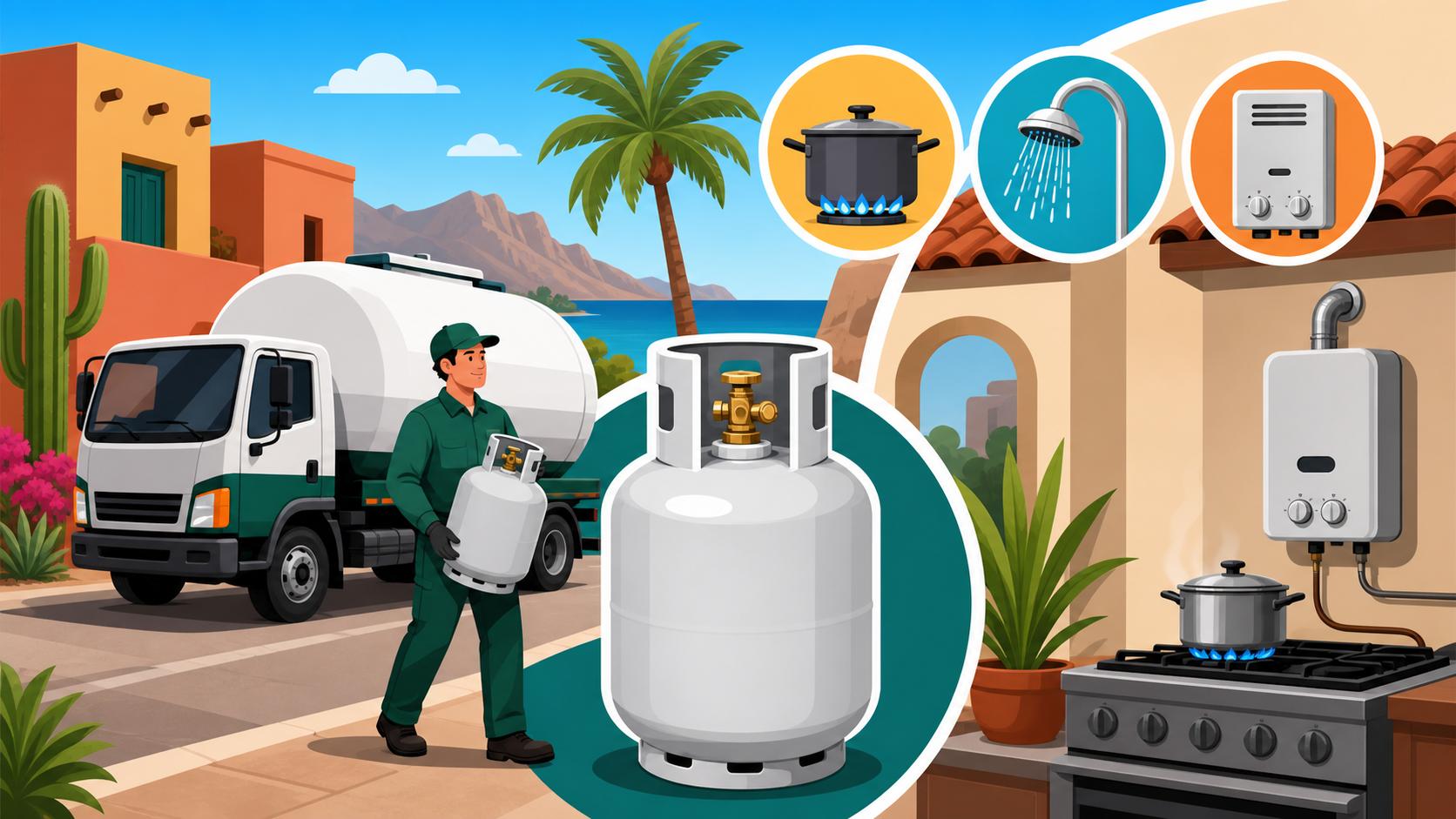
The most common setup for modern houses and condos is the tanque estacionario (stationary tank). These are large, horizontal tanks usually painted white or silver and located on the roof. They come in various sizes, often measured in liters, such as 120L, 180L, or 300L. The beauty of these tanks is that they have a gauge (medidor) that tells you exactly how much gas is left as a percentage. When you order gas, a truck comes to your house, pulls a long hose up to the roof, and pumps the liquid propane directly into the tank.
On the other hand, older homes or smaller apartments often use cilindros (portable cylinders). These are the tall, vertical metal tanks you might see tucked away in a service alley or a laundry room. They are measured in kilograms, typically 20kg or 30kg. Unlike stationary tanks, cylinders do not have gauges. You essentially use them until they are empty, at which point you swap the empty tank for a full one from a passing gas truck. This "guesswork" method is a common frustration when Renting a Home in Mexico: Complete Expat Guide to Leases, Deposits, and More, as you never quite know if you have five days or five minutes of hot water left.
Why Mexico Relies on Propane
You might wonder why a country with such advanced cities hasn't moved to a centralized piping system. The reality is that Mexico’s seismic activity and the age of its urban infrastructure make underground gas lines a massive safety and engineering challenge. Propane is portable, efficient, and relatively cheap, making it the logical choice for a nation where many homes were built long before modern zoning laws.
For those who are just Settling in Mexico: Step-by-Step Guide to Your First 30 Days as an Expat, the reliance on propane is a reminder of the "manual" nature of life here. You have to be proactive. If you are staying at a place like Selina while you hunt for a long-term rental, you won't have to worry about this, as they handle the utilities. But once you move into your own place, the "gas man" will become one of the most important people in your life.
How to Get Your Gas Delivered
Once you realize your tank is low, the next hurdle is actually getting the gas to your door. Depending on where you live, this can range from a high-tech app-based experience to chasing a truck down the street while waving a handful of pesos. It is a process that requires a bit of patience and a basic understanding of how local commerce works.
Calling the Trucks and the Famous Gas Song
In many neighborhoods, you don't even need to make a call. You will hear the gas trucks before you see them. Each company has its own signature jingle or a recorded voice shouting "¡Gaaaas!" through a loudspeaker. Some even play music that sounds remarkably like an ice cream truck. When you hear your preferred brand—common ones include Zeta Gas, Gas Noel, or Hidrogas—you simply step outside and flag them down. They will park, hop out, and take care of the refill or cylinder swap immediately.
If you aren't home during the day or live in a gated community, this "drive-by" method won't work. In that case, you’ll need to call the company’s local dispatch office. Most have a "Call Center" number displayed on the side of their trucks. Using a local SIM or an e-sim from Airalo ensures you have the data and calling capability to look up these numbers or even message them via WhatsApp, which is the preferred method of communication for many drivers.
Using Apps and Digital Services
If your Spanish is still a work in progress, you might find phone calls intimidating. Fortunately, in larger cities like Mexico City, Guadalajara, or Monterrey, many gas companies now have apps. You can pin your location, select the amount of gas you need, and even track the truck in real-time. This is a game-changer for those Living in Mexico: Cultural and Practical Guide for New Expats who want to avoid the linguistic gymnastics of explaining their address over a crackly phone line.
Even with an app, you should expect a phone call from the driver when they are a block away. They often need clarification on which gate to enter or where the roof access is located. Always keep your phone handy after placing an order. If you miss the call, they will often skip your house and move on to the next delivery, leaving you with another night of cold showers.
Safety and Maintenance for Expats
Propane is highly flammable, and safety should be your top priority. In the US or Canada, we often assume that appliances are installed and maintained to a strict code. In Mexico, the responsibility for ensuring your connections are tight and your tank is in good repair often falls on you. This is one of the most critical Home Utilities in Mexico: Setting Up Electricity, Water, Gas, and Internet to monitor.
Checking for Leaks and Using the Soapy Water Test
Every time you get a delivery, or if you smell a faint "rotten egg" odor, you should check your connections. The easiest way to do this is with a simple spray bottle filled with water and a healthy amount of dish soap. Spray the suds onto the valves and the hose connections (the lines that lead from the tank to your house). If you see bubbles forming and growing, you have a leak.
I highly recommend keeping a basic toolkit and some spare parts on hand. You can find high-quality gas regulators and heavy-duty hoses on Amazon Mexico that are often better than the generic ones the delivery guys carry. If you do find a leak, turn off the main valve on the tank immediately. Do not use your stove or water heater until a professional plumber (plomero) has inspected the system and replaced the faulty parts.
Tank Expiration and Maintenance
Stationary tanks don't last forever. Most have a lifespan of about 10 years. Over time, the sun and rain can cause the exterior to rust, and the valves can become brittle. If you are Buying Property in Mexico: Comprehensive Guide for Foreign Buyers, always check the manufacturing date stamped on the side of the stationary tank. If it's over a decade old, factor the cost of a new tank (usually several hundred dollars) into your moving budget.
Portable cylinders also take a beating. When the truck arrives to swap your cylinder, inspect the "new" one they are giving you. If it looks excessively rusted or the bottom rim is bent (making it wobble), ask the driver for a different one. You are paying for the gas, but you are also trusting the integrity of that metal container inside your home.
| Feature | Stationary Tank (Estacionario) | Portable Cylinder (Cilindro) |
|---|---|---|
| Common Location | Roof or high exterior wall | Kitchen, laundry room, or patio |
| How It's Measured | Liters (shown as a % on gauge) | Kilograms (usually 20kg or 30kg) |
| Refill Method | Truck pumps liquid through a hose | Driver swaps the empty tank for a full one |
| Ease of Monitoring | Easy; just check the gauge on the roof | Difficult; no gauge, must feel weight |
| Best For | Large families, heavy use, long-term stays | Small apartments, solo living, budget rentals |
Costs, Payments, and Avoiding Scams
Understanding the financial side of propane is essential for Managing Your Money in Mexico: Budgeting, Saving, and Currency Tips. Gas prices are regulated but can fluctuate monthly based on international market rates. Knowing how much you should be paying—and how to spot when someone is trying to overcharge you—will save you a lot of headache.
How Much Does Gas Cost?
Propane is sold by the liter for stationary tanks and by the cylinder for portable ones. As of 2026, a 20kg cylinder typically costs between 400 and 500 pesos, though this varies by region. For stationary tanks, most people wait until their gauge hits 20% and then "fill it up" to 80% or 90% (you should never fill it to 100% to allow for heat expansion).
When it comes to Paying Utility Bills in Mexico: Methods and Tips for Expats, gas is one of the few things you almost always pay for in cash (efectivo) directly to the driver. While some larger companies now accept cards or bank transfers via their apps, cash remains king on the streets. Always ask for a receipt (nota) and make sure the price on the receipt matches what you are handing over.
Common Scams and How to Avoid Them
Unfortunately, "the short fill" is a scam that some unscrupulous drivers attempt. With stationary tanks, the truck has a digital meter that shows how many liters are being pumped. A common trick is for the driver to start the pump before you’ve had a chance to see that the meter was reset to zero. Always go up to the roof (if it's safe) or ask the driver to show you the meter before they start and after they finish.
Another issue is the "meter bypass," where the driver has rigged the pump to spin the numbers faster than the actual gas is flowing. The best way to combat this is to know your tank's capacity. If you have a 300-liter tank that is at 20%, you should only be able to fit 210 liters to get it to 90%. If the driver claims he pumped 280 liters into your 300-liter tank that wasn't even empty, you are being scammed. Be firm, point out the math, and if they persist, call the company's main office immediately.
Tipping the Gas Delivery Driver
Tipping (the propina) is an important part of the culture. If the driver has to haul a heavy 30kg cylinder up three flights of stairs or drag a 50-meter hose through your house to reach a courtyard tank, a tip of 20 to 50 pesos is standard and very much appreciated. It builds a relationship; next time you are out of gas on a rainy Sunday, that driver is much more likely to make your house their last stop of the day if they know you are a "buena gente" (good person).
Summary of Best Practices for Expats
Navigating the propane system is a rite of passage for any expat. It requires a shift from the "set it and forget it" mentality of the North to a more mindful, hands-on approach to home maintenance. By staying on top of your tank levels and building a rapport with your local delivery drivers, you can ensure that your home remains a comfortable sanctuary.
For those still navigating the early stages of their move, check out our guide on Expat Housing in Mexico: Navigating Neighborhoods, Utilities, and Services for more tips on setting up your new home. And remember, if you ever find yourself in a dispute over a bill or a contract, understanding the nuances of Understanding Mexican Rental Contracts: Key Terms and Tenant Rights can provide the legal backing you need.
Disclaimer
This guide is for informational purposes only. Propane gas is hazardous and should be handled with extreme caution. Always consult with a certified local technician for installations, repairs, or if you suspect a gas leak. Regulations and prices in Mexico can change frequently; always verify current local laws and safety standards.