How Pet-Friendly Is Mexico? Bringing Your Dog to Restaurants and Parks
Moving your life to a new country is a massive undertaking, but doing it with a furry companion adds a layer of logistical complexity that can feel overwhelming. When I first packed up my life and my 60-pound Labrador to head south, I stayed awake at night wondering if we would be confined to our apartment or if he would truly be part of my new Mexican lifestyle. This guide solves the mystery of the "pet-friendly" label in Mexico, providing a boots-on-the-ground perspective on where your dog is actually welcome and where you might face pushback.
Disclosure: This post may contain affiliate links. We may earn a commission at no extra cost to you if you make a purchase through these links. Read full disclosure.
The Cultural Evolution of Pets in Mexico
To understand how pet-friendly Mexico is, you first have to understand the massive cultural shift that has occurred over the last decade. Historically, dogs in Mexico were often viewed as "guardians" rather than family members, frequently relegated to rooftops or courtyards. However, if you walk through neighborhoods like Roma Norte in Mexico City or Americana in Guadalajara today, you will see a completely different reality. The rise of the "perri-hijo" (dog-child) phenomenon has transformed urban Mexico into a haven for pet lovers.
In these metropolitan bubbles, dogs are accessorized, pampered, and welcomed into high-end boutiques. This shift is deeply rooted in the changing demographics of younger Mexicans and the expat community, who prioritize animal welfare and inclusion. You will find that the younger generation, in particular, is highly empathetic toward pet owners. That said, this urban "pet-topía" does not always extend to smaller, more traditional pueblos. In rural areas, dogs are still largely working animals, and the concept of bringing a dog inside a restaurant might still be met with a confused stare.
Navigating this transition requires a bit of cultural nuance. While people are generally very friendly toward pets, there is still a lingering segment of the population that may be wary of large breeds. I’ve found that a well-behaved dog and a friendly "buenos días" go a long way in smoothing over any initial hesitation from neighbors or shopkeepers. If you are still in the planning stages of your move, it is worth checking out the Best Places to Live in Mexico for Expats (2027 Edition) to see which cities align best with a high-energy dog’s needs.
Dining Out with Your Dog: The Terrace Culture
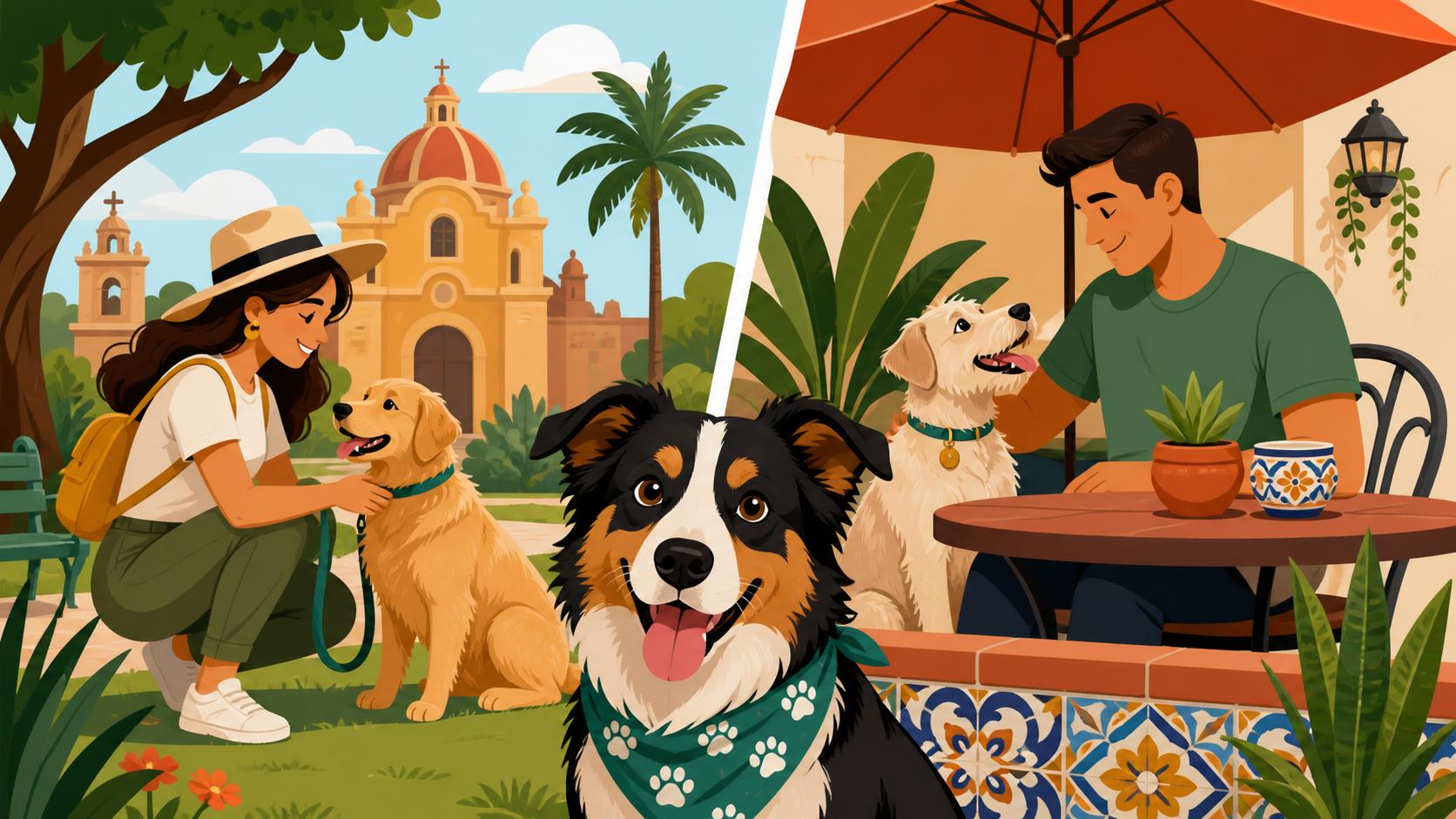
One of the greatest joys of living in Mexico is the outdoor dining scene. Because of the incredible climate, many restaurants feature extensive outdoor seating, known as "terrazas." Generally speaking, if a restaurant has a sidewalk or patio area, they will almost certainly allow your dog to join you. I have spent countless afternoons with my dog tucked under a table in some of the country’s best cafes, and often, the waiter brings a bowl of water before they even take my drink order.
However, there is a legal distinction you should be aware of. Technically, Mexican health regulations (COFEPRIS) are quite strict about animals being inside areas where food is prepared or served. This means that while the patio is fair game, you might be asked to leave your dog outside if you want to sit in the enclosed dining room. Some modern establishments have found ways around this or simply choose to ignore it in favor of being pet-friendly, but it is always polite to ask, "¡Hola! ¿Es pet-friendly?" before you grab a seat.
For those who work remotely, finding a spot that welcomes both a laptop and a dog is essential. Brands like Selina have become a staple for the nomadic community, often offering pet-friendly co-working spaces and accommodations that understand the modern expat's needs. Whether you are staying for a night or a month, these types of hubs provide a built-in community of other dog owners, which makes socializing your pet in a new country much easier.
Parks and Green Spaces: More Than Just a Patch of Grass
Mexico’s parks are the heartbeat of its social life, and for dog owners, they are indispensable. In major cities, you will find dedicated "corralitos para perros" (dog pens) where your pet can run off-leash. Parque México and Parque España in Mexico City are world-famous for their dog culture, featuring professional trainers and dozens of dogs playing together at any given hour.
When visiting these parks, it is important to remember that leash laws are often viewed as "suggestions" by locals, although they are technically required in most municipalities. You will encounter many off-leash dogs, which can be a challenge if your pet is reactive. My advice is to always keep your dog leashed until you are within a designated fenced area to avoid any unexpected scuffles with local dogs who might be protecting their "turf."
Beyond the city, the rules for beaches can be a bit more "wild west." On many public beaches in areas like Sayulita or Puerto Escondido, dogs run free and play in the surf. However, in highly regulated tourist zones or "Blue Flag" certified beaches, dogs are strictly prohibited to maintain environmental standards. If you are planning a coastal move, reading up on Living in Mexico: Cultural and Practical Guide for New Expats can help you understand the regional differences in how public spaces are managed.
| Feature | Urban Cities (CDMX, GDL, QRO) | Coastal Towns (PV, Playa, Tulum) | Rural Pueblos |
|---|---|---|---|
| Restaurant Access | High (mostly patios) | Very High (beach clubs) | Limited |
| Leash Law Adherence | Moderate | Low | Very Low |
| Off-Leash Areas | Fenced dog parks available | Open beaches | None (mostly open fields) |
| Pet Boutiques | Abundant | Common | Rare |
| Vet Access | World-class specialists | General practitioners | Basic services only |
Shopping and Services for the Modern Pet Owner
Gone are the days when you had to lug 40-pound bags of specialized kibble across the border. The infrastructure for pet care in Mexico has exploded. For everyday supplies, from orthopedic beds to high-quality grain-free food, Amazon Mexico is an absolute lifesaver. Their delivery network is remarkably efficient, even in smaller towns, and it saves you the hassle of trying to fit a giant bag of dog food into a small Mexican taxi.
When it comes to staying connected while exploring new trails or finding the nearest emergency vet, I always recommend having a reliable data plan. Using an eSIM from Airalo allows you to have instant access to Google Maps and translation apps the moment you cross the border or head to a new state. This is particularly useful when you are navigating the often-confusing streets of a new neighborhood and need to find a pet-friendly pharmacy or a park quickly.
For more specialized needs, you will find that "Veterinarias" are everywhere. In fact, I’ve found that the cost of high-quality veterinary care in Mexico is a fraction of what it is in the US or Canada, without sacrificing quality. Many vets in expat-heavy areas speak excellent English and are well-versed in the specific health challenges pets face in a tropical climate. For a deeper dive into finding the right care, check out Pet Care in Mexico: Finding Veterinarians and Pet Services.
Realities and Challenges: What They Don't Tell You
While Mexico is incredibly welcoming to pets, it isn't all sunshine and tail wags. There are specific "I've-been-there" realities that every expat needs to prepare for. The first is the presence of "callejeros" (street dogs). While many are friendly or simply indifferent, they can carry parasites or be territorial. Ensuring your dog is up to date on all shots is non-negotiable. You should consult the Vaccinations Needed for Mexico: Guidance for Expats (2026) list to ensure your pet is protected against local threats like Heartworm and Erlichia, which are common in warmer regions.
Another major adjustment is the noise. Mexico is a loud country, and fireworks (cohetes) are a staple of almost every religious or civic celebration. If your dog is terrified of thunder or loud bangs, you will need a strategy. Many expats use calming pheromones or "Thundershirts" ordered via Amazon Mexico to help their pets cope during festival seasons.
Finally, consider the walking surfaces. In the summer, the colonial cobblestones and concrete sidewalks can become hot enough to burn paws within minutes. I learned the hard way that mid-day walks are a no-go. Stick to early morning or late evening strolls, and always carry water. For more tips on keeping your pet safe in the sun, our guide on Staying Healthy in Mexico: Essential Tips for Food, Water, and Preventive Care offers great advice that applies to both humans and their furry companions.
Navigating Housing with Pets
Finding a rental that accepts dogs can be one of the most frustrating parts of the expat journey. Many landlords have had bad experiences with untrained pets and may flatly refuse "mascotas." However, this is often a point of negotiation rather than a hard rule. I have found that offering a slightly higher security deposit or providing a "pet resume" (complete with a photo and a reference from a previous landlord) can work wonders.
In more modern developments, particularly those catering to foreigners, pet-friendliness is often built into the building's amenities. Some even feature rooftop dog runs or washing stations. If you are struggling to find a place, I recommend looking at Renting a Home in Mexico: Complete Expat Guide to Leases, Deposits, and More to learn how to navigate the specific language used in Mexican rental contracts regarding pets.
| Category | Advice for Expats |
|---|---|
| Housing | Always ask about "mascotas" early; consider a pet deposit. |
| Health | Use tick/flea prevention year-round; beware of "TV" (Transmissible Venereal Tumor) in street dogs. |
| Transportation | Uber Pet is available in major cities; long-distance buses usually require pets in crates in the cargo hold. |
| Etiquette | Always pick up after your dog; "poop bags" are widely available at Grocery Shopping in Mexico: Supermarkets vs Local Markets. |
Transportation and Travel Within the Country
If you plan on exploring Mexico beyond your front door, you’ll need to know how to get around with your dog. Within cities like Mexico City or Guadalajara, "Uber Pet" is a reliable option, though it is slightly more expensive than a standard ride. If you are using traditional taxis, it is hit or miss; many drivers will refuse a dog unless it is small and in a carrier.
For long-distance travel, the situation is more restricted. Mexico’s luxury bus lines (like ETN or ADO) generally only allow pets if they are in a crate in the luggage compartment, which can be stressful for both the owner and the animal. Flying domestically is often a better option, as airlines like Volaris and Aeroméxico have established pet policies for both "in-cabin" (for small dogs) and "checked" pets. Always double-check the Bringing Pets to Mexico: Import Requirements and Pet Care Tips guide before booking a flight to ensure you have the correct health certificates and crate dimensions.
Staying connected during these travels is vital. I always make sure my Airalo data is topped up before a road trip so I can find pet-friendly stops along the way. There is nothing worse than being stuck in rural Mexico with a dog that needs a break and no way to search for a safe, grassy area nearby.
Safety and Street Awareness
Safety isn't just about crime; it's about being aware of your surroundings while walking your pet. In many neighborhoods, sidewalks can be uneven, and open "registros" (utility holes) are a real hazard for both you and your dog. I always walk with a flashlight at night to ensure my dog doesn't step into a hole or onto a piece of broken glass.
Furthermore, you should be mindful of what your dog is sniffing or eating on the street. In some areas, residents may put out "comida" for street dogs that might not be fresh, or worse, there have been rare reports of intentional poisoning in certain parks. Keeping a close eye on your pet and training a strong "leave it" command is the best way to ensure their Safety in Mexico: What Expats Need to Know About Staying Safe.
In conclusion, Mexico is a remarkably pet-friendly country that will welcome your dog with open arms—and often a treat or two. By understanding the local customs, preparing for the heat and noise, and utilizing the modern conveniences available, you and your four-legged friend can enjoy a rich, vibrant life in the sun.
Disclaimer
This guide is for informational purposes only and does not constitute legal or veterinary advice. Regulations regarding pet ownership, import requirements, and public access can change. Always verify specific local laws and health requirements with the appropriate Mexican authorities or a licensed veterinarian before traveling or moving with your pet.