Mexican Visa Sticker Validity: Understanding the 180-Day Entry Window
Getting that shiny, gold-and-green visa sticker placed in your passport by a Mexican consulate is a moment of pure relief, but it is also the moment a very specific, invisible clock starts ticking. I remember staring at my own sticker back in the day, terrified I’d miss a deadline and have to start the whole expensive process over from scratch. This guide solves the confusion surrounding the 180-day entry window, explaining exactly how to navigate the transition from a consulate-issued sticker to a physical residency card without losing your mind or your legal status.
Disclosure: This post may contain affiliate links. We may earn a commission at no extra cost to you if you make a purchase through these links. Read full disclosure.
Understanding the Lifecycle of a Mexican Visa Sticker
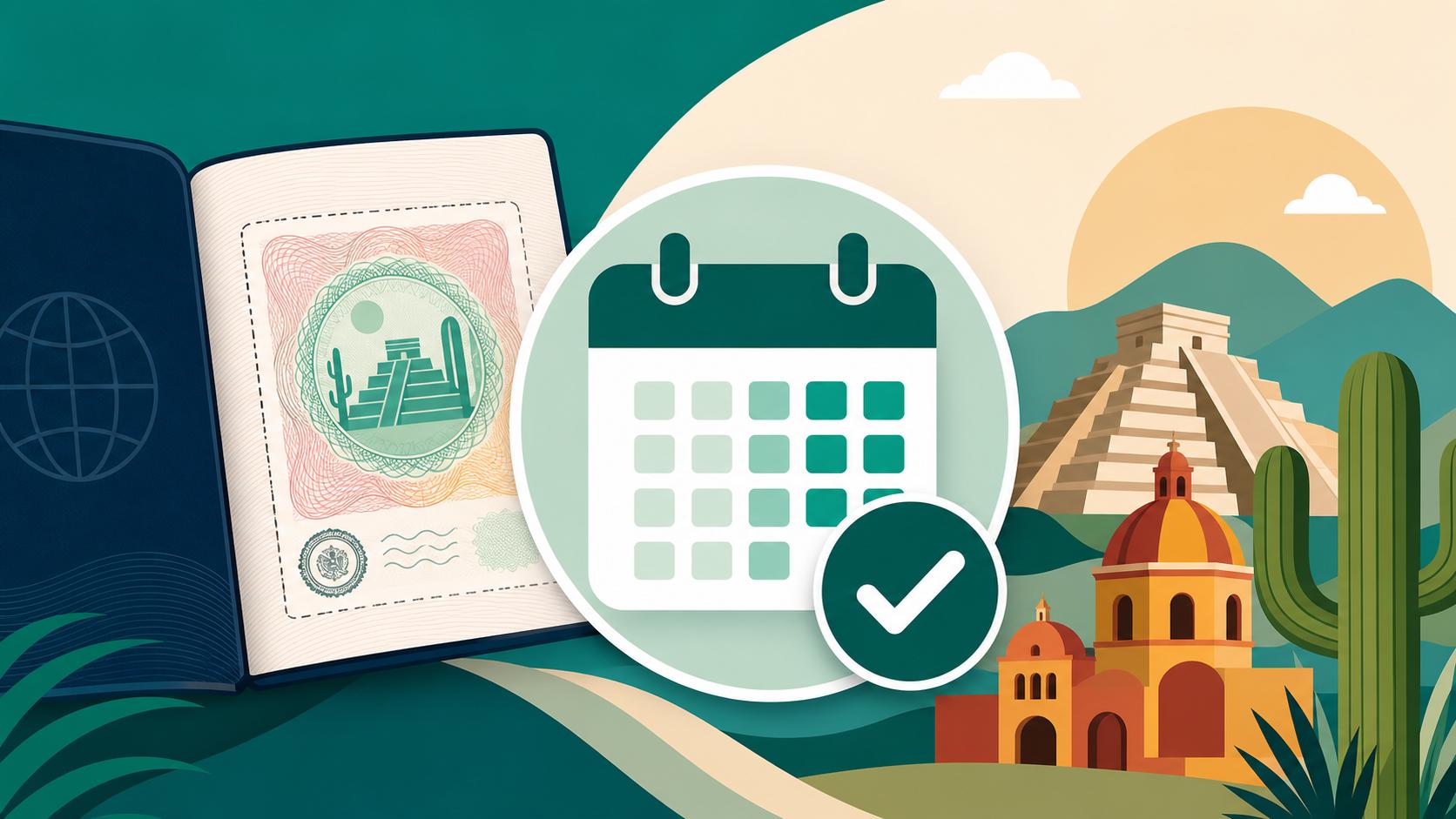
When you successfully complete your interview at a Mexican consulate abroad, the official will print a visa sticker and place it in your passport. This is not your residency card; it is essentially a "golden ticket" that grants you one-time entry into the country for the specific purpose of becoming a resident. The most common mistake I see new expats make is assuming that the 180-day validity printed on that sticker is the amount of time they can live in Mexico. In reality, that date refers strictly to your window of opportunity to cross the border.
The Consulate Phase and the Birth of Your Sticker
The process begins outside of Mexico. Whether you are applying for a Mexico Temporary Resident Visa: Comprehensive Guide for Expats (2026 Update) or a permanent one, the consulate’s job is to verify your financial solvency and intent. Once they approve you, they issue the sticker. This sticker typically has a validity of 180 days from the date of issuance.
Think of this as the "use by" date for the sticker itself. If you do not cross a Mexican border point and present this sticker to an immigration officer within those 180 days, the sticker becomes void. You cannot "renew" the sticker; you would have to pay the consulate fees again, book a new appointment, and re-submit all your financial documents. This is why timing your consulate appointment is so critical. If you aren't planning to move for another eight months, do not go to the consulate today.
The 180-Day Countdown: Why It Matters
The 180-day window is designed to give you enough time to wrap up your affairs in your home country, sell your car, pack your house, and arrange travel. However, many people get lulled into a false sense of security. I’ve met expats who waited until day 175 to fly down, only to have their flight canceled or delayed, putting their entire residency at risk.
It is also important to understand that the sticker is for a single entry. Once you use it to enter Mexico, its job is done. You cannot use that sticker to leave and re-enter. If you cross the border, receive your entry stamp, and then immediately fly back home to grab more boxes before finishing your paperwork at the local immigration office, you have technically "burned" your visa. You would then likely be entered as a tourist on your return, which complicates your residency process immensely.
Crossing the Border: The Transformation from Sticker to Canje
The moment you stand in front of the INM (Instituto Nacional de Migración) officer at the airport or land border, your status changes. This is the "Canje" or exchange process. This is where most of the administrative "horror stories" happen, usually because of a small misunderstanding at the immigration booth.
Air vs. Land Entry Nuances
If you are flying into a major hub like Mexico City or Cancun, you will likely encounter an automated gate or a digital process. However, as a residency applicant, you must be extremely careful. You need to ensure the officer knows you are entering for residency, not as a tourist. In 2026, Mexico has largely moved toward a digital FMM (Forma Migratoria Múltiple), but for those in the residency process, the officer must specifically mark your entry as "Canje" in the system.
If the officer accidentally marks you as a "Visitante" (tourist), you are legally a tourist. You cannot proceed with your residency paperwork until that is fixed, which often involves a stressful trip back to the airport or a specialized "regularization" process. Always check your digital record or your passport stamp immediately. If it says 180 days (the standard tourist stay), and you are there for residency, you need to speak up right then and there. Understanding Mexico Immigration Terminology 101: FMM, CURP, RFC and Other Essentials will help you communicate clearly with the officials during this high-stakes moment.
The 30-Day Window to Start Your Exchange
Once you have successfully entered Mexico and the officer has acknowledged your visa sticker, a second, much shorter clock starts. You have exactly 30 calendar days from your date of entry to show up at a local INM office to begin the "Canje" process. This is where you exchange that passport sticker for a plastic residency card.
This 30-day window is non-negotiable. If you arrive in Mexico and decide to take a three-week vacation at a resort before heading to your new home city to start paperwork, you are cutting it dangerously close. I always advise people to visit the INM office within the first week of arrival. The process involves submitting an application form, paying rights fees at a local bank, and eventually getting your fingerprints and photos taken.
Essential Requirements for the Canje Process
Walking into an INM office can feel like entering a different dimension where the rules change based on who is behind the desk. To survive, you need to be over-prepared. The "Canje" requires several documents that you should have organized before you even leave your home country.
| Document Required | Purpose | Veteran Tip |
|---|---|---|
| Valid Passport | Proof of identity | Make at least 3 high-quality color copies of every page. |
| Visa Sticker | The entry permit | Ensure the entry stamp is clearly visible on the opposite page. |
| FMM (Digital or Paper) | Proof of legal entry | Download and print your digital FMM before going to INM. |
| Proof of Address | Utility bill (CFE or Water) | Must be less than 3 months old; it doesn't need to be in your name. |
| Formato de Solicitud | The official application | Filled out online and printed; signatures must match your passport. |
| Payment Receipts | Proof you paid the fees | Paid at a Mexican bank (not online) before your appointment. |
In many cases, the INM office will require your documents to be translated into Spanish if they weren't issued in Mexico. For official birth certificates or marriage licenses needed for family-based residency, I highly recommend using RushTranslate to ensure the translations meet the "perito traductor" (certified translator) standards often expected by Mexican bureaucracy. This avoids the frustration of being turned away after waiting three hours in line because of a minor translation error.
Navigating the INM Office and Finalizing Your Residency
The final step of the journey is Surviving the INM Office: Tips for a Smooth Visa Processing Day. Each office in Mexico—whether you are in the heat of Merida or the bustle of Mexico City—operates slightly differently. Some require appointments booked weeks in advance online, while others still operate on a "first-come, first-served" basis where people start lining up at 5:00 AM.
Managing Insurance and Health Requirements
While the INM office itself doesn't always ask for your insurance policy during the "Canje" phase, many consulates require it during the initial sticker application to prove you won't be a burden on the public system. Even after you have your card, navigating the Mexican healthcare landscape is a priority. Many expats opt for international coverage through Cigna Global to ensure they have access to private hospitals like ABC in CDMX or Star Médica in Queretaro. Having this in place before you arrive is one less thing to worry about during your first 30 days.
Actually getting your card involves a process of "huellas" (fingerprints). You can read more about what to expect during How to Get Your Fingerprints and Photo Taken for Residency (INM Process) so you don't show up with ink-stained fingers or the wrong outfit. Once the fingerprints are done, some offices issue the card the same day, while others may take a few weeks. During this waiting period, you are technically in a "process" status and should generally avoid leaving the country unless you obtain a specific exit/re-entry permit.
Why You Can't Ignore the Deadlines
I cannot emphasize enough how strict these windows are. If your 180-day entry window expires, your sticker is dead. If your 30-day Canje window expires, your status becomes irregular. If you find yourself in a situation where you've missed a deadline, do not simply hide and hope for the best. There are Mexico's Regularization Programs: Giving Illegal Stays a Second Chance that can sometimes help, but they are often more expensive and time-consuming than just following the original rules.
The transition from tourist to resident is a marathon, not a sprint. The 180-day entry window is just the first leg. By understanding that the sticker is merely a bridge to the plastic residency card, you can plan your move with precision. Make sure you have your Health Insurance in Mexico: How Expats Can Get Coverage (2027) sorted out early, and keep your paperwork organized in a dedicated folder. Mexico is a beautiful place to call home, but she demands respect for her administrative processes.
Comparison of Residency Types and Their Validity
Not all residency paths are equal when it comes to how long you can stay after that initial sticker is exchanged. It’s helpful to know what you’re aiming for before you even step into the consulate. Many people start with temporary residency and eventually move toward Upgrading from Temporary to Permanent Residency: What You Need to Know.
| Residency Type | Initial Card Validity | Renewal Requirement | Path to Citizenship |
|---|---|---|---|
| Temporary (Residente Temporal) | 1 Year | Renew for 1, 2, or 3 years | After 5 years of residency |
| Permanent (Residente Permanente) | Indefinite | No renewal (only info updates) | After 2 or 5 years (varies) |
| Student (Residente Temporal Estudiante) | 1 Year | Must renew annually | Generally doesn't count toward citizenship |
Choosing between Temporary vs Permanent Residency in Mexico: Key Differences and Benefits is a decision you should make based on your long-term goals. If you know you want to stay forever and you meet the higher financial bars for permanent status, it saves you the hassle of annual renewals at the INM office.
Final Logistics for a Smooth Transition
As you prepare to use your 180-day entry window, remember that the "Canje" process also triggers your eligibility for other local essentials. You’ll want to look into How to Get a CURP as a Foreigner: The Mexican ID Number Explained, as this number is the key to everything from opening a bank account to getting a local phone plan.
Also, consider the timing of your move. If you enter Mexico in December, you might run into "Guadalupe-Reyes" holiday closures, where INM offices operate on limited schedules or close entirely for two weeks. This can eat into your 30-day "Canje" window. Always check the Mexican holiday calendar before booking your one-way flight. Being an expat here is about learning to dance with the bureaucracy, not fighting it. Stay patient, stay organized, and that plastic card will be in your wallet before you know it.
Disclaimer
This guide is for informational purposes only and does not constitute legal or immigration advice. Mexican immigration laws and the policies of the Instituto Nacional de Migración (INM) are subject to change without notice. Always verify current requirements with the official website of the Mexican government or consult with a certified immigration attorney before making travel or residency plans.