Can I Apply for Mexican Residency at Any Consulate? Choosing the Right One
Trying to secure a residency appointment at a Mexican consulate can feel like playing a high-stakes game of whack-a-mole where the rules change every time you swing. I remember the sheer panic of refreshing the MiConsulado booking page at 2:00 AM, wondering if I should just drive twelve hours to a different state because my local office was booked through next year. This guide solves the confusion around consulate "jurisdiction" and helps you choose the best location for your specific financial situation.
Disclosure: This post may contain affiliate links. We may earn a commission at no extra cost to you if you make a purchase through these links. Read full disclosure.
The Concept of Jurisdiction: Are You Restricted to One Office?
When you first start researching how to move to Mexico, you will likely encounter the term "jurisdiction." In a traditional administrative sense, this means you are technically supposed to apply at the Mexican consulate that services the specific geographic area where you live. For example, if you reside in Seattle, the consulate in Seattle is your "home" office. However, in the world of Mexican immigration, the reality is much more flexible—and sometimes much more frustrating.
Most Mexican consulates in the U.S. and Canada operate with a degree of autonomy. While some strictly enforce the jurisdiction rule, requiring you to show a utility bill or driver’s license from their region, many others are "open." An open consulate will allow an applicant from Florida to fly to Las Vegas or Phoenix for an interview if they can find an available slot. This is a lifesaver when your local office has a six-month waitlist.
However, you must verify this before booking travel. I’ve seen expats show up in Los Angeles with documents in hand, only to be turned away because they lived in San Diego. Always check the specific consulate's website or send a quick email to confirm if they accept out-of-jurisdiction applicants. Knowing this distinction is the first step in Navigating Mexico's Immigration System: Visas, INM Procedures, and Regulations.
Why Consulates Have Different Financial Requirements
One of the most baffling aspects of the Mexican residency process is that the financial requirements are not uniform across all consulates. While the federal government sets the baseline using the UMA (Unit of Measure and Update), each consul has the discretion to interpret these figures. Some offices use the daily UMA, while others might still lean toward the old minimum wage calculations, leading to massive discrepancies in how much money you need to show in your bank accounts.
This is exactly why "consulate shopping" became a thing. If one office requires a monthly income of $4,500 USD for a Mexico Temporary Resident Visa: Comprehensive Guide for Expats (2026 Update), you might find another consulate just a few hours away that only requires $3,800 USD. These variations often depend on the cost of living in the consulate’s home city or simply the internal policy of that specific head consul.
When you are Qualifying for Permanent Residency in Mexico: Paths and Requirements, these differences become even more stark. Some consulates will allow retirees to jump straight to permanent residency if they meet a high enough age and income threshold, while others will insist that everyone starts with temporary residency regardless of their bank balance. This is why understanding Mexico's Residency 2026: New Rules and Financial Criteria Updates is vital before you pick your application spot.
Comparing Popular Consulates for North American Applicants
Because each office is its own "fiefdom," certain consulates have gained reputations within the expat community. Some are known for being "retiree-friendly," while others are notoriously difficult for digital nomads or younger applicants.
High-Volume Border Consulates
Consulates in places like Laredo, McAllen, and Brownsville are often very efficient because they handle a massive volume of applications. They are used to dealing with people who are "border crossing" and often have more frequent appointment openings. The downside? They can be very "by the book" and may have less patience for incomplete paperwork. If you choose a border office, ensure your Mexico Temporary Residency Financial Requirements (2026) are met to the penny.
Inland and "Expat-Favorite" Offices
Consulates in Phoenix, Orlando, and Las Vegas have historically been more flexible with out-of-state applicants. Phoenix, in particular, has a reputation for a streamlined process, often issuing the visa sticker on the same day as the interview. Meanwhile, offices in the Northeast U.S. might have fewer appointments but offer a more relaxed interview environment.
Consulates in Canada
For our Canadian friends, the consulates in Vancouver, Toronto, and Montreal generally follow very strict jurisdiction rules. You will almost certainly need to apply at the office designated for your province. The financial requirements in Canada are also calculated in CAD, and because of exchange rate fluctuations, the "goalposts" for your savings can move. It is always wise to have a buffer of at least 10-15% above the stated requirements to account for these shifts.
| Consulate Region | Jurisdiction Strictness | Appointment Availability | Typical "Vibe" |
|---|---|---|---|
| U.S. Border (Texas/Arizona) | Moderate | High | Fast-paced, efficient |
| U.S. West Coast (CA/WA) | High | Low | Very strict, long waits |
| U.S. Interior (NV/FL/IL) | Low | Moderate | Usually expat-friendly |
| Canada (All Provinces) | Very High | Moderate | Formal, strictly by-province |
The Interview Experience and Language Barriers
A common fear for many expats is the interview itself. Will it be in Spanish? Do I need a translator? Generally, the officers at Mexican consulates in the U.S. and Canada are bilingual. However, their primary goal is to verify that your intentions for moving to Mexico match your visa type.
They will ask questions like, "Why do you want to live in Mexico?" or "What do you plan to do for work?" If you are applying for a non-lucrative visa (meaning you won't be working for a Mexican company), you must be very clear that your income comes from abroad. This is where Mexican Consulate Appointments: Tips to Succeed in Your Visa Interview preparation really pays off.
If you do not speak Spanish, don't worry too much at the consulate stage. However, you should still show respect for the culture. A simple "Buenos días" goes a long way. The real language hurdle usually comes later, once you are in Mexico trying to finish the process at the INM office. For the consulate phase, your focus should be on the accuracy of your documents.
Essential Documentation and the Role of Professional Services
Regardless of which consulate you choose, your paperwork must be flawless. Any discrepancy between your passport name and your bank statements can result in an immediate rejection. This is where many expats get tripped up.
Certified Translations
Most consulates require that any documents not in Spanish (like marriage certificates or bank summaries) be translated. Some offices are fine with a basic translation, but many are now requiring "certified" translations. Using a service like RushTranslate ensures that your documents meet the official standards required by the Mexican government. I’ve seen people lose their appointment slots because they tried to use a free online translator for their marriage license—don't be that person. You can learn more about this in our guide on How to Translate Documents for Your Mexican Visa Application (Certified Translations).
Health Insurance Evidence
While not every consulate asks for proof of health insurance during the initial interview, it is becoming increasingly common, especially for those applying under the "Family Unity" or "Retiree" categories. They want to see that you won't become a burden on the Mexican public healthcare system (IMSS). Having a policy from a global provider like Cigna Global can serve as strong evidence of your financial self-sufficiency. It shows the consul that you are prepared for Medical Emergencies in Mexico: What Expats Should Know and Prepare.
Navigating the MiConsulado Booking System
Choosing the right consulate is only half the battle; you actually have to get through the door. The MiConsulado system (accessible via the web or WhatsApp) is the centralized portal for booking appointments. It is notoriously glitchy and often shows "no appointments available" for months on end.
Here is a veteran tip: appointments are often released in "blocks." Many consulates release their next month’s slots on the last Friday of the current month or every Monday morning at 9:00 AM local time. If you are willing to travel, you can check multiple locations within the portal. Just remember that if you find a slot in a different city, you need to be 100% sure they don't have a strict jurisdiction policy.
Once you secure that golden ticket, your next step is preparing for the day of the appointment. You'll need to know How to Get Your Fingerprints and Photo Taken for Residency (INM Process), as the consulate will take your biometrics and place a visa sticker in your passport. This sticker is only valid for 180 days and only allows for one entry into Mexico to start your "canje" (exchange) process.
Final Steps: From Consulate Sticker to Residency Card
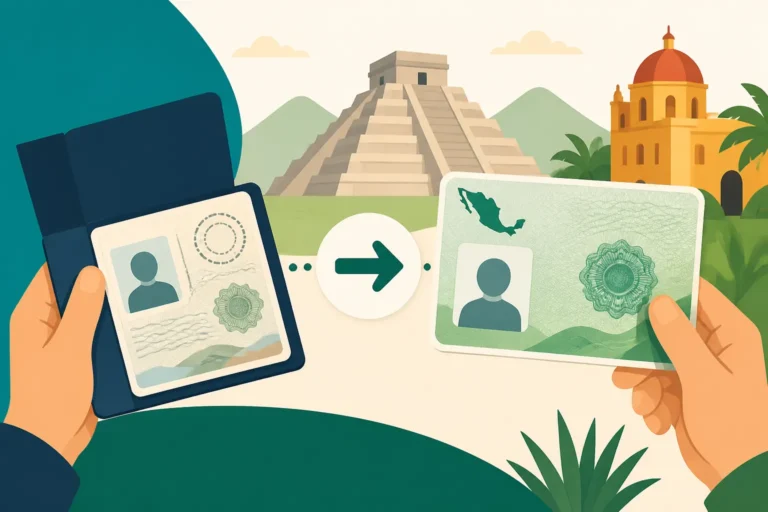
It is a common misconception that the consulate gives you your residency card. They do not. They give you a "Visa de Residente Temporal" sticker that takes up a full page in your passport. Once you cross the border into Mexico with that sticker, you have 30 days to report to the local INM (Instituto Nacional de Migración) office in your new Mexican hometown to exchange that sticker for a plastic ID card.
This second phase is where the "real" Mexico begins. You will need to deal with more paperwork, more fees, and the dreaded Understanding Mexico's UMA: How It Determines Financial Requirements again, as the fees are calculated based on these units. The choice of consulate affects this because some consulates are better at explaining this transition than others. If you go to a consulate that is familiar with expats, they will often give you a "handout" explaining exactly what to do when you land in Mexico. This advice is invaluable for Surviving the INM Office: Tips for a Smooth Visa Processing Day.
Ultimately, the "right" consulate is the one that has an available appointment and whose financial requirements you can comfortably meet. If you have the luxury of time, browse expat forums to see the "latest report" from specific offices. Procedures change fast in Mexico, and what was true for a consulate in January might be different by June.
Disclaimer
The information provided in this article is for educational and informational purposes only and does not constitute legal or immigration advice. Mexican visa requirements and consulate policies are subject to frequent changes without notice. While we strive to provide the most up-to-date information, readers are strongly encouraged to verify all requirements directly with the official website of the Mexican Consulate where they intend to apply or to consult with a certified immigration professional. We are not responsible for any delays, denials, or issues arising from the use of this guide.