Temporary Import Permit Refund: How to Get Your Car Deposit Back when Exiting Mexico
Leaving Mexico after a long road trip or a period of residency is bittersweet, but forgetting to stop at the Banjercito booth can turn that nostalgia into a financial nightmare. I once drove halfway through Texas before realizing my permit sticker was still stuck to the windshield, and the stress of that $400 mistake was a lesson I don't want you to repeat. This guide explains exactly how to navigate the Temporary Import Permit refund process to ensure your deposit returns safely to your pocket.
Disclosure: This post may contain affiliate links. We may earn a commission at no extra cost to you if you make a purchase through these links. Read full disclosure.
Understanding the Temporary Import Permit Deposit
When you first drive your foreign-plated vehicle across the border, the Mexican government requires you to obtain a Temporary Import Permit (TIP). This isn't just paperwork; it involves a significant guarantee deposit intended to ensure that you actually take the car back out of the country when you leave. If you fail to "export" the vehicle officially by visiting a Banjercito module at the border, the government keeps that money, and your vehicle is technically flagged as being illegally in the country.
The deposit amount is not a flat fee. It varies based on the age of your vehicle, reflecting the potential value of the car if it were to be sold illegally within Mexico. For many expats, this deposit represents a chunk of their travel budget that they expect to see again. Understanding how this money is held and returned is the first step in successful cross-border financial management.
Why Mexico Requires a Guarantee Deposit
The Mexican authorities use the deposit as a deterrent against the illegal sale of foreign cars. In the past, it was common for people to bring high-value vehicles from the U.S. or Canada and leave them in Mexico permanently without paying the necessary import taxes. By tying a financial consequence to the permit, the Aduana (Customs) ensures that the vast majority of vehicles are properly accounted for upon exit.
It is also important to note that the TIP is linked to your immigration status. If you are on a tourist permit, your TIP is usually valid for 180 days. If you have a Mexico Temporary Resident Visa: Comprehensive Guide for Expats (2026 Update), your TIP is typically valid for the duration of your residency. Failing to cancel the permit doesn't just lose you money; it can also complicate your future residency renewals or entries into the country.
Current Deposit Rates for 2026
The deposit amounts have remained relatively stable, but they are always calculated in U.S. Dollars, even if you are paying with a card from another country. The following table provides a breakdown of what you can expect to pay at the point of entry and what should be returned to you upon a successful exit.
| Vehicle Model Year | Guarantee Deposit Amount (USD) |
|---|---|
| 2007 and Older | $200 USD |
| 2008 – 2012 | $300 USD |
| 2013 – Newer | $400 USD |
The Step-by-Step Process to Cancel Your TIP at the Border
The most critical thing to remember is that you must cancel your permit before you leave Mexico. Once you have crossed the bridge into the United States or passed the final Mexican checkpoint into Guatemala or Belize, it is often too late or extremely difficult to turn around. The Banjercito modules are almost always located a few miles before the actual physical border line or right at the final inspection point.
You should allow at least 30 to 45 minutes for this process. While it usually takes only ten minutes at the window, lines can be long during peak travel seasons like Christmas or Semana Santa. I have stood in line at the Laredo crossing for over an hour, watching the clock tick, so give yourself a buffer.
Locating the Banjercito Module
Look for signs that say "Banjercito" or "Cancelación de Permiso." At major crossings like Tijuana, Nuevo Laredo, or Colombia, these modules are well-marked. However, at smaller crossings, they can be tucked away in a corner of a large administrative building. You are looking for the "CIITEV" (Centro de Importación e Internación Temporal de Vehículos) office.
When you arrive, do not just park and walk in. You often need to drive your vehicle through a specific lane where an official will verify your VIN (Vehicle Identification Number) and remove the sticker from your windshield themselves. In some locations, they may ask you to remove it, but it is always best to let the official lead the process. They will use a handheld device to scan the barcode on the permit and the VIN plate to ensure everything matches.
Required Documentation for Cancellation
To get your Temporary Import Permit Refund: How to Get Your Car Deposit Back when Exiting Mexico, you need to have your original documents ready. If you lost your paperwork during your stay in Mexico, the process becomes much more complicated and may require a police report.
Ideally, you should have:
- The original TIP document (the paper part).
- The TIP sticker (still attached to the windshield).
- Your passport.
- Your residency card or FMM (tourist permit).
- The credit or debit card used to pay the deposit.
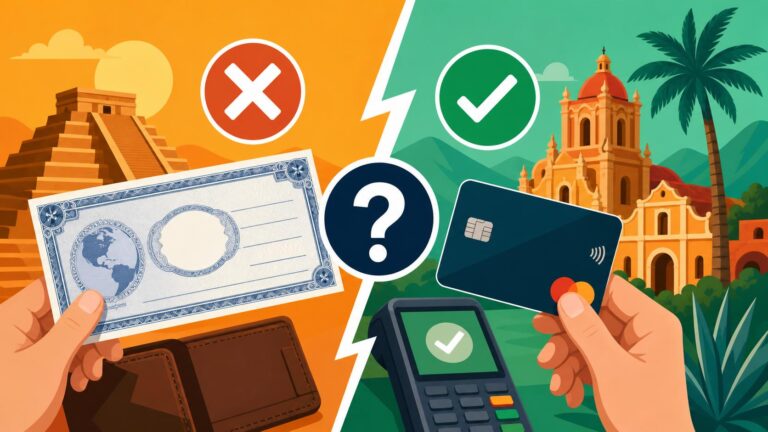
If you paid the deposit in cash, you will receive the refund in cash. If you paid by card, the refund must go back to that same card. This is where many expats run into trouble if their card has expired or been cancelled since they entered Mexico. In such cases, the refund might still be processed by your bank, but it takes much longer to appear in your account. Using a flexible digital account like Wise can be a lifesaver here, as their virtual card details remain accessible even if a physical card is lost, provided the account itself is active.
Receiving Your Refund: Timing and Methods
The method of your refund is dictated by how you paid. This is a strict rule with Banjercito. They do not have the authority to change the refund method at the border. If you are worried about the exchange rate or bank fees, it is wise to plan your payment method before you even enter Mexico.
Managing these cross-border transactions is part of the broader reality of Banking in Mexico: Complete Guide for Foreigners. You want to ensure that the $200-$400 coming back to you isn't swallowed by high foreign transaction fees or poor conversion rates offered by traditional banks.
Credit Card vs. Cash Refunds
If you paid by credit card, the official will give you a receipt showing that the cancellation was successful. This receipt is your "get out of jail free" card. Keep it forever. It proves that you exported the vehicle. The actual money usually takes 2 to 10 business days to appear on your credit card statement. It is processed as a "void" or a "refund" in USD.
If you paid in cash, you will receive your cash back right then and there. However, be aware that you will receive it in the same currency you paid. If you paid in USD, you get USD. If you paid in Pesos (which is sometimes possible at certain modules, though USD is the standard for the deposit), you get Pesos. Most travelers prefer the card method to avoid carrying large amounts of cash across the border.
Dealing with Currency Exchange Fluctuations
Since the deposit is held in USD but your bank account might be in CAD, EUR, or GBP, you are at the mercy of the exchange rate on the day of the refund. If the USD has weakened against your home currency since you entered Mexico, you might technically receive back less than you "spent."
This is why many veteran expats use Wise to handle these specific transactions. By paying the deposit with a USD balance in a Wise account, you ensure that you receive exactly $400 back into your $400 balance, bypassing the hidden markups traditional banks often add to "international" refunds. For those managing larger portfolios or long-term investments, keeping an eye on these small leaks is as important as choosing the right platform for Investing in Mexico: Opportunities in Real Estate, Stocks, and Beyond. Some expats even use Interactive Brokers to hedge their currency exposure if they are moving significant amounts between the US and Mexico regularly.
What to Do If You Forgot to Cancel Your TIP
It happens to the best of us. You’re tired, the kids are screaming, and the line for the bridge looks three hours long, so you just keep driving. If you realize your mistake after you’ve already crossed, you are in a difficult legal position. The Mexican government assumes the car is still in Mexico.
If you find yourself in this situation, you cannot simply mail the sticker back. The vehicle must be physically present at a Banjercito module to be scanned out. This means you will have to drive back to the border, enter Mexico again (which might require a new tourist permit or visa check), and go to the module.
The Consequences of a Non-Cancelled Permit
The most immediate consequence is the loss of your deposit. Banjercito will keep the $200-$400. However, the long-term consequences are worse. You will be barred from getting another TIP for any other vehicle in the future until the old one is cleared.
Furthermore, if you are applying for Mexico Permanent Residency Explained: A Complete Guide (2027), an open TIP on your record can cause delays. The immigration system and the customs system are increasingly linked. An "abandoned" vehicle on your record suggests a lack of compliance with Mexican law.
Can You Cancel a TIP from Abroad?
Technically, no. There is no official "remote cancellation" process for a standard TIP. However, there are extreme exceptions, such as if the car was totaled in an accident or stolen. In these cases, you must provide a "Certificado de Pérdida Total" from an insurance company or a formal "Denuncia" (police report) from the Mexican authorities, translated and legalized.
This process is a bureaucratic nightmare that involves the SAT (Mexico's tax authority) and can take months. It is far easier to ensure you have Car Insurance in Mexico: Understanding Coverage and Costs that includes legal assistance to help you navigate these filings if a disaster occurs. Even with insurance, you may still lose the deposit, as the deposit is a guarantee of export, and a destroyed car cannot be exported.
Financial Tips for Cross-Border Expats
Living between two countries requires a different financial mindset. You aren't just managing a budget; you are managing a multi-currency life. Small things like the TIP deposit are part of a larger picture that includes your Monthly Budget in Mexico: Living Well on $1,500, $2,500, and $4,000.
When you get your refund back, don't just let it sit in a low-interest checking account. Many expats use these "windfalls" to fund their next cross-border move or reinvest them into their primary accounts.
Managing Your Refund with Modern Banking
Once the refund hits your account, consider how to use it effectively. If you are a high-net-worth individual or someone planning for a long-term retirement in Mexico, you might use platforms like Interactive Brokers to move that money into diversified assets. Interactive Brokers is particularly popular among expats because it allows for easy management of international equities and multi-currency balances, which is essential when your life spans the border.
Similarly, if you are looking to move the refund money back into Mexican Pesos for your next trip, Wise offers some of the best mid-market rates available. Avoid the "Cambio" booths at the border if you can; they often offer rates that are 5-10% worse than what you can get digitally.
Long-term Financial Planning in Mexico
The TIP is just one small part of the legal and financial requirements for living abroad. As you settle in, you'll need to consider Taxes in Mexico for Expats: A Complete Guide to Income Tax and More and how your vehicle status affects your tax residency.
Keeping a clean record with Banjercito and Aduana is vital. It shows you are a responsible resident who respects the local regulations. This reputation makes everything from opening a bank account to renewing your residency much smoother. Always think of the TIP deposit not as a "fee," but as a temporary loan to the Mexican government that requires a strict protocol to reclaim.
Summary of Best Practices for TIP Refunds
To ensure you get every penny back, follow this checklist every time you leave:
- Plan your exit route: Ensure the border crossing you choose has a Banjercito module (most do, but some tiny rural crossings may not).
- Check opening hours: Some modules are not 24/7. If you arrive at 3:00 AM, you might have to wait until 7:00 AM to cancel your permit.
- Keep the receipt: This is the only proof that the car left. If there is a system glitch later, this paper is your only defense.
- Monitor your statement: If the refund doesn't appear within 15 days, contact your bank and Banjercito immediately.
- Use the right tools: Use Wise for the initial payment to simplify the refund and avoid conversion fees.
Living as an expat in Mexico is an incredible adventure, but it requires a bit of "administrative hygiene." By treating the TIP cancellation as the most important part of your exit journey, you protect your bank account and your ability to return to this beautiful country whenever you wish. Whether you are managing your daily expenses or looking into Investing in Mexico: Opportunities in Real Estate, Stocks, and Beyond, staying informed is your best strategy for a stress-free life.
Disclaimer
This guide is for informational purposes only and does not constitute legal or financial advice. Immigration and customs regulations in Mexico are subject to change, and specific requirements may vary based on individual circumstances or changes in government policy. Always verify the latest requirements with the official Banjercito or SAT websites before traveling.