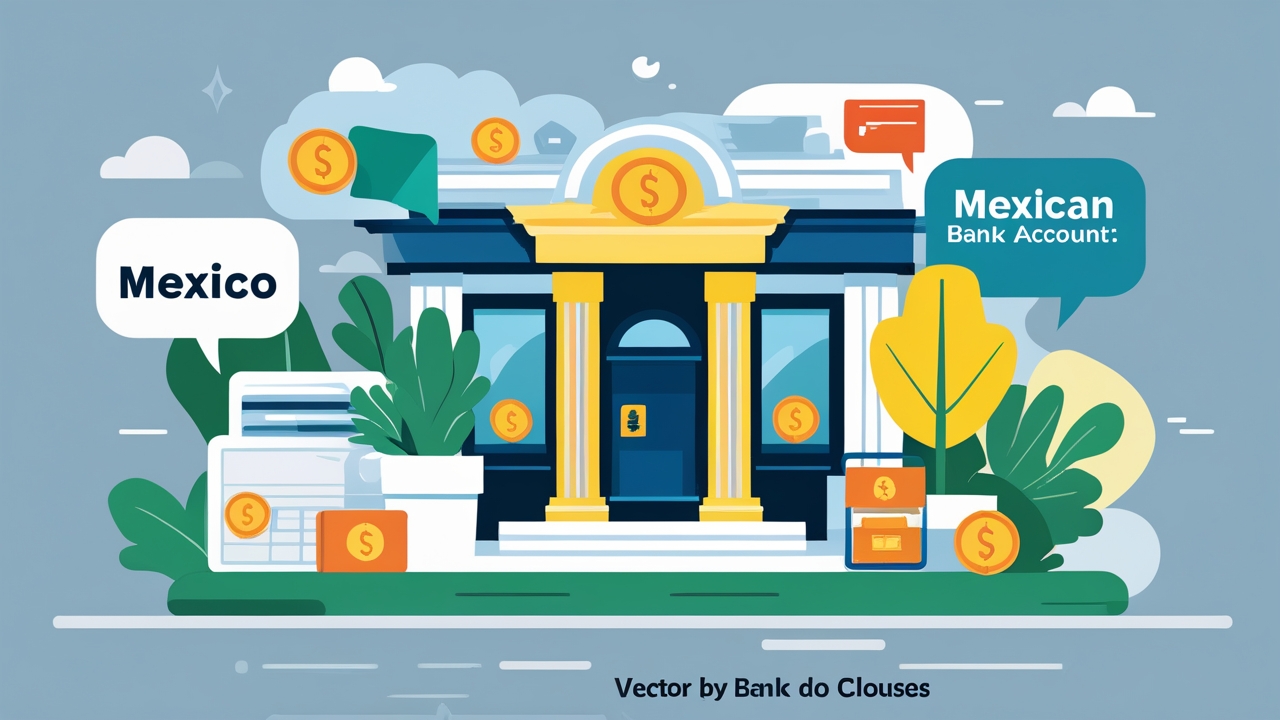
Closing a Mexican Bank Account: What to Do When Leaving the Country
One of the most stressful experiences I faced when preparing to leave Mexico wasn't packing the boxes or saying goodbye to my favorite taco stand; it was the realization that closing my bank account was going to be an administrative marathon. I vividly remember sitting in a plastic chair at a Banorte branch for four hours, clutching a numbered ticket, only to be told the "sistema" was down and I’d have to come back tomorrow. This guide is designed to save you from that frustration and ensure your financial exit from Mexico is as clean and penalty-free as possible.
Disclosure: This post may contain affiliate links. We may earn a commission at no extra cost to you if you make a purchase through these links. Read full disclosure.
Why You Can’t Just Walk Away From Your Mexican Bank Account
It is a common misconception among foreigners that simply withdrawing all your funds and flying home will effectively "close" your account. In many countries, an empty account with no activity eventually gets purged. In Mexico, this is a dangerous gamble. Mexican banks are notorious for maintaining accounts in an "active" status even with a zero balance, which allows monthly maintenance fees to accumulate quietly in the background.
I have known expats who left Mexico thinking they were done, only to return years later for a vacation and find they owed several thousand pesos in back-fees and interest. Because your account is linked to your How to Get a CURP as a Foreigner: The Mexican ID Number Explained, these debts can theoretically follow you if you ever decide to apply for residency again or conduct business in the country. Furthermore, an open, unmonitored account is a prime target for identity theft. If someone gains access to your old account and uses it for suspicious transactions, your name is the one on the legal hook with the Mexican tax authorities (SAT).
Closing the account properly also ensures you have a final "Estado de Cuenta" (Statement) showing a zero balance and a "Carta de Cancelación" (Cancellation Letter). These documents are vital for your own records, especially if you need to prove to your home country's tax office that you no longer hold foreign assets. Understanding Income Tax Basics for Expats: Understanding Mexico’s Tax System is crucial here, as you want to ensure your final tax obligations are settled before you sever your banking ties.
Preparing for the Big Shutdown: A Strategic Checklist
Before you ever set foot in the bank branch, you need to do a significant amount of legwork. The goal is to walk into that branch with an account that is "clean"—meaning no pending transactions, no active direct deposits, and no linked insurance policies. Mexican banks often use the presence of a single pending "cargo" (charge) as a reason to deny a cancellation request on the spot.
Start by auditing your Monthly Budget in Mexico: Living Well on $1,500, $2,500, and $4,000 to identify every recurring payment. This includes your CFE electric bill, your Telmex internet, and any local gym memberships. You must cancel these or move them to a different payment method at least one full billing cycle before you close the account. If a utility company attempts to pull a payment two days after you close the account, the bank might reject the closure or, worse, let the charge go through and re-open the account in an overdraft state.
Next, you need to decide how to move your remaining capital. If you are moving a significant amount of money—perhaps from a home sale—refer to our guide on Moving Money Out of Mexico: How to Repatriate Funds from Property Sales for the legal nuances. For most expats, the most efficient way to drain the account to a manageable "walking around" balance is through Wise. I personally used Wise to send my final few thousand dollars back to my U.S. account because the exchange rates provided by Mexican banks at the teller window are historically poor. If you have been using your bank's brokerage arm for local investments, you may want to transfer those positions to a global platform like Interactive Brokers before initiating the account closure, as liquidating everything into a single checking account can sometimes trigger internal fraud alerts at the bank.
| Transfer Method | Typical Speed | Best For | Pros | Cons |
|---|---|---|---|---|
| Wise | 1-2 Business Days | Mid-range balances | Excellent rates, transparent fees | Requires initial setup/verification |
| International Wire (SWIFT) | 3-5 Business Days | Very large sums | Direct bank-to-bank | High fees, poor exchange rates |
| ATM Withdrawal | Instant | Small "exit" cash | Convenient | Daily limits, high foreign fees |
| Interactive Brokers | 2-5 Business Days | Investment portfolios | Professional grade, low cost | Higher learning curve |
The In-Branch Experience: Navigating the Red Tape
In Mexico, banking is still a very face-to-face endeavor. You cannot, under almost any circumstances, close a standard "Cuenta de Ahorros" or "Cuenta de Cheques" over the phone or via an app from abroad. You must physically go to the branch where you opened the account—your "Sucursal de Origen"—or at the very least, a branch within the same banking region.
When you arrive, ask to speak with an "Ejecutivo de Cuenta" specifically for a "Cancelación de Cuenta." Do not go to the teller (cajero) for this; they do not have the authority to process the paperwork. You will need to bring your physical residency card (Residente Temporal or Permanente), your passport, and your "Token" (the physical device or the phone with the digital app). If you are a U.S. citizen, keep in mind your requirements for Reporting Mexican Bank Accounts to the IRS: FATCA/FBAR for US Expats, as you will want that final statement to show the account is closed for your next tax filing.
The executive will likely try to talk you out of it. They might offer to waive fees for a year or suggest you just leave a small amount in there "just in case." Be firm but polite. Use your Online Banking in Spanish: Overcoming Language Barriers in Finance skills to insist on the closure. They will print out a "Solicitud de Cancelación." Read this carefully. Ensure the account number matches exactly and that it states the account is being closed at the client's request with a balance of zero. Once you sign it, they should provide you with a "Comprobante de Cancelación" with a "Folio" (tracking number). Do not leave the building without this paper. It is your only legal proof that the account no longer exists.
Handling the Remaining Balance and Final Logistics
One of the trickiest parts of closing the account is getting the balance to exactly zero. If you have 43.20 pesos left, the system won't let the executive close the account. Usually, the easiest way is to have the executive "withdraw" the remaining cents at the desk or transfer them to a friend's Mexican account via SPEI right there in front of them.
If you had any credit cards with the same bank, these must be canceled first. You cannot close a checking account if there is an active credit card linked to your profile, even if the card has a zero balance. This is a common sticking point that sends many expats home empty-handed. For more on how these different accounts interact, see our comparison of the Best Banks in Mexico for Expats: Comparing Fees and Services.
If you were a property owner, you might also have a Do You Need a Mexican Will? Estate Planning for Expats that mentions this specific bank account. While closing the account doesn't invalidate the will, it’s a good idea to update your legal records once the account is gone to avoid confusion for your heirs.
Finally, remember that if you have been using Interactive Brokers or Wise for your international moves, you should update those platforms with your new home-country banking details immediately after the Mexican account is closed. This prevents any accidental automated attempts to pull funds from a non-existent Mexican account, which could lead to "failed payment" fees on those platforms. Walking out of that bank with your stamped cancellation letter is a massive weight off your shoulders—it signifies the official end of your financial residency in Mexico and lets you start your next chapter with a clean slate.
Disclaimer
The information provided in this guide is for informational purposes only and does not constitute legal, financial, or tax advice. Banking regulations and procedures in Mexico are subject to frequent change. We strongly recommend consulting with a qualified financial advisor or a legal professional specializing in Mexican administrative law before making significant financial decisions or closing international accounts. While we strive to provide accurate and up-to-date information, we cannot guarantee the current validity of specific bank policies or governmental requirements.