Do Mexican Hospitals Require Payment Upfront? How Billing Works for Expats
One of the most terrifying moments for a foreigner is arriving at a Mexican emergency room and being refused treatment until a massive deposit is swiped. I remember handing over three different credit cards while my partner was in severe pain, just to cover the initial admission hold. This guide breaks down exactly how hospital billing works and how to prepare.
Disclosure: This post may contain affiliate links. We may earn a commission at no extra cost to you if you make a purchase through these links. Read full disclosure.
The Harsh Reality of Hospital Admissions in Mexico
Private Hospitals Demand Immediate Payment
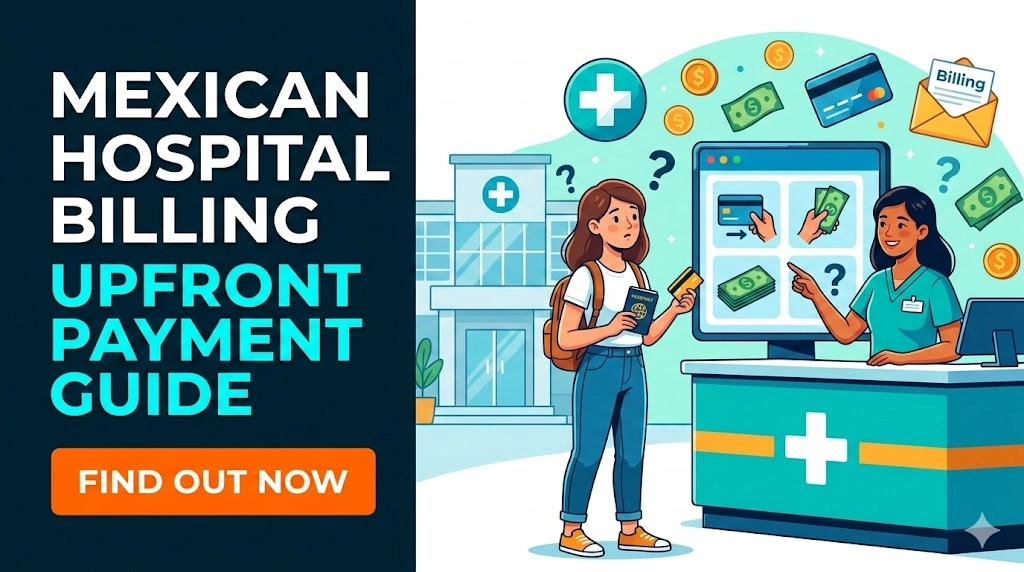
The short answer to whether private Mexican hospitals require payment upfront is an absolute and unwavering yes. Unlike in some Western countries where you are treated first and billed months later, the private healthcare system in Mexico operates strictly on a pay-as-you-go or deposit basis. When you walk through the sliding glass doors of major hospital chains like Hospital Angeles, Star Medica, or San Javier, the first person you will interact with is not a triage nurse, but a financial admissions officer.
Before a doctor even assesses your vitals in a non-life-threatening scenario, you will be required to leave an open credit card voucher or pay a cash deposit. This deposit varies widely depending on the hospital’s prestige and the city you are in, but it is not uncommon for it to range from 10,000 to 50,000 Mexican pesos. This is designed to cover the emergency room fee, basic labs, and the consulting physician’s initial evaluation. If you are admitted for surgery or an overnight stay, the financial demands escalate rapidly. You will be asked to sign a pagaré, which is a legally binding promissory note in Mexico. By signing this document, you are personally guaranteeing the entire cost of your medical care, regardless of what your insurance company might later say. If your credit card declines or you cannot produce the funds, the hospital has the legal right to refuse non-life-saving treatment or direct you to a public facility. Preparing for this reality is why reading about Medical Emergencies in Mexico: What Expats Should Know and Prepare is incredibly important.
Public Hospitals and Emergency Stabilization
The rules change slightly when dealing with public healthcare facilities, such as those run by IMSS, INSABI, or the Mexican Red Cross. Under Mexican federal law, any hospital, whether public or private, is required to stabilize a patient in a true, life-or-death emergency. If you are brought in unconscious after a severe traffic accident, they will intervene to save your life regardless of your immediate ability to pay.
However, stabilization is a very strictly defined medical term. Once your life is no longer in imminent danger, the free or mandatory care stops. If you are in a private hospital, you will be quickly transferred to a public hospital unless you can provide a deposit. If you are already in a public hospital, you will then be subjected to a socio-economic evaluation, and you or your family will be required to pay for the ongoing bed, surgical materials, and medications.
It is a common misconception among new arrivals that public hospitals are entirely free for everyone. While they are heavily subsidized for Mexican citizens who pay into the social security system, foreigners without IMSS coverage are billed as private patients within the public system. Furthermore, public hospitals frequently suffer from severe shortages. Families of patients are routinely handed a prescription and told to run to the local pharmacy to buy their own gauze, IV fluids, and antibiotics before the doctors can proceed with treatment. Understanding Wait Times in Mexico: Public vs Private Healthcare Services will help you weigh whether the cost savings of a public hospital are worth the administrative hurdles.
How Billing Actually Works for Foreigners
Out of Pocket Payments and Insurance Guarantees
The most critical financial concept to grasp is that the vast majority of medical encounters in Mexico will be out-of-pocket expenses that you must settle yourself. Even if you hold a premium international policy from a company like Cigna Global, the hospital will view you as a cash patient until a formal Letter of Guarantee is issued. This letter is a formal contract between the hospital and the insurance provider stating that the insurer takes responsibility for the bill.
Securing a Letter of Guarantee can take anywhere from 24 to 72 hours. During this waiting period, you are entirely responsible for the bills accruing. If you need a CT scan on a Saturday night, you will have to pay for it with your own credit card, keep the official Mexican tax receipt, and file a claim for reimbursement later. Do not expect Mexican hospital administrators to patiently wait for your insurance company in your home country to answer the phone and verify benefits.
To bridge this gap, many expats rely on Cigna Global because of their extensive network of direct-billing hospitals in major Mexican cities, which can expedite the guarantee process. However, if you are relying on travel insurance or a policy without local ties, be prepared to fund your entire hospital stay upfront. You must ensure your policy explicitly covers international care; otherwise, you will be left absorbing the full financial shock. For more details, look into Will Mexican Hospitals Accept International Health Insurance? to see how your specific provider might fare.
Navigating Itemized Bills and Hidden Fees
Mexican hospital bills are notoriously complex and itemized to an extreme degree. When you receive your account statement, you will see charges for every single item used during your stay. This includes individual pairs of latex gloves, individual alcohol swabs, specific syringes, and every single pill dispensed. There is no bundled room and board fee that covers incidental medical supplies; everything is meticulously tracked and charged. Another major shock for expats is understanding that the hospital and the attending doctors operate as separate financial entities. The hospital bills you for the use of the room, the nursing staff, the operating theater, and the medications. However, your primary doctor, the anesthesiologist, the radiologist, and any specialists who consult on your case will issue their own separate bills.
You cannot pay the doctor’s fees through the hospital’s central cashier. Doctors generally require payment directly to them, often via bank transfer or cash. This is where services like Wise become indispensable, allowing you to quickly transfer funds from your home bank account directly to the doctor’s Mexican bank account without exorbitant international wire fees. Knowing Healthcare Costs in Mexico: Doctor Visits, Hospital Stays, and Surgery Expenses will help you anticipate these separate billing tiers so you aren’t caught off guard by a surgeon demanding their fee before you are discharged.
The Discharge Process and Settling the Final Account
The discharge process is a bureaucratic event that can take several hours to complete. You cannot simply get dressed and walk out of the hospital once the doctor says you are cleared to go home. The nursing station must physically send your chart to the billing department, which then conducts a massive audit of every department you interacted with to ensure no charges were missed.
Once the final tally is prepared, you or your family member must go to the cashier to settle the balance. If you placed a credit card deposit upon admission, those funds will be applied against the final bill. If your insurance company successfully issued a Letter of Guarantee, you will only be responsible for paying your deductible or co-insurance at this time. However, if the insurance has not come through, you must pay the entire balance in full before the hospital security will allow you to leave the premises.
If the final bill exceeds your credit card limits, you will find yourself in a very stressful negotiation. Hospitals will not offer payment plans to foreigners without significant local collateral or a Mexican guarantor. Expats frequently have to call family members back home to wire money, which can delay discharge by days. During this time, the hospital will continue charging you the daily room rate just for taking up the bed while you wait for funds to clear. This is why understanding What If You Get Sick in Mexico Without Insurance? Options and Costs is crucial for your financial survival.
Practical Steps to Prepare for Medical Costs
Managing Your Credit Limits and Cash Reserves
The most immediate and practical step any expat can take is to physically carry multiple credit cards with high available balances. You should actively call your credit card companies before moving to or traveling in Mexico to ensure they will not block a sudden, high-dollar transaction at a foreign hospital due to fraud alerts. It is generally recommended to have access to immediate credit across a few cards specifically earmarked for medical emergencies.
Having a reliable way to move liquid cash is equally important. Setting up an account with an international money transfer service like Wise before you actually need it will save you immense stress. When a specialist demands their fee in Mexican pesos directly to their local account, using a service like Wise allows you to execute that transfer instantly from your smartphone, bypassing the multi-day delays of traditional international wire transfers.
It is also prudent to keep a small reserve of physical cash hidden safely at home. If an ambulance is called to your house, private ambulance companies will often demand payment in cash before they will transport you to the hospital. Being financially agile is just as important as knowing Navigating Hospitals and Clinics in Mexico: An Expat’s Guide to Medical Care; the best doctors in the world cannot help you if you cannot pass the financial gatekeepers at the front desk.
Coordinating with International Insurance Providers
If you have a policy with a provider like Cigna Global, your first phone call during an emergency—after calling for an ambulance—should be to their international assistance hotline. You must open a claim file immediately so they can begin the grueling administrative process of contacting the Mexican hospital’s billing department. The sooner this communication starts, the higher the chance you will receive a Letter of Guarantee before it is time to be discharged.
You must also be intimately familiar with your policy’s fine print regarding emergency notifications. Many insurers require you to notify them within 24 to 48 hours of an emergency admission. If you fail to do so because you were distracted by the medical trauma, they can legally deny your claim, leaving you entirely responsible for the Mexican hospital bill. Keep your policy number, the international collect-call phone number, and a copy of your ID in your wallet at all times.
When choosing a policy, actively seek out insurers that have established networks within Mexico. An insurance company that has pre-negotiated rates and administrative workflows with local hospitals will process your billing significantly faster than a company that has never dealt with the Mexican healthcare system. Researching Choosing Private Health Insurance: Local Mexican Plans vs International Coverage will guide you toward the right products for your specific lifestyle and budget.
Mitigating Risks Before You Need a Hospital
The absolute best way to handle Mexican hospital billing is to avoid the hospital entirely through diligent preventive care. Mexico offers excellent, affordable outpatient care, meaning you can see specialists and general practitioners for minor issues before they escalate into emergencies requiring a hefty deposit. Establishing a relationship with a local doctor early on is key. You can learn more about this process by reading Finding English-Speaking Doctors and Specialists in Mexico.
Maintaining your general health, nutrition, and immune system is critical when adjusting to a new climate and environment. Many expats supplement their diets with high-quality vitamins, probiotics, and preventive health products ordered through iHerb, which reliably ships international brands directly to Mexican addresses. Keeping your gut healthy to avoid severe dehydration from local pathogens can literally save you from a costly emergency room visit.
Stocking a robust home pharmacy is another crucial defense. Because many medications are available over the counter in Mexico, you can manage minor ailments at home. By combining healthy lifestyle choices, supplements from iHerb, and a proactive approach to minor illnesses, you drastically reduce your risk of facing the daunting financial admissions desk of a Mexican private hospital.
| Billing Feature | Private Hospitals in Mexico | Public Hospitals (IMSS/Cruz Roja) |
| Upfront Deposit Required? | Yes, absolutely mandatory before treatment. | No, but you must pay for supplies later. |
| Accepts Foreign Insurance? | Yes, but often requires a Letter of Guarantee. | No, out-of-pocket only for non-citizens. |
| Itemized Billing? | Highly detailed; every individual glove and pill is charged. | Less detailed; mainly focused on surgical supplies. |
| Doctor Fees | Billed entirely separately from the hospital facility. | Included in the general socio-economic fee structure. |
| Discharge Process | Cannot leave until balance is strictly zero. | Evaluated by social work department for payment. |
References
Primary sources (official)
- UK Government Foreign Travel Advice – Mexico Health: https://www.gov.uk/foreign-travel-advice/mexico/health
Other helpful sources
- Expat Focus Emergencies in Mexico – A highly realistic breakdown of why emergency treatment costs can skyrocket into tens of thousands of dollars without insurance. https://www.expatfocus.com/mexico/guide/mexico-emergencies
Disclaimer
This article is for informational purposes only and does not constitute formal medical or financial advice. Healthcare costs, hospital policies, and legal requirements in Mexico are subject to change without notice. Always consult with a licensed insurance broker and local medical professionals to understand your specific coverage and financial responsibilities before an emergency occurs.