Air Pollution Concerns: Living in Mexico City with Allergies or Asthma
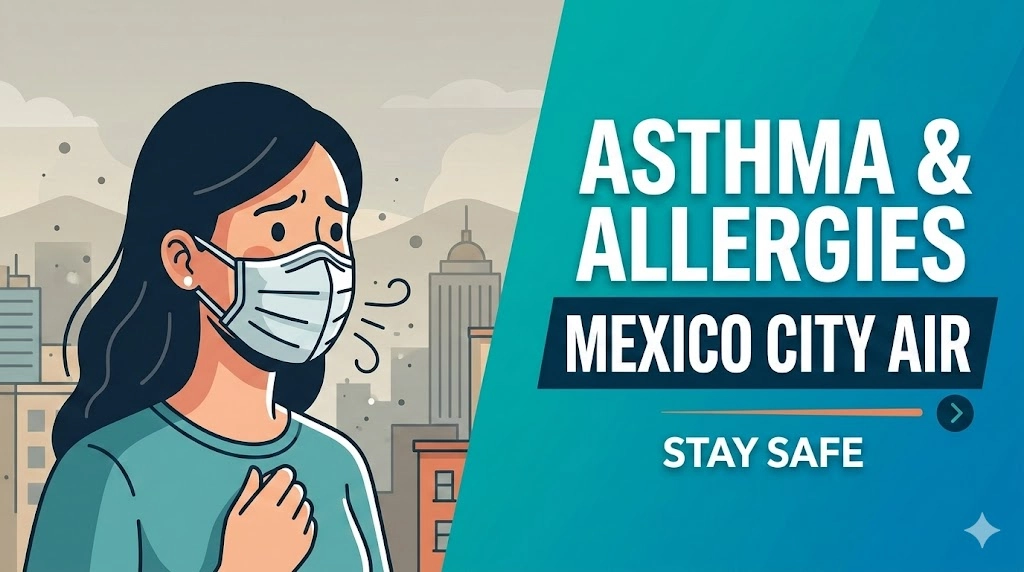
Moving to Mexico City is an incredible cultural experience, but the notorious smog and high altitude can be a nightmare for your respiratory system. I spent my first winter here battling constant sinus infections and a persistent asthma cough before finally learning how to adapt. This guide breaks down exactly how to protect yourself, manage allergies, and handle asthma while living in the capital.
Disclosure: This post may contain affiliate links. We may earn a commission at no extra cost to you if you make a purchase through these links. Read full disclosure.
Understanding Mexico City’s Unique Air Quality Challenges
The Impact of High Altitude and Geography
Mexico City sits at an elevation of over 7,300 feet (2,240 meters) above sea level, nestled in a valley surrounded by towering mountains and volcanoes. This unique bowl-like geography is visually stunning but creates a massive natural trap for vehicular exhaust, industrial emissions, and everyday urban dust. Because the air is significantly thinner at this altitude, vehicles with combustion engines operate less efficiently, producing a higher volume of localized emissions than they would at sea level. If you are already prone to respiratory issues, the combination of thin air and trapped pollutants means your lungs have to work twice as hard just to oxygenate your blood, often triggering dormant asthma or exacerbating seasonal allergies.
For expats arriving from coastal cities, the physical adjustment period can be jarring. You might find yourself out of breath just walking up a flight of stairs in your apartment building. This initial shortness of breath is often confused with an allergic reaction or an asthma flare-up, but it is primarily a physiological response to the elevation. Understanding Altitude Sickness in Mexico: Tips for Adjusting to High Elevations is your first step in diagnosing whether your symptoms are due to the altitude or the actual air quality. It typically takes a few weeks for your body to produce the extra red blood cells needed to adapt, during which time your respiratory system is exceptionally vulnerable to airborne irritants.
Furthermore, the high altitude increases your exposure to ultraviolet (UV) radiation, which acts as a catalyst for chemical reactions in the atmosphere. When volatile organic compounds and nitrogen oxides from car exhaust mix with intense high-altitude sunlight, they create ground-level ozone. Ozone is one of the primary irritants in Mexico City’s smog and is notorious for triggering asthma attacks, chest pain, and throat irritation, even in otherwise healthy individuals.
Thermal Inversions During Winter Months
If you suffer from asthma or severe allergies, you need to be particularly vigilant from November through February. During these winter months, Mexico City frequently experiences a meteorological phenomenon known as a thermal inversion. Normally, warm air at the surface rises, carrying pollutants up and dispersing them into the higher atmosphere. However, during a thermal inversion, a layer of cold air gets trapped beneath a layer of warmer air above it. This acts like an invisible lid over the entire valley, preventing any smog from escaping.
During these inversions, the concentration of particulate matter (specifically PM2.5 and PM10) skyrockets. These microscopic particles are small enough to bypass your body’s natural respiratory defenses and lodge deep within your lungs, or even enter your bloodstream. I learned the hard way that leaving my apartment windows open on a crisp December morning was actually flooding my living space with trapped toxic particulates. This is the time of year when local clinics see a massive spike in respiratory complaints, and when the city government frequently issues environmental contingencies restricting vehicle usage.
Navigating this seasonal shift requires preparation. By late October, you should already have your asthma action plan in place and your allergy medications stocked. Reviewing Weather and Climate Considerations When Choosing Where to Live in Mexico can help you anticipate these seasonal shifts so you are never caught off guard when the first major winter inversion hits the capital.
Practical Strategies for Your Apartment and Daily Routine
Choosing the Right Air Purifiers and Filters
Creating a clean-air sanctuary inside your home is the single most effective step you can take to manage allergies and asthma in Mexico City. You cannot control the smog outside, but you can strictly regulate what you breathe while you sleep and work. The foundation of this strategy is investing in a high-quality True HEPA air purifier. Do not settle for basic ionizers or cheap fans with sponge filters; you need a machine certified to capture particles as small as 0.3 microns, which includes the dangerous PM2.5 pollutants common in the capital.
Finding top-tier air purifiers locally can sometimes be frustrating. While major department stores like Liverpool or Palacio de Hierro carry brands like Dyson or Coway, the markup is often substantial compared to prices in the US or Europe. When planning your budget using the Cost of Living in Mexico City (2026): Detailed Expat Budget Guide, you must factor in the upfront cost of these machines and the recurring cost of replacement filters. Because specific HEPA replacement filters or specialized nutritional supplements for lung health (like Quercetin or NAC) are frequently out of stock at local pharmacies, many expats rely on iHerb to ship these preventative health items directly to their Mexican address. This avoids the hassle of hunting down niche allergy supplements across the sprawling city.
When setting up your apartment, placement matters. Keep a high-capacity purifier running continuously in your bedroom, and another in your primary living or workspace. Furthermore, be cautious when Furnishing Your Home in Mexico: Buying New vs Second-Hand, as older, second-hand upholstered furniture and heavy rugs can harbor years of dust mites, pet dander, and trapped urban particulate matter. Opt for leather, vinyl, or easily washable slipcovers, and stick to hard floors wherever possible to minimize indoor allergy triggers.
Timing Your Outdoor Activities and Monitoring AQI
Living in Mexico City does not mean you have to stay locked indoors, but it does require strategic timing. The air quality in the capital fluctuates wildly throughout the day based on traffic patterns and sunlight. Generally, the air is cleanest in the early morning before the rush hour traffic peaks and before the sun has had time to cook the exhaust into ground-level ozone. If you enjoy running, cycling, or brisk walking, schedule your outdoor exercise before 8:00 AM.
Conversely, the absolute worst time to be active outdoors is between 2:00 PM and 5:00 PM, when ozone levels hit their daily peak and the afternoon winds kick up urban dust. To take the guesswork out of your daily routine, you must actively monitor the local Air Quality Index (AQI). The official local resource is the Índice AIRE Y SALUD, managed by the city’s environmental secretariat (SEDEMA). You can check this via the official web portal or the local AIRE app, which breaks down the specific pollutants (Ozone, NO2, PM2.5, etc.) in your exact municipality.
When the local index flashes orange (Mala) or red (Muy Mala), that is your cue to skip the outdoor run and opt for an indoor gym instead. For expats who use international bank accounts to pay for sudden expenses like a premium gym membership or last-minute indoor workout classes during high-pollution weeks, using Wise is an excellent way to transfer your home currency into Mexican pesos instantly with minimal fees, ensuring you aren’t penalized by bad exchange rates just to stay healthy indoors.
Navigating Respiratory Healthcare and Medications in the Capital
Accessing Asthma Inhalers and Allergy Medications
Mexico’s pharmacy system is highly accessible, and managing standard respiratory medications is generally much easier than in the US or Canada. Most common allergy medications—including second-generation antihistamines like Loratadine, Cetirizine, and Fexofenadine, as well as steroid nasal sprays like Fluticasone—are available entirely over-the-counter (OTC) at any standard pharmacy like San Pablo or Farmacias del Ahorro. You can simply walk in and purchase them without a doctor’s note.
For asthma management, rescue inhalers containing Salbutamol (the generic name for Albuterol) are also widely available OTC and are extremely affordable. However, if you require maintenance inhalers containing corticosteroids (like Symbicort or Advair), pharmacy policies can vary. While some pharmacists will sell them OTC, stricter branches may ask for a prescription. It is crucial to understand these nuances by reading Pharmacies in Mexico: How to Get Medications (OTC vs Prescription) so you are not left arguing with a cashier during a mild asthma flare-up.
If you do need a prescription, or if you want a doctor to evaluate a persistent smog-induced cough, many pharmacies have an attached clinic where a general practitioner will see you for a nominal fee (often under $3 USD). While these doctors are excellent for writing a quick script for an inhaler, they are not specialists and should not be relied upon for long-term management of complex respiratory diseases.
Finding Pulmonologists and Allergists
If your asthma or allergies become unmanageable due to the air pollution, you will need to establish care with a local specialist. Mexico City boasts some of the best medical facilities in Latin America, including top-tier private hospitals like Hospital Angeles, Médica Sur, and Centro Médico ABC. These institutions house highly trained English-speaking pulmonologists (Neumólogos) and allergists (Alergólogos) who are intimately familiar with how the local environment affects foreign lungs.
Booking a private specialist is straightforward. You do not need a referral from a general practitioner; you simply call the hospital or use a directory app like Doctoralia to book directly. If you are comparing Healthcare Quality: Mexico vs Your Home Country – A Comparison, you will likely find that Mexican specialists spend significantly more time with you during a consultation, often running comprehensive lung capacity tests right in their office.
However, private specialist care and the necessary diagnostic imaging can add up quickly. If you develop a chronic respiratory issue requiring ongoing treatment, daily preventative medications, or emergency room visits during a severe asthma attack, paying entirely out-of-pocket is risky. Securing a robust international health insurance plan like Cigna Global ensures that you have access to the absolute best respiratory specialists in the city without worrying about the financial burden. Knowing exactly Finding English-Speaking Doctors and Specialists in Mexico will help you utilize your coverage efficiently. Furthermore, when paying for initial consultations or high-end diagnostic tests out of pocket before a reimbursement, utilizing Wise to manage the large peso transactions from your foreign account will save you significantly on bank conversion spreads.
Assessing Neighborhoods for Better Air Quality
Microclimates: South vs. Central vs. North CDMX
Mexico City is massive, and air quality is not uniform across its sprawling boroughs. The valley has distinct microclimates dictated by wind patterns, industrial zoning, and proximity to green spaces. When deciding where to rent or buy, your respiratory health should be a primary factor in your decision-making process.
The northern and eastern parts of the city (such as Azcapotzalco, Gustavo A. Madero, and Iztapalapa) generally experience the worst air quality. These areas are heavily industrialized, contain major freight routes, and sit at the lower elevations of the valley where pollution naturally settles. Conversely, the southern and western neighborhoods (such as Coyoacán, Tlalpan, and Cuajimalpa) are situated at slightly higher elevations and are bordered by expansive forests and national parks like the Bosque de Tlalpan and the Desierto de los Leones. The prevailing winds often push the smog away from these southern borders, providing a noticeably crisper atmosphere.
If you are currently researching Living in Mexico City: An Expat’s Guide to Neighborhoods and Lifestyle, it is worth prioritizing areas with dense tree canopies, such as Condesa, Bosques de las Lomas, or the greener pockets of the south. While no neighborhood is entirely immune to the city’s thermal inversions, choosing a home near substantial green lungs can drastically reduce your daily baseline exposure to particulate matter.
| City Sector | Key Neighborhoods (Colonias) | Typical Air Quality Profile | Best For |
| South / Southwest | Coyoacán, Tlalpan, Pedregal, San Ángel | Generally the best. Closer to mountains, heavy tree cover, fewer industrial zones. | Severe asthma sufferers, families, outdoor enthusiasts. |
| Central / West | Roma, Condesa, Polanco, Lomas | Moderate. Highly congested with traffic, but features large parks (Bosque de Chapultepec) that filter some smog. | Those balancing a central commute with moderate allergies. |
| North / East | Azcapotzalco, Gustavo A. Madero, Iztapalapa | Generally the worst. High industrial activity, heavy freight traffic, lower valley settling points. | Not recommended for those with chronic respiratory conditions. |
Adapting to Mexico City’s environment takes patience and a proactive mindset. By understanding the seasonal shifts, equipping your home properly, and knowing exactly how to access top-tier medical care, you can fully enjoy this vibrant capital without letting your respiratory health hold you back.
References
Primary sources (official)
- Secretaría del Medio Ambiente (SEDEMA) – Calidad del Aire CDMX: https://www.aire.cdmx.gob.mx
- Instituto Nacional de Ecología y Cambio Climático (INECC) – SINAICA: https://sinaica.inecc.gob.mx
Other helpful sources
- World Air Quality Index Project – Mexico City: https://aqicn.org/city/mexico/mexico/
- Eje Central – Monitoreo de la Calidad del Aire en CDMX: https://www.ejecentral.com.mx/nuestro-eje/como-monitorear-la-calidad-del-aire-en-cdmx-herramientas-oficiales-y-recomendaciones-de-salud
Disclaimer
The information provided in this guide is for informational and educational purposes only and does not constitute professional medical advice. Air quality conditions, healthcare regulations, and medication availability in Mexico are subject to change. Always consult directly with a licensed healthcare provider regarding the management of asthma, allergies, or any other medical conditions, and verify current air quality indices through official local channels before making health-related decisions.