Renting a Home in Mexico: Complete Expat Guide to Leases, Deposits, and More
Disclosure: This article contains affiliate links. If you buy through them, we may earn a commission at no extra cost to you. Read our full disclosure.
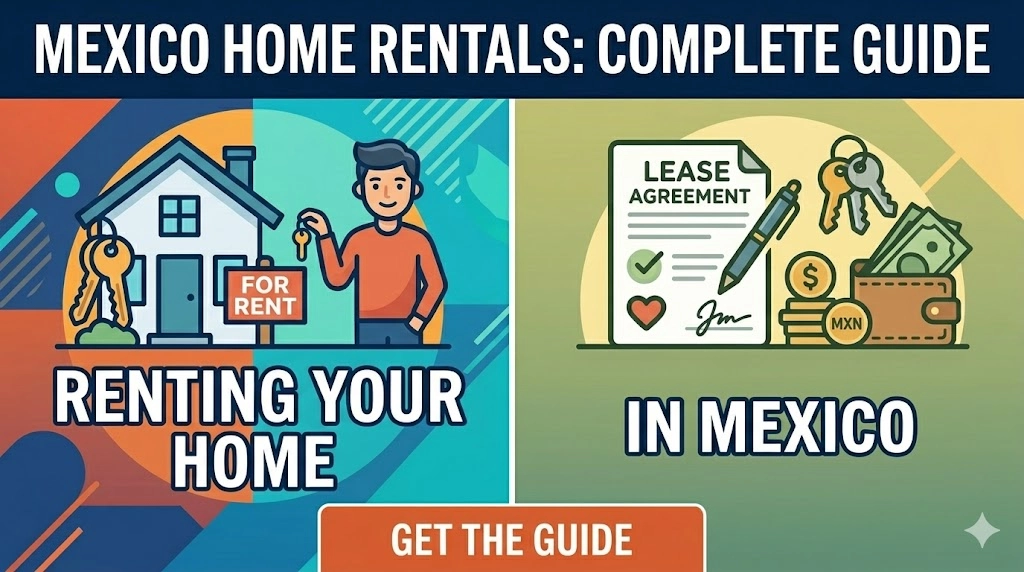
The Mexican rental market operates on a completely different set of legal, cultural, and bureaucratic rules than the housing markets in the United States, Canada, or Europe. If you arrive expecting to simply fill out an online application, consent to a quick credit check, and receive your keys the next day, you are setting yourself up for a massive shock. This comprehensive guide is designed to completely demystify the Mexican rental process. From navigating the notorious fiador requirement to dodging prevalent Facebook scams and understanding what “unfurnished” actually means, here is the unvarnished, factual roadmap to successfully renting a home in Mexico.
1. The Soft Landing: Never Rent Sight Unseen
The absolute golden rule of relocating to Mexico is this: Never sign a long-term lease before you have physically stood inside the apartment and walked the surrounding neighborhood.
Photographs on rental listings are notoriously deceptive. A wide-angle lens will not reveal that the bedroom window opens directly onto a noisy, 24/7 commercial bus route, or that the beautiful neighborhood floods under two feet of water during the July rainy season. Furthermore, wiring a massive cash deposit to a stranger before you have met them face-to-face is the fastest way to become the victim of a scam.
The Ideal Basecamp Strategy
Instead of rushing into a 12-month commitment, savvy expats plan a “soft landing.” You should book temporary, reliable accommodation for your first three to four weeks.
Many remote workers and digital nomads choose to base themselves at a co-living and co-working hub like Selina. Staying at a Selina property provides you with an immediate community, reliable high-speed internet (crucial for remote work while you hunt for housing), and a safe, central location in your target city. By utilizing a flexible basecamp, you give yourself the physical time to aggressively explore neighborhoods, tour multiple properties, and negotiate leases in person without the desperate pressure of impending homelessness.
For a broader look at establishing your initial footprint and budget, review our Cost of Living in Mexico: 2026 Comprehensive Guide.
2. Communication and Connectivity: The WhatsApp Rule
To effectively hunt for an apartment in Mexico, you must understand how local real estate agents (inmobiliarias) and independent landlords operate. They do not use email. They rarely respond to the internal messaging systems on rental websites. Real estate in Mexico runs 100% on WhatsApp.
If you want to view an apartment, you must send a WhatsApp message to the phone number listed on the advertisement. To do this the moment you land, you absolutely must have an active, reliable mobile data connection. Trying to jump from public Wi-Fi cafe to public Wi-Fi cafe to coordinate viewings will result in you losing out on prime properties.
Instead of fighting with physical SIM cards at the airport, the most efficient solution is to download an eSIM via Airalo before your flight even takes off. With an Airalo Mexico eSIM, your phone connects to the local Telcel or AT&T network the second you land. You can instantly start WhatsApping landlords, navigating the city via Google Maps, and ordering Ubers to your property viewings. Remaining constantly connected is your greatest tactical advantage in a fast-moving rental market. For more on localized communications, see Internet and Mobile Phone Plans in Mexico: Staying Connected as an Expat.
3. The Search: Where to Find Legitimate Listings
The platforms you use to find your apartment will dictate the price you pay. If you search exclusively in English on expat-focused forums, you will be subjected to severe “Gringo Pricing”—rental rates that are artificially inflated by 30% to 50% above the local market value.
Online Local Platforms
To find genuine, locally priced real estate, you must search the platforms that Mexican citizens use. Your browser should auto-translate these sites if your Spanish is still developing:
- Inmuebles24: The largest and most reliable real estate portal in Mexico. It features both agency listings and private landlords.
- Vivanuncios & Metros Cúbicos: Excellent secondary portals with massive inventories of long-term rentals.
- Facebook Marketplace & Local Facebook Groups: In many Mexican cities, Facebook is the primary engine for real estate. Search for groups titled “Rentas [City Name]” or *”Departamentos en Renta [City Name].” *
Walking the Neighborhood (Trato Directo)
Despite the digital age, some of the best, most affordable apartments in Mexico are never listed online. Landlords, particularly older generations, simply hang a physical sign in the window that reads “SE RENTA” (For Rent) accompanied by a phone number.
Spending a morning walking through your desired neighborhood and looking for these physical signs often yields incredible hidden gems. When you contact these numbers, you are usually dealing directly with the owner (Trato Directo), which bypasses real estate agent commissions and often makes the negotiation process significantly more flexible.
4. Decoding Mexican Real Estate: What “Unfurnished” Actually Means
When you browse Mexican rental listings, you will see properties categorized by their level of furnishing. Assuming these terms mean the same thing they do in North America or Europe is a massive financial trap.
Amueblado (Fully Furnished)
A fully furnished apartment is move-in ready. It includes beds, couches, dining tables, a refrigerator, a stove, and often a washing machine. Premium listings might even include televisions, cutlery, and linens. This is the most convenient option for expats on a 12-month timeline, but it commands the highest monthly premium.
Semi-Amueblado (Semi-Furnished)
This is a gray area. “Semi-furnished” typically means the apartment includes large kitchen appliances (a refrigerator and a stove) and perhaps built-in closets (clósets), but absolutely no furniture (no beds, no couches). You must clarify exactly what is included before signing the lease.
Sin Muebles (Unfurnished)
In Mexico, “unfurnished” is taken to its most literal, extreme definition. An unfurnished apartment is often nothing more than a concrete shell. It is highly common for a sin muebles apartment to lack:
- A refrigerator (refrigerador).
- A stove/oven (estufa).
- Built-in closets or shelving.
- Light fixtures (you may literally find bare wires hanging from the ceiling).
- A hot water heater (boiler).
- Air conditioning units (mini-splits).
If you sign a lease for an unfurnished apartment to save money, you must have the upfront capital to purchase all of your own appliances and potentially install your own lighting and ceiling fans.
The Lifeline for Furnishing an Empty Apartment
If you choose the unfurnished route, outfitting an entire apartment without owning a pickup truck is a logistical nightmare. Navigating massive Mexican department stores and organizing private freight delivery for a refrigerator and a mattress can take weeks.
To solve this, modern expats heavily leverage Amazon Mexico. Amazon’s logistics network in Mexico is phenomenal. You can order high-quality mattresses in a box, microwaves, televisions, ceiling fans, and essential furniture directly to your new address, often with free delivery via Amazon Prime. Utilizing Amazon Mexico allows you to rapidly build out a bare-bones apartment into a comfortable home within days of signing your lease, entirely bypassing the stress of local freight logistics.
| Listing Term | Typical Inclusions | Who Should Rent This? |
| Amueblado (Furnished) | Beds, couches, dining set, all appliances, sometimes TV/linens. | Digital nomads, 1-year expats, those avoiding setup costs. |
| Semi-Amueblado | Stove, refrigerator, built-in closets. No soft furniture. | Expats staying 2+ years who want to buy their own beds/sofas. |
| Sin Muebles (Unfurnished) | Literally an empty shell. Often no stove, fridge, or light fixtures. | Permanent residents, families shipping household goods (Menaje de Casa). |
5. The Bureaucratic Wall: The “Fiador” Requirement
This is the single greatest hurdle you will face when renting a home in Mexico.
Mexican tenant law historically favors the renter. If a tenant stops paying rent, it can take a landlord months, or even years, of expensive legal battles to formally evict them. To protect themselves from squatters and defaults, Mexican landlords demand intense financial guarantees before handing over the keys.
The standard requirement is a Fiador (also known as an Aval). A fiador is a guarantor. However, it is not simply someone with a good credit score who co-signs your lease. A fiador must be an individual who owns debt-free real estate (a property without a mortgage) located within the exact same state where you are renting. The landlord places a legal lien on the fiador’s property; if you destroy the apartment or skip rent, the landlord can legally pursue the guarantor’s real estate.
As a newly arrived foreigner, you almost certainly do not know someone with a paid-off local house willing to risk their property for you. Since you cannot provide a fiador, you must utilize one of the following three alternatives:
Alternative 1: La Póliza Jurídica (Legal Policy)
This is the most common and widely accepted workaround for expats. A Póliza Jurídica is essentially an eviction insurance policy. The landlord hires a specialized legal firm to investigate you. You provide your passport, residency card, and proof of income (usually three to six months of bank statements).
If the legal firm approves you, they issue a policy guaranteeing the landlord that, if you default on the rent, the legal firm will handle the costs of the eviction process.
- The Cost: The Póliza Jurídica typically costs between 30% and 50% of one month’s rent.
- Who Pays: By custom, the tenant pays this fee entirely out of pocket. It is a non-refundable sunk cost.
Alternative 2: El Convenio Transaccional (Notary Public)
In states like Yucatán (particularly in Mérida), landlords frequently use a Convenio Transaccional de Desocupación. This is a highly formalized lease agreement that is signed in the physical presence of a Notario Público (Notary Public).
By signing this specific legal instrument, you waive certain tenant rights, allowing the landlord to execute an expedited eviction if you breach the contract, entirely bypassing the lengthy civil court process.
- The Cost: Notary fees for a convenio usually range from $150 to $300 USD.
- Who Pays: The tenant is almost always expected to cover the notary fees.
Alternative 3: Massive Upfront Deposits
If a landlord refuses to use a póliza jurídica, their last resort for an applicant without a fiador is to demand a massive cash buffer. Some landlords will ask you to pay two, three, or even six months of rent upfront as a security deposit.
While this solves the immediate problem, tying up thousands of dollars in a foreign legal system is inherently risky. If you have a dispute with the landlord, recovering a six-month deposit is incredibly difficult. We strongly advise expats to push for a Póliza Jurídica rather than handing over excessive cash reserves.
6. The Contract (El Contrato de Arrendamiento)
Once you navigate the fiador alternatives, you must review and sign the lease (Contrato de Arrendamiento). Mexican leases are legally binding documents written entirely in dense, formal Spanish. Never sign a contract you do not fully understand. If your Spanish is not proficient, you must hire a local translator or a bilingual relocation specialist to review the clauses.
Standard Terms and Length
The standard residential lease in Mexico is 12 months. Finding a 3-month or 6-month lease outside of the heavily inflated Airbnb market is exceedingly rare, and landlords will usually charge a massive premium for the flexibility.
If you break a 12-month lease early, the standard penalty in Mexico is the forfeiture of your entire security deposit, and potentially a requirement to pay a penalty equal to one or two additional months of rent.
The Inventory List (El Inventario)
Attached to your contract will be an Inventario. This is a detailed list of every single item in the apartment and the exact condition of the walls, floors, and appliances.
This is the most critical document for protecting your security deposit. On the day you move in, you must walk through the apartment and verify the inventory line by line. If there is a scratch on the refrigerator, a chip in the tile, or a missing lightbulb, it must be documented in writing on the inventario.
Furthermore, you should take an extensive timestamped video on your smartphone of every square inch of the apartment, narrating any pre-existing damage, and immediately email that video to the landlord or agent. Mexican landlords are notoriously strict about deducting money from deposits for minor damages; hyper-documentation is your only defense.
Pet Clauses and Deposits
Mexico is highly dog-friendly in public, but Mexican landlords are increasingly cautious about pets inside rental units. Many modern condo buildings explicitly ban pets over a certain weight limit. If a landlord does accept your pet, expect to pay a non-refundable pet fee or an additional “pet deposit” equivalent to half a month’s rent.
7. Financial Logistics: Deposits and Paying Rent
The financial mechanics of securing an apartment require significant liquid capital on your move-in day.
The Move-In Capital Requirement
To sign the lease and receive your keys, you should expect to pay the following on day one:
- The First Month’s Rent.
- The Security Deposit: (Depósito en Garantía) – Standard is equal to one month’s rent.
- The Legal Fee: The cost of the Póliza Jurídica or Notary (approx. 30% to 50% of a month’s rent).
If you are renting an apartment for $1,000 USD a month, you must have roughly **$2,500 USD** in liquid capital ready to finalize the transaction.
Cash vs. Bank Transfers (SPEI)
Historically, much of the Mexican rental market operated in physical cash to avoid taxation. However, the federal government (SAT) has cracked down heavily on this practice. Today, reputable landlords and corporate agencies will require you to pay your rent via a domestic bank transfer using the SPEI network.
If you have already established a local Mexican bank account, you simply execute an instant, free SPEI transfer to the landlord’s 18-digit CLABE number every month. If you have not yet opened a local account, attempting to wire rent from a US or Canadian bank will result in massive fees and late payments. To navigate this, expats rely on fintech platforms to push funds into the local economy, a strategy we detail extensively in Banking in Mexico: Complete Guide for Foreigners.
Note: If a landlord insists you pay a $1,500 USD monthly rent exclusively in physical cash, be aware that you are participating in an informal, off-the-books agreement. You will not receive official tax receipts (facturas), which can complicate your residency renewals if immigration asks to see formal proof of address and housing stability.
8. Identifying Scams and Red Flags
The Mexican rental market moves incredibly fast, and scammers actively prey on panicked, newly arrived foreigners who do not understand the local protocols. You must be hyper-vigilant regarding the following red flags:
The “I Am Out of the Country” Scam
This is the most prevalent scam on Facebook Marketplace and Craigslist. You find an absolutely stunning apartment in a premium neighborhood listed for 40% below market value. You message the “landlord,” who responds in perfect English.
They tell you that they are currently traveling for business in Europe or the US, but because there is so much interest in the property, you need to wire them the security deposit immediately via Western Union or an offshore bank account to “hold the keys.”
This is always a scam. Legitimate Mexican landlords will have a local property manager, a trusted family member, or a local real estate agent handle the physical showing and the contract. Never send money for a property you have not physically stood inside.
The OXXO Transfer Scam
If a “real estate agent” tells you that you must pay a 500-peso “application fee” or “reservation fee” by depositing cash into a specific account at an OXXO convenience store before they will even show you the apartment, walk away. While OXXO deposits are a legitimate way to pay for goods in Mexico, scammers use them because the cash deposits are instant and entirely untraceable.
The Airbnb Hijack
Scammers will occasionally rent a beautiful Airbnb for two nights. During those two nights, they will list the apartment for long-term rent on Facebook. They will physically meet you at the apartment, give you a tour, sign a fake contract, and collect your first month’s rent and security deposit in cash.
When you return with your suitcases the next day, the real owner of the Airbnb is there wondering who you are, and the scammer’s phone is disconnected. To avoid this, always ask the agent or landlord to prove ownership of the property (showing the predial / property tax bill or their official INE identification matching the contract names) before handing over massive amounts of cash.
9. Moving Out: The Truth About Security Deposits
One of the most persistent cultural frictions between expats and Mexican landlords revolves around the return of the security deposit (Depósito en Garantía).
Under Mexican law, the landlord typically has 30 to 60 days after the termination of the lease to inspect the property, calculate any outstanding utility bills (CFE bills arrive bi-monthly, meaning a bill will always arrive after you move out), and return the remaining deposit.
However, in practice, many expats find that landlords become incredibly evasive when it is time to return the cash. Landlords may suddenly discover “massive damage” to the paint or claim the apartment requires a deep industrial cleaning, eating up the entire deposit. Recovering a $1,000 USD deposit through the Mexican civil court system will cost more in attorney fees than the deposit is worth.
The Cultural Workaround: “Deposit as Last Month’s Rent”
Because the legal recovery of a deposit is so difficult, a very common, albeit legally gray, cultural workaround exists in Mexico.
Many tenants, both Mexican and foreign, will approach the landlord roughly 40 days before moving out. They will politely state: “I am moving out next month. Let us do a walkthrough of the apartment today to ensure everything is in perfect condition. Because it is in good condition, I would like to use my security deposit to cover my final month’s rent, and I will leave 2,000 pesos in cash on the table to cover the final pending utility bills.”
While a landlord can technically refuse this (as the contract states the deposit cannot be used as rent), many landlords accept this pragmatic compromise, provided the apartment is genuinely undamaged. It eliminates the friction of exchanging large sums of cash at the end of the term. Always communicate clearly and respectfully with your landlord if you attempt to negotiate this exit strategy.
10. Knowing Your Rights: The PROFECO Shield
While the system is heavily weighted to protect landlords at the signing stage, once you are legally inside the apartment with a signed contract, you have significant rights.
A landlord cannot simply change the locks or throw your belongings into the street if you are late on rent or have a dispute. Evictions require a formal judge’s order, which takes months to execute. Furthermore, a landlord must provide proper legal notice (usually 30 to 60 days, depending on state law) if they wish to terminate the contract at the end of the 12-month term or if they intend to sell the property.
If you are renting through a formal real estate agency and feel you are being subjected to predatory practices, you have the right to file a formal complaint with PROFECO (La Procuraduría Federal del Consumidor), Mexico’s powerful federal consumer protection agency. PROFECO takes abuses by formal corporate entities very seriously and can act as a powerful mediator in severe disputes.
Conclusion: Preparation is Your Greatest Asset
Renting a home in Mexico is a true test of your adaptability as an expat. It requires abandoning the automated, high-speed expectations of the North American real estate market and embracing a system built on personal relationships, heavy bureaucratic paperwork, and intense localized negotiation.
By executing a soft landing at a basecamp like Selina, securing immediate local connectivity with Airalo, understanding the mechanical realities of the Póliza Jurídica, and leveraging tools like Amazon Mexico to comfortably furnish your new life, you completely bypass the panic that plagues so many new arrivals. You transition from a vulnerable tourist into a knowledgeable, prepared resident, ready to sign a contract with absolute confidence.
References
Primary sources (official)
- Procuraduría Federal del Consumidor (PROFECO): Official federal guidelines regarding consumer rights in real estate transactions and rental agreements. https://www.gob.mx/profeco
- Secretaría de Desarrollo Agrario, Territorial y Urbano (SEDATU): Federal agency overseeing urban development and housing regulations in Mexico. https://www.gob.mx/sedatu
Other helpful sources
- Airalo: Global eSIM provider for securing immediate mobile connectivity in Mexico without physical SIM cards. https://www.airalo.com/
Disclaimer
The information provided in this article is for educational and informational purposes only and does not constitute financial, investment, legal, or real estate advice. Mexican real estate laws, tenant rights, and eviction procedures (such as the specific use of a Póliza Jurídica or Convenio Transaccional) vary significantly by state and municipality. The rental processes described are general standards and individual landlord requirements will vary. Always consult with a licensed Mexican real estate attorney or a certified bilingual relocation specialist before signing legally binding contracts, paying legal fees, or transferring massive security deposits. Ensure that any services or platforms mentioned meet your specific individual requirements and legal residency status.