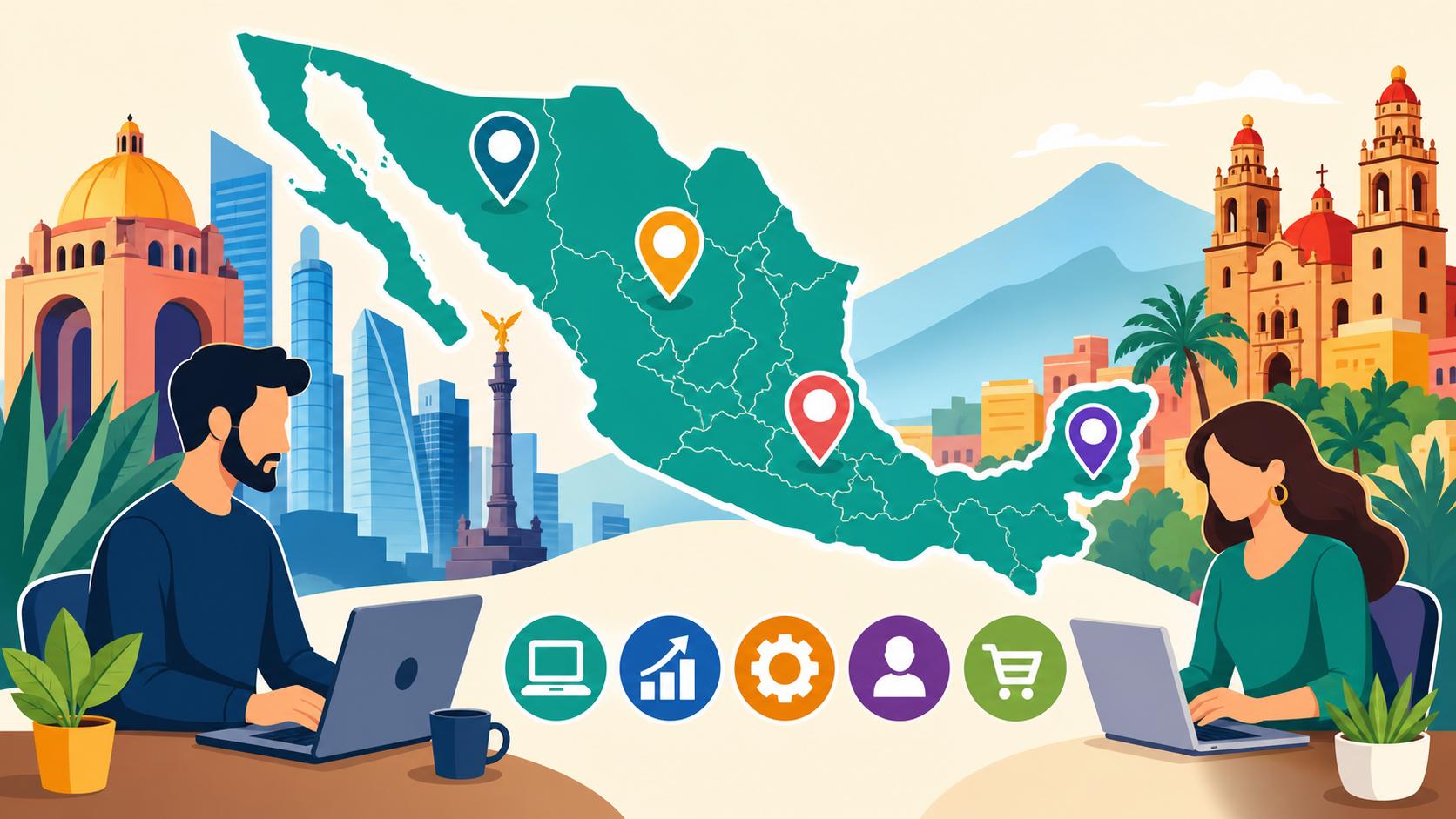
Where Do Most Expats Work in Mexico? Key Cities and Industries
Navigating the Mexican job market is a dizzying maze of legal quotas, "who-you-know" networking, and a confusing disparity between local salaries and expat expectations. I remember spending my first six months in Queretaro frantically polishing my resume, only to realize that most recruiters didn't even know how to process a foreign hire. This guide solves that uncertainty by pinpointing exactly which cities and industries are actively seeking foreign talent right now.
Disclosure: This post may contain affiliate links. We may earn a commission at no extra cost to you if you make a purchase through these links. Read full disclosure.
The Reality of the Mexican Job Market for Foreigners
If you are coming from the US, Canada, or Europe, the first thing you need to swallow is that Mexico’s Federal Labor Law is designed to protect Mexican citizens first. Legally, companies are generally restricted to a 10% foreign worker quota. This means you aren't just competing with locals; you are competing for one of the very few "slots" a company has available for someone who isn't Mexican. When I first started looking, I was shocked to find that even high-level positions were often filled by local candidates because the bureaucratic headache of hiring a foreigner just wasn't worth it for the employer.
Beyond the legalities, there is the "Local Hire" trap. If you find a job through a local listing, the salary will be in pesos and scaled to the local economy. While the Cost of Living in Mexico: 2026 Comprehensive Guide makes it clear that your money goes further here, a local salary might still feel like a massive step backward if you have student loans or a mortgage back home. Most successful expats I know either landed an "Expat Package" where they were transferred by a multinational corporation, or they targeted very specific industries where their specialized skills made the 10% quota irrelevant.
Finally, you have to understand the power of the palanca—the "lever." In Mexico, resumes sent into the void of a job portal rarely get a second look. Connections are everything. Before you even land, you should be joining LinkedIn groups and local expat forums to start building these bridges. I spent weeks studying specific business terminology on SpanishPod101 just so I wouldn't sound like a total tourist during my initial coffee meetings with potential "levers" in my industry.
Top Industries Where Expats Actually Find Employment
While you can technically find a job in any field, three specific sectors consistently absorb the highest number of foreign workers. The first, and most accessible for many, is the education sector. This ranges from entry-level English teaching at private institutes to high-paying positions at prestigious international schools. If you are a certified teacher from your home country, you should skip the "language mills" and head straight for the Colegios. These schools often offer "Local Plus" packages that include housing allowances and flight stipends.
The second major sector is Tech and Advanced Manufacturing. Mexico has become a massive hub for the automotive and aerospace industries, particularly in the "Bajio" region. Companies like BMW, Continental, and various aerospace firms in Queretaro are constantly looking for specialized engineers and project managers who can bridge the gap between Mexican production teams and foreign headquarters. In these environments, being bilingual is a non-negotiable requirement for leadership. I found that practicing specific workplace scenarios on SpanishPod101 was the only way I could keep up during high-pressure production meetings.
Thirdly, the Tourism and Hospitality industry in the coastal regions is a massive employer of expats. However, these aren't just "bartender" jobs. We are talking about luxury resort management, high-end real estate sales, and dive shop operations. Real estate, in particular, is a goldmine for expats who understand the legalities of the Fideicomiso: A Foreigner’s Trust for Owning Coastal Property. If you can explain complex Mexican property laws to a nervous American buyer in plain English, you are worth your weight in gold to a developer in Tulum or Cabo.
The Rise of the Digital Nomad and Remote Worker
We cannot discuss working in Mexico without mentioning those who bring their jobs with them. While not "working for a Mexican company," these expats represent a huge portion of the foreign workforce in places like Mexico City and Oaxaca. The Digital Nomads in Mexico: Remote Work Guide for 2027 highlights how this lifestyle has changed the local economy. These workers often face a different set of challenges, primarily related to tax residency and high-speed internet reliability.
If you are working remotely, your biggest hurdle isn't the 10% quota; it's the legality of your stay. Many remote workers operate on a tourist permit, but as the government tightens up, more are moving toward a Mexico Temporary Resident Visa: Comprehensive Guide for Expats (2026 Update) to stay above board. Even if your boss is in New York or London, learning the local language through a platform like SpanishPod101 is essential for negotiating your lease or setting up your home office utilities without being overcharged.
Key Cities Where Expats Congregate for Work
Where you live in Mexico will largely be dictated by what you do. You can't just move to a beach and expect to find a corporate marketing job. Mexico is a country of regional hubs, each with its own "flavor" of employment.
Mexico City (CDMX) – The Corporate Goliath
This is where the big money and the big titles live. If you are looking for a role in finance, multinational marketing, or diplomatic relations, CDMX is the only place to be. The business districts of Polanco, Santa Fe, and Lomas de Chapultepec are home to the Latin American headquarters of Google, Uber, and major global banks. The lifestyle here is fast-paced, and the traffic is legendary, but the career opportunities are unparalleled in the region.
Working in CDMX requires a high level of professional Spanish. This isn't the place for "taco Spanish." You need to understand the nuances of formal address and business etiquette. I spent many hours using the advanced levels of SpanishPod101 to master the formal Usted structures required in these high-rise boardrooms. If you are considering this move, be sure to check the Cost of Living in Mexico City (2026): Detailed Expat Budget Guide because while salaries are higher here, so is the rent in the "expat-friendly" neighborhoods.
Monterrey and Guadalajara – Industrial and Tech Powerhouses
Monterrey is often called the "Sultan of the North" and for good reason. It is the industrial heart of the country, with deep ties to the US economy due to its proximity to the border. It’s a city of engineers, entrepreneurs, and industrial magnates. If you have a background in logistics, supply chain, or heavy manufacturing, Monterrey offers some of the highest salaries in the country, though the climate can be punishingly hot.
Guadalajara, on the other hand, is the "Silicon Valley of Mexico." It has a thriving tech scene, with companies like Intel and Oracle maintaining massive campuses there. It’s also a hub for creative industries and startups. The vibe is slightly more relaxed than CDMX, but the professional expectations are just as high. Both of these cities are excellent for those who want a "real" Mexican city experience without the overwhelming scale of the capital.
The Riviera Maya and Baja Peninsula – Tourism and Real Estate
If your career is built on the "sun and sand" economy, you’ll likely end up in Playa del Carmen, Cancun, or Los Cabos. These areas are dominated by the hospitality sector. Most expats here work for international hotel chains or in the luxury vacation rental market. There is also a massive demand for English-speaking sales professionals in the real estate sector.
| City | Primary Industry | Expat Job Availability | Cost of Living |
|---|---|---|---|
| Mexico City | Finance, Tech, Diplomacy | High (Corporate) | High |
| Guadalajara | Software, Tech, Startups | High (Technical) | Medium |
| Monterrey | Manufacturing, Logistics | Medium (Industrial) | High |
| Playa del Carmen | Tourism, Real Estate | High (Service/Sales) | Medium-High |
| Queretaro | Aerospace, Automotive | Medium (Engineering) | Medium |
| San Miguel de Allende | Arts, Non-Profits, Real Estate | Low (Retirement focused) | High |
Navigating the Legal and Language Barriers
You cannot legally work in Mexico on a tourist visa. It is a common myth that you can "just figure it out later." If a company wants to hire you locally, they must provide you with a job offer letter which you then take to a Mexican consulate outside of Mexico to start your residency process. I have seen many talented people lose out on great jobs because they didn't understand the Work Permit Process: How Employer Sponsorship Works in Mexico.
Once you have the visa, the next mountain is the language. While you can survive in a tourist bubble with English, you will never truly "work" in Mexico without Spanish. It’s the difference between being a temporary visitor and a respected professional. Being able to joke with your coworkers during comida (the long lunch) is how you build the trust necessary to get promoted. I found that the cultural lessons included in SpanishPod101 were just as valuable as the grammar, as they explained the indirect communication style that is so prevalent in Mexican offices.
Finally, don't forget the administrative "fun." You will need an RFC (tax ID) and a CURP (population registry number). Navigating the SAT (tax office) is a rite of passage for every working expat. It involves waiting for "citas" (appointments) that never seem to exist and bringing stacks of paperwork that you hope are correct. If you are prepared for the bureaucracy and have a solid foundation in the language, working in Mexico can be one of the most rewarding experiences of your life. It certainly changed mine.
If you are planning your move, start by researching How to Get a Mexican Work Permit Approved? and Working in Mexico: Job Market, Work Culture, and Opportunities for Foreigners to ensure you are legally prepared for the transition. Whether you are aiming for a high-rise office in CDMX or a real estate office in Tulum, the key is preparation and a willingness to adapt to the local rhythm.
Important Disclaimer
The information provided in this guide is for educational and informational purposes only. Immigration laws, financial requirements, and labor regulations in Mexico are subject to frequent changes. While we strive to keep this content updated for 2026, you should always consult with a certified Mexican immigration attorney or a professional tax advisor before making any legal or financial commitments. Navigating the Navigating Mexico's Immigration System: Visas, INM Procedures, and Regulations requires professional oversight to ensure full compliance with current Mexican law.