The FMM and Tourist Entry to Mexico
Standing in the humid, fluorescent-lit immigration line at Cancun International Airport, clutching a passport and wondering if the officer will grant you seven days or six months, is a rite of passage for every traveler to Mexico. I remember my first time vividly, sweating through my shirt as I practiced my "Hola" and hoped for the best. This guide clarifies the confusing world of the FMM and tourist entry to ensure your arrival is as smooth as a Jalisco tequila.
Disclosure: This post may contain affiliate links. We may earn a commission at no extra cost to you if you make a purchase through these links. Read full disclosure.
Understanding the FMM: From Paper to Digital
The Forma Migratoria Múltiple, or FMM, has long been the bane of the organized traveler’s existence. For decades, it was a literal piece of paper you had to fill out on the plane with a dying ballpoint pen, only to guard it with your life for the duration of your trip. If you lost that little slip, you faced a world of fines and bureaucratic headaches at the airport upon exit. However, the system has undergone a massive transformation that every visitor needs to understand.
What Exactly is a Forma Migratoria Múltiple?
Technically, the FMM is not a visa; it is a "statistical admission form" that grants you the status of a Visitante sin permiso para realizar actividades remuneradas (Visitor without permission to perform remunerated activities). It is the legal document that tracks your entry and exit. While many people call it a "tourist visa," it is actually the mechanism that triggers your legal stay under the visa-waiver program if you are from a country like the USA, Canada, or the UK.
I’ve seen plenty of newcomers treat this document like a mere receipt, but it is the cornerstone of your legal presence here. Even if you don't receive a physical card anymore at most major airports, the digital record created when your passport is scanned is your FMM. Understanding the nuances of this document is the first step in Mexico Tourist Card (FMM) Explained: Entry Requirements for 2026. It is your proof that you didn't just wander across the border, but were formally admitted by the Instituto Nacional de Migración (INM).
The Digital Shift: Why You Might Not Get a Paper Slip
The paper FMM is largely a relic of the past at major international airports. Mexico has aggressively rolled out a digital system to streamline the chaos of arrival halls. When you land in Mexico City, Cancun, or Guadalajara, the immigration officer will likely scan your passport, stamp it, and write a number of days. They will not hand you a perforated piece of paper. Instead, your entry is logged in an internal database.
This shift was designed to prevent the constant "lost FMM" issues that plagued tourists for years. However, the transition has created its own set of anxieties. Many travelers feel "naked" without that paper slip. You are now expected to visit the INM website after arrival to download and print your digital FMM if you need it for things like renting a car or proving legal status to a hotel. Is Mexico Eliminating the FMM? Understanding Entry Changes in 2026 provides more context on how this digital rollout varies across different regions of the country.
How to Access and Download Your Digital FMM
Once you have cleared immigration and found your way to your Airbnb or hotel, your next task is to verify your digital record. You can access the official INM portal using your passport details. This is crucial because the stamp in your passport is often hard to read, and the digital record is what the government truly cares about. If there is a discrepancy between what the officer wrote and what the system says, you want to know immediately.
In some rare instances, if you are asked for proof of your remote work or financial solvency by an officer who is being particularly thorough, having your documents translated can be a lifesaver. For example, using a service like RushTranslate to have your bank statements or employment letters translated into Spanish can prevent a "secondary inspection" from turning into a denial of entry. While not always required for a simple vacation, those intending to stay for the full 180 days often find that having professional, certified translations from RushTranslate makes them appear much more prepared and legitimate to the skeptical officer.
Entering Mexico by Air: The Modern Experience
Flying into Mexico is generally the most straightforward way to enter, but it is not without its nuances. The experience at a massive hub like Mexico City’s AICM is worlds apart from a smaller regional airport in the south. The introduction of automated E-Gates has further changed the landscape for travelers from select countries.
Navigating the Immigration Interview and E-Gates
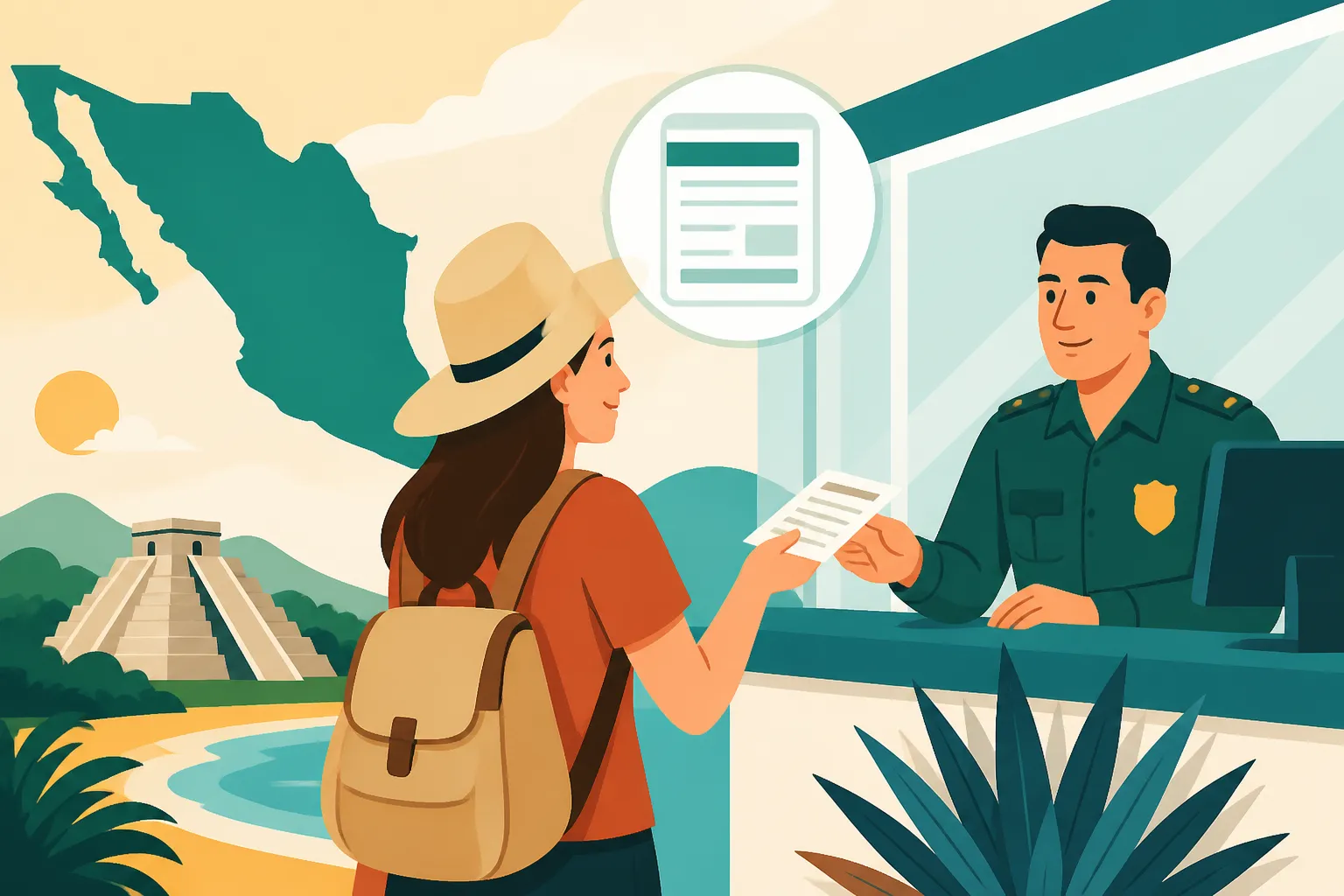
When you approach the immigration booth, the officer has one job: to decide if you are a genuine tourist or someone trying to live in Mexico illegally on a tourist permit. I always suggest being polite, dressing "business casual," and having your answers ready. They will ask where you are staying, how long you plan to remain, and what your occupation is.
If you are from a country eligible for E-Gates, you might bypass the human interaction entirely. You simply scan your passport at a kiosk, the camera verifies your identity, and a small receipt is printed (or your digital record is updated). However, be warned: E-Gates almost always default to the maximum 180 days, which is great for most but can be complicated if you are planning to transition to residency later. For more on the different entry points, check out Crossing into Mexico by Land vs Air: How Entry Procedures Differ for Expats.
Why Proof of Onward Travel is Non-Negotiable
One of the biggest mistakes I see travelers make is showing up with a one-way ticket. In the eyes of an immigration officer, a one-way ticket screams "I’m not leaving." Even though the law doesn't strictly mandate a return flight for every single traveler, the airline likely won't even let you board without one, and the INM officer will almost certainly ask for it if they suspect you are a digital nomad.
I always tell people to have a printed copy of their return flight or a bus ticket to Belize or Guatemala. If your return flight is months away, be prepared to explain how you will support yourself. This is another area where having your financial documents professionally translated by RushTranslate can save the day. If you can show a translated bank statement proving you have the funds to cover a 5-month stay, the officer is much more likely to grant you the days you ask for.
What to Do If You Receive Limited Days
There is a persistent myth that everyone gets 180 days automatically. This hasn't been true for years. The officer can give you 7 days, 30 days, or 180 days at their total discretion. If you look at your passport and see "30" written over the stamp but you planned to stay for 90, do not walk away from the booth. Politely explain that your return flight is on a specific date and show them the booking.
Once you leave that immigration hall, changing the number of days on your FMM is nearly impossible without leaving the country and coming back. It’s a stressful moment, I know. I once had to plead my case in Guadalajara when an officer tried to give me 15 days for a 3-week trip. Staying calm and showing documentation is the only way to win that argument. Will I Get 180 Days? Understanding Mexico's Tourist Entry Stamp Policies dives deeper into why these discrepancies happen and how to handle them.
Entering Mexico by Land: Different Rules for Different Borders
Driving or walking across the border from the United States is a completely different beast than flying. Many people make the mistake of thinking that because there isn't always a "gate" stopping them, they don't need to check in with immigration. This is a massive error that can lead to your car being impounded or you being deported later.
The Essential Stop at the INM Office
If you are driving into Mexico, the Mexican customs (Aduana) might wave you through if you have nothing to declare, but they are not the same as Immigration (INM). You must proactively find the INM office at the border to get your FMM. This is usually located near the Banjercito where you get your Temporary Import Permit (TIP) for your vehicle.
If you fail to stop and get your entry stamp, you are technically in the country illegally. This becomes a nightmare if you are pulled over at one of the many internal military checkpoints or if you try to leave the country. I’ve heard horror stories of people driving all the way to San Miguel de Allende only to realize they have no legal entry record, forcing them to drive all the way back to the border. Living in Mexico on a Tourist Permit: Risks and Limitations in 2027 highlights why maintaining legal status is vital for those staying longer than a week.
The 7-Day Rule vs. The 180-Day Fee
For land entries, there is a specific cost nuance. If you are staying in Mexico for 7 days or less, the FMM is generally free. If you are staying longer than 7 days, you must pay the Derecho de No Residente (DNR) fee, which is roughly $700–$800 MXN (it increases annually). At airports, this fee is hidden in the price of your plane ticket, but at land borders, you have to pay it at a bank or at the Banjercito.
Always keep your receipt of payment. Even in the digital age, land borders often still use the paper FMM or at least provide a stamped receipt. If you are entering as a pedestrian at a crossing like San Ysidro (Tijuana), the process is usually very fast, but they will almost always ask for your payment receipt if you say you are staying for more than a week.
Temporary Import Permits (TIP) and the FMM Link
For those bringing a vehicle, your FMM is the "anchor" for your car’s legality. A Temporary Import Permit is usually granted for the same duration as your FMM. If the officer gives you only 30 days on your FMM, your car is only legal for 30 days, regardless of the 180-day max the TIP can technically allow.
This is a common trap for "snowbirds" driving down for the winter. If you plan to stay for six months, you must ensure the immigration officer gives you 180 days on that FMM so your car stays legal the whole time. If you need to prove your residency or intent to return to a foreign employer to satisfy an officer at a land crossing, having a certified translation of your remote work contract from RushTranslate can be the difference between a 180-day stay and a 7-day "transit" permit.
Comparing Entry Methods: Air vs. Land
| Feature | Entry by Air | Entry by Land |
|---|---|---|
| FMM Format | Mostly Digital | Often Paper or Receipt |
| Cost (DNR Fee) | Included in Airfare | Paid at Border/Bank |
| Typical Duration | 180 days (standard) | Varies (often less without proof) |
| Process | Booth or E-Gate | Mandatory stop at INM office |
| Vehicle Permit | N/A | Requires TIP (linked to FMM) |
| Proof of Exit | Not required (checked by airline) | Must hand in paper (if issued) |
Overstaying and "Border Runs" in 2026
The practice of "border runs"—leaving Mexico for a day to reset a 180-day tourist stay—is a contentious topic in 2026. While it was once the standard way to live in Mexico indefinitely without a residency visa, the Mexican government has significantly cracked down on this practice.
The Risks of the 180-Day Reset
INM officers now have access to your full travel history at the touch of a button. If they see that you have been in Mexico for 540 of the last 600 days on three different tourist permits, they are likely to flag you. They may give you only 7 days to pack your things and leave, or they may deny entry entirely.
Living as a "perpetual tourist" is no longer a viable long-term strategy. The government wants people who live here to contribute to the tax system and go through the proper channels. If you find yourself in a position where you have overstayed, you should read Overstaying in Mexico: Consequences and How to Fix Your Status to understand your options for regularization.
Transitioning to Residency
If you love Mexico enough to want to stay beyond the 180-day limit, the best advice I can give is to stop relying on the FMM and apply for a residency visa. Whether it’s Temporary or Permanent residency, it removes the stress of the immigration line forever. You start the process at a Mexican consulate in your home country. For a complete breakdown of how to move beyond the tourist stage, refer to The Ultimate Guide to Mexico's Visa and Residency Options (2027 Edition).
During the residency application process, you will need a mountain of paperwork. This is where a reliable translation partner becomes essential. Consulates are notoriously picky about documentation. Using RushTranslate to certify your birth certificates, marriage licenses, and financial statements ensures that your application doesn't get rejected for a simple clerical or translation error. It’s an investment in your future peace of mind.
The Importance of the CURP and RFC
Once you move past the FMM and become a resident, you will gain access to a How to Get a CURP as a Foreigner: The Mexican ID Number Explained. This ID number is the key to everything in Mexico—opening a bank account, getting a local phone plan, and even signing up for a gym membership. Tourists on an FMM cannot get a CURP, which is one of the many reasons why the "perpetual tourist" lifestyle is so limiting.
If you are currently on a tourist permit and are considering the jump to residency, you might want to look into Mexican Consulate Appointments: Tips to Succeed in Your Visa Interview. Preparing your documents early, with the help of professional services like RushTranslate, will make that interview at the consulate feel like a breeze compared to the uncertainty of the airport immigration line.
Final Practical Tips for a Stress-Free Entry
To ensure your entry into Mexico is as smooth as possible, follow these veteran tips that I’ve gathered over years of crossings:
- Print Everything: Even if the system is digital, have a hard copy of your return flight, your first night’s hotel booking, and your bank statements. Technology fails, but paper usually doesn't.
- Check the Stamp Immediately: Don't walk away from the booth until you see the number of days written in your passport. If it’s not what you expected, speak up politely right then.
- Download the Digital FMM: Within 48 hours of landing, go to the INM website and save a PDF of your digital FMM. You will need it if you lose your passport or if you are asked for ID by the police.
- Be Honest but Concise: Tell them you are here for tourism. If you are a digital nomad, it is often better to emphasize the "vacation" aspect rather than the "working from my laptop" aspect, as the legalities of remote work on an FMM are still a gray area in Mexican law.
- Use Professional Services: If you are asked for any translated documents, do not use Google Translate. The INM and Mexican consulates require certified translations. A service like RushTranslate is the gold standard for ensuring your documents are accepted without question.
Navigating the FMM and tourist entry in Mexico is about preparation and temperament. If you show up with a smile, the right documents, and a clear plan for your exit, you’ll find that the "Gateway to the Americas" is as welcoming as everyone says it is. Enjoy the tacos, the sun, and the culture—just make sure you do it legally!
Disclaimer
The information provided in this guide is for informational purposes only and does not constitute legal or immigration advice. Mexican immigration laws and procedures are subject to frequent change. Always consult with the official Instituto Nacional de Migración (INM) website or a qualified immigration attorney before making travel or residency plans.