Saving on Dental and Vision: The Cost Benefits of Medical Care in Mexico
Staring down a $4,000 estimate for a single crown and root canal back home is enough to make anyone panic about their health and their savings. I remember avoiding the dentist for two years simply because I couldn’t afford the out-of-pocket costs in the United States. This guide breaks down exactly how to navigate Mexico’s world-class, budget-friendly dental and vision care.
Disclosure: This post may contain affiliate links. We may earn a commission at no extra cost to you if you make a purchase through these links. Read full disclosure.
The Reality of Dental Care in Mexico
When you first tell friends back home that you are getting dental work done in Mexico, you will inevitably hear outdated jokes about back-alley clinics. The reality of the private medical sector here is entirely different.
Quality Standards and Clinic Environments
Private dental care in major Mexican cities and expat hubs is exceptionally modern. Walk into a dental clinic in Puerto Vallarta, Merida, or Mexico City, and you will likely find 3D panoramic X-ray machines, CAD/CAM milling machines for same-day crowns, and immaculate sterilization protocols that rival or exceed anything you would find in North America.
Many Mexican dentists serving the expat community received portions of their training or board certifications in the United States or Europe. They speak fluent English and understand the specific anxieties foreigners bring to the chair. Finding a practitioner you trust is a breeze once you know where to look, a process closely mirroring the steps outlined in Finding an English-Speaking Doctor in Mexico: What to Expect. You aren’t compromising on quality; you are simply bypassing the inflated administrative overhead of the US healthcare system.
Furthermore, the personalized care is shocking for those used to the rushed, corporate dental chains up north. Your Mexican dentist will often give you their personal WhatsApp number for aftercare questions. This level of accessibility transforms a terrifying medical procedure into a highly supported, comfortable experience, reinforcing why so many of us rely heavily on the system detailed in Healthcare in Mexico: Complete Guide for Expats Public vs Private.
Price Comparisons for Major Dental Work
The primary reason expats and medical tourists cross the border is the undeniable cost savings. On average, you can expect to save between 60% to 80% on major dental procedures. If you are trying to balance your Cost of Living in Mexico: A Realistic Budget Breakdown, realizing that a dental emergency won’t bankrupt you provides immense peace of mind.
To give you a realistic idea of the financial relief, here is a comparison of average out-of-pocket costs. Keep in mind that prices fluctuate slightly based on the city and the exact materials used (like zirconia versus porcelain).
| Procedure | Average US Cost (USD) | Average Mexico Cost (USD) | Estimated Savings |
|---|---|---|---|
| Routine Cleaning & Exam | $150 – $200 | $30 – $50 | 75% |
| Tooth Extraction (Simple) | $200 – $400 | $40 – $80 | 80% |
| Root Canal (Front Tooth) | $800 – $1,200 | $200 – $300 | 75% |
| Porcelain Crown | $1,200 – $1,800 | $300 – $450 | 75% |
| Single Dental Implant (Complete) | $3,500 – $5,000 | $1,200 – $1,800 | 65% |
When you look at those numbers, it becomes immediately clear why entire border towns like Los Algodones are dedicated entirely to serving foreign dental needs. However, you do not need to go to a specialized medical tourism hub to get this care. If you live in the interior, the local private dentists offer the exact same high-tier services, often at even lower prices because they cater to the local middle class.
Vision Care Without the Premium Price Tag
Just like dental care, vision care in the US and Canada has become an overpriced monopoly dominated by a few massive eyewear conglomerates. In Mexico, the optical market is highly decentralized, competitive, and vastly more affordable.
Eye Exams and Prescription Glasses
In most Mexican cities, you can walk into a local optical shop without an appointment. The optometrist will perform a computerized eye exam, which is frequently offered completely free of charge if you agree to purchase your frames and lenses from them. Even if you only want the prescription to take elsewhere, the exam rarely costs more than $10 to $15 USD.
The speed of service in the Mexican optical industry is another massive frustration-reliever for expats. In the US, ordering a new pair of glasses can take a week or two as the frames are sent off to centralized labs. In Mexico, many independent shops have the lens grinding equipment right in the back room. If your prescription isn’t overly complex, it is incredibly common to have your eyes examined in the morning and walk out with your new, custom-cut glasses that exact same afternoon.
A standard pair of prescription glasses with anti-reflective coating can easily be manufactured for under $60 USD. If you need complex progressives or transition lenses, you might spend $100 to $150 USD, still a fraction of the $500 you would pay up north. This accessible pricing structure is a massive relief for expats and functions similarly to the affordable localized drug costs discussed in Pharmacies in Mexico: Buying Prescription Drugs as an Expat.
Lasik and Advanced Eye Surgeries
If you are tired of dealing with contacts and glasses altogether, Mexico is a premier destination for corrective eye surgeries like LASIK and PRK. Private ophthalmology clinics in major hubs utilize the exact same FDA-approved excimer lasers found in Beverly Hills or Manhattan.
A bilateral LASIK procedure in Mexico generally runs between $1,000 and $1,500 USD total. In the United States, that same procedure averages $4,000 to $5,000. The pre-operative consultations, the surgery itself, and all post-operative follow-ups are typically bundled into one highly transparent price.
Because these are elective surgeries, you will be paying entirely out of pocket. You won’t have to fight with insurance companies over what is deemed medically necessary. You walk in, get assessed, pay the flat rate, and walk out with perfect vision. If you have been hesitant about the quality of these private clinics, reading through Public vs Private Hospitals in Mexico: Which is Better? will help alleviate your concerns regarding the elite standards of the Mexican private medical sector.
Paying for Procedures as an Expat
When the time comes to actually settle your bill, the logistics of paying in a foreign country can eat into your anticipated savings if you aren’t careful. The financial mechanisms you use matter just as much as the clinic you select.
Navigating Cash, Cards, and Hidden Fees
Many local dental clinics and optical shops operate heavily in cash. Some will offer a 5% to 10% discount if you pay in physical Mexican Pesos rather than using a credit card, as it saves them the merchant processing fees.
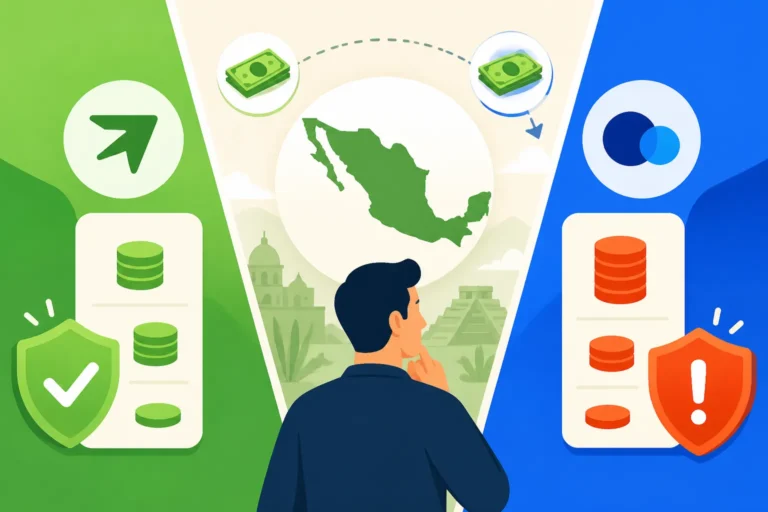
If you do decide to use a foreign card, you have to be hyper-vigilant about dynamic currency conversion and foreign transaction fees. This is where relying on digital platforms saves the day. I exclusively use Wise for these mid-level medical expenses. When I needed to pay $400 for a new crown, I simply used my Wise debit card. Because Wise holds my funds in pesos and gives me the true mid-market exchange rate, I bypassed the terrible exchange rates my traditional home bank would have forced on me.
Furthermore, if the clinic prefers a direct bank transfer, you can use Wise to execute a domestic interbank transfer right from your phone. You just ask the receptionist for the clinic’s transfer code, a process explained deeply in What Is a CLABE? Understanding Mexican Bank Account Numbers. Relying on Wise keeps your medical transactions transparent and ensures you actually keep the savings you traveled to Mexico for. If you want to dive deeper into protecting your money locally, check out Bank Fees in Mexico: Tips to Avoid Unnecessary Charges.
Funding Major Reconstructions
While a single crown or a pair of glasses is easy to cash-flow, what happens when you need massive reconstructive work? It is not uncommon for expats to undergo full mouth dental implants, a procedure that can still cost $10,000 to $15,000 USD even at Mexican prices. While this is a staggering $30,000 cheaper than the US, moving $15,000 internationally to pay a clinic requires institutional-level financial tools.
You cannot simply withdraw $15,000 from an ATM, and standard consumer apps often have limits. For these massive capital transfers, veteran expats rely on Interactive Brokers. Since Interactive Brokers operates as a sophisticated global platform, you can convert large sums of USD or CAD into Mexican Pesos at the actual institutional spot rate.
Instead of losing hundreds of dollars to the hidden exchange rate markups that traditional banks charge on large international wires, Interactive Brokers executes the conversion for mere pennies in commission. Once converted, Interactive Brokers allows you to wire the pesos directly to the Mexican clinic’s bank account or to your own local account. If you are liquidating investments to fund your health, using Interactive Brokers guarantees your hard-earned wealth isn’t squandered on predatory banking spreads. Properly structuring these large transfers is also crucial for your financial footprint, a topic covered in Taxes in Mexico for Expats: A Complete Guide to Income Tax and More.
References
Primary sources (official)
- Centers for Disease Control and Prevention (CDC): The official CDC Yellow Book guidelines detailing global risks, preparation strategies, and recommendations for US citizens engaging in medical and dental tourism. https://wwwnc.cdc.gov/travel/page/medical-tourism
- Procuraduría Federal del Consumidor (PROFECO): The federal consumer protection agency in Mexico, which actively monitors and reports on pricing transparency and consumer rights within the Mexican private hospital and clinical sector. https://www.gob.mx/profeco
Other helpful sources
- Patients Beyond Borders: A highly trusted, independent resource that evaluates and lists accredited international hospitals and dental clinics in Mexico that cater specifically to the expat and medical tourism community. https://www.patientsbeyondborders.com/clinics
- Asociación Dental Mexicana (ADM): The official Mexican Dental Association portal, providing insight into the certification standards, continuing education, and regulatory boards governing Mexican dentists. https://www.adm.org.mx/
Disclaimer
The information provided in this guide is for educational, logistical, and informational purposes only and does not constitute formal medical, financial, or legal advice. However, private clinical costs, surgical estimates, and local exchange rates are subject to frequent and sudden fluctuations. The quality of medical care varies drastically between individual practitioners and facilities. Digital transfer platforms and brokerage services operate under their own strict terms of service and fluctuating fee structures. Always conduct independent research on a clinic’s credentials, request itemized quotes in writing before agreeing to treatment, and consult with a certified cross-border financial advisor when moving large sums of capital for medical procedures.