How to Use a Mexican Debit Card Abroad
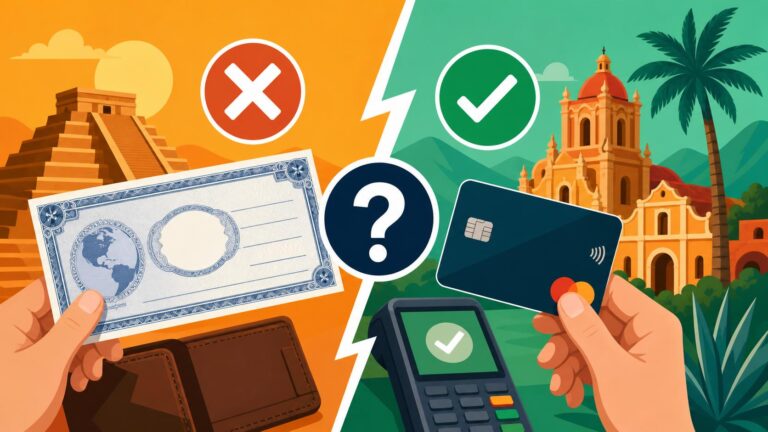
Trying to swipe your Mexican debit card in a foreign grocery store only to see "Declined" is a special kind of expat nightmare. I once spent three hours on a park bench in Tokyo trying to reach a BBVA representative because my card froze after a single coffee purchase. This guide ensures you never face that administrative headache while traveling.
Disclosure: This post may contain affiliate links. We may earn a commission at no extra cost to you if you make a purchase through these links. Read full disclosure.
Before You Board: Setting Your Mexican Card for Success
The most common mistake expats make is assuming their Mexican debit card is "plug and play" globally. While most cards issued by major Mexican institutions like BBVA, Santander, Banorte, or HSBC carry the Visa or MasterCard logo, the security protocols within Mexico are famously aggressive. This is largely due to high domestic fraud rates, meaning your bank is trained to view any sudden transaction in Paris or New York as a high-alert event. If you haven't laid the groundwork, you might find yourself with a piece of useless plastic the moment you land.
Your first step must be the "Aviso de Viaje" (Travel Notice). In years past, this required a physical visit to a branch or a long phone call to a "línea de atención," but today, most major apps allow you to do this digitally. However, do not wait until you are at the airport. Log into your app and look under the "Seguridad" or "Configuración de Tarjetas" section. You will need to specify the countries you are visiting and the exact dates. Be generous with your dates; if your flight is delayed and you try to buy a sandwich in the terminal a day after your "notice" expires, the system will likely block the transaction.
Beyond the notice, you need to verify your "Límites de Operación." Many Banking in Mexico: Complete Guide for Foreigners accounts come with a default daily spending limit that is quite low to protect users from theft. When you factor in the exchange rate from Pesos to a stronger currency like the Euro or the British Pound, that daily limit vanishes quickly. I once struggled to pay for a hotel in London because my "unlimited" card actually had a 20,000 Peso daily cap I never knew existed. Adjust these limits through your portal or at a branch before you depart to ensure you can cover large expenses like accommodation or emergency transport.
The Financial Reality of Using Pesos Globally
Using a Mexican debit card abroad is rarely the most cost-effective way to manage your money, but it is often the most convenient. You must understand that every time you tap that card, you are losing money in two distinct ways: the foreign transaction fee charged by your bank and the "spread" on the exchange rate. Most Mexican banks will charge between 1% and 4% as a commission for the privilege of spending your own money in a foreign currency. This is often buried in the fine print of your Bank Fees in Mexico: Tips to Avoid Unnecessary Charges document.
Then there is the exchange rate itself. Banks rarely give you the "mid-market" rate you see on Google. Instead, they use a "sell" rate that is significantly less favorable. If you are traveling for a long period or making large purchases, these percentages compound. This is why many seasoned travelers choose to use Transferring Money Internationally: Best Ways to Send Money to/from Mexico services to move funds into a multi-currency account like Wise before they leave. By holding the local currency of your destination (like USD or EUR) in a digital wallet, you bypass the unpredictable Peso fluctuations and the high fees of traditional Mexican banks.
| Fee Type | Typical Mexican Bank Cost | Strategy to Avoid |
|---|---|---|
| Foreign Transaction Fee | 1% to 4% per swipe | Use a multi-currency card like Wise |
| ATM Withdrawal Fee | $5 to $10 USD + 3% | Use a partner bank network (e.g., Santander Global) |
| Exchange Rate Spread | 3% to 5% above mid-market | Always decline Dynamic Currency Conversion |
| Emergency Card Replacement | $50 to $200 USD | Carry a backup card from a different bank |
Another trap to avoid is "Dynamic Currency Conversion" (DCC). When you pay at a terminal in a foreign country, the machine may recognize your Mexican card and ask: "Would you like to pay in Mexican Pesos or [Local Currency]?" It sounds helpful to see the price in Pesos, but this is a trap. If you choose Pesos, the merchant's bank sets the exchange rate, which is almost always predatory. Always choose the local currency of the country you are in. Your Mexican bank will still charge its fee, but it will be far lower than the rate offered by the merchant's terminal. Understanding Currency Exchange in Mexico: Getting the Best Rates on Pesos helps you realize that the bank's "convenience" is usually just an extra profit margin for them.
ATM Withdrawals and the Token Digital Dilemma
Withdrawing cash abroad with a Mexican debit card is a high-stakes game. First, there is the "Comisión por Retiro en Extranjero." This is a flat fee, often around $100 to $150 MXN, plus a percentage of the total amount. When you add the local ATM owner's fee, a small withdrawal can become incredibly expensive. If you must use an ATM, try to withdraw the maximum amount allowed in one go to minimize the impact of the flat fees. For more details on this, see our guide on Using ATMs in Mexico: Avoiding Fees and Staying Secure.
The most significant technical hurdle, however, is the "Token Digital" or "Token Móvil." Most Mexican banking apps require a security code generated by the app to authorize certain types of transactions or even to log in from a new IP address. If you are abroad and your phone doesn't have a stable internet connection—or worse, if you change your SIM card to a local one—you might find yourself unable to access your banking app. Some Mexican banks still send SMS codes for verification, which often fail to arrive on foreign networks.
Before you leave, ensure your Token Digital is set to "offline mode" if your bank supports it. If your bank requires SMS verification, you must keep your Mexican SIM card active and roaming just to receive those codes. I have seen many expats lose access to their funds because they switched to a local European SIM and couldn't receive the "OTP" (One-Time Password) needed to unblock a card or confirm a transfer. This is part of the broader complexity of How to Open a Bank Account in Mexico: Requirements and Tips; the systems are designed for domestic security, not global flexibility.
Security Features and Backup Strategies
Mexican banks have pioneered some excellent security features that are actually very useful abroad. The "Prender/Apagar" (Turn On/Off) feature is a lifesaver. If you are worried about card skimming in a crowded tourist area, you can keep your card "off" in the app and only "turn it on" for the sixty seconds it takes to complete a transaction. This prevents unauthorized charges if your card data is stolen. Many of the Best Banks in Mexico for Expats: Comparing Fees and Services offer this feature as standard now.
However, you should never rely on a single card. If a Mexican ATM "eats" your card or if it is stolen, getting a replacement sent to a foreign country is a bureaucratic nightmare that can take weeks. Always carry at least two cards from different banks. If you have a primary account with BBVA, consider a backup with a fintech like Wise or a different traditional bank like Banorte. This ensures that if one bank's fraud detection goes haywire and freezes your account, you aren't left stranded without a cent.
Finally, keep in mind your tax and reporting obligations. If you are a US citizen living in Mexico and using these accounts, you must stay compliant with international reporting rules. Large movements of money out of your Mexican account for international travel can sometimes trigger questions during tax season. Working with a specialized firm like Taxes for Expats can help you ensure that your global spending and Mexican bank balances are correctly reported, particularly when dealing with Reporting Mexican Bank Accounts to the IRS: FATCA/FBAR for US Expats. Being an expat means your financial life is always under a microscope, and your vacation spending is no exception.
Troubleshooting Declined Transactions Abroad
If your card is declined despite you having followed all the steps, do not panic. The first thing to check is your "Concepto de Pago." Sometimes, Mexican cards fail at automated kiosks (like gas pumps or train ticket machines) because these machines "ping" the card for a $1 USD authorization that the Mexican system rejects as suspicious. If this happens, try to find a human teller or a different machine. Often, the "tap to pay" (Contactless) feature works when the chip-and-pin fails, or vice versa.
If you are forced to call your bank, be prepared for a long wait and a lot of security questions. They will ask for your "Número de Cliente," your "Clave de Seguridad," and potentially details about your last three transactions in Mexico. This is why it’s helpful to have a small "cheat sheet" of your banking details (stored securely, of course). If you eventually decide that the hassle of international use is too high, you might even look into Closing a Mexican Bank Account: What to Do When Leaving the Country if you are moving on from Mexico, but for most, these cards remain a necessary tool for global mobility.
Disclaimer
The information provided in this article is for informational purposes only and does not constitute financial, legal, or tax advice. Banking regulations, fees, and digital security protocols in Mexico are subject to frequent change. While we strive to provide accurate and up-to-date information, you should always verify current terms and conditions directly with your financial institution before traveling. The authors and publishers are not responsible for any financial losses, blocked accounts, or travel disruptions resulting from the use of this guide.