How to Transfer Money Out of Mexico to a Foreign Account
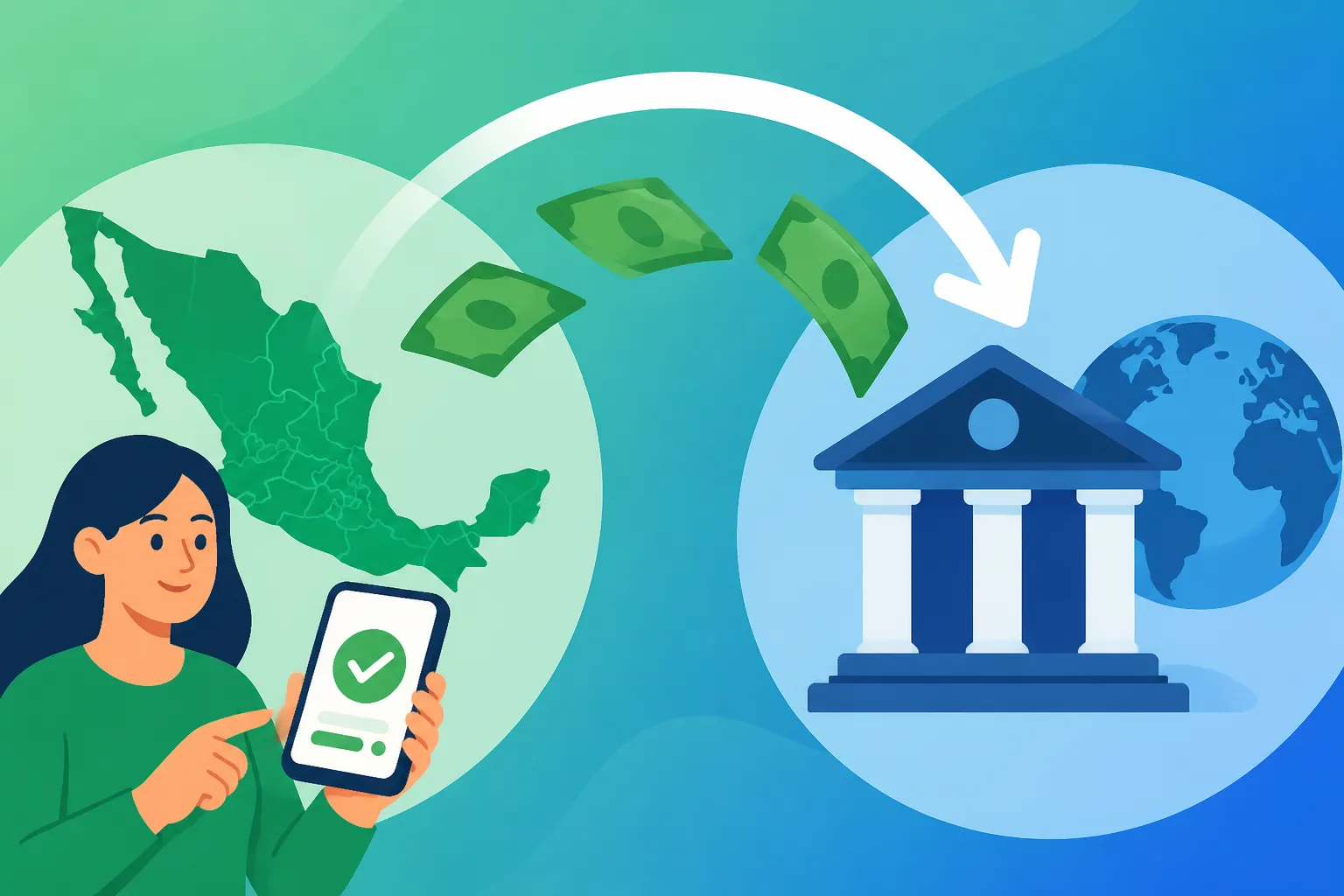
Trying to move a significant sum of money out of Mexico often feels like you are auditioning for a bureaucratic thriller where the bank manager holds all the scripts. I remember the sheer panic of trying to wire funds for a closing back in my home country, only to be told my signature didn't match the one on file from three years ago. This guide solves the riddle of repatriating your funds safely, legally, and without losing a fortune to hidden fees.
Disclosure: This post may contain affiliate links. We may earn a commission at no extra cost to you if you make a purchase through these links. Read full disclosure.
Navigating the Traditional Mexican Banking System
When you first moved here, you likely spent weeks figuring out Opening a Bank Account in Mexico as a Foreigner. Now that it is time to send money the other direction—perhaps after selling a property or simply moving savings—you are facing the reverse of that mountain. Traditional banks in Mexico, like BBVA, Banorte, or Santander, are the most common route for large transfers, but they are rarely the most user-friendly.
Understanding the SWIFT and CLABE Requirements
To initiate a transfer from a Mexican bank to a foreign account, you cannot just use a standard account number. You will need the receiving bank's SWIFT/BIC code and, most importantly, you need to ensure your Mexican account is authorized for international "transferencias internacionales."
In Mexico, every account is tied to an 18-digit What Is a CLABE? Understanding Mexican Bank Account Numbers. While the CLABE is used for domestic SPEI transfers, for moving money out of the country, the bank will require a formal request. Often, this cannot be done through an app. If you are trying to move more than a few thousand dollars, expect to walk into a physical branch, wait for a "gerente" (manager), and sign several pieces of paper. I’ve spent many a Tuesday morning in a cold bank lobby just to prove that I am, in fact, the person who owns the money I am trying to spend.
The Hidden Costs of Bank-to-Bank Wires
The most frustrating part of using a traditional bank isn't just the flat fee, which usually ranges from $30 to $60 USD per wire. It is the exchange rate spread. Banks rarely give you the "mid-market" rate you see on Google. Instead, they take a percentage—sometimes as high as 3% to 5%—off the top by giving you a less favorable rate for your pesos.
If you are transferring the proceeds from a home sale, that 3% can amount to thousands of dollars lost to the bank's profit margin. This is why many veteran expats have moved away from traditional wires for anything other than absolute necessities. You also have to consider the "intermediary bank" fee. Since many Mexican banks don't have a direct relationship with smaller banks in the US, Canada, or Europe, the money might pass through a third bank, which will take its own $15 to $25 cut along the way.
Modern Fintech and Digital Transfer Solutions
Thankfully, we aren't living in the 1990s anymore. The rise of fintech has been a godsend for those of us living the cross-border lifestyle. If you are looking for Sending Money To and From Mexico: Transfers and Fees, digital platforms have become the gold standard for speed and transparency.
Using Wise for International Transfers
One of the most reliable tools in an expat's belt is Wise. Unlike traditional banks, they use the real exchange rate—the one you actually see on financial news sites. When you want to move money out of Mexico, you essentially set up a transfer where you pay Wise in pesos (via a domestic SPEI transfer from your Mexican bank), and they then pay out the equivalent in your target currency from their local accounts in your home country.
I personally use Wise for my monthly transfers because the interface is in English and the fees are stated upfront. You aren't guessing how many dollars will show up on the other side; the app tells you down to the cent. It bypasses the "intermediary bank" nightmare and usually completes within 24 to 48 hours. However, keep in mind that there are limits. If you are trying to move millions of pesos, you may need to provide additional "source of funds" documentation to satisfy their compliance teams.
Comparing Speed and Reliability of Digital Platforms
While Wise is a heavy hitter, other options like Remitly or Western Union exist, though they are often geared more towards smaller "remittance" amounts rather than moving an entire life's savings. For the veteran expat, the priority is usually a mix of low cost and high security.
| Method | Typical Fee | Exchange Rate | Speed | Best For |
|---|---|---|---|---|
| Traditional Bank Wire | $30 – $60 USD | Poor (3-5% spread) | 3-5 Days | Very large sums ($50k+) |
| Wise | Low % fee | Mid-Market (Real) | 1-2 Days | Monthly bills & mid-range transfers |
| Brokerage/FX Firm | Negotiable | Competitive | 2-3 Days | Real estate proceeds |
| Fintech Apps (Nu/Klar) | Variable | Average | 1-2 Days | Small, quick transfers |
When you are Managing Your Money in Mexico: Budgeting, Saving, and Currency Tips, it is often wise to keep accounts with both a traditional bank (for local stability) and a fintech platform (for moving money out).
Tax Implications and Legal Compliance
This is the part where people tend to get nervous, and for good reason. Both Mexico and your home country want to know why a large sum of money is crossing the border. Moving money isn't just about the "how," it is about the "why" and ensuring the paper trail is crystal clear.
Reporting to the SAT and Foreign Revenue Services
The Mexican tax authority, the SAT, keeps a close eye on large outflows. If you are a tax resident in Mexico, you need to ensure that the money you are sending out has already been properly taxed or declared. This is especially true if you are operating under The RESICO Tax Regime in Mexico Explained.
If you sell a house, the Notario will usually withhold the necessary capital gains tax, but you must keep the "constancia" (proof of tax payment) to show your home country's tax office. Without this, you might be hit with double taxation. Dealing with The RFC and SAT: Mexico's Tax System for Foreigners is never fun, but it is much worse to deal with them after you have already moved the money and triggered an audit.
Taxes for Expats and Financial Transparency
For Americans, the IRS requires the FBAR (Foreign Bank Account Report) if the total of all your foreign accounts exceeds $10,000 USD at any point during the year. Moving money out of Mexico doesn't "hide" it; in fact, the transfer itself creates a record. Consulting with a firm like Taxes for Expats is highly recommended to ensure you aren't accidentally committing a felony by failing to report the existence of your Mexican holdings.
Remember that US Taxes for Americans Living in Mexico are based on global income. If your pesos earned interest in a Mexican "pagaré" before you transferred them home, that interest is taxable. Taxes for Expats can help navigate the complexities of the Foreign Earned Income Exclusion or the Foreign Tax Credit so that you don't lose even more of your hard-earned money to the taxman during the transfer process.
Practical Strategies for Large Sums
If you are moving a significant amount—say, from an inheritance or a business liquidation—the rules of the game change. You cannot simply use an app for $200,000 USD without a lot of prep work.
Documentation for Large Transfers
Before you even attempt a large transfer, gather your "papeleo." You will need:
- Your residency card (Residente Temporal or Perpetuo).
- Your The RFC and SAT: Mexico's Tax System for Foreigners documentation.
- Proof of the source of funds (a notarized sales contract for a home, for example).
- A recent "Estado de Cuenta" (bank statement) from both the sending and receiving banks.
Mexican banks are notoriously skittish about money laundering. If you suddenly try to wire a million pesos out of an account that usually only sees twenty thousand a month, they will freeze the transaction. I always recommend calling your bank or visiting the branch a week in advance to "warn" them. It sounds silly, but a little "propinas" of information can prevent your funds from being stuck in limbo for weeks.
Avoiding Red Flags with Mexican Banks
One mistake many new expats make is "structuring"—sending many small transfers to avoid a large one. This is a massive red flag for anti-money laundering algorithms. It is almost always better to do one large, well-documented transfer than twenty small ones.
If you find yourself Dealing With Hacienda (SAT) as a Foreigner, having a single, clean transaction with a clear purpose (like "repatriation of savings") is much easier to defend than a messy web of small transfers. Also, ensure your name matches exactly on both accounts. If your middle name is on your US account but not your Mexican one, the transfer might be rejected, and you’ll be out the wire fee plus the cost of the currency conversion back into pesos.
Final Thoughts on Moving Your Funds
Moving money out of Mexico is the final hurdle for many who are closing a chapter of their lives here. Whether you are Closing a Mexican Bank Account: What to Do When Leaving the Country or just sending some investment capital back home, the key is patience and transparency. Use tools like Wise for your day-to-day needs, but keep your traditional bank for the heavy lifting, provided you have the documentation to back it up.
Mexico has a way of making the simplest tasks feel like a marathon, but once that notification hits your home bank account and you see those funds safely settled, you can finally breathe a sigh of relief. Just remember to keep your Filing Taxes in Mexico as a Foreigner records for at least five years, just in case the SAT comes knocking with questions later.
Disclaimer
The information provided in this article is for informational purposes only and does not constitute legal, financial, or tax advice. Regulations regarding international money transfers and tax obligations in Mexico and other countries are subject to frequent change. You should consult with a qualified financial advisor, accountant, or tax professional who specializes in expat finances before making significant financial decisions. All internal links provided are for reference and may be updated by the respective authors over time.