Bridge Accommodation: Where to Stay Between Landing and Getting Keys
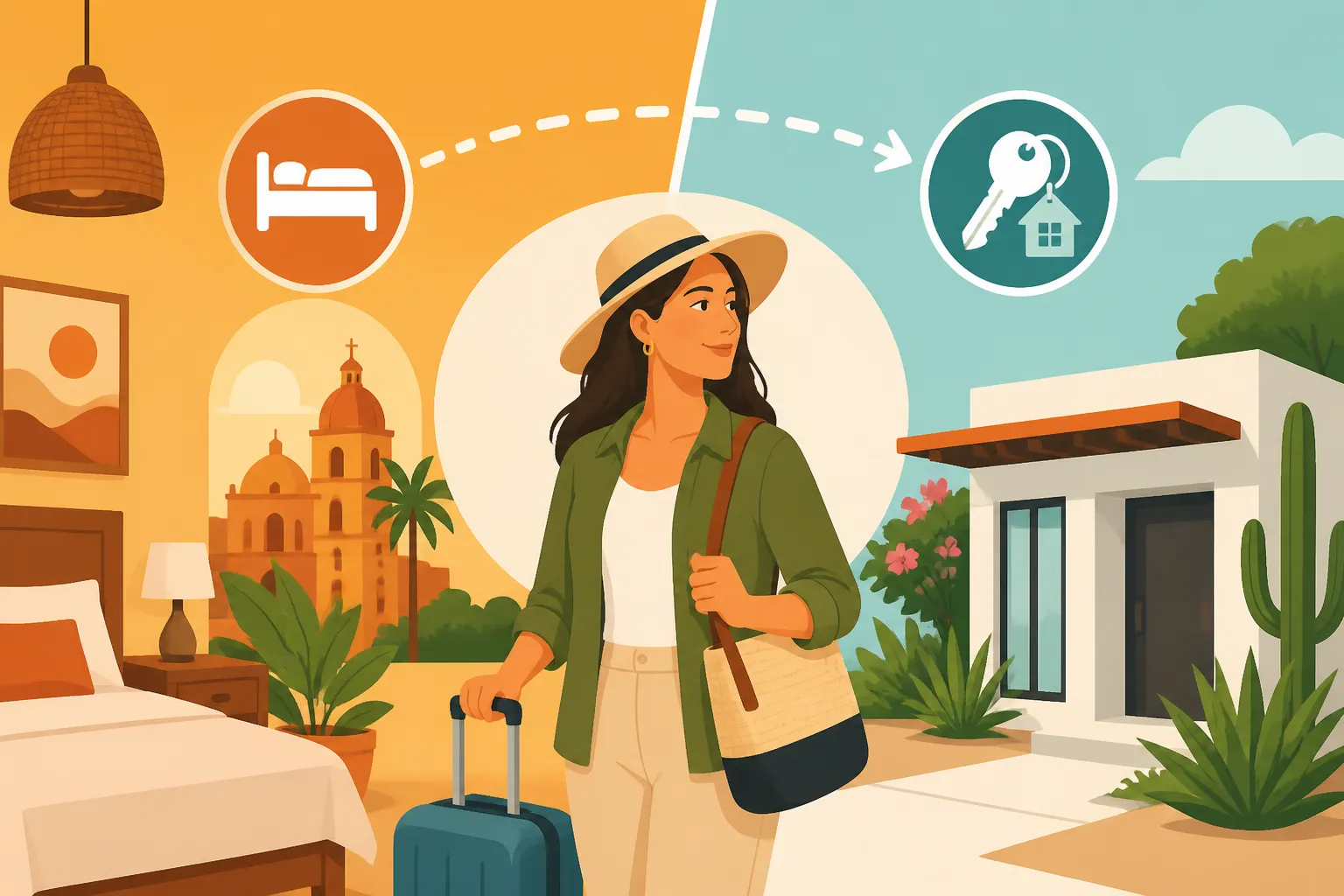
Ah, the big move! You've made the leap, booked your flight, and your dreams of a new life in Mexico are almost a reality. But then it hits you: where on earth are you going to sleep those first few nights, or even weeks, before you find your long-term place? That gap between landing and getting the keys to your permanent home, often called "bridge accommodation," can be a huge source of anxiety for new arrivals. Trust me, I’ve been there, staring at a calendar wondering if I’d be sleeping in a hammock on the beach. This guide is here to walk you through the best options for your temporary landing pad, ensuring your arrival in Mexico is as smooth and stress-free as possible, with a special nod to one platform that has saved my sanity more times than I can count: Booking.com.
Disclosure: This post may contain affiliate links. We may earn a commission at no extra cost to you if you make a purchase through these links. Read full disclosure.
Why Bridge Accommodation is Absolutely Essential for New Expats
When you first arrive in Mexico, your head will be buzzing with excitement, but also a healthy dose of "OMG, what now?" Trying to secure a permanent rental, navigate local bureaucracy, and simply adjust to a new country all at once can be overwhelming. This is exactly where bridge accommodation steps in, acting as your crucial decompression chamber and strategic base camp.
The Stress of the Unknown: Why You Need a Soft Landing
Picture this: you've just stepped off a long flight, you're jet-lagged, carrying heavy luggage, and your Spanish might be a little rusty. Now imagine trying to haggle with a taxi driver, figure out an unfamiliar neighborhood, and then, after all that, attempt to find a rental apartment – all before you even have a place to lay your head. It’s a recipe for instant regret and unnecessary stress.
Having a pre-booked, comfortable place to land for your first week or two is not a luxury; it's a necessity. It gives you a safe, predictable haven where you can recover from travel, unpack (even if it's just partially), and take a deep breath. You'll have a familiar address to put on initial forms, a place to organize your thoughts, and most importantly, a solid base from which to tackle the myriad tasks of setting up a new life. Without this buffer, the initial days can feel like a chaotic scramble, turning what should be an exciting new chapter into a nerve-wracking ordeal. It's about giving yourself the grace and space to adjust, rather than jumping straight into the deep end.
Avoiding Costly Mistakes and Scams
One of the biggest pitfalls for eager expats is rushing into a long-term rental agreement without properly vetting the property or the landlord. When you're new to a city, every apartment listing looks promising online. However, what looks like a dream home in photos could be a noisy, rundown unit in a less-than-ideal neighborhood in reality. I've heard too many horror stories from fellow expats who signed leases sight unseen, only to discover major issues – from non-existent hot water to neighbors who practice their mariachi skills at 3 AM.
Bridge accommodation allows you to be on the ground, in person, to conduct your housing search. You can actually walk through apartments, check water pressure, test internet speeds, and get a feel for the surrounding area at different times of day. This hands-on approach drastically reduces your risk of falling victim to rental scams, which, sadly, are not uncommon in Mexico. These can range from fake listings designed to collect "application fees" to landlords demanding multiple months' rent as a deposit and then disappearing. By having a secure temporary home, you maintain control and can make a truly informed decision about your long-term lease. Plus, you’ll be able to properly understand the nuances of a Renting a Home in Mexico: Complete Guide for Expats to Leases, Deposits, and More before committing.
The Reality of Mexican Bureaucracy and Rental Processes
Let's be frank: the administrative side of moving to Mexico takes time. It’s not a quick in-and-out process. Securing a long-term rental involves more than just signing a paper; you'll often need a fiador (a guarantor, usually a property owner in Mexico City who owns a clear title), or a significant upfront deposit, or even a specialized rental insurance policy. Then there's the actual contract review, which should ideally be done with a lawyer if your Spanish isn't fluent.
Beyond the rental itself, you'll need time to get your official ducks in a row. This includes things like applying for your CURP, setting up a Mexican bank account, and getting your utilities connected. Many of these processes require a physical, stable address. You can't just put "floating expat" on a bank application! Having a temporary address for a few weeks gives you the stability to begin these essential administrative tasks without the added pressure of simultaneously trying to find a permanent roof over your head. It's all part of the dance, and bridge accommodation gives you the rhythm.
Popular Bridge Accommodation Options in Mexico
Once you understand why bridge accommodation is so important, the next step is figuring out where to stay. Luckily, Mexico offers a variety of options, each with its own pros and cons, depending on your budget, lifestyle, and how long you anticipate needing a temporary home. What works for one expat might not work for another, but the key is knowing your choices.
Short-Term Rentals: Airbnb and Beyond
Short-term rental platforms like Airbnb, and many options also listed on Booking.com, have revolutionized temporary stays for expats. These offer a fantastic opportunity to live like a local, often in residential neighborhoods, complete with a kitchen and a more homely atmosphere than a hotel. For families, or those who prefer to cook their own meals, having a full apartment with separate living spaces can be a huge advantage. You might even find a place with a washing machine, which is a total game-changer after weeks of travel.
However, short-term rentals also come with considerations. While they can be cost-effective for a few days, booking them for several weeks or a month can become quite pricey, especially if you're looking in popular expat hubs like San Miguel de Allende, Puerto Vallarta, or Mexico City's trendier neighborhoods. The quality can vary wildly, from exquisitely furnished lofts to bare-bones studios, so reading reviews diligently is crucial. Also, some hosts prefer shorter stays, and cancellation policies can be stricter than hotels. It’s important to clarify all details before booking. Always remember that Booking.com frequently lists independent apartments and houses alongside traditional hotels, offering a wider net for finding that perfect temporary spot.
Hotels and Aparthotels: Comfort and Convenience
For sheer convenience and ease of booking, traditional hotels remain a top choice, especially for the initial few days or a week. Hotels in Mexico range from quaint boutique properties in colonial centers to major international chains in business districts or beach resorts. They offer predictable service, daily cleaning, often a restaurant or room service, and front-desk staff who can usually assist with local queries, arrange taxis, or even help with basic Spanish translations. Many travelers find this level of service incredibly reassuring when first arriving in a new country.
Aparthotels or suite hotels are a fantastic hybrid option, combining the best of both worlds. These properties offer hotel-style services (reception, cleaning) but provide apartment-like units, often with kitchenettes, separate living areas, and sometimes even laundry facilities. They’re perfect for those who want some independence without sacrificing hotel amenities. While they might seem pricier on a daily rate, the ability to cook some of your meals can offset dining out costs. The beauty of a platform like Booking.com is that it allows you to easily filter for these types of properties, helping you find that sweet spot between a traditional hotel and a full apartment, whether you're looking for a quick stop or something more extended. When planning your initial stay, remember to consider the various types of Accommodation in Mexico: Hotels, Hostels, and Rentals available.
Extended Stay Hotels and Serviced Apartments
Specifically designed for longer sojourns, extended stay hotels and serviced apartments cater to business travelers, families relocating, or anyone needing a temporary home for several weeks or months. These often come with discounts for weekly or monthly bookings, making them more economical than booking a standard hotel room for the same duration. They almost always include a fully equipped kitchenette or kitchen, separate living and sleeping areas, and often access to amenities like gyms, swimming pools, and communal laundry facilities.
The significant advantage here is that these properties understand the needs of guests staying for an extended period. They anticipate that you’ll want more space, the ability to cook, and perhaps a more residentially-oriented feel. While they may not be as abundant as standard hotels, they are increasingly popular in larger Mexican cities and expat havens. Searching for these types of properties on a robust platform like Booking.com is straightforward, as many specifically market themselves for longer stays. They offer a great sense of security and a stable environment while you navigate the more complex task of securing your long-term dream home in Mexico.
Choosing the Right Bridge Accommodation: What to Consider
Deciding on your temporary home in Mexico involves more than just picking the prettiest picture. You need to think strategically about your needs, your budget, and how this temporary spot will serve as your launchpad for a successful long-term move. I've learned from experience that a little planning here goes a very long way.
Location, Location, Location: Your Temporary Neighborhood
Where you decide to stay for your initial weeks can significantly impact your experience. While it's tempting to just grab the cheapest option, consider its proximity to areas you're actually interested in for long-term living. For example, if you're eyeing the bustling, cultured vibes of Roma Norte or Condesa in Mexico City for your permanent address, finding bridge accommodation there (or very close by) allows you to immerse yourself immediately. This way, you can easily walk around, check out local amenities, visit potential rental properties, and get a true feel for the neighborhood without long commutes.
Think about practicality: is your temporary spot near a metro station, a reliable bus route, or easy to access by ride-sharing apps? How close is a major supermarket, a pharmacy, or even a local market (mercado)? Having these conveniences nearby will make your first few weeks much smoother. You don't want to spend precious time just trying to figure out how to buy groceries or get to an important appointment. Use the map feature on Booking.com to visualize the area and ensure it aligns with your preliminary ideas of where you'd like to eventually settle. This initial location scouting can really help you refine your long-term neighborhood choices. Choosing wisely now can save you a lot of headache later, especially when figuring out the Living in Mexico City: An Expat's Guide to Neighborhoods and Lifestyle or any other major hub.
Budgeting for Your Initial Weeks
One of the biggest financial shocks for new expats can be the cost of these initial weeks. While Mexico generally offers a lower cost of living than many Western countries, temporary accommodation, especially in popular tourist areas or major cities, can add up quickly. It’s crucial to factor this into your overall moving budget. Short-term rentals or hotels, while convenient, rarely offer the same value as a long-term lease.
A good rule of thumb is to budget for at least two to four weeks of temporary housing, even if you hope to find a place sooner. This gives you a buffer for unexpected delays. Research average prices for your chosen type of accommodation in your preferred areas. Don't forget to account for daily expenses like food (if your accommodation doesn't have a kitchen, you'll be eating out more), transportation, and those initial bureaucratic fees. Here's a simple breakdown of what you might expect for estimated daily costs in popular expat cities like Mexico City or Guadalajara:
| Accommodation Type | Pros | Cons | Estimated Daily Cost (USD) |
|---|---|---|---|
| Budget Hotel/Hostel | Affordable, basic amenities | Small rooms, shared spaces, limited privacy/facilities | $25 – $60 |
| Mid-Range Hotel | Comfortable, good service, private bath | Can lack kitchen, less space, often no laundry | $60 – $120 |
| Aparthotel/Suite | Kitchenette, more space, hotel services | Fewer options, can still be pricey | $80 – $150 |
| Airbnb/VRBO (1BR) | Home-like, kitchen, residential feel | Variable quality, potentially strict cancellation, fewer services | $50 – $150 |
| Extended Stay Hotel | Designed for long stays, amenities, discounts | Limited locations, may feel less "local" | $70 – $140 |
Note: These are estimated ranges and can fluctuate significantly based on location, season, and specific property. Always check current prices on Booking.com for the most accurate figures.
This initial outlay is an investment in your peace of mind and allows you to make better, less rushed decisions. Remember, even though it feels like a big expense, it’s preventing potentially larger, more costly mistakes down the line. For a broader overview of typical expenses, check out the Cost of Living in Mexico: 2026 Comprehensive Guide.
Essential Amenities and Services
When you're starting fresh in a new country, certain amenities can go from "nice-to-have" to "absolutely-must-have." Prioritize these when selecting your bridge accommodation:
- Reliable Wi-Fi: This is non-negotiable. You'll need it to research long-term rentals, communicate with family and friends, handle banking, apply for visas, and if you're a digital nomad, work! Check reviews specifically for Wi-Fi quality.
- Laundry Facilities: After a long flight and a few days of exploring, clean clothes are a blessing. Look for in-unit laundry, communal machines, or at least a highly-rated lavandería (laundry service) nearby.
- Kitchen Access: Even a small kitchenette with a microwave and mini-fridge can save you a ton of money. Being able to prepare simple breakfasts or reheat leftovers cuts down on dining out expenses and helps you feel more at home.
- Security: This is paramount. Look for properties with good reviews regarding safety, secure entrances, and perhaps even 24/7 reception. While Mexico is generally safe, common sense precautions are always important, especially when you're carrying your most valuable documents.
- Air Conditioning/Heating: Depending on where and when you arrive in Mexico, this can be crucial for comfort. Coastal areas are hot and humid, while central highlands can get surprisingly chilly in winter nights.
Platforms like Booking.com excel at letting you filter for these specific amenities. Don't be afraid to be picky! This is your temporary sanctuary, and ensuring it meets your basic needs will significantly reduce stress during your transition.
Streamlining Your Search with Booking.com
Okay, so we've established why you need bridge accommodation and what kind of options are out there. Now, let's talk about the tool that, in my experience, makes finding and booking these temporary stays a breeze: Booking.com. It's not just for vacations; it’s a powerhouse for expats in transition.
Why Booking.com is the Expat's Best Friend for Bridge Stays
Hands down, Booking.com is often my first stop when I need temporary housing, whether it's for a client arriving in Mexico or for my own travels. Why? It's simple: unparalleled selection and robust filtering. Unlike some other platforms that might specialize in vacation rentals or hotels, Booking.com aggregates a massive array of property types. You'll find everything from budget-friendly hostels and cozy guesthouses to major hotel chains, independent boutique hotels, serviced apartments, and even private homes and apartments. This breadth of choice means you're much more likely to find something that fits your exact needs and budget for your specific bridge period.
The platform's advanced filtering capabilities are a godsend. Need a place that's pet-friendly? Filter. Must have a kitchen? Filter. Want to stay in a specific neighborhood in Guadalajara? Filter by location on the map. Looking for properties with flexible cancellation policies because your plans are still a little fluid? There's a filter for that too! This granular control allows you to quickly narrow down thousands of listings to a manageable few that truly meet your criteria. Plus, the extensive review system provides invaluable insights from previous guests, letting you gauge everything from Wi-Fi reliability to noise levels before you commit. When you're making such a significant move, having this level of detail and flexibility from Booking.com is not just convenient, it's essential for peace of mind.
Navigating Booking.com: Tips and Tricks for Expats
Using Booking.com effectively for your bridge accommodation is straightforward, but a few insider tips can make a big difference:
- Start with Your Dates and Destination: Input your arrival and estimated departure dates. Even if your plans aren't firm, put in a longer estimate (e.g., 3-4 weeks) to see options and then look for flexible cancellation policies.
- Filter Aggressively: This is where the magic happens. On the left-hand side or at the top of the search results, you'll see a plethora of filters.
- Property Type: Don't just stick to "hotels." Explore "apartments," "aparthotels," "guesthouses," and "hostels" (some private rooms in hostels are fantastic budget options).
- Amenities: Prioritize "Free WiFi," "Kitchen/Kitchenette," "Laundry facilities" (if available), and "Air conditioning" or "Heating" as needed.
- Cancellation Policy: Look for "Free cancellation" options. This is your safety net if your long-term housing search speeds up or slows down.
- Price Range: Set your budget realistically based on the table we discussed earlier.
- Review Score: Aim for properties with a score of 8.0 or higher. Read a few negative reviews to see if the complaints are deal-breakers for you.
- Utilize the Map View: Once you have a filtered list, switch to the map view. This is incredibly helpful for visualizing proximity to neighborhoods you're considering, public transport, parks, or specific services. You can literally see properties pop up in the exact colonia you’re interested in.
- Read the Fine Print: Always double-check what's included in the price (e.g., taxes, cleaning fees, breakfast). Pay attention to check-in/check-out times and any specific instructions from the property.
- Look for "Genius" Discounts: If you sign up for a free Booking.com account and become a "Genius" member (it happens automatically after a few bookings), you unlock special discounts and perks like free breakfast or room upgrades at select properties. This can add up during a longer stay.
By taking advantage of these features on Booking.com, you can quickly and confidently find a temporary home that truly supports your transition into life in Mexico. It’s like having a personal assistant for your accommodation search.
Securing Your Stay and What to Expect Upon Arrival
Once you've found the perfect bridge accommodation on Booking.com, securing your stay is usually quite simple. Most properties will require a credit card to guarantee the reservation, and many will allow you to pay upon arrival, giving you flexibility. However, for some apartment-style rentals, especially for longer stays, full or partial payment might be requested in advance. Always confirm the payment policy when booking.
Upon arrival, be prepared with a copy of your Booking.com reservation confirmation – either printed or easily accessible on your phone. Even if you've communicated with the property in English, it's always a good idea to have some basic Spanish phrases ready for check-in. Things like "Tengo una reservación a nombre de…" (I have a reservation under the name of…) can be very helpful. Remember that not all front desk staff, especially in smaller establishments, will be fluent in English. If you anticipate a language barrier, consider using a translation app or having key phrases written down. For tips on general communication, you might find guidance from Overcoming Language Barriers at the Doctor: Tips for Expats useful, as the principles apply broadly.
Also, confirm the exact check-in process. Is there a 24-hour reception, or do you need to coordinate a specific time to meet someone for keys? Are there any local taxes not included in the Booking.com price that you'll need to pay in cash? These small details, clarified beforehand, can prevent any last-minute stress after a long journey.
Practical Tips for Your Bridge Accommodation Period
Your bridge accommodation isn't just a place to sleep; it's your command center for launching your new life in Mexico. Make the most of this period to get truly settled, tackle necessary bureaucracy, and explore your potential new surroundings.
Using Your Temporary Base to Find Your Long-Term Home
This is the golden opportunity to conduct an intelligent, on-the-ground search for your permanent residence. Don't spend all your time inside your temporary digs! Get out and explore. Use your temporary neighborhood as a base to visit other colonias (neighborhoods) you're considering. Walk the streets, visit local markets, observe the daily rhythm, and see what the commute would be like to places of interest.
Connecting with other expats can also be invaluable during this time. Join local expat Facebook groups, attend meetups, or ask around at cafes. Word-of-mouth recommendations are often the best way to find rental leads, reliable real estate agents, or even private landlords. Many expats find their perfect long-term place by being present in the community. Take your time, don't feel rushed, and remember that your comfortable temporary spot allows you the luxury of a thorough search. For detailed strategies on finding your dream place, refer to How to Find an Apartment in Mexico: Best Websites and Tips for Expats. And if you're looking to expand your social circle, Making Friends in Mexico: Expat Groups, Meetups, and Social Tips offers some great advice.
Getting Your Affairs in Order: Residency, Banking, and Utilities
Having a stable address, even a temporary one, is a foundational step for many bureaucratic processes in Mexico. While you might not yet have a utility bill in your name, you'll need an address to start your residency process and apply for your CURP (Clave Única de Registro de Población), which is Mexico's unique identity number and essentially your social security number. You will also need an address to open a bank account, which is crucial for managing your finances.
Use your bridge accommodation period to:
- Start Your Residency Process: If you've arrived on a visa that requires canje (exchange) for a resident card, you’ll need a local address.
- Obtain Your CURP: This is essential for almost any official transaction. Learn more about the process in Getting a CURP as a Foreigner in Mexico.
- Open a Bank Account: This often requires your residency card, proof of address (sometimes your temporary accommodation can provide a letter), and your CURP. It's a key step for financial independence. Find out more in How to Open a Bank Account in Mexico: Requirements and Tips.
- Research Utilities: While you won't set up utilities directly for your temporary spot, you can research providers (internet, electricity, gas) in your target long-term neighborhoods. This will give you a head start for when you do get your permanent keys. Our guide on Setting Up Utilities in Mexico: CFE, Water, and Gas can offer a good starting point.
These tasks might seem daunting, but tackling them from a comfortable and secure base makes them infinitely more manageable.
Settling In and Embracing Your New Environment
Beyond the practicalities, your bridge accommodation phase is also a vital time for cultural immersion and simply settling into your new rhythm. Don't lock yourself away!
- Explore Locally: Take daily walks around your temporary neighborhood. Find your local tortillería, frutería, and panadería. Discover parks, small cafes, and local eateries. These small discoveries are what make a new place feel like home.
- Practice Your Spanish: Even if you're shy, try to use basic Spanish at shops, restaurants, and with your accommodation staff. Every interaction is a mini-lesson. For some helpful resources, dive into Learning Spanish in Mexico: Top Tips and Resources for Expats.
- Observe and Learn: Pay attention to local customs, meal times, transportation habits, and social etiquette. Mexicans are incredibly warm and welcoming, but understanding their social cues will enrich your experience immensely. Our guide on Mexican Etiquette and Customs: Do's and Don'ts for New Expats is a great read.
- Be Patient and Flexible: Things in Mexico might not operate on the same timeline or with the same procedures you're used to. Embrace the mañana spirit to some extent, and don't let small frustrations derail your excitement. This entire transition is a journey, not a sprint.
Embrace this temporary period as an exciting prelude to your new life. It’s an opportunity to learn, explore, and breathe before diving fully into the commitments of a permanent home. And with a reliable platform like Booking.com, securing that initial comfort and stability is one less thing to worry about.
Disclaimer
The information provided in this guide is intended for general informational purposes only and does not constitute legal, financial, or immigration advice. While we strive to provide accurate and up-to-date information, regulations and circumstances in Mexico can change. It is highly recommended that you consult with appropriate professionals (e.g., immigration lawyers, financial advisors, real estate agents) for advice tailored to your specific situation before making any decisions related to your move or residency in Mexico.