Are Medications in Mexico Safe and Regulated?
Waking up in a foreign country needing urgent medication can be terrifying, especially when you are unsure if the pills behind the pharmacy counter are legitimate or safe. I remember standing in a small Mexican farmacia for the first time, skeptically examining a box of antibiotics and wondering if the quality matched what I was used to back home. This guide explains exactly how Mexico regulates its pharmaceutical industry and how you can ensure the medicine you buy is authentic.
Disclosure: This post may contain affiliate links. We may earn a commission at no extra cost to you if you make a purchase through these links. Read full disclosure.
The Regulatory Framework: COFEPRIS and Drug Safety
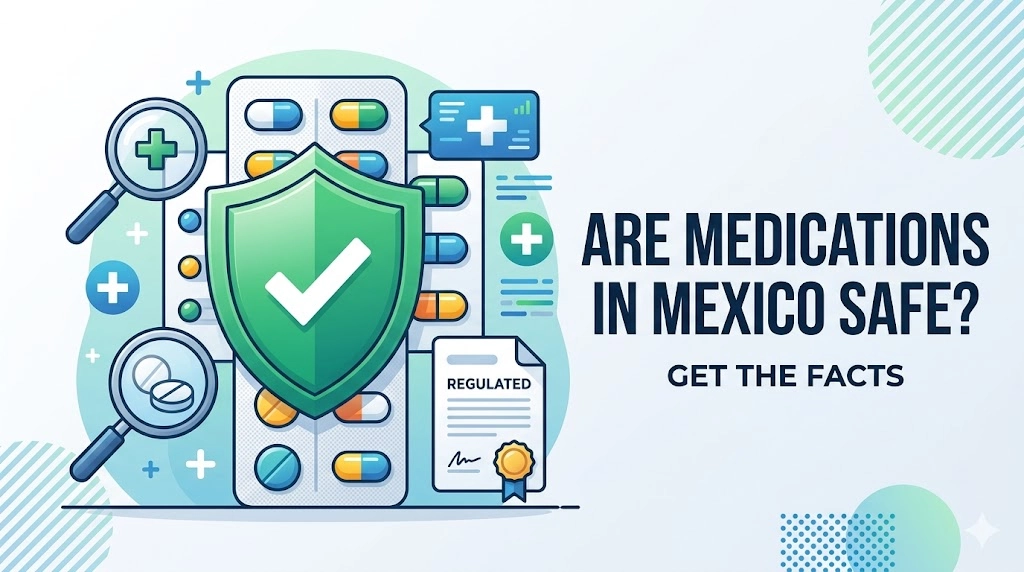
One of the most common misconceptions among newly arrived expats is that the Mexican pharmaceutical market is a lawless “Wild West.” In reality, Mexico possesses one of the most sophisticated and rigorous regulatory environments in Latin America. The safety, efficacy, and quality of all medications in the country are overseen by a powerful federal authority known as COFEPRIS (Comisión Federal para la Protección contra Riesgos Sanitarios).
The Role of COFEPRIS
COFEPRIS is the Mexican equivalent of the U.S. Food and Drug Administration (FDA) or the European Medicines Agency (EMA). It is a decentralized administrative body within the Ministry of Health that has technical, operational, and administrative autonomy. Its mandate is extensive: it regulates everything from pharmaceuticals and medical devices to food safety, pesticides, and organ transplants.
In 2012, the World Health Organization (WHO) and the Pan American Health Organization (PAHO) designated COFEPRIS as a “National Regulatory Authority of Regional Reference.” This is a prestigious certification granted only to agencies that meet the highest international benchmarks for drug evaluation and surveillance. When you purchase medication that has been approved by COFEPRIS, you are buying a product that has undergone rigorous clinical trial reviews and manufacturing inspections. For a deeper look at the legalities of buying these regulated goods, see Pharmacies in Mexico: How to Get Medications (OTC vs Prescription).
Manufacturing and Quality Control
Medications sold in Mexico are not just “imported and sold.” COFEPRIS requires every pharmaceutical company—whether a domestic manufacturer or an international giant like Pfizer or Novartis—to obtain a Sanitary Registration (Registro Sanitario). To get this, manufacturers must prove they adhere to Good Manufacturing Practices (GMP).
COFEPRIS regularly conducts facility inspections to ensure that production lines are sterile, temperatures are controlled, and active ingredients are pure. This oversight extends to the entire supply chain. Reputable pharmacies must maintain a legal registry of controlled substances and adhere to strict storage requirements. If a medication is not stored at the correct temperature or if its registration has expired, it is legally mandated to be removed from the shelves. This high level of regulation is a core reason why Mexico has become a global destination for high-quality, affordable medical care, a topic we explore in Healthcare in Mexico: Complete Guide for Expats (Public vs Private).
Bioequivalence and the Truth About Generic Drugs
One of the greatest successes of Mexican healthcare reform has been the standardization of generic medications. For decades, there was a significant trust gap between expensive “brand name” drugs (patente) and cheaper “generic” versions (similares). Today, federal law has virtually eliminated that gap through mandatory bioequivalence testing.
Interchangable Generics (GI)
In Mexico, true generic medications are labeled as GI (Genérico Intercambiable). To carry this label, the manufacturer must provide scientific evidence to COFEPRIS proving that the generic drug delivers the exact same amount of active ingredient at the same rate as the original brand-name version.
This means that if you buy generic Atorvastatina at a major chain, it is legally guaranteed to work just as effectively as the brand-name Lipitor. Choosing GI medications is the single most effective way to manage your Healthcare Costs in Mexico: Doctor Visits, Hospital Stays, and Surgery Expenses, often saving you 60% to 90% compared to international prices.
Avoiding “Similares” Without the GI Label
While the GI system is robust, expats should be aware of the linguistic nuances. The term “Similares” is often used colloquially to refer to all generics (largely due to the massive Farmacias Similares chain). However, you should always look for the GI symbol on the box. While COFEPRIS has worked hard to bring all “similar” products up to GI standards, verifying the label provides that extra layer of safety. If you are ever in doubt, the pharmacists at major national chains are trained to explain the bioequivalence of their products.
Identifying and Avoiding Counterfeit Risks
While the legal and regulated market in Mexico is exceptionally safe, counterfeit medications remain a global challenge. In Mexico, the risk of “fake” medicine is almost exclusively found in informal channels, street markets (tianguis), or small, independent pharmacies in high-traffic tourist zones or along the border.
Red Flags for Expats
The most common counterfeit drugs are often high-demand “lifestyle” medications (like those for erectile dysfunction or weight loss) and expensive painkillers. To ensure your safety, follow these non-negotiable rules:
- Buy from Reputable Chains: Always purchase from established national brands like Farmacias del Ahorro, Farmacias San Pablo, Farmacias Guadalajara, or Farmacia Paris. These companies have airtight, vertically integrated supply chains.
- Avoid “No Prescription” Offers: Legitimate pharmacies will always require a physical, Mexican-signed prescription for antibiotics and controlled “Fraction I” drugs. If a vendor claims they can bypass this law, it is a massive red flag that the product is not coming from a regulated source.
- Inspect the Packaging: Authentic Mexican medication will always have a Lot Number (Lote), an Expiration Date (Caducidad), and a COFEPRIS Registration Number (Reg. No. MSS). The printing should be sharp and the box should show no signs of tampering.
For more on the risks of unregulated purchases and how to handle medical crises, read Medical Emergencies in Mexico: What Expats Should Know and Prepare.
The Fentanyl Warning
In recent years, the U.S. State Department and DEA have issued alerts regarding counterfeit pills in specific Mexican tourist towns (notably in the north) that were found to be laced with fentanyl or methamphetamine. These were almost exclusively “knock-off” versions of Percocet, Oxycontin, and Adderall sold in small, independent pharmacies that did not require a prescription. By sticking to reputable hospital pharmacies and national chains, you almost entirely eliminate this risk. We discuss the importance of finding trusted providers in Finding English-Speaking Doctors and Specialists in Mexico.
The Expat Strategy: Proactive Health and Financial Safety
Navigating the Mexican pharmaceutical world is not just about avoiding bad drugs; it’s about optimizing your overall wellness strategy and protecting your finances.
Supporting Your Health with iHerb
While Mexican pharmacies are world-class for acute allopathic medicine, many expats find that the specific high-potency vitamins, clean-ingredient minerals, or clinical-grade probiotics they used for preventative health are harder to find locally. Local health food stores often carry limited inventory with massive import markups.
For my daily preventative health regimen, I rely entirely on iHerb. They ship directly to Mexico using reliable couriers like Estafeta, and because they offer DDP (Delivered Duties Paid) shipping, all taxes and customs fees are pre-calculated at checkout. Using iHerb allows me to maintain the exact pharmaceutical-grade supplement routine I had back home, ensuring my immune system remains resilient against local tropical challenges. Maintaining your baseline health with quality products from iHerb is a smart strategy to reduce your need for local prescriptions in the first place, which is a core tenet of Staying Healthy in Mexico: Essential Tips for Food, Water, and Preventive Care.
Managing Payments with Wise
Even with the savings offered by generic medications, the cost of specialized drugs (such as biologics for autoimmune disorders or oncology treatments) can still be high. If you are paying for these out-of-pocket, using a traditional home-country bank card is a mistake. Most banks charge hidden 3% “currency conversion” fees and utilize unfavorable exchange rates.
I use Wise to manage all my local medical and pharmacy expenses. Wise allows you to hold a balance in Mexican Pesos and pay with a local-currency debit card, ensuring you get the real mid-market exchange rate. When purchasing a $500 box of specialized medication, using Wise can save you enough in fees to pay for your next doctor’s visit. This level of financial planning is vital when managing chronic conditions, as detailed in Choosing Private Health Insurance: Local Mexican Plans vs International Coverage.
The Importance of Comprehensive Insurance
If you require life-saving medications that must be administered in a hospital setting—such as chemotherapy or emergency IV antibiotics—your financial risk increases exponentially. While you can trust the quality of the medicine in a private Mexican hospital, the billing protocols are aggressive.
Carrying a premium international policy from Cigna Global ensures that your treatment and the associated medications are fully covered. Cigna Global works directly with top-tier Mexican facilities, often providing a “Guarantee of Payment” (GOP) so you don’t have to front the money for expensive, regulated treatments. To see how international plans handle these scenarios and provide a safety net for your residency, review Will Mexican Hospitals Accept International Health Insurance?.
Summary Table: Mexican Medication Regulation vs. Global Standards
| Feature | Mexico (COFEPRIS) | Global Benchmark (FDA/EMA) |
| Agency Status | PAHO Regional Reference Authority | Gold Standard |
| Generic Bioequivalence | Mandatory (GI Label) | Mandatory |
| Antibiotic Control | Strict Prescription Required | Strict Prescription Required |
| Retail Regulation | Licensed Pharmacies Only | Licensed Pharmacies Only |
| Supply Chain Security | High (Reputable Chains) | Very High |
| Price Control | Government-Regulated for Many Meds | Market-Driven (Varies) |
References
Primary sources (official)
- COFEPRIS (Federal Commission for Protection against Sanitary Risk): https://www.gob.mx/cofepris
- Secretaría de Salud (Mexican Ministry of Health): https://www.gob.mx/salud
Other helpful sources
- U.S. Embassy & Consulates in Mexico – Health and Medication Safety: https://mx.usembassy.gov/services/
- World Health Organization (WHO) – Global Surveillance on Substandard Products: https://www.who.int/teams/regulation-prequalification/incidents-and-sf
Disclaimer
The information provided in this article is for educational and informational purposes only and does not constitute medical or legal advice. Pharmaceutical regulations and drug availability in Mexico are subject to change by federal health authorities. Always consult with a licensed healthcare provider before starting any new medication or altering your current treatment. Ensure that any insurance or financial services mentioned, such as Cigna Global or Wise, meet your specific individual needs.