Pre-Existing Conditions: Will Mexican Health Insurance Cover You?
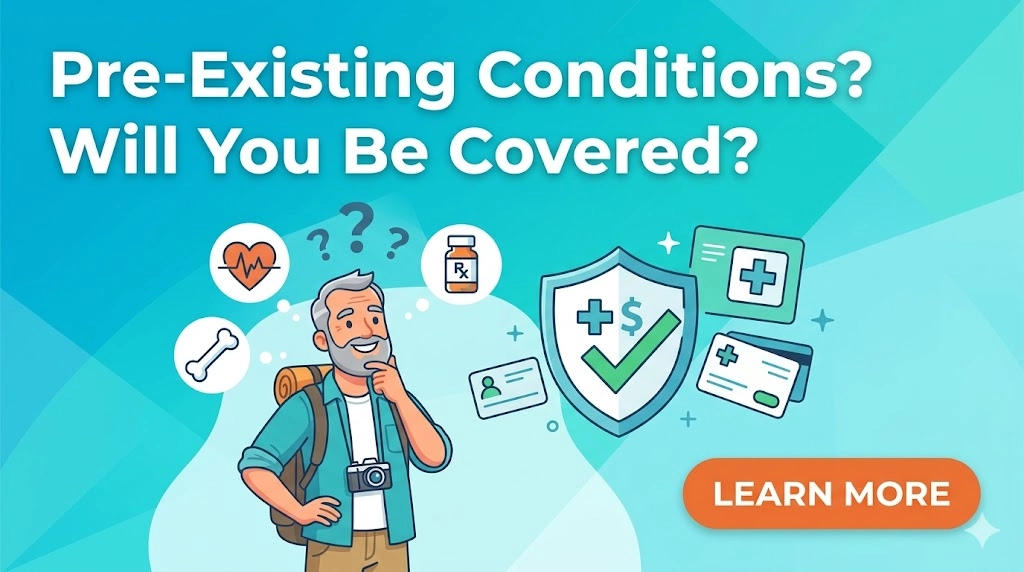
Finding out your daily heart medication or previous cancer diagnosis suddenly makes you uninsurable abroad is a terrifying wake-up call. I remember staring at a denial letter from a local Mexican insurer simply because of a minor surgery I had five years prior. This guide explains exactly how Mexican health insurance handles pre-existing conditions and how to secure reliable coverage.
Disclosure: This post may contain affiliate links. We may earn a commission at no extra cost to you if you make a purchase through these links. Read full disclosure.
The Reality of Pre-Existing Conditions in the Mexican Private Sector
When moving to Mexico, most expats naturally assume they can simply buy a local private health insurance policy from giants like GNP, AXA Mexico, or Seguros Monterrey. While these local policies are excellent for young, perfectly healthy individuals, they operate under incredibly strict underwriting guidelines that are notoriously hostile to anyone with a medical history.
How Local Mexican Insurance Companies View Your Medical History
The underwriting process for local Mexican private health insurance is exhaustive. When you apply, you must fill out a detailed medical questionnaire, and in many cases for expats over the age of fifty, the insurer will mandate a physical exam and blood work at an approved clinic before they even offer you a quote. They define a pre-existing condition very broadly: it is any illness, injury, or symptom for which you received a diagnosis, sought medical advice, took medication, or even just experienced symptoms prior to the policy start date.
If you disclose a major pre-existing condition, such as a history of cancer, Type 2 diabetes, cardiovascular disease, or severe autoimmune disorders, a local Mexican insurer will almost universally deny your application outright. They are heavily risk-averse and generally refuse to write policies they know will result in immediate, high-cost claims. Attempting to hide a condition by lying on your application is a catastrophic mistake; if they discover the omission later (which they will when you make a claim), they will instantly cancel your policy and refuse to pay your hospital bills, leaving you entirely financially liable. To understand the baseline differences between these local carriers and global options, review Choosing Private Health Insurance: Local Mexican Plans vs International Coverage.
Waiting Periods and Exclusion Clauses Explained
Even if your pre-existing condition is relatively minor—say, mild asthma or a past knee arthroscopy—the local insurer will not simply cover it. Instead, they will issue your policy with a permanent exclusion rider. This means they will cover you if you get into a car crash or develop a brand-new illness, but they will never pay a single peso for anything remotely related to your asthma or your knee for the entire lifetime of the policy.
Furthermore, Mexican local insurance relies heavily on periodos de espera (waiting periods). Even for conditions that are not pre-existing, local insurers mandate strict waiting periods before coverage activates. For example, you typically cannot claim any orthopedic surgeries (like a knee replacement) for the first 24 months of the policy. Maternity coverage often requires a 10-month waiting period. This means that if you are moving to Mexico and need ongoing, seamless care, a local policy leaves massive gaps in your financial safety net. To see how these exclusions translate to actual out-of-pocket costs, read Healthcare Costs in Mexico: Doctor Visits, Hospital Stays, and Surgery Expenses.
Navigating the IMSS Public Healthcare System with Prior Health Issues
Because the private sector is so restrictive, many expats turn their hopeful gaze toward the Instituto Mexicano del Seguro Social (IMSS), Mexico’s massive public healthcare system. There is a persistent, dangerous myth in the expat community that IMSS accepts absolutely everyone, regardless of their health status. The reality depends entirely on how you enroll.
What the Public System Covers and What It Denies
If you are a retired expat or a digital nomad seeking to enroll in IMSS voluntarily, you must apply for the Seguro de Salud para la Familia. This voluntary scheme is heavily regulated to prevent “adverse selection”—the phenomenon where only sick people enroll, bankrupting the system.
When you apply for voluntary IMSS enrollment, you must fill out a rigorous medical questionnaire. The IMSS regulations feature a strict, uncompromising list of pre-existing conditions that instantly disqualify you from joining the system. If you have pre-existing malignant tumors, chronic renal failure, diabetes mellitus with complications, cardiovascular disease, or chronic liver disease, you will be denied entry into IMSS. There is no negotiating this; it is codified into the IMSS affiliation laws to protect the financial integrity of the public system.
Even if you are accepted because your condition is not on the instant-denial list, IMSS implements strict waiting periods for voluntary members. You cannot receive treatment for certain benign tumors for one year, and orthopedic surgeries are delayed for two years. If you are a retiree trying to calculate the financial viability of this route, you must read Cost of IMSS for Expats: Voluntary Enrollment Fees by Age Group and review the exact steps in How to Enroll in IMSS: Step-by-Step Guide for Foreign Residents.
The Exception: Formal Employment in Mexico
There is one massive exception to the IMSS pre-existing condition rules: formal employment. If you are hired by a legally registered Mexican corporation and placed on their formal payroll, the employer is legally obligated to register you with IMSS under the Mandatory Regime (Régimen Obligatorio).
Under the Mandatory Regime, IMSS is not allowed to deny you coverage or impose waiting periods for pre-existing conditions. Because the system is funded by massive, mandatory payroll taxes from both you and your employer, you have full access to public healthcare from day one, regardless of your medical history. This is a massive lifeline for expats with severe chronic illnesses who manage to secure a formal Mexican job. However, the bureaucracy and severe overcrowding of public hospitals mean that even with full access, the quality of care may not meet your expectations. You should heavily weigh the realities discussed in IMSS vs Out-of-Pocket: Should You Rely on Public Healthcare or Private Care?.
International Health Insurance as a Workaround
Because local private insurance excludes you and voluntary public insurance denies you, the most viable and reliable solution for expats with pre-existing conditions is securing a premium international health insurance policy. These plans are specifically underwritten for globally mobile citizens and offer significantly more flexibility.
Premium Expat Plans and Moratorium Underwriting
Major global insurers operate differently than local Mexican companies. When you apply for a comprehensive policy through a provider like Cigna Global, you are accessing a risk pool designed for international expatriates. While no insurer loves pre-existing conditions, global providers offer specific underwriting pathways that local companies do not.
The first pathway is a “Rate-Up.” Instead of flatly denying you for having mild hypertension, an international provider might approve your application but charge you a 20% or 30% premium load. You pay more every month, but your condition is fully covered.
The second, and highly popular, pathway is “Moratorium Underwriting.” If you apply for a Cigna Global policy with moratorium underwriting, you do not have to fill out a massive medical history questionnaire. Instead, the insurer automatically excludes any condition you experienced symptoms of, or received treatment for, in the five years prior to your policy start date. However, if you can go a rolling 24-month period after the policy begins without any symptoms, treatments, or medications for that specific condition, the insurer will lift the exclusion and start covering it. This is an incredible feature for expats who have recovered from past illnesses and want the security of future coverage.
International plans also provide the flexibility to seek treatment anywhere in the world. If you develop a complex complication from your pre-existing condition, a top-tier Cigna Global plan allows you to fly back to the United States or travel to a specialized clinic in Europe for surgery, a benefit local Mexican plans simply cannot offer.
Managing Out-of-Pocket Expenses and Daily Medications
Even if you secure an international policy with a moratorium or an exclusion for your pre-existing condition, you still have to manage your daily health on the ground in Mexico. This means paying out-of-pocket for your routine specialist visits, blood work, and daily maintenance medications.
Fortunately, paying out-of-pocket for private healthcare in Mexico is highly affordable compared to the US. A visit to a top-tier private cardiologist or endocrinologist usually costs between $40 and $80 USD. To manage these ongoing expenses without bleeding money on bank fees, expats rely heavily on Wise. Instead of using a foreign credit card that charges 3% foreign transaction fees and terrible exchange rates at the doctor’s office, you can use a Wise debit card to convert your home currency into Mexican Pesos at the exact mid-market rate. You can also use Wise to seamlessly transfer larger sums directly to the hospital’s bank account if you need an excluded outpatient procedure. To find the right professionals for this ongoing care, consult Finding English-Speaking Doctors and Specialists in Mexico.
Managing the pharmaceutical side of your condition also requires strategy. Your home-country prescriptions are invalid in Mexico. You must bring enough medication to survive your first few months; the exact rules for this are outlined in Bringing Prescription Medications from Home: Rules and Tips for Expats. Once you settle, you will find that many maintenance drugs for blood pressure or diabetes are available over the counter, which you can verify in Over-the-Counter Medications: What Can You Get in Mexico Without a Prescription?.
However, if your pre-existing condition requires highly specific dietary supplements, specific probiotic strains, or holistic wellness products that are not heavily stocked in standard Mexican pharmacies, you will need to import them. Expats consistently use iHerb to bridge this gap. Because iHerb ships reliably directly to residential addresses in Mexico, you can guarantee a steady, uninterrupted supply of the exact holistic and nutritional supports your body needs to stay healthy. If your condition causes sudden flare-ups and you cannot immediately reach your specialist, you should also familiarize yourself with Telemedicine in Mexico: Accessing Online Doctor Consultations as an Expat for quick prescription refills and triage advice.
Comparing Insurance Options for Pre-Existing Conditions
To help you visualize your options, here is a breakdown of how different insurance routes in Mexico handle prior health issues:
| Insurance Type | Underwriting Style | Handling of Pre-Existing Conditions | Best For |
| Local Private (GNP, AXA) | Full Medical Underwriting | Flat denial or permanent lifetime exclusion. Strict waiting periods apply. | Young expats with absolutely zero medical history. |
| IMSS (Voluntary / Retirees) | Questionnaire-based | Instant denial for major conditions (cancer, diabetes). Waiting periods for others. | Healthy retirees looking for catastrophic public backup. |
| IMSS (Formal Employment) | None (Mandatory Regime) | Fully covered from Day 1 with no exclusions or waiting periods. | Expats with chronic illnesses who secure legal employment in Mexico. |
| International (e.g., Cigna Global) | Moratorium or Full Underwriting | May offer rate-ups (higher premiums for coverage) or rolling moratoriums. | Expats needing reliable coverage, willing to pay for premium flexibility. |
Navigating healthcare abroad with a medical history requires abandoning the expectation that your home-country coverage will easily translate. By understanding the strict limitations of local policies and leveraging the flexibility of international plans and out-of-pocket management, you can retire or work in Mexico with complete peace of mind. For a comprehensive look at how to coordinate your long-term medical strategy, read Managing Chronic Illness in Mexico: Access to Medication and Specialists.
References
Primary sources (official)
- International Insurance – Navigating Pre-Existing Medical Conditions in International Health Insurance: https://www.internationalinsurance.com/articles/pre-existing-conditions/
Other helpful sources
- Pacific Prime – Expat Health Insurance Coverage for Pre-existing Conditions: https://www.pacificprime.com/health-insurance-plans/pre-existing/
Disclaimer
The information provided in this guide is for educational and informational purposes only and does not constitute formal medical, legal, or financial advice. Health insurance underwriting policies, IMSS voluntary enrollment regulations, and the legal definitions of pre-existing conditions are subject to frequent changes by both private insurers and the Mexican government. Always consult directly with a licensed insurance broker and the official IMSS administration to verify your specific eligibility and coverage details before relocating or cancelling your home-country health insurance.