Mexico, Belize, and Guatemala in One Trip: Which eSIM Covers the Route
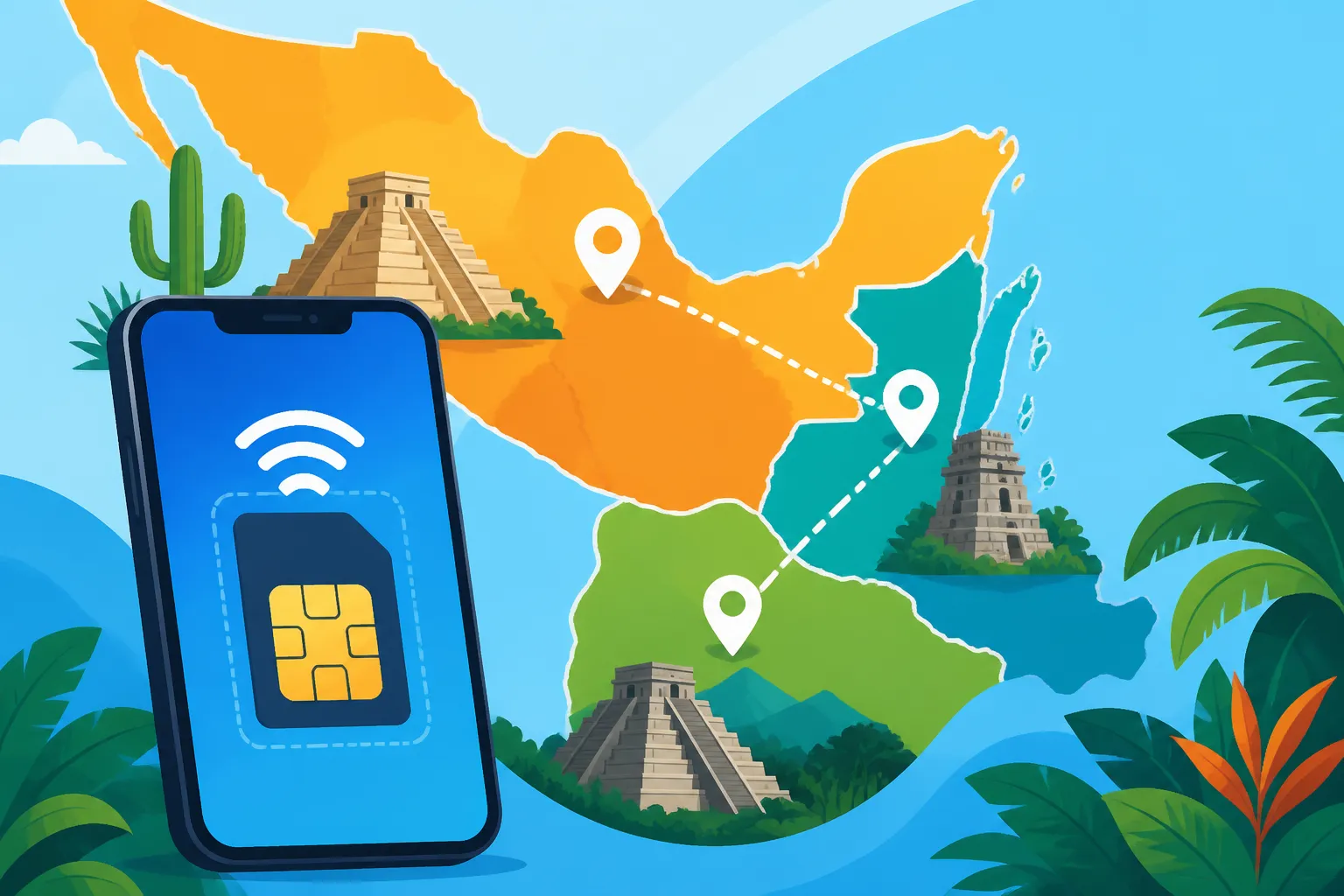
Embarking on a multi-country adventure through Mexico, Belize, and Guatemala sounds like an absolute dream, doesn't it? Turquoise waters, ancient ruins, vibrant markets – it’s an incredible journey. But let’s be real, the planning can quickly turn into a nightmare, especially when it comes to staying connected. Juggling different physical SIM cards, dealing with language barriers in unfamiliar phone shops, or facing astronomical roaming charges can add a layer of stress no traveler needs. This guide is here to cut through that confusion, focusing on how a clever little technology called an eSIM, particularly one from a provider like Airalo, can simplify your connectivity across all three of these amazing destinations.
Disclosure: This post may contain affiliate links. We may earn a commission at no extra cost to you if you make a purchase through these links. Read full disclosure.
The Tri-Country Connectivity Conundrum: Why Traditional Methods Fall Short
When you’re hopping from the bustling streets of Mexico City to the serene beaches of Ambergris Caye and then into the highlands of Guatemala, your phone is more than just a communication device; it’s your map, your translator, your emergency contact, and your lifeline to home. The thought of losing connectivity, even for a moment, can be anxiety-inducing. Unfortunately, many traditional methods of staying online just don't cut it for a trip like this.
The Headache of Traditional SIM Cards
Picture this: you land in Cancún, Mexico, and buy a local SIM card from Telcel. Great, you’re connected! But then you cross the border into Belize. Suddenly, that Mexican SIM is useless, or you're slammed with exorbitant roaming fees. So, you find a store in Belize City, navigate the process of buying a new SIM (maybe from Digicel or Smart), register it, and hope it works. Then, it's off to Guatemala, and the whole song and dance starts again with Claro or Tigo.
It’s not just the inconvenience of finding a vendor in each new country, which can be surprisingly hard outside major cities or airports. It’s the time wasted, the potential for being overcharged as a tourist, and the administrative hoops like passport registration, which vary by country. You're meant to be exploring ancient Maya sites or snorkeling in crystal-clear waters, not spending precious hours trying to get your phone to work! For anyone who has experienced the frustration of trying to explain what they need in broken Spanish or an unfamiliar local dialect, you know this struggle is real. The promise of seamless travel often gets tangled in these small but significant logistical challenges.
Roaming Costs: The Wallet Wrecker
Then there’s the option of simply using your home country’s phone plan with international roaming. Oh, the horror stories! Many expats I know, especially those just starting their journey, have made this mistake. A simple check of social media, a few map searches, and a quick call home can easily rack up hundreds, if not thousands, of dollars in unexpected charges. Your phone company back home sees international borders as a gold mine, and unless you're on a very specific, premium plan, their roaming rates are designed to shock you.
For travelers visiting multiple countries, this becomes even more complex. You might have one set of roaming charges for Mexico, another for Belize, and yet another for Guatemala, all compounding into an impossible-to-budget bill. The beauty of travel is about being present, not constantly worrying about every megabyte of data you consume or every minute you spend on a call. Relying on spotty Wi-Fi in hotels and cafes just isn't a reliable solution for navigation, emergencies, or simply staying in touch with loved ones. It really diminishes the freedom that technology is supposed to offer.
Why eSIMs Are Your Ultimate Travel Companion for Central America
This is where eSIM technology steps in as a true game-changer, especially for multi-country itineraries like Mexico, Belize, and Guatemala. Forget the physical plastic cards, the tiny ejector pins, and the endless forms. An eSIM is essentially a digital SIM card embedded directly into your phone, allowing you to activate a local or regional data plan with just a few taps. It’s less hassle, more flexibility, and often far more cost-effective.
Seamless Connectivity Across Borders
The biggest advantage of an eSIM, particularly for an itinerary like yours, is the sheer convenience it offers. Instead of buying a new physical SIM card in each country, you can often purchase a regional eSIM plan that covers multiple destinations. This means you can land in Mexico, already connected, and remain connected as you cross into Guatemala, without doing a thing. While a single regional plan may not cover all three of Mexico, Belize, and Guatemala directly with one package (more on that in a moment), the beauty of a service like Airalo is its incredible flexibility.
You can often buy an individual eSIM for Mexico, another for Belize, and a third for Guatemala, all from the same provider, managed through a single app. This is still infinitely easier than hunting for physical SIM cards. Imagine landing, switching your cellular data to the newly installed eSIM profile, and boom, you're online. No queuing, no language barriers, no fumbling with tiny cards. This level of ease allows you to focus on the vibrant markets of Oaxaca, the breathtaking snorkeling in Belize, or the ancient splendor of Tikal in Guatemala, rather than agonizing over your phone plan. It’s all about empowering you to embrace your adventure fully.
Cost-Effectiveness and Flexibility with Airalo
When it comes to value, Airalo truly shines, making it our top recommendation for savvy travelers. Airalo offers a wide range of plans, from individual country eSIMs to multi-country regional packages. For your specific journey covering Mexico, Belize, and Guatemala, you'll find that while a single "Central America triple-play" eSIM isn't quite the standard offering, Airalo provides excellent individual country plans for each, or regional plans that cover two of the three.
This flexibility allows you to tailor your connectivity to your exact needs. Let's say you spend more time in Mexico and Guatemala and just a few days in Belize. You could get Airalo’s regional "Latam" eSIM that covers Mexico and Guatemala, and then purchase a specific individual Airalo eSIM for Belize for those few days. This approach often works out cheaper than purchasing separate physical SIM cards in each location, and it absolutely crushes the cost of international roaming. Plus, with Airalo, you can monitor your data usage directly in their user-friendly app and easily top up if you need more, giving you complete control over your spending. No hidden fees, no surprises – just straightforward, affordable data.
Diving Deep into Regional eSIM Options: Your Best Bet with Airalo
So, let's get down to the brass tacks: how exactly does Airalo manage this multi-country connectivity for your Mexico, Belize, and Guatemala trip? While the dream of one single regional eSIM covering all three perfectly might not be a standard Airalo offering, their robust individual country and multi-country options still make them the leading solution.
Airalo's Latam and Individual Country Plans
Airalo provides a variety of eSIM options that are incredibly useful for your multi-country itinerary. You'll likely be looking at a combination of their regional and individual plans.
Airalo's Latam Plan:
This plan is fantastic for covering a good portion of your journey. Many of Airalo's "Latam" or "Latin America" regional eSIMs, such as the one named "Andes", typically cover Mexico and Guatemala, alongside several other South and Central American countries. These plans come in various data packages (e.g., 1GB, 3GB, 5GB, 10GB, 20GB) and validity periods (e.g., 7 days, 15 days, 30 days). This means you could purchase a Latam eSIM to handle your connectivity needs throughout Mexico and Guatemala seamlessly. You land, switch the eSIM, and you're good to go.
For example, a 10GB Latam eSIM valid for 30 days might cost around $26-30 USD. This is perfect for moderate to heavy usage across Mexico and Guatemala. The beauty is you won't need to change anything when you cross from Mexico into Guatemala; your phone will just connect to a local partner network in Guatemala.
Airalo's Individual Country Plans:
For Belize, since it's often not included in the broader Latam regional plans, you would simply purchase a dedicated Airalo eSIM for Belize. These are available in similar data and validity options. A 1GB eSIM for Belize valid for 7 days might cost around $9-10 USD, which is usually more than enough for a short stay or light usage.
This strategy of combining a regional eSIM for the bulk of your trip (Mexico and Guatemala) with a specific individual country eSIM for Belize gives you the best of both worlds: widespread coverage where you need it most, and targeted, cost-effective connectivity for the remaining country. It eliminates the need for physical SIM cards entirely, and you manage everything through the intuitive Airalo app.
Here’s a quick overview of how the typical Airalo options might compare for your trip:
| Connectivity Option | Countries Covered | Pros | Cons | Estimated Cost (example) |
|---|---|---|---|---|
| Airalo Latam eSIM | Mexico, Guatemala, (15+ more) | Seamless for MX/GT, easy management | Often excludes Belize | 10GB/30 days: ~$28 USD |
| Airalo Belize eSIM | Belize | Dedicated, reliable local data | Only covers Belize | 1GB/7 days: ~$9 USD |
| Individual Physical SIMs | Mexico, Belize, Guatemala | Potentially high local data volume | Time-consuming, registration, language barriers | Varies by country, ~$10-25 each |
| International Roaming | All three countries | Utmost convenience | Extremely expensive, bill shock risk | Hundreds of dollars |
This table makes it clear why Airalo's combination approach is usually the smartest and most efficient choice.
Activating Your Airalo eSIM for Your Trip
Getting your Airalo eSIM set up is remarkably simple, even for those who aren't tech-savvy. You can do it all before you even leave home, or from your hotel room with Wi-Fi, which is a massive stress-reducer.
- Download the Airalo App: First things first, head to your phone's app store (Apple App Store or Google Play Store) and download the Airalo app. It's free and straightforward to navigate.
- Choose Your Destination(s): In the app, you'll search for "Mexico," "Guatemala," and "Belize." You'll see individual country options. Look for the "Latam" regional eSIM if you want to cover Mexico and Guatemala together. Carefully read the details of each plan to ensure it meets your data needs and validity period. For instance, if you're spending 2 weeks in Mexico, 5 days in Belize, and 1 week in Guatemala, you might opt for a 10GB Latam eSIM (30 days) and a 1GB Belize eSIM (7 days).
- Purchase Your eSIM(s): Select the plan(s) that work for you and complete the purchase directly within the app using a credit card or other payment methods.
- Install the eSIM: This is where the magic happens. Airalo provides super clear, step-by-step instructions for installation.
- Direct Installation (Recommended): The easiest way is directly through the Airalo app. It will guide you to your phone's settings to add the cellular plan.
- QR Code Installation: If direct installation doesn't work or you prefer, Airalo will provide a QR code that you can scan in your phone’s settings (usually under "Cellular" or "Mobile Data"). You'll need another device (like a tablet or a friend's phone) to display the QR code.
- Manual Installation: As a last resort, you can manually enter details provided by Airalo into your phone's settings.
- Important Note: Make sure you're connected to Wi-Fi when installing the eSIM! You need an internet connection for the installation process to work.
- Activate Your eSIM: Once installed, your eSIM profile will appear in your phone's cellular settings. You can name it (e.g., "Mexico/Guatemala Trip" or "Belize Data") to keep things organized. You'll typically only turn on the eSIM when you arrive in the relevant country or countries. For the Latam eSIM, you’d activate it upon landing in Mexico, and it would continue to work in Guatemala. For Belize, you’d switch to your Belize eSIM when you arrive there. Remember to switch off your primary home SIM's data roaming to avoid unwanted charges!
This process truly takes minutes, giving you reliable data access almost immediately upon arrival. You'll be ready to check your Mexico Tourist Card (FMM) Explained: Entry Requirements for 2026, pull up directions, or find the best taco stand without skipping a beat.
Practical Tips for Using Your eSIM on the Road
Having an eSIM like Airalo makes travel so much smoother, but a few pro tips can make your experience even better. As an expat who's been around the block a few times, I can tell you that a little foresight goes a long way.
Monitoring Data and Topping Up
One of the greatest freedoms with Airalo is the transparency of your data usage. Forget guessing or hoping you don’t run out. The Airalo app provides real-time tracking of your data consumption. You can easily see how much data you have left on your current plan.
If you find yourself needing more data than anticipated – maybe you spent more time streaming videos by the pool or got lost more often than you planned (it happens!) – topping up is a breeze. Within the Airalo app, you can purchase additional data for your existing eSIM plan. This means no more frantically searching for a store or dealing with foreign currency transactions just to get back online. Just a few taps, a quick payment, and your data is replenished. This flexibility is invaluable, especially if your travel plans are fluid or if you decide to extend your stay in a particular region. It empowers you to manage your Cost of Living in Mexico: 2026 Comprehensive Guide on the go, without unexpected phone bills.
Troubleshooting Common eSIM Issues
While eSIMs are generally incredibly reliable, sometimes technology throws a curveball. Don’t panic if your eSIM doesn't connect instantly. Here are a few common troubleshooting steps I've learned over the years:
- Check APN Settings: Most of the time, Airalo eSIMs configure APN settings automatically. However, if you're not getting data, double-check that the Access Point Name (APN) is set correctly. Airalo provides the correct APN for each eSIM in the app, usually something simple like "globaldata."
- Toggle Airplane Mode: A classic tech fix! Turn airplane mode on for about 30 seconds, then turn it off. This often forces your phone to re-search for a network.
- Restart Your Phone: The age-old solution! A quick reboot can clear up many minor connectivity glitches.
- Ensure Data Roaming is ON (for the eSIM): This might sound counter-intuitive since you're trying to avoid roaming charges from your home carrier. However, for an eSIM to work, its "Data Roaming" setting in your phone's cellular options needs to be enabled. This allows the eSIM to connect to the local partner network. Just make sure your primary SIM's data roaming is off.
- Contact Airalo Support: Airalo has a responsive support team that can help if you're still stuck. You can reach them through the app or their website. It's always a good idea to download a local offline map or have a backup plan (like hotel Wi-Fi) if you anticipate needing help.
When to Stick with Local SIMs or Wi-Fi (and why Airalo is still great)
While Airalo is truly the champion for multi-country travel, it's worth acknowledging that there are niche situations where other options might seem appealing, though rarely surpass Airalo's overall convenience.
- Extremely Long-Term Stays: If you're planning to live in one of these countries for several months or years, a local physical SIM card might eventually offer slightly cheaper per-gigabyte rates for massive data consumption or extensive local calls. However, even then, the hassle of setting it up, maintaining it, and potentially dealing with contracts can be significant. For most travelers, even those staying for a month or two, Airalo’s ease of use and competitive pricing often outweighs this marginal difference.
- Heavy Local Calling: Airalo eSIMs are primarily data-focused. While you can use apps like WhatsApp, Google Voice, or FaceTime for calls over data, if you anticipate making a huge volume of traditional local calls to Mexican, Belizean, or Guatemalan landlines or non-smartphone users, a local physical SIM might offer better call packages. But honestly, most communication is app-based.
Even in these specific scenarios, Airalo still offers immense value. For instance, you could use an Airalo eSIM for data and rely on WhatsApp for messaging and calls. Or, if you eventually decide to get a local physical SIM for a long stay, your Airalo eSIM serves as a fantastic bridge, keeping you connected from the moment you land until you sort out your long-term solution. It's truly about starting your journey seamlessly. Knowing you're connected right away means you can immediately start navigating the local transport system, whether you're using How to Use Uber and Ride-Hailing Safely in Mexico or figuring out the bus routes for your next adventure. It gives you peace of mind that allows you to focus on the wonders around you, not the tech in your pocket.
Ultimately, for a journey spanning Mexico, Belize, and Guatemala, the flexibility, cost-effectiveness, and sheer convenience of Airalo's eSIMs make it the standout choice.
Connecting Beyond the Internet: Other Essential Travel Tips
While staying connected with an eSIM is crucial, remember that a smooth journey through Mexico, Belize, and Guatemala also involves being prepared in other ways. These three countries offer incredible experiences, but like any international travel, awareness and preparation are key.
Safety First and Foremost
Your phone connectivity, courtesy of Airalo, is a vital tool for personal safety. It allows you to access emergency numbers, share your location, and communicate with family or local contacts if needed. Always keep a charged power bank with you. Beyond that, remember to exercise common sense: be aware of your surroundings, especially in crowded tourist areas or at night. Avoid displaying expensive items overtly. Before you travel, do some research on specific areas you plan to visit. While most of Mexico, Belize, and Guatemala are welcoming, it's always wise to be informed. Check out guides like Staying Safe in Mexico: Practical Tips for Travelers for more detailed advice.
Navigating Local Transport
Having reliable internet allows you to use mapping apps like Google Maps or Waze, which are indispensable for getting around, especially in cities like Mexico City or Antigua, Guatemala. You can also look up bus schedules, book Long-Distance Buses in Mexico: ADO and Premium Lines, or call ride-sharing services. Learning a few basic Spanish phrases, even if you’re using an app for translation, will greatly enhance your interactions. Even a simple "Hola," "Gracias," and "Por favor" can go a long way. Consider brushing up on your Survival Spanish for Travelers in Mexico: Key Phrases.
Embracing the Local Culture
Beyond the practicalities, remember to immerse yourself in the rich cultures of these countries. Your eSIM will help you research local customs, find authentic restaurants, or locate nearby markets. Don't be afraid to try street food (responsibly!), engage with locals, and step outside your comfort zone. Each country has its unique charm, from the vibrant markets of Oaxaca to the Garifuna culture of Belize and the Mayan heritage woven throughout Guatemala. Being connected means you can share these incredible moments with your loved ones instantly, making your journey even more memorable.
Disclaimer
Please remember that travel regulations, visa requirements, and local conditions can change rapidly. While we strive to provide the most accurate and up-to-date information, it is crucial to verify all details with official sources (e.g., embassy websites, airline guidelines, immigration authorities) before and during your trip. Our advice is for informational purposes only and does not constitute legal or professional guidance. Always prioritize your personal safety and well-being.