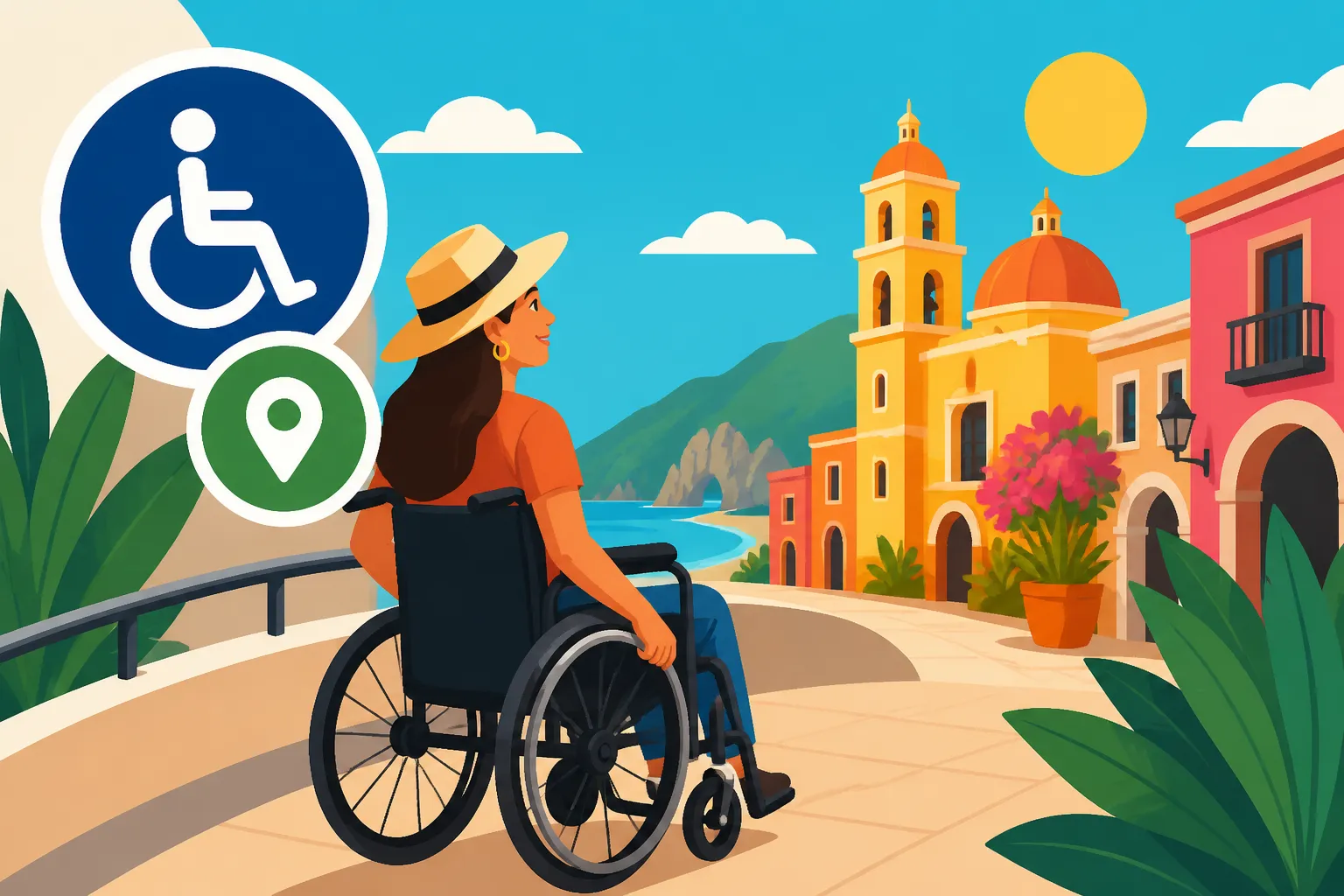
How to Find Wheelchair-Accessible Travel in Mexico
Navigating Mexico in a wheelchair can feel like an Olympic sport at times, a real test of patience and planning that many of us able-bodied folks never even consider. Uneven sidewalks, high curbs, ancient cobblestone streets, and a general lack of consistent infrastructure can make what should be a straightforward journey an absolute gauntlet. But don't despair! This guide is here to walk you through the realistic landscape of wheelchair-accessible travel in Mexico, offering practical tips and resources to help you plan an incredible, frustration-minimized adventure.
Disclosure: This post may contain affiliate links. We may earn a commission at no extra cost to you if you make a purchase through these links. Read full disclosure.
The Honest Truth: Understanding Accessibility in Mexico
Let's be real. Mexico wasn't designed with universal accessibility in mind. Its charm often lies in its colonial architecture, ancient ruins, and bustling, organic street life – elements that, unfortunately, rarely feature smooth ramps or wide, even pathways. As an expat who's lived here for years and seen both the incredible beauty and the infrastructural quirks, I can tell you upfront that accessibility is a mixed bag, requiring extra planning and a hearty dose of flexibility.
The Good, The Bad, and The Uneven
On one hand, you'll find places where accessibility is surprisingly good. Newer, purpose-built resorts in popular tourist destinations like Cancún, Playa del Carmen, and Los Cabos often meet international accessibility standards, boasting ramps, accessible rooms, and pool lifts. Major hotel chains are usually a safe bet. Even some modern malls and newer parts of large cities like Mexico City have improved sidewalks and designated accessible parking. You'll often find that international airports are also relatively accessible, offering assistance upon request.
However, the reality outside of these specific pockets can be a stark contrast. Imagine trying to navigate a narrow, uneven cobblestone street in a charming Pueblo Mágico like San Miguel de Allende or Taxco. It's tough even on foot, let alone in a wheelchair. Many colonial buildings, which are often the main attractions, have steps at entrances and narrow doorways. Public transportation, especially local city buses, often lacks ramps or space for wheelchairs. Sidewalks can be broken, nonexistent, or obstructed by street vendors, parked cars, or open drainage canals – real hazards for anyone with mobility challenges. Even public restrooms, when available, might not be accessible. It’s not out of malice, but simply an older infrastructure that hasn't caught up with modern accessibility standards across the board.
Advocating for Yourself: Tips for Inquiring About Accessibility
Since a blanket "accessible" label can mean very different things here, it's absolutely crucial to become your own best advocate. Don't rely solely on website filters or generic descriptions. Pick up the phone, send emails, or use messaging apps to speak directly with hotels, tour operators, and transportation providers.
Here's what you should specifically ask about:
- Door Widths: Is the entrance door wide enough for your chair? What about bathroom doors?
- Room Layout: Are there steps or thresholds within the room? Is there enough maneuvering space around the bed and in the bathroom?
- Bathroom Specifics: Are there grab bars in the shower and next to the toilet? Is the shower a roll-in shower, or does it have a lip? What height is the toilet? This is one of the most common oversights, so be very specific.
- Elevators/Ramps: If it's a multi-story building, is there a functioning elevator, and is it large enough? Are ramps available, and what is their gradient? Are they temporary or permanent?
- Transportation: If they offer transfers, is it an accessible vehicle? What kind of ramp or lift does it have? Can they confirm the dimensions and weight capacity?
- Site-Specific Questions: If you're visiting a specific attraction, ask if there are designated accessible routes, elevators, or alternative entry points. Sometimes an attraction might have one accessible entrance, but the rest of the site is challenging.
Don't be afraid to ask for photos or even a video if possible. It might seem like a lot, but this meticulous inquiry can save you immense frustration down the line. Remember, a picture is worth a thousand words, especially when dealing with varied interpretations of "accessible."
Planning Your Accessible Itinerary: Research and Resources
Planning is your superpower when it comes to accessible travel in Mexico. While it might take a bit more legwork than you're used to, the payoff is a smoother, more enjoyable trip. Think of yourself as a detective, gathering all the clues to ensure your path is clear.
Online Tools and Platforms: Where to Start Your Search
You'll definitely want to leverage online tools, but always with a grain of salt and a follow-up call.
- Accommodation: Websites like Booking.com are excellent starting points. They usually have filters for "wheelchair accessible" rooms. However, as mentioned, this can be a broad term. Once you've narrowed down some options, always contact the hotel directly to confirm the specifics of their accessible rooms and public areas. Ask about the route from the hotel entrance to your room, to the pool, and to the dining areas. Even the seemingly smallest details can make a huge difference.
- Tours and Activities: For tours, you might start your search on platforms like Viator. Look for tours explicitly advertised as accessible or private tours where you can customize the itinerary. Again, direct communication with the tour operator is non-negotiable. Explain your specific needs, the type of wheelchair (manual, power), and any assistance you might require. Many local operators are genuinely eager to accommodate but might not know how unless you guide them. There are also specialized accessible travel agencies that focus solely on this niche, which might be a more expensive but much less stressful option.
- Transportation: When it comes to long-distance travel, modern bus lines like ADO are generally quite good, with newer buses sometimes offering wheelchair lifts. You can check schedules and often book tickets through platforms like Busbud. However, the number of truly accessible buses or specific routes can be limited, so confirming directly with ADO or other premium bus lines is key. For more on navigating bus travel, check out our guide on Getting Around Mexico: Buses, Flights, and Car Hire.
Key Questions to Ask Before You Go
Beyond the specifics for hotels and tours, consider these broader questions for your overall trip:
- Medical Needs: Have you packed all necessary medications and supplies? Do you know where the nearest pharmacy or hospital is? Read up on Pharmacies in Mexico: How to Get Medications (OTC vs Prescription) and prepare for any potential medical emergencies.
- Assistance: Will you be traveling with a companion who can assist you, or will you need to arrange for local assistance? Some hotels or tour companies might offer this, but it’s best to clarify expectations and costs beforehand.
- Emergency Contact: Share your itinerary with someone at home and have local emergency numbers handy. While 911 works, it's good to know local equivalents or specific hospital numbers. Our guide on Medical Emergencies in Mexico: What Expats Should Know and Prepare has more on this.
- Backup Plan: What if your planned accessible transport falls through? What are your alternative options? Always have a Plan B (and maybe a Plan C) for critical elements of your trip.
- Language Barrier: While many people in tourist areas speak English, preparing some basic Spanish phrases related to accessibility can be incredibly helpful. Learning a bit of "Pharmacy Spanish: Phrases to Help You Buy Medicine in Mexico" can also be useful.
Being prepared for contingencies is not about expecting the worst, but about ensuring you can adapt and still enjoy your trip even if small hitches arise.
Getting Around: Accessible Transportation Options
Once you've nailed down your accommodation, getting from point A to point B is the next big hurdle. This is where Mexico's infrastructure truly varies, and where informed choices become paramount.
Air, Bus, and Private Transfers
- Air Travel: Mexico's major airlines, like Aeromexico, Volaris, and Viva Aerobus, generally adhere to international accessibility standards for boarding and disembarking. You can request wheelchair assistance when booking your ticket or upon arrival at the airport. They typically provide aisle chairs for getting to your seat and staff to help with baggage. However, always confirm that your specific airport has an accessible ramp or jet bridge; smaller regional airports might still require a lift. Baggage handling can sometimes be rough, so ensure your wheelchair is clearly marked and well-protected, or consider disassembling it if possible.
- Long-Distance Buses: As mentioned, premium bus lines like ADO offer a comfortable and often reliable way to travel between major cities. Their newer fleet often includes buses with wheelchair lifts, particularly on their "GL" and "Platino" classes. However, these specific buses might not be available on all routes or at all times. It's imperative to call ADO directly (or the bus line you plan to use) well in advance to confirm the availability of a truly accessible bus for your desired route and departure time. Don't rely solely on online information. Bus terminals in larger cities are generally more accessible than smaller local stations.
- Private Accessible Transfers: This is often your best, albeit most expensive, option for guaranteed accessibility, especially for airport transfers or specific day trips. Many tour companies and specialized transport services in major tourist hubs (like Mexico City, Cancún, or Puerto Vallarta) offer accessible vans equipped with ramps or lifts. A quick online search for "accessible transportation [city name] Mexico" or "wheelchair taxi [city name] Mexico" should yield results. Always confirm the vehicle type, ramp/lift specifications, and the driver's experience with passengers in wheelchairs. They might even be able to offer insights into accessible locations, as they often cater to clients with similar needs.
| Transportation Type | Pros | Cons | Key Considerations for Accessibility |
|---|---|---|---|
| Air Travel | Fastest for long distances, major airports generally accessible, airline assistance available. | Smaller airports may lack jet bridges, baggage handling can be rough on chairs. | Pre-arrange assistance, check airport facilities, protect your wheelchair. |
| Premium Buses (e.g., ADO Platino/GL) | Comfortable, cost-effective for inter-city, newer buses may have lifts. | Not all routes/buses are accessible, limited space for larger chairs, terminals can be busy. | CALL AHEAD to confirm lift availability for specific route/time, arrive early. |
| Private Accessible Van | Guaranteed accessibility, door-to-door service, customizable, knowledgeable drivers. | Most expensive option, requires booking in advance. | Confirm ramp/lift type, vehicle size, driver experience. |
| Local Taxis / Uber / Didi | Widely available, often affordable for short distances. | Very few are truly accessible; most require transferring out of your chair, limited trunk space. | Be prepared to transfer, luggage space is minimal. Call/message driver to explain needs. |
| City Bus / Metro (Mexico City) | Very cheap, extensive network. | Mostly inaccessible (high steps, crowded), Metro can be crowded but some stations have elevators. | Generally not recommended outside of very specific, researched Metro lines. |
Navigating Cities: Taxis, Ride-Shares, and Specialized Transport
Getting around within a city presents its own set of challenges and opportunities.
- Taxis and Ride-Share Apps (Uber, Didi): While ubiquitous, finding a truly accessible taxi or ride-share vehicle is rare outside of highly specialized services. Most standard taxis are sedans, meaning you'll need to transfer from your wheelchair to the car seat, and your wheelchair will be folded and stored in the trunk (if it fits). This can be a challenge if you have a rigid or heavy power chair. If you use an app like Uber or Didi, you can try messaging the driver immediately after they accept to explain you're a wheelchair user and inquire if their trunk can accommodate it. Be prepared for cancellations, which can be frustrating but expected given the limitations. In Mexico City, there are some private companies specializing in accessible taxis, often at a higher rate.
- Mexico City Metro and Metrobus: The Mexico City Metro is generally not wheelchair accessible, with many stations having stairs and large gaps between the platform and the train. However, some newer lines and stations have elevators. The Metrobus (BRT system) is a bit better, with some stations and buses having ramps, but it can still be very crowded, especially during peak hours. For deeper insights into navigating the city, our post on Getting Around Mexico City: Metro, Metrobús, and Apps might offer some general context, though accessible information will require specific research.
- Walkable (and Rollable) Areas: Your best bet for independent movement might be to research specific neighborhoods known for their wider, smoother sidewalks. In Mexico City, areas like Roma Norte, Condesa, and parts of Polanco are generally more accessible than the historic center or older colonias. Similarly, newer boardwalks in coastal towns like Puerto Vallarta or Playa del Carmen can be quite rollable. Always be aware of your surroundings, as even "accessible" areas can have unexpected dips or obstacles.
Accommodation and Activities: Making the Most of Your Trip
Once you’ve got your transportation figured out, it’s time to focus on where you’ll rest your head and what adventures you’ll embark on. This is where your diligent research truly pays off!
Finding Accessible Hotels and Resorts
Beyond just the "wheelchair accessible" filter, let's talk about what that really means in Mexico. As a seasoned expat, I've heard too many stories of disappointment. A hotel might have one room with a wider door, but then the bathroom is tiny, or the shower isn't roll-in, or there are steps to the pool.
When you're confirming with a hotel, ask about:
- Roll-in Showers: This is paramount. Many "accessible" rooms still feature a small lip or step into the shower, making it unusable for many wheelchair users. If a roll-in shower isn't available, ask if there's a shower chair or bench.
- Bed Height: Is the bed at a comfortable height for transferring? Can it be adjusted?
- Room Service/Restaurant Access: Can you easily access all the hotel's amenities, like the restaurant, bar, or gym? Are there ramps to the pool area, and does the pool have a lift?
- Ground Floor vs. Upper Floors: While elevators are good, a ground-floor room can sometimes be less hassle, especially in older hotels where elevators might be temperamental.
- Location, Location, Location: Does the hotel's immediate vicinity offer rollable sidewalks and nearby accessible restaurants or attractions? Staying in an accessible hotel on a challenging street can still limit your mobility.
Major international chains like Marriott, Hilton, and Hyatt often have more consistent standards for their accessible rooms than smaller, independent Mexican hotels. These larger properties are also more likely to have staff trained in assisting guests with disabilities. For instance, in places like Mexico City, you'll find a range of excellent accessible options, which you can explore further in our "Mexico City and Mexico's Great Cities: Explorer's Guide".
Accessible Tours and Attractions
This is where you'll have to be the most creative and proactive. Mexico is full of incredible sights, from ancient ruins to bustling markets, but not all are created equal in terms of accessibility.
- Ancient Ruins: Many of Mexico's famous archaeological sites, like Teotihuacán or Chichén Itzá, involve vast, uneven grounds, multiple steps, and often unpaved paths. While you might be able to appreciate them from a distance or access certain sections, fully navigating these sites in a wheelchair can be extremely challenging, if not impossible. Call ahead to the site administration or hire a specialized guide who can confirm specific accessible routes. Some sites might have paved main pathways but no ramps to climb pyramids.
- Museums: Many modern museums in larger cities are quite accessible, with ramps, elevators, and accessible restrooms. For example, Mexico City's Museo Nacional de Antropología is largely accessible. Smaller or older museums, especially those in colonial buildings, might be less so. Always check their websites or call directly.
- Beaches and Natural Wonders: Mexico's beautiful beaches (check out "Beaches and Coastal Mexico: Caribbean and Pacific") and natural wonders like cenotes can be tricky. Some resorts have beach wheelchairs or accessible paths to the water, but public beaches rarely do. Cenotes often involve stairs or steep descents into underground caves, making them largely inaccessible for traditional wheelchairs. However, some larger, more developed cenotes in the Yucatán Peninsula might have platforms or specific accessible sections.
- Customized Experiences: For a truly accessible experience, consider hiring a private guide or a tour company specializing in accessible travel. They can craft an itinerary tailored to your needs, ensure accessible transportation, and know which attractions are genuinely navigable. This option may be more costly, but it offers invaluable peace of mind and access to experiences you might otherwise miss.
- Street Life and Markets: Embracing Mexico's vibrant street life and markets is a huge part of the experience. However, these areas are often crowded, with uneven ground, tight spaces, and temporary stalls. While you might not be able to navigate every nook and cranny, you can still enjoy the atmosphere from the periphery, perhaps with the help of a companion.
Ultimately, accessible travel in Mexico requires a proactive mindset, thorough research, and a willingness to communicate your needs clearly and often. While the country still has a long way to go in terms of universal accessibility, with careful planning and the right resources, you can absolutely create an unforgettable and enriching experience. Don't let the challenges deter you; empower yourself with knowledge and prepare for an incredible journey.
Disclaimer
The information provided in this guide is for general informational purposes only and does not constitute professional advice. While we strive to keep the information up-to-date and accurate, accessibility standards, services, and infrastructure in Mexico can change rapidly. Always verify specific details directly with service providers, accommodations, and transportation companies before making any travel arrangements. Travel involves inherent risks, and individual experiences may vary.