How to Visit the National Museum of Anthropology in Mexico City
Oh, Mexico City! It's a place that can be exhilarating and utterly overwhelming all at once. If you’re anything like me when I first arrived, you're probably trying to figure out how to tackle the immense cultural richness without getting lost in the logistical maze. Visiting the National Museum of Anthropology, or as locals call it, the Museo Nacional de Antropología (MNA), is a non-negotiable must-do, but navigating it can feel like a mini-expedition in itself. This guide is here to cut through the confusion and help you experience this incredible treasure like a seasoned expat.
Disclosure: This post may contain affiliate links. We may earn a commission at no extra cost to you if you make a purchase through these links. Read full disclosure.
Getting to the National Museum of Anthropology
The MNA is gloriously situated in Chapultepec Park, a massive green lung in the heart of Mexico City. While its location is central, getting there involves a bit of planning depending on where you're starting from. The key is to pick the transport method that best suits your comfort level and budget.
Navigating Public Transportation Options
Using Mexico City's public transport system, particularly the Metro and Metrobús, is an experience in itself – sometimes chaotic, always efficient once you get the hang of it. It’s also incredibly cheap, making it a fantastic option for budget-conscious travelers and those who want to feel truly immersed in local life. Just be prepared for crowds, especially during peak hours, and always keep an eye on your belongings.
The most direct way to reach the MNA via Metro is to take Line 7 (the orange line) to the Auditorio station. From there, it's a pleasant, albeit slightly long, walk through a beautiful part of Chapultepec Park, perhaps 15 to 20 minutes depending on your pace and how many times you stop to admire the surroundings. Another option is the Chapultepec station on Line 1 (the pink line), which is also a solid walk away, but often bustling and less direct for the museum itself. If you're coming from the historic center, Line 1 is often your best bet, connecting you easily to the park.
For those who prefer the Metrobús, which offers dedicated bus lanes and typically less cramped conditions than the Metro, Line 7 (which confusingly also uses "Line 7," but is a distinct system) has a stop called Museo de Antropología directly in front of the museum's main entrance. This is by far the most convenient public transport option as it drops you right where you need to be. You'll need a reloadable Metro card (which works for both systems) to use either. You can pick these up at any Metro station or Metrobús stop, and it’s wise to load it with a bit extra so you don't have to worry about topping up in the middle of your journey. Remember, Mexico City's public transport system is extensive, but can be a bit intimidating if your Spanish isn't stellar. For a deeper dive into all the ways to move around this massive city, check out our guide on Getting Around Mexico City: Metro, Metrobús, and Apps.
Ride-Sharing and Taxis
If public transport sounds like too much of an adventure or if you're traveling with kids or a lot of gear, ride-sharing services are a godsend. Uber and Didi are widely available and generally reliable in Mexico City. I've personally relied on them countless times, especially after a long day of sightseeing when my feet are screaming for a break.
Just punch in "Museo Nacional de Antropología" as your destination, and your driver will get you there directly, usually dropping you off right at the entrance. The cost is quite reasonable, especially when compared to fares in many other major global cities. For those who prefer to keep things familiar, using an app takes away much of the guesswork and potential language barrier. If you're concerned about safety or curious about how these services compare, our article How to Use Uber and Ride-Hailing Safely in Mexico has some fantastic advice.
Traditional taxis are also an option, but I generally advise new visitors to stick to ride-sharing apps for transparency and safety. If you do opt for a street taxi, try to hail one from a sitio (a designated taxi stand) rather than just flagging one down, and always confirm the price or ensure the meter is running before you depart. This isn't unique to Mexico, of course, but it’s a good general rule of thumb for any big city.
Walking or Cycling
If you're staying in one of the neighborhoods bordering Chapultepec Park, like Polanco, Roma Norte, or Condesa, the museum might even be within walking or cycling distance. The stroll through Chapultepec Park itself is a delightful experience, with vendors selling snacks, performers entertaining passersby, and plenty of green space to enjoy.
For cyclists, Mexico City has made significant strides in creating bike-friendly infrastructure. There are bike lanes in many areas, and the ECOBICI public bike-sharing system is a fantastic way to explore. Just be aware that cycling in a city of this size requires a bit of confidence and street smarts, as traffic can be intense. It’s certainly an invigorating way to arrive, allowing you to soak in the morning atmosphere of the park before diving into ancient history.
Planning Your Visit: Essential Information and Tips
Before you even step foot inside the MNA, a little foresight can vastly improve your experience. This museum is enormous, and trying to see everything in one go is a recipe for sensory overload. Trust me, I’ve tried to power through it all, and by the end, my brain felt like a sponge that couldn't absorb another fact!
Opening Hours and Best Times to Go
The National Museum of Anthropology is open from Tuesday to Sunday, typically from 9:00 AM to 6:00 PM. It is closed on Mondays. This is crucial, as many an excited tourist has shown up on a Monday only to be met with disappointment! Always double-check their official website for the most current hours and any special closures, especially around national holidays.
To truly enjoy the museum and avoid the biggest crowds, I highly recommend arriving right when it opens at 9:00 AM. This gives you a precious hour or two of relative calm before the tour groups and school trips descend. Another good time can be later in the afternoon, around 3:00 PM, when some of the morning rush has subsided, though you'll have less time to explore. Weekends are always busier than weekdays, so if your schedule allows, a Tuesday, Wednesday, or Thursday morning is ideal. Even better, plan for a couple of shorter visits rather than one exhausting sprint.
Ticket Prices, Discounts, and What to Expect at the Entrance
The entrance fee for foreign visitors is generally around 95 Mexican pesos (this amount can change, so always check the official site). Mexican nationals get a reduced rate, and there are specific discounts for students, teachers, and seniors with valid Mexican identification. Children under 13 typically enter for free.
Here’s a practical tip: While you can usually buy tickets at the door, during peak season or busy times, the queue can be quite long. It's often not possible to buy tickets in advance online directly from the museum, but you can sometimes find tours that include entrance fees on platforms like Viator. If you're someone who likes to plan every detail of your trip, browsing combination tours on Viator that include the MNA and other nearby attractions might be a convenient option. This way, you might bypass some of the ticketing hassle and have a guide to enhance your understanding.
At the entrance, there will be security checks, so be prepared to have your bags scanned. Large backpacks are usually not allowed inside the exhibition halls and must be checked at the cloakroom (guardarropa). This is actually a blessing in disguise, as lugging a heavy bag around a sprawling museum for hours is no fun at all.
What to Bring and What to Leave Behind
- Comfortable Shoes: This is non-negotiable. You will be doing a lot of walking on hard floors, and tired feet will quickly dampen your enthusiasm.
- Water Bottle: Stay hydrated! While there are water fountains and a cafeteria, having your own reusable bottle is eco-friendly and convenient.
- Small Bag/Backpack: For your essentials like wallet, phone, and camera. Remember, larger bags will need to be checked.
- Camera (without flash): Photography for personal use is generally allowed without flash, but always check signs in specific exhibits. Professional equipment might require special permission.
- A Light Jacket or Sweater: Mexico City's weather can be unpredictable, and museum interiors can sometimes be cool.
- A Notebook and Pen: If you're like me and love jotting down observations or interesting facts.
- Leave at Home: Large bags, outside food and drinks (other than a water bottle), tripods, and anything that could be considered a weapon.
Language Considerations and Accessibility
The National Museum of Anthropology is very well-equipped for international visitors. Most of the main exhibit descriptions and information panels are presented in both Spanish and English. This is a huge relief for many, as struggling with a language barrier can definitely detract from the educational experience.
However, if you want a truly immersive experience or have very specific questions, hiring an independent, licensed tour guide is an excellent idea. Many speak fluent English and can offer insights that go beyond the written descriptions, bringing the ancient cultures to life with captivating stories and historical context. You can often find reputable guides just outside the museum entrance, or pre-book one through a tour operator. If you're trying to brush up on your Spanish before your trip, our guide Learning Spanish in Mexico: Top Tips and Resources for Expats offers some great advice!
For visitors with disabilities, the MNA is generally accessible. There are ramps, elevators, and accessible restrooms. It’s always a good idea to contact the museum directly beforehand to confirm any specific accessibility needs you might have, as conditions can vary.
Navigating the Museum: Halls, Exhibits, and Strategies
This museum is truly colossal, a masterpiece of modern architecture housing an unparalleled collection of Mexico's pre-Hispanic heritage. It’s laid out in a way that can be both intuitive and overwhelming. The ground floor covers the pre-Hispanic cultures, while the upper floor focuses on ethnography and the lives of indigenous peoples today.
The Layout and Must-See Exhibits
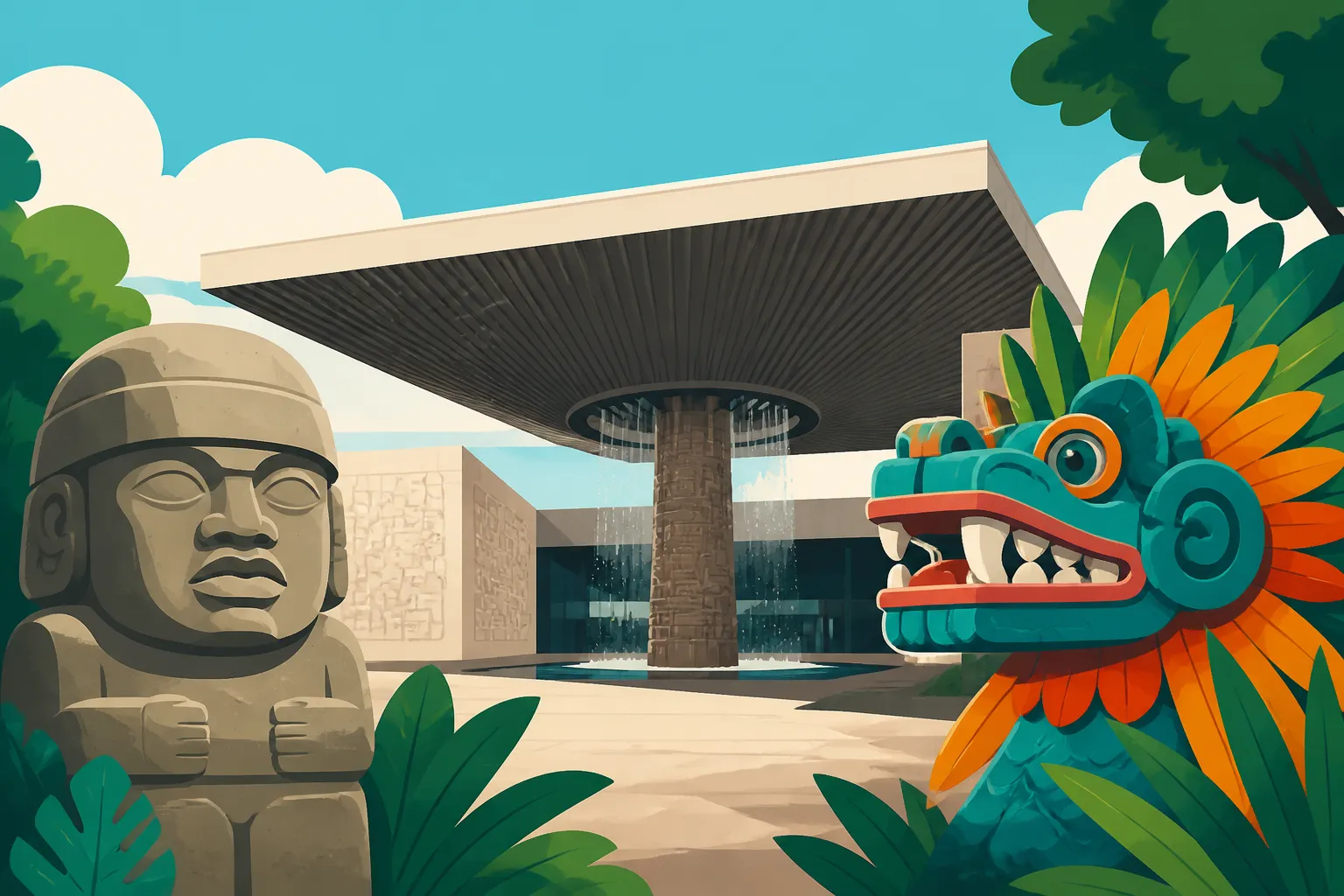
The museum is structured around a central patio with a spectacular concrete "umbrella" fountain. The exhibition halls are arranged chronologically and geographically around this patio.
Ground Floor (Pre-Hispanic): This is where the heavy hitters are, the artifacts that will leave you speechless.
- Sala Mexica (Aztec Hall): This is probably the most famous hall, home to the iconic Piedra del Sol (Aztec Sun Stone). It’s massive, intricate, and absolutely mesmerizing. You'll also find sculptures of Coatlicue and other powerful deities here. Give yourself ample time in this hall, as it’s dense with history and symbolism.
- Sala Maya (Maya Hall): Dive into the rich cosmology and artistic prowess of the Maya civilization. Look for the replica of Pakal's tomb lid from Palenque, complete with intricate carvings, and the exquisite jade mask from Calakmul.
- Sala Oaxaca (Oaxaca Hall): Explore the Zapotec and Mixtec cultures, featuring intricate pottery, jewelry, and funerary offerings from Monte Albán.
- Sala Teotihuacán (Teotihuacan Hall): Discover the mysteries of the vast ancient city near Mexico City, with impressive replicas and artifacts, including the large sculpture of Tláloc, the rain god, which actually stands outside the museum entrance.
- Sala Olmecas (Olmec Hall): Home to the colossal Olmec heads from La Venta. These ancient, enigmatic sculptures are truly awe-inspiring and make you ponder the early civilizations of Mesoamerica.
Upper Floor (Ethnography): This floor often gets overlooked, but it's incredibly valuable for understanding the living indigenous cultures of Mexico. It showcases clothing, tools, rituals, and daily life from various groups across the country. While perhaps less "flashy" than the ground floor, it offers crucial context to the archaeological wonders below and reminds you that these cultures are not just history, but vibrant living traditions.
Suggested Pacing and Strategies to Avoid Museum Fatigue
My biggest piece of advice for the MNA is: don't try to see everything in one go. It’s simply too much. Pick two or three halls on the ground floor that genuinely interest you, and explore them thoroughly. Maybe the Aztec, Maya, and Olmec halls for their sheer impact. Then, on a separate visit or if you have extra time, explore a few more, or dedicate time to the upper ethnographic floor.
- Prioritize: Decide beforehand which cultures or exhibits you are most eager to see.
- Take Breaks: Utilize the central patio. It’s a beautiful, serene space where you can sit by the fountain, grab a coffee or snack from the cafeteria, and simply decompress for a bit. This mental pause is crucial for preventing burnout.
- Focus on Depth, Not Breadth: Instead of rushing through every room, spend quality time in a few. Read the plaques, observe the details, and let the history sink in.
- Consider a Guided Tour: As mentioned, if you want curated insights and don't want to navigate the vastness alone, a guide is invaluable. Platforms like Viator often list various tour options, some focusing on specific halls or offering express versions for those on a tighter schedule.
- Use the Museum’s Map: Grab a map at the entrance. It’s your best friend for orienting yourself and finding your chosen halls efficiently.
Eating, Amenities, and Facilities within the Museum
The MNA has a cafeteria located off the central patio that offers a decent selection of sandwiches, salads, pastries, coffee, and soft drinks. It’s a good spot for a light lunch or a quick pick-me-up. The prices are reasonable for a museum cafe. There are also vending machines scattered throughout the museum for quick snacks and drinks.
Restrooms are readily available and generally well-maintained. You’ll find them conveniently located near the entrance, by the cafeteria, and at various points throughout the exhibition halls. If you're thinking about dining more extensively, you might want to save your appetite for the excellent restaurants in the surrounding neighborhoods, which we'll discuss shortly.
The museum shop is worth a browse before you leave. It offers a wide array of books (many in English), replicas of artifacts, textiles, and other high-quality souvenirs. While it’s certainly pricier than buying from street vendors, you’re getting well-curated items that support the museum.
Table: Key Information for Your MNA Visit
| Aspect | Detail | Notes |
|---|---|---|
| Opening Hours | Tuesday – Sunday: 9:00 AM – 6:00 PM | Closed on Mondays. Check official website for holiday hours. |
| Entrance Fee | Approx. 95 MXN (Foreigners) | Mexican nationals, students, seniors (with valid Mexican ID) may get discounts. |
| Best Time to Visit | Early morning (9:00 AM) on a weekday (Tues-Thurs) | Avoids crowds, cooler temperatures. |
| Location | Chapultepec Park, Av. Paseo de la Reforma s/n, Polanco | Easily accessible from Polanco, Roma Norte, Condesa. |
| Public Transport | Metro: Auditorio (Line 7), Chapultepec (Line 1); Metrobús: Museo de Antropología (Line 7) | Metrobús drops directly at the entrance. Metro requires a walk. |
| Average Visit Time | 3-4 hours (for focused visit) to a full day (comprehensive) | Don't try to see everything in one go! |
| Language | Exhibit information in Spanish and English | Guided tours often available in English. |
| Facilities | Cafeteria, gift shop, restrooms, cloakroom for large bags, accessible ramps/elevators | Comfortable shoes are a must. |
Beyond the Museum: Exploring Nearby Gems
Your visit to the National Museum of Anthropology doesn't have to end once you step outside! Its location within Chapultepec Park means you're surrounded by other incredible attractions and excellent dining opportunities.
Exploring Chapultepec Park
Chapultepec Park, known as the "lungs of Mexico City," is one of the largest city parks in the Western Hemisphere and is teeming with things to see and do. After immersing yourself in ancient history, taking a leisurely stroll through the park is a perfect way to decompress.
Just a short walk from the MNA is the majestic Castillo de Chapultepec (Chapultepec Castle), perched atop Chapultepec Hill. This historic castle has served as a military academy, imperial residence, and presidential home, and now houses the National Museum of History. The views of the city from its terraces are simply breathtaking. Also nearby is the Museo de Arte Moderno (Museum of Modern Art) and the Museo Tamayo Arte Contemporáneo, offering a stark contrast to the MNA's ancient artifacts. You can easily spend an entire day, or even several, exploring all that Chapultepec has to offer. For a broader overview of the city's treasures, our Mexico City for First-Time Visitors: Neighborhoods and Highlights guide will be incredibly helpful.
Nearby Dining Options
Once you’ve worked up an appetite from all that intellectual and physical exertion, you’re in luck. The MNA is situated between some of Mexico City's most vibrant and delicious neighborhoods.
- Polanco: Immediately adjacent to Chapultepec Park, Polanco is known for its upscale dining scene. You’ll find everything from world-renowned fine dining establishments like Pujol (if you can get a reservation!) to charming cafes and excellent international cuisine. It’s a bit on the pricier side, but the quality is generally superb, and it's perfect if you're looking for a more refined meal after your museum visit.
- Roma Norte and Condesa: A slightly longer walk (or a short ride-share away), these neighborhoods are celebrated for their bohemian vibe, tree-lined streets, and incredible array of restaurants, cafes, and bars. You'll find trendy spots, traditional Mexican eateries, and a fantastic mix of international flavors. These areas offer a more relaxed atmosphere and cater to a wider range of budgets. For those who enjoy culinary adventures, finding a great spot for lunch or dinner here is part of the Mexico City experience. Our guide Dining Out in Mexico: Restaurant Etiquette and Tipping Guide can help you navigate the local customs.
Souvenir Shopping
While the museum’s gift shop offers high-quality mementos, if you're looking for more authentic, artisanal, or budget-friendly souvenirs, you might want to venture outside. Many street vendors around Chapultepec Park sell crafts, jewelry, and small trinkets, though the quality can vary.
For a more comprehensive and traditional shopping experience, consider exploring the markets in other parts of the city. For instance, the Ciudadela Market near the historic center is famous for its vast selection of Mexican handicrafts from all over the country. This provides a wonderful opportunity to support local artisans and find truly unique items to remember your trip by. Just be sure to brush up on your bargaining skills – it’s part of the fun in Mexico!
Remember, Mexico City is a place that rewards exploration and a willingness to embrace the unexpected. The National Museum of Anthropology is a cornerstone of that experience, but it’s just one incredible piece of a much larger, fascinating puzzle. Take your time, soak it all in, and enjoy every moment of your journey through Mexico's rich past and vibrant present.
Disclaimer
Please note that travel information, including opening hours, entrance fees, and transportation details, can change. While I strive to provide the most up-to-date and accurate information, it's always recommended to check the official website of the National Museum of Anthropology or consult local resources for the latest details before your visit. This guide is for informational purposes only.